


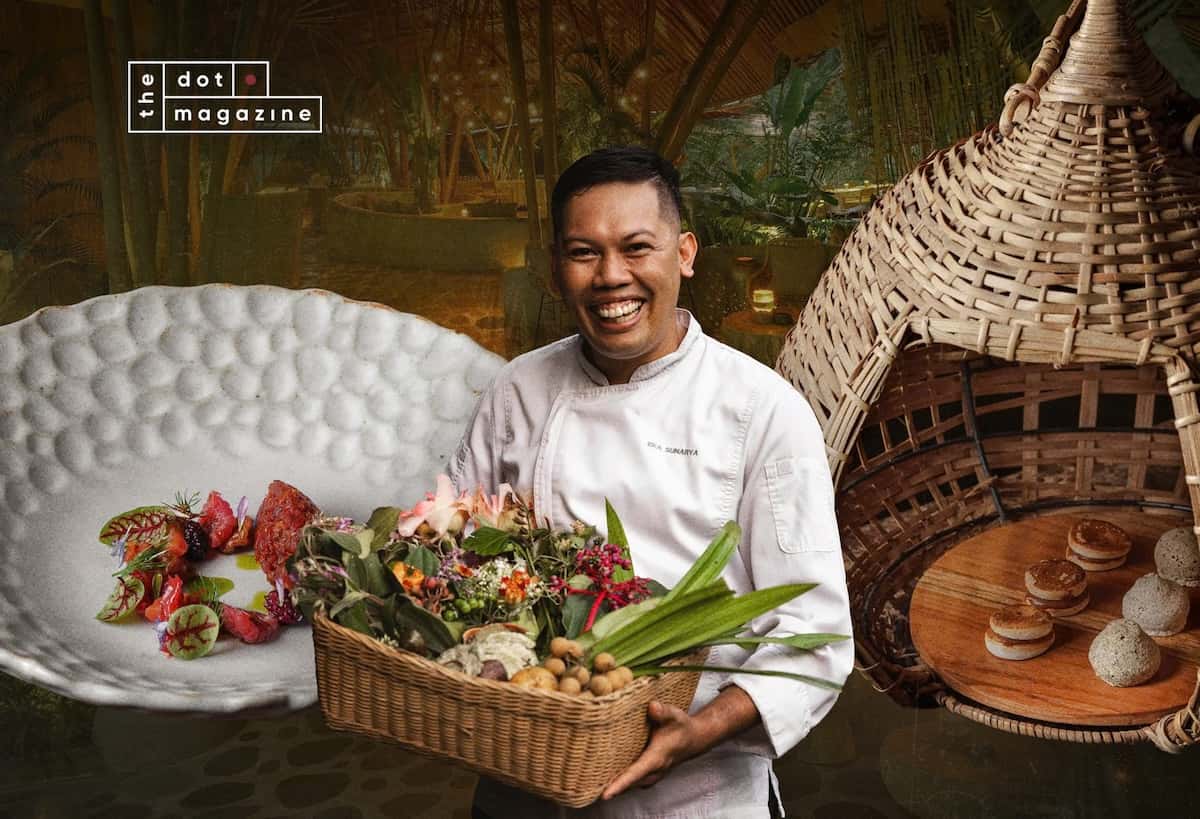
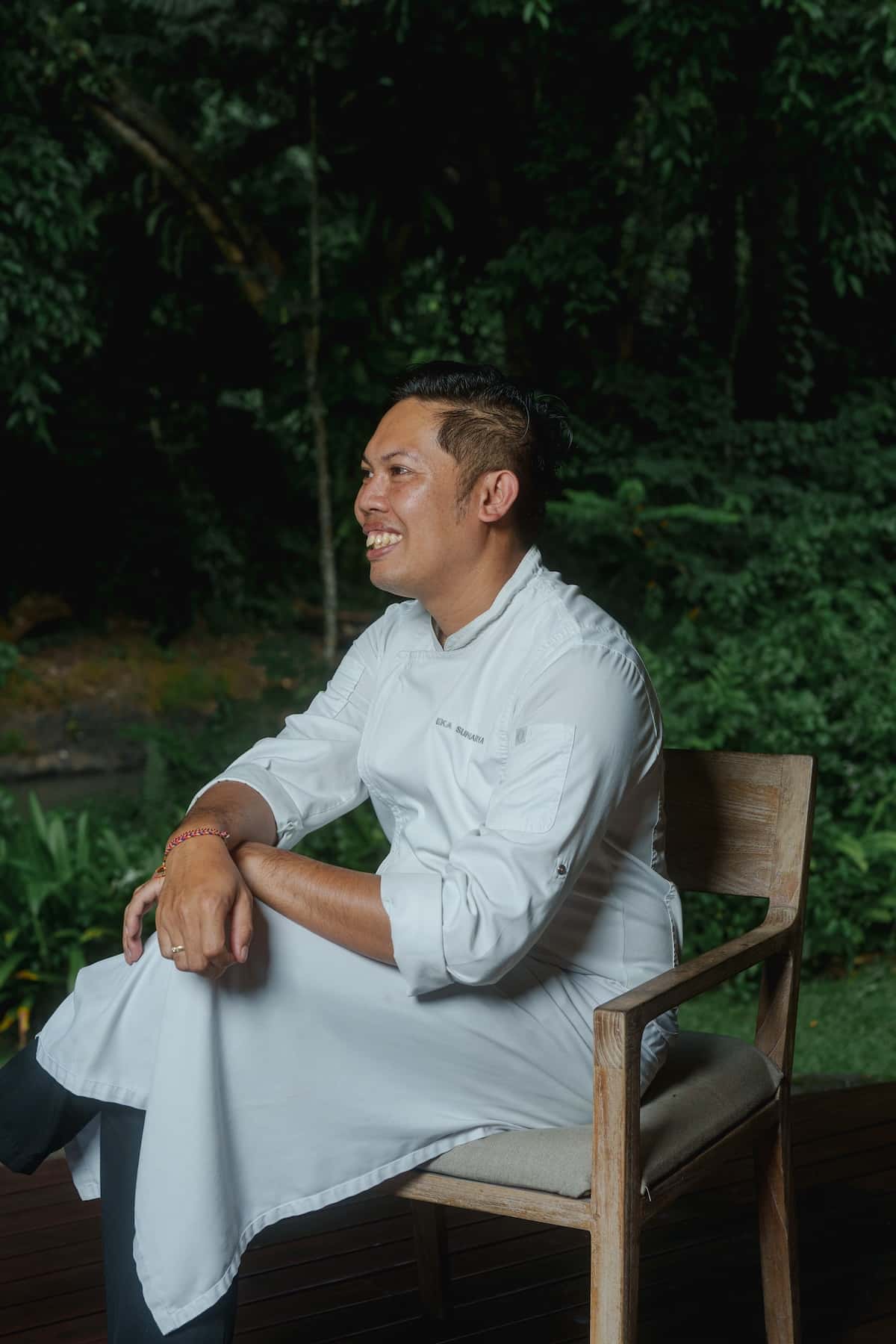
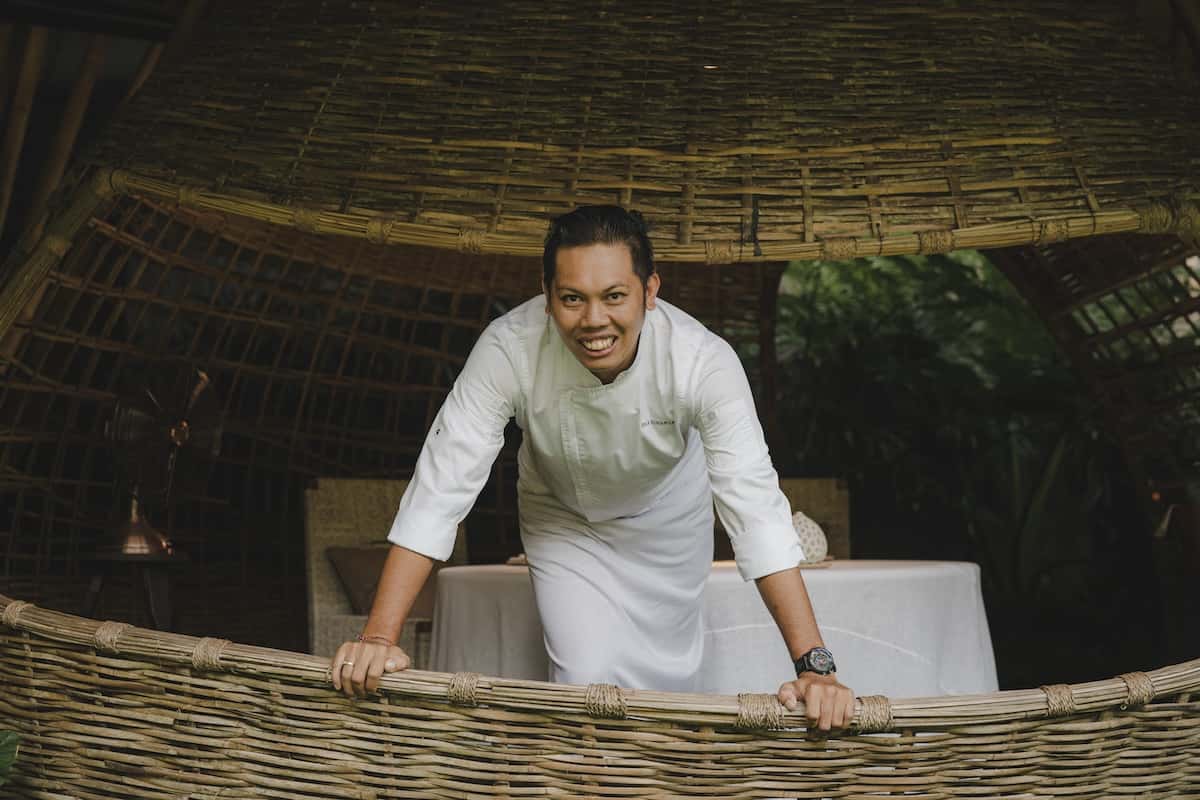
There are two versions of Eka Sunarya (many more if you count all the nicknames). One wears chef’s whites and runs Kubu, one of Bali’s most locally-inspired kitchens. The other has beat-up sneakers and wanders the jungle twelve kilometres outside Ubud, in a kind of reverie, declaring every single thing he picks his absolute favorite. Understanding Kubu requires spending time with both of them.
“This one’s my favorite,” Eka Sunarya beams, picking a leaf and rubbing it between his fingers before taking a long, exuberant inhale. About twenty metres further on, he picks another. “This one is my absolute favorite!” A little further still: “This is definitely my favorite.” He means it every time.
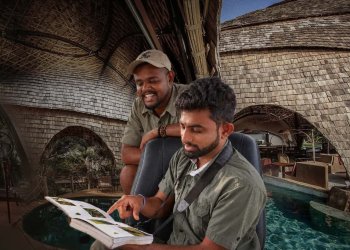
Jaron Guggenheim, Mandapa Ritz-Carlton Reserve’s Assistant F&B Manager, jokingly rolls his eyes. He’s used to Eka’s unbridled enthusiasm for the flora and fauna of this jungle trek and the edible treats it offers along the way. The resort staff have nicknamed Eka Mr. Mowgli, for his love of the jungle, and Mr. Bean, for his signature dish of jungle beans.
The Drive Up
“Or DJ Eka,” Jaron had laughed, as Eka fiddled with the car stereo with one hand while steering through the single-lane chaos of a Bali back road – scooters appearing from nowhere, dogs asserting right of way and the jungle pressing in from both sides.
The drive up took forty minutes in Mandapa’s white VW Type 181 – flat-sided, open-topped and with the Mandapa logo on the door. It looks exactly right for the jungle. “It’s a great ride,” Jaron noted from the front passenger seat, “unless it rains.”
The climb started at around 500 metres above sea level and topped out at roughly 1,050 – the sky, mercifully, staying clear the whole way up so as not to test the white VW Type 181’s water-resistance. The destination is a community jungle twelve kilometres out, 200 hectares in total. We’ll see maybe five percent of it.
The Jungle Is The Menu
Eka doesn’t wait for a clearing or a designated tasting spot. He stops mid-path, picks something and gleefully hands it over. The jungle is the menu.
There’s wild pepper – not dried black peppercorns but a living vine threading itself through the undergrowth, clusters of small dark berries hanging off it like tiny grapes that pop satisfyingly in the mouth. They taste like gooseberries at first, then the pepper heat arrives a second later. The leaf, he explains, is often stir-fried as a vegetable.
Then there are Balinese oranges – smaller than anything you’d find in a market, the skin caught between green and yellow, like it couldn’t decide whether to ripen. The farm has 600 trees of them, cut back at seven or eight years each to keep the yield strong.
Further up, he snaps a leaf from a mango tree and holds it out. Raw. You chew it and it delivers the sharp, grassy aroma of green mango, nothing added. Then there’s a second mango relative he calls gedong — wilder and less cultivated, familiar taste of mango but sharper.
Then moringa that’s growing fast and loose at the rough path’s edge, all-season and unfussy. The taste is simple, slightly raw, like something not quite finished. Eka eats it without ceremony, doing a small dance of joy as he does so.
Then there are mangosteens. Eka climbs the tree and throws them down one by one. The thick purple skin splits open in your hands. The flesh inside is cold and white and tastes like someone distilled a tropical garden into a single bite.
None of it is presented. And none of it is plated. It’s just there, and then it’s in your hand and then you understand something about what tonight’s dinner is going to mean at Kubu – or what’s behind the menu at Aryadi Saputra’s Ambar, who sometimes leads this trek himself, his focus the cocktail programme there rather than the cuisine at Kubu – back up the hill from the resort’s 35 suites and 25 private pool villas.
Eka Sunarya Presents Dinner At Kubu
Eka is barely recognizable when he appears at Kubu to present the dinner — chef’s whites replacing the beaten-up sneakers and jungle gear, but the smile identical.
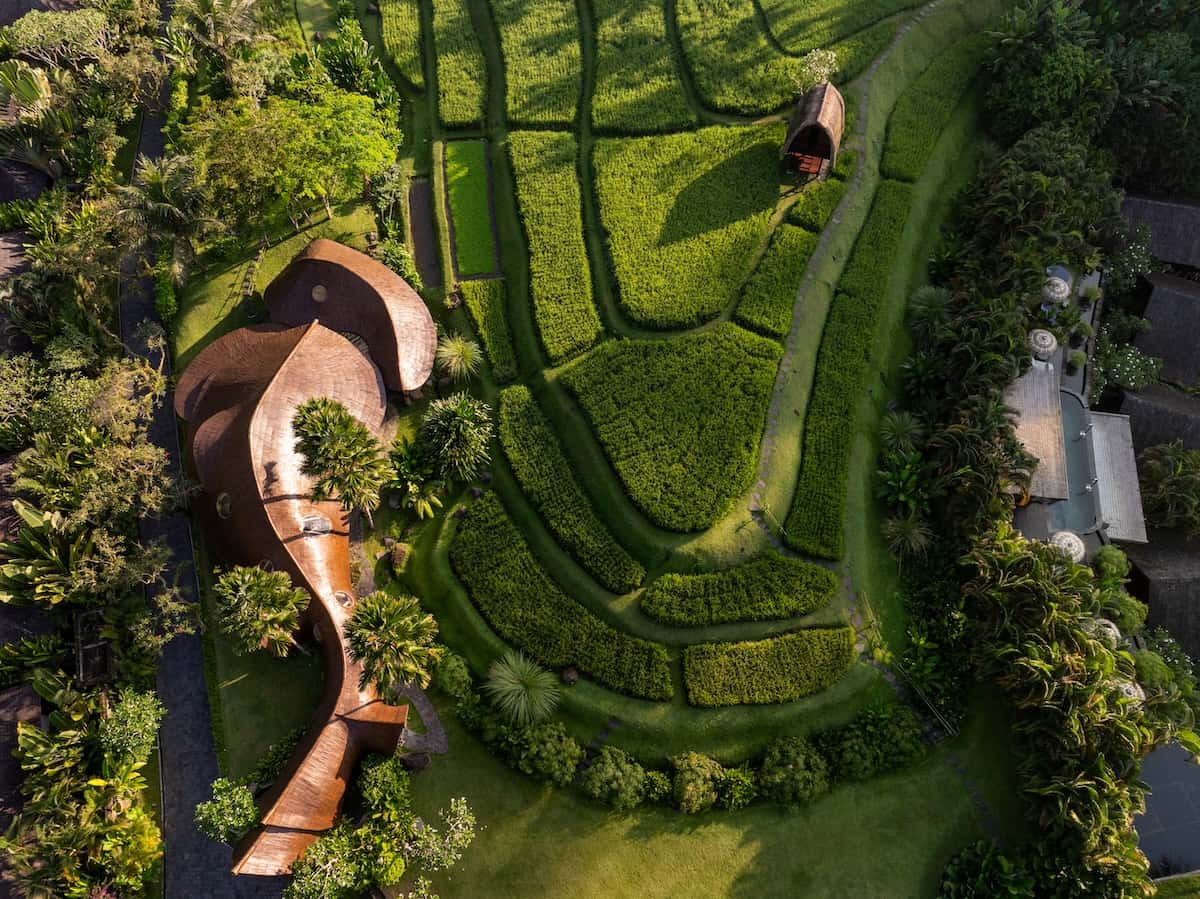
Kubu means hut in Indonesian – the bamboo shelter where Balinese farmers store rice after harvest. Mandapa took the word and built a restaurant around the idea: private bamboo dining pods, candlelit tables above the river, a kitchen run by Ubud-born chef Eka.
The nine courses are built almost entirely from ingredients sourced within 100 kilometres. Zero-waste is the operating principle – every root, leaf, seed, and fermented surplus finding its way onto the plate in some form. The botanical drinks pairing leans into this: low-alcohol fermented pours made from surplus fruit, including one with Plaga berries, tomato essence, and marigold. And there’s a wine list for anyone that wants it.
The food is the point. Payangan beans braised with kelp garum fermented for over a year. The day’s catch from the Bali community fishery in buttermilk with scallion and ragleaf. Dishes that you won’t find anywhere else, because nowhere else has this soil, this chef and team or this particular obsession with not wasting anything the island produces.
Conjuring Up The Spirits Of The Ubud Jungle
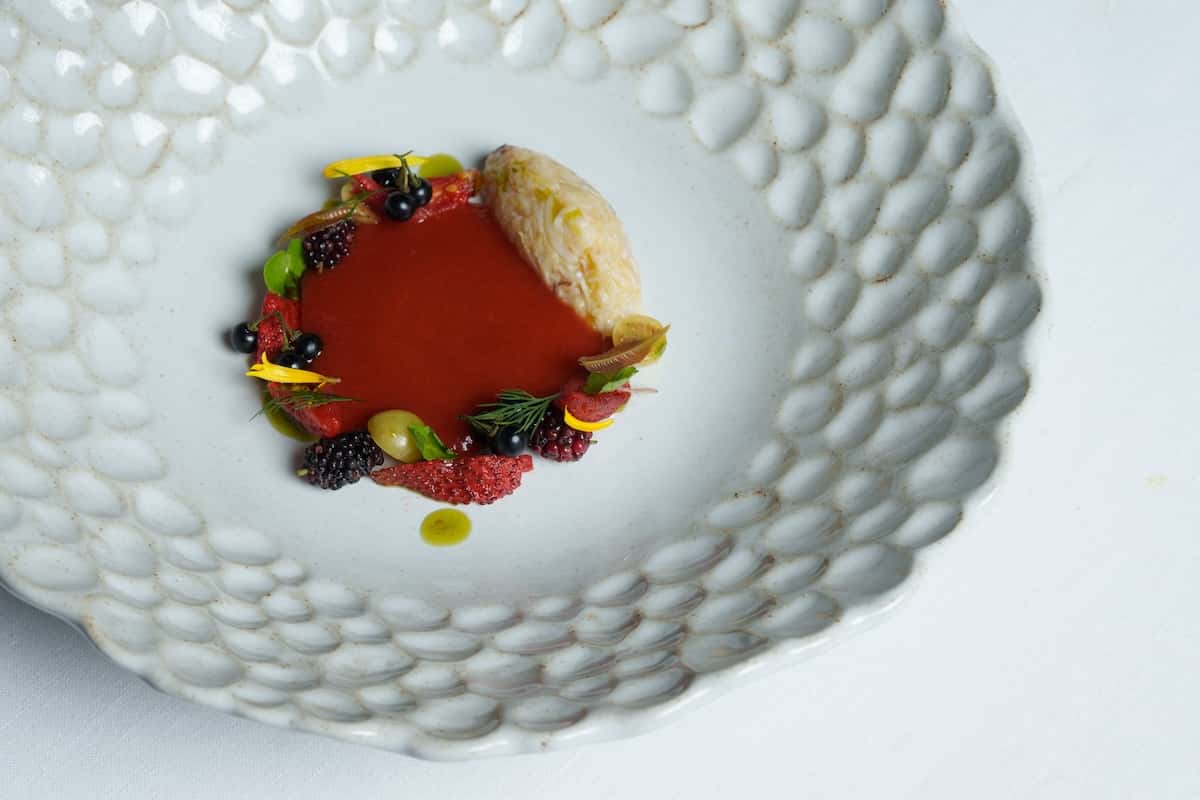
The evening’s menu is titled Spirits of the Ubud Jungle, in honor of the four day-long cocktail event it punctuates. It reads like a field notes inventory – place names and raw ingredients. It opens with Serangan crab – plaga melon, kelp, bilimbi sorrel and marigold – the crab from the south of the island, dressed in components that arrived from foragers that morning.
Then Bali community fishery produce served ceviche-style, with passion fruit, rosella, radish and wild herbs. Eka presents it with a small jug of rosella sauce. “Very refreshing,” he accurately predicts.
The drinks pairing runs alongside, botanical and low-alcohol. A Sotong arrives – bacem bacem-infused vodka, guava cordial, salt, soda. Then Kayu Manis: gin with kayumanis leaf, coconut water, and lemongrass gomme. Cocktails made from what’s left over as much as from what was planned.
The Jimbaran lobster comes in a corn velouté with vanilla fat and herb oil – the corn sweet and deeply flavoured, the lobster delicate within it. Then the Payangan beans – the dish that earned Eka his Mr. Bean nickname. Each variety cooked differently for a different texture, set on tree nut cream with forest mushroom and a free-range egg yolk slow-cooked to 60 degrees. Eka tells the table to break the yolk and mix it in slowly. “Like a carbonara,” he says. The comparison is apt and deliberately strange.
The Jamur Payangan pairing – whisky, mushroom consommé, tomato vinegar, coconut aminos – arrives alongside the Baturiti heritage pig. Slow-cooked pork belly with green peppercorn and pepper leaf: the same leaf we ate off the vine five hours earlier in the jungle. Nobody mentions this. Nobody needs to.
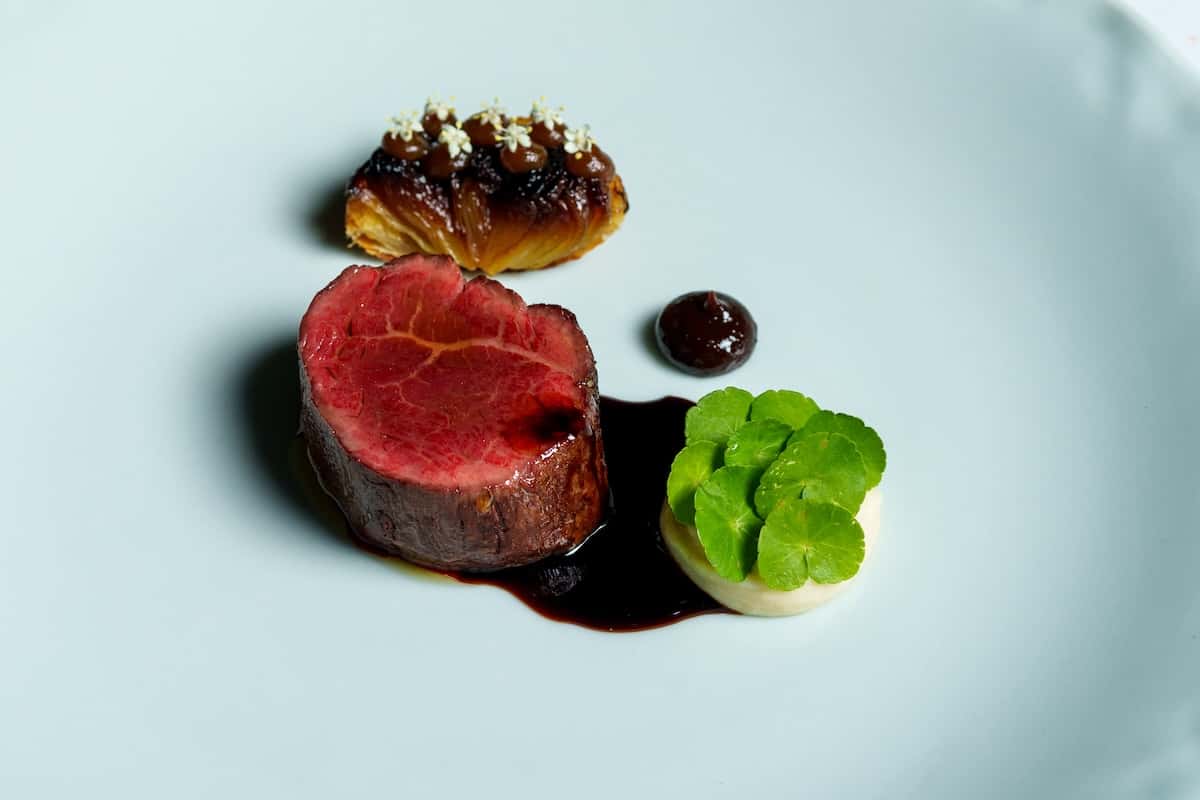
Then the Java tokusen beef: Bedugul onion, potato, Plaga wine sauce. A single succulent medallion cooked to a deep, uniform pink, the crust as dark as the night crowding around Kubu.
The Kintamani Wild Honey pre-dessert arrives as a tile of white chocolate cast into a perfect hexagonal grid, amber honey pooling in each cavity. Beside it, a pale lemongrass sorbet quenelle resting on honey cake, its surface almost powdery. Between them, a single candied bee. Three types of honey are on the plate; the stingless variety produces less but tastes sharper, more complex.
Then the Kubu Mignardise, and it’s over.
“This is my favorite,” Eka declares.
But we’ve heard that before.