



Gucci Mane is pumping through the Maguro Studio sound system. Chef Lam lifts the brush covered in soy sauce out of its skull-faced holder on the counter to lick the cuts of fish with. There’s tuna dry-aging in a cabinet in the corner lit by pink neon, like a scene from Shinjuku. And there are funky octopuses and tuna painted on the walls, taking in the proceedings. Right then, you realize Maguro Studio is not your traditional omakase restaurant.
Đọc bài viết bằng tiếng Việt
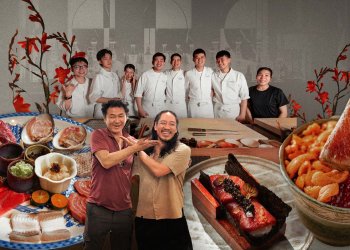
When Chef Lam slides over a tower of different cuts of tuna – that looks a little like Mount Fuji, including some dry aged from the cabinet – you’re sure it’s not a typical omakase restaurant. Then there’s the two guys behind it, Chef Lam and Lanh, both Vietnamese but with the necessary experience, precision and attention to ingredients and service required of the best sushi-ya.

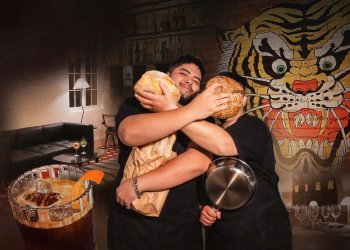
They call it ‘contemporary omakase’. “Well, I guess it is kind of funky in here,” Lanh smiles, “with the graffiti-style murals we wanted to capture some of the energy of the streets, and then there’s our big model of a bluefin tuna hanging outside – a restaurant icon every passerby spots.”
The hanging tuna hints at Maguro Studio’s other preoccupation, as a fish butchery with regular guest-friendly ‘cutting shows’. The Studio’s design elevates the chefs even higher above the diners than the usual sushi restaurant, adding to the show’s (and dinner’s) theatrical style. “During the show we try to recreate the atmosphere of a traditional Japanese seafood market,” Lanh says of the recurring event where: “the fish butcher dissects the fish live in front of guests…which of course they get to try.”
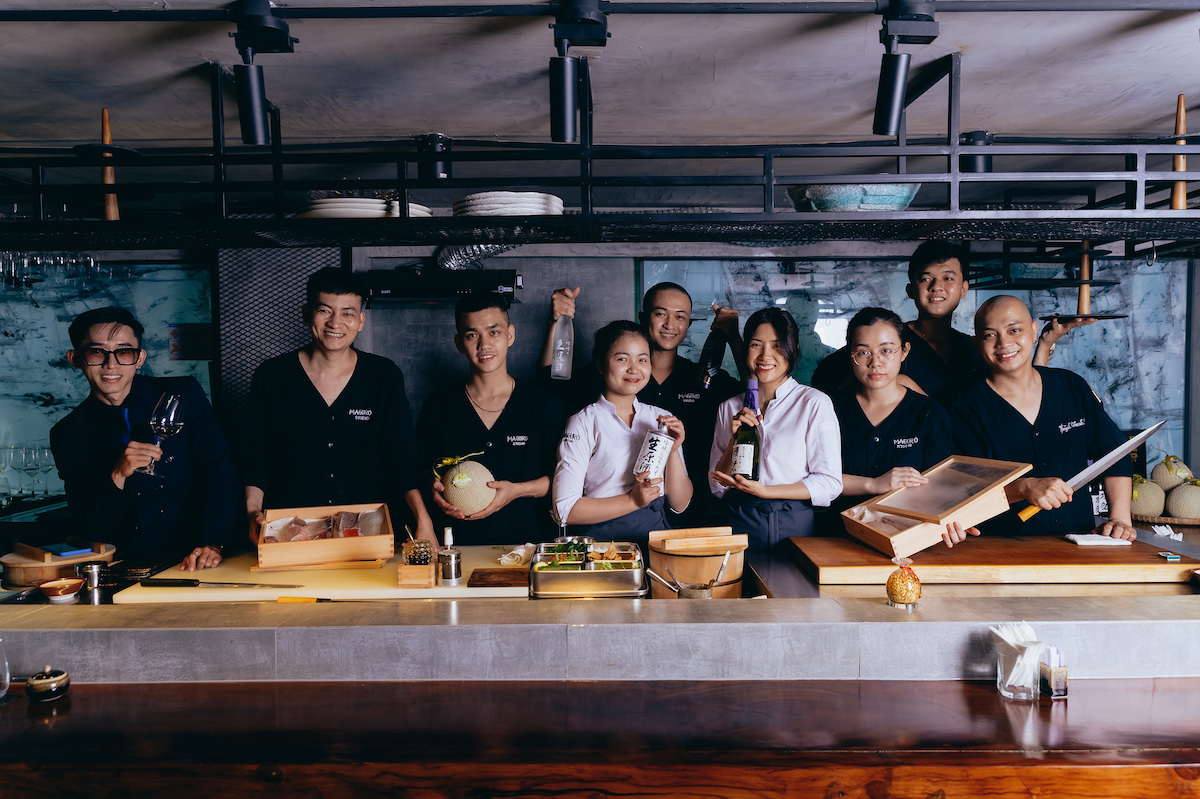
Lanh is CEO of premium fish importers Yamanaka Vietnam, who specialize in the tuna, or maguro, that gave the restaurant its name (they added Studio to emphasize the fun, informal vibes but also in tribute to the tuna cutting shows they host at the counter). He’d been supplying a host of five-star hotels and high-end sushi restaurants their fish for some time.

Chef Lam came from the highly-regarded Japanese restaurant Towa. And they first met over a coffee, where Lanh and Lam quickly agreed to pair the former’s fish importation network with the latter’s sushi-making skills and open Maguro Studio. They had lots in common, like having Japanese cuisine epiphanies, only in different countries. “Mine was in Tokyo,” Lanh tells us, “In a ramen shop. Small. Seemingly nothing special. But the level of service, or ‘omotenashi’ – the deeply-rooted concept of taking care of guests with sincerity and kindness – made that simple bowl of ramen unforgettable.”

“Mine was in Bangkok, at a restaurant serving contemporary Japanese cuisine, but I got the same, ‘Wow!’ moment,” Chef Lam adds. And they’re bringing the same spirit of ‘omotenashi’ to Maguro Studio. “Despite the extensive training we do, to reach those kinds of levels as we discovered in Tokyo and Bangkok it’s a constant process of developing, and evolving our service standards,” Lanh explains of the team’s work with snappily suited restaurant manager, Louis.

And there’s plenty of ‘Wow!’ moments too, like when the cherry blossom printed on the delicate sake glasses flushes pink after the sake has been poured, or when Chef Lam dabs the maguro sushi with red hot charcoal, old-school ‘aburi’ style causing smoke to billow up, giving the fish a beautifully smokey, charred touch, or when he’s carefully sitting a piece of monkfish liver upon a piece of halibut before flash-torching it for something like the same seared effect, or squeezing the cut of fish onto a brown rice for the sushi, which, mixed with vinegar as ‘shari’, gives it a sweetness more suited to the local palate.

During that first meeting, they also realized a shared goal to lead guests who are more used to eating salmon to a love of “the high-class, delicately flavored and textured” bluefin tuna. “And by working directly with suppliers in Japan, evaluating the quality of tuna ourselves and then getting it here in under 12 hours, we can bring the freshest products to our diners,” Lanh explains, “something like farm to table…but with fish. So, for example, after the fish is caught from the sea it’s processed by the ikejime and shinejime methods, traditional approaches to preparing fish that preserve its flavor and texture while offering more umami flavors when they’re aged like the ones in the cabinet there.”

As evidence of the quality of fish, they recommend the uninitiated to try a maguro zanmai set, featuring cuts of akami, the ubiquitous meaty lean red tuna that packs the most umami flavor and that you’ll be served in most sushi restaurants, and otoro, the fattiest, most melt-in-the-mouth cut of tuna from the belly, and chutoro that’s a mix of the two with a satisfying balance of meatiness and fattiness. “And pair them with a Kubota “Seppou” White, a sake from the northern Honshu region of Hokuriku that’s brewed and stored in cold winter temperatures giving it a clean, fresh taste,” Lam suggests.

We barely register what he’s saying as we take the first bite of akami and disappear into a sensory reverie as, appropriately, Travis Scott’s ‘Highest In The Room’ comes on.
Photos by Nghia Ngo (unless otherwise stated).