


 If Hozo City Tết Fest 2025’s MÊ VỊ® is anything to go by Vietnam’s culinary moment might be arriving. MICHELIN stars are spreading across Vietnam, street food is stepping onto global stages, and a new generation of chefs is cooking from memory without chasing trends.
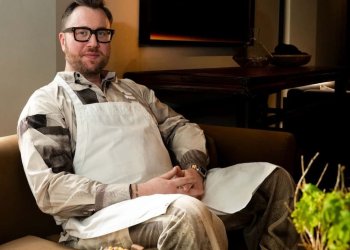
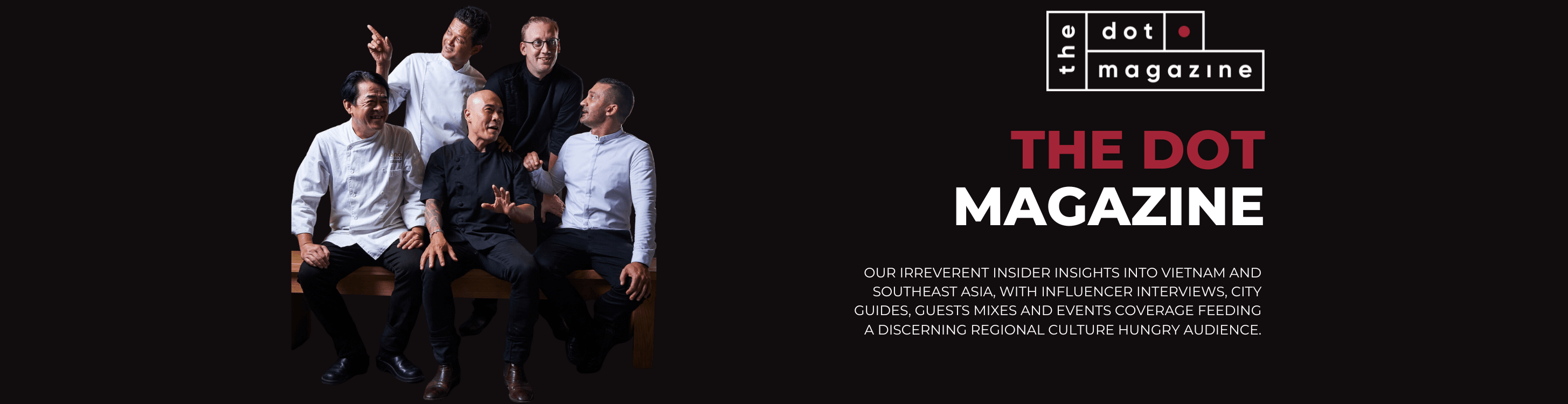
The question three people creating new and uniquely Vietnamese culinary experiences – Anan Saigon and Pot au Pho’s Peter Cuong Franklin, Sofitel Saigon Plaza’s Alistair Minty, and CoCo Dining’s Chef Thanh Vuong Vo – are pondering isn’t whether Vietnamese cuisine will compete with the world’s best. It’s what happens when it starts defining itself on its own terms.
Panels, Battles And Banquets
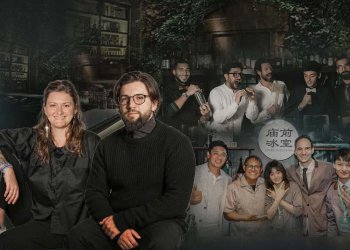
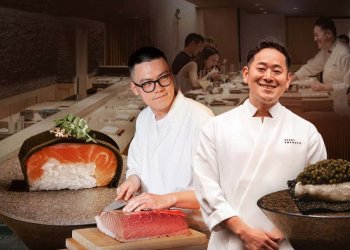
They’ll all be appearing at Hozo City Tết Fest 2025’s MÊ VỊ® which runs December 27–30 at Saigon Riverside Park. Mê Tales® brings discussions on The Craft of Passion in Modern Vietnamese Cuisine with Peter Cuong Franklin, Aspiration and the New Spirit of Vietnamese Culinary with Jimmy Phạm and Alistair Minty, and Designing Taste with the architects at the Mê cái Vị event. VỊ Battle® and a banquet, hosted by CoCo Dining’s Chef Vuong, close it out.

Telling Stories Through Flavor
Chef Vuong picked up a MICHELIN star this year at CoCo Dining for his culinary voyages into his past. “I’d describe myself as a chef who tells stories through flavor,” he smiles. “Which means I cook from memory, taking inspiration from everywhere – from the sea, from the ordinary moments life offers.”
His culinary style has evolved into something deeply personal. “I don’t chase trends. They lack soul,” he shrugs. “And I don’t believe food should be loud. A dish should speak for itself.”
While Chef Vuong is the latest chef to receive a MICHELIN star – the very last one announced at this year’s awards ceremony in Danang – Peter Cuong Franklin was the first chef ever to receive one in Saigon, at the inaugural MICHELIN Guide Vietnam awards.

We Are What We Eat, And We Become What We Do
His cuisine is deeply nostalgic too. “We are what we eat, and we become what we do,” he muses. “I grew up in Dalat, in Central Vietnam, always surrounded by food. My mom ran a small noodle shop in the tiny living room of our house. Eating and cooking has been very much a central part of my daily life.” Perhaps, always with a mind for mom’s approval, there’s authenticity in his take on modern Vietnamese cuisine. “I do not bullshit in cooking,” he adds by way of summary.
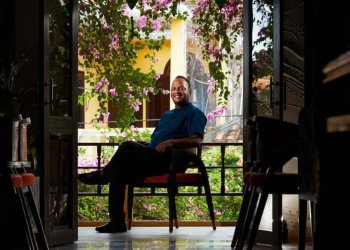
Alistair Minty is the General Manager of Sofitel Saigon Plaza in the city he describes as “warm, ambitious, and energetic, with motorbikes in choreographed flow, glass towers rising beside century-old shophouses, and street stalls doing brilliant business on plastic stools.”
“I usually introduce myself as the custodian of that beautiful hotel,” he adds contentedly. “In reality, that makes me part conductor, part host, and full-time problem solver,” he laughs.
The hotel hosts the MICHELIN-selected ST25 by KOTO, a restaurant that pays tribute to the award-winning Vietnamese rice, ST25, and that’s staffed by KOTO alumni. Jimmy Pham’s free-of-charge hospitality programs have, since 1999, offered training to at-risk and disadvantaged youth here in Vietnam.

Having Epiphanies
That means Alistair gets to see tourists’ insatiable appetite for Vietnamese cuisine up close. “They have these epiphanies,” he explains. “Usually over a great bowl of pho or a street-side bánh mì.”
They’re getting more adventurous, he reckons. “I read somewhere that there are 40 types of noodle soups and over 15 types of bánh mì, so even sticking with the classics, there’s lots for them to discover.”
Peter has been instrumental in repositioning Vietnamese cuisine – including his takes on pho and bánh mì – in a fine dining context. Only, minus the white tablecloths. “Fine dining is becoming less relevant and less dominant, especially in Vietnam and in Asia in general. We have a different dining culture to Europe, and maybe this is part of forging our own identity.”

Clear, Composed And Unpretentious
Chef Vuong agrees. “Vietnam in 2025 feels more confident in its own identity: flavors that are clear, composed, and unpretentious,” he smiles. It’s a moment of equilibrium – “a balance between tradition and the desire to step onto the global stage.”
“At Anan Saigon, I strive to maintain a delicate balance too,” Peter concurs. “We use innovation to elevate street food and traditional dishes, incorporating French and modern culinary techniques, all while retaining the essential flavors at the heart of traditional Vietnamese cuisine,” he elaborates. “I think high-end Vietnamese cuisine and accessibility can coexist and can even complement each other.”
But unlike at Peter’s Anan and Pot au Pho, at Chef Vuong’s CoCo Dining, guests are less likely to revisit the classics. In his recent menu, Ra Khơi, he created a narrative woven from childhood, the salty air of the sea, and the warmth of family meals. Each plate bridged the gap between his coastal upbringing and his current status as a celebrated chef.

The Secret Ingredient
It’s the kind of deeply personal exploration of flavor that takes bravery to realize. “That must be the secret ingredient,” Alistair joins in. “The courage to trust your gut, plus the patience to let others discover it, and the belief that good ideas age just as well as fine wine.”
The ease with which ST25 by KOTO has assured itself a place among Ho Chi Minh City’s essential dining destinations while “showing a new way of delivering social dining with impact” belies the hard work behind bringing it to life.
Part of its success is storytelling. “Stories, stories, and more stories,” Alistair nods. “There really are so many untold stories here and so much untapped potential.”
And still so many unexplored ingredients. “I’m only cautious of those ingredients that have been overused to the point of losing their character. When an ingredient no longer carries a story, the chef has to work twice as hard,” Chef Vuong opines.

Feel Something Real
Alistair thinks the potential adds up to an impending delicious identity crisis. “In the not-too-distant future, Vietnamese cuisine will refine its traditions without breaking them, mix confidently with global influences, rediscover regional and home-style dishes, cook more sustainably, and care less about showing off and more about making you feel something real,” he adds.
“I think in the next five years, Vietnam’s dining scene will compete with Thailand’s for the depth and diversity of its restaurants,” Peter speculates. “There’ll be 2- and 3-MICHELIN-star restaurants. And five years beyond that, it’s an open book. The future is yet unwritten, but I think we will evolve into something that is new and uniquely Vietnamese.”
MÊ VỊ® — making its debut at HOZO CITY TẾT FEST 2025 — and taking place at Saigon Riverside Park from 27.12.2025 – 30.12.2025 is a tribute to the individuals, stories, and passions that are shaping the face of Vietnamese cuisine today, where tradition meets innovation and passion transforms into flavor. Visit their website for more information.