



 “You don’t have to take your shoes off,” Jimmy says, pointing at the row of footwear around the staircase leading up to Cempedak Private Island Resort’s Dodo Bar. “But people just do.”
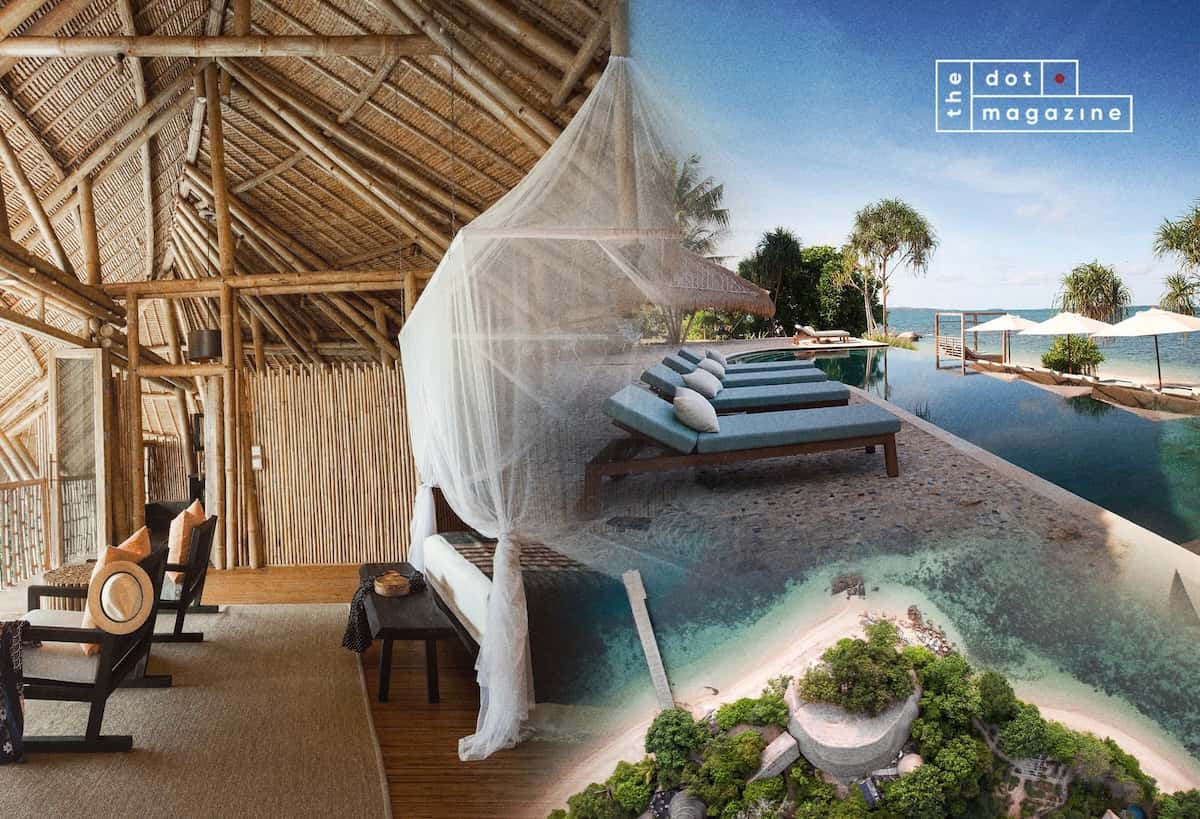
There’s more at the restaurant entrance. More at the pool bar. It’s the kind of gesture the place invokes – a voluntary reverence for something carefully made. Because a three-hour escape from Singapore, off Bintan’s coast, this 20-villa resort wasn’t built so much as crafted by Balinese artisans who spent two years shaping this island around what was already there.
Work With What You Have
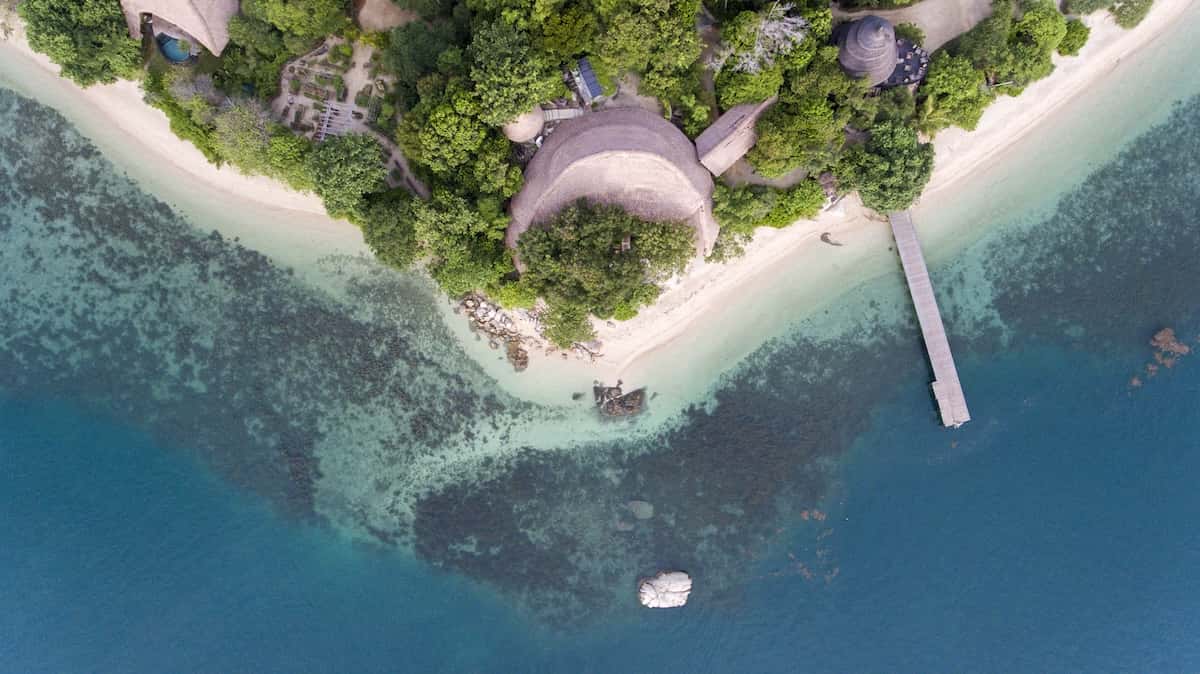
The resort opened in March 2017 after construction began in January 2015. “Not everything was done,” Jimmy, the resort’s manager, admits about those early days. Today, the resort clings to the coast of the kidney bean-shaped island. And that reflects the philosophy of design: don’t fight the land, flow with it.
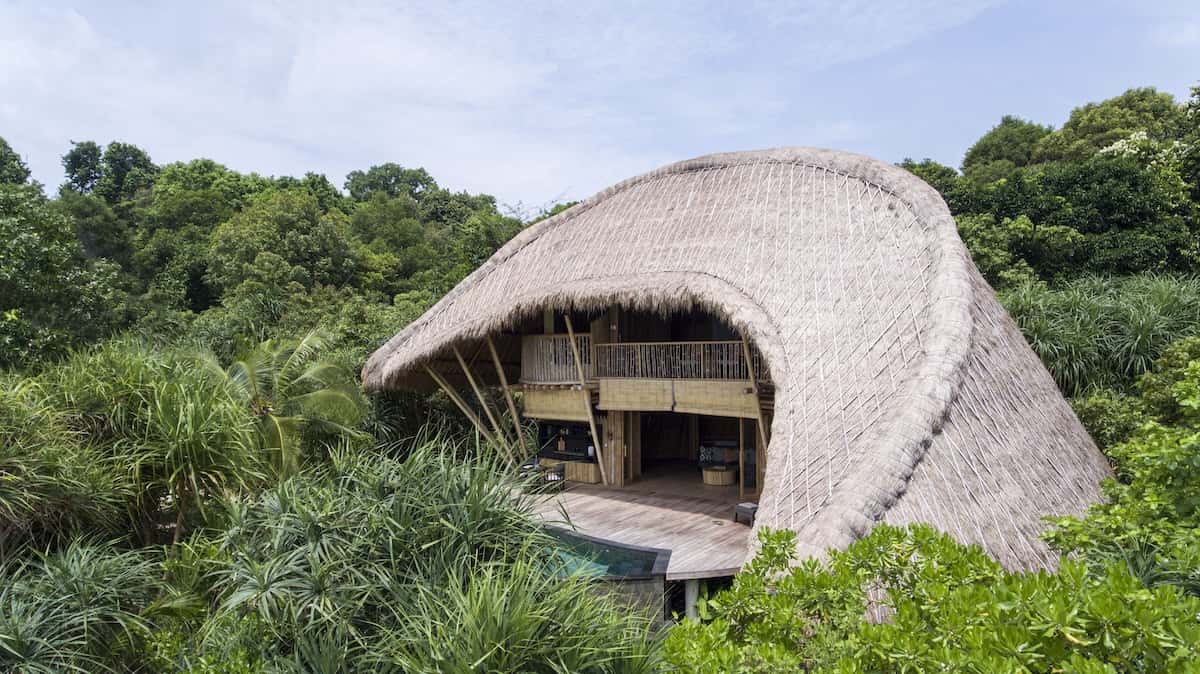
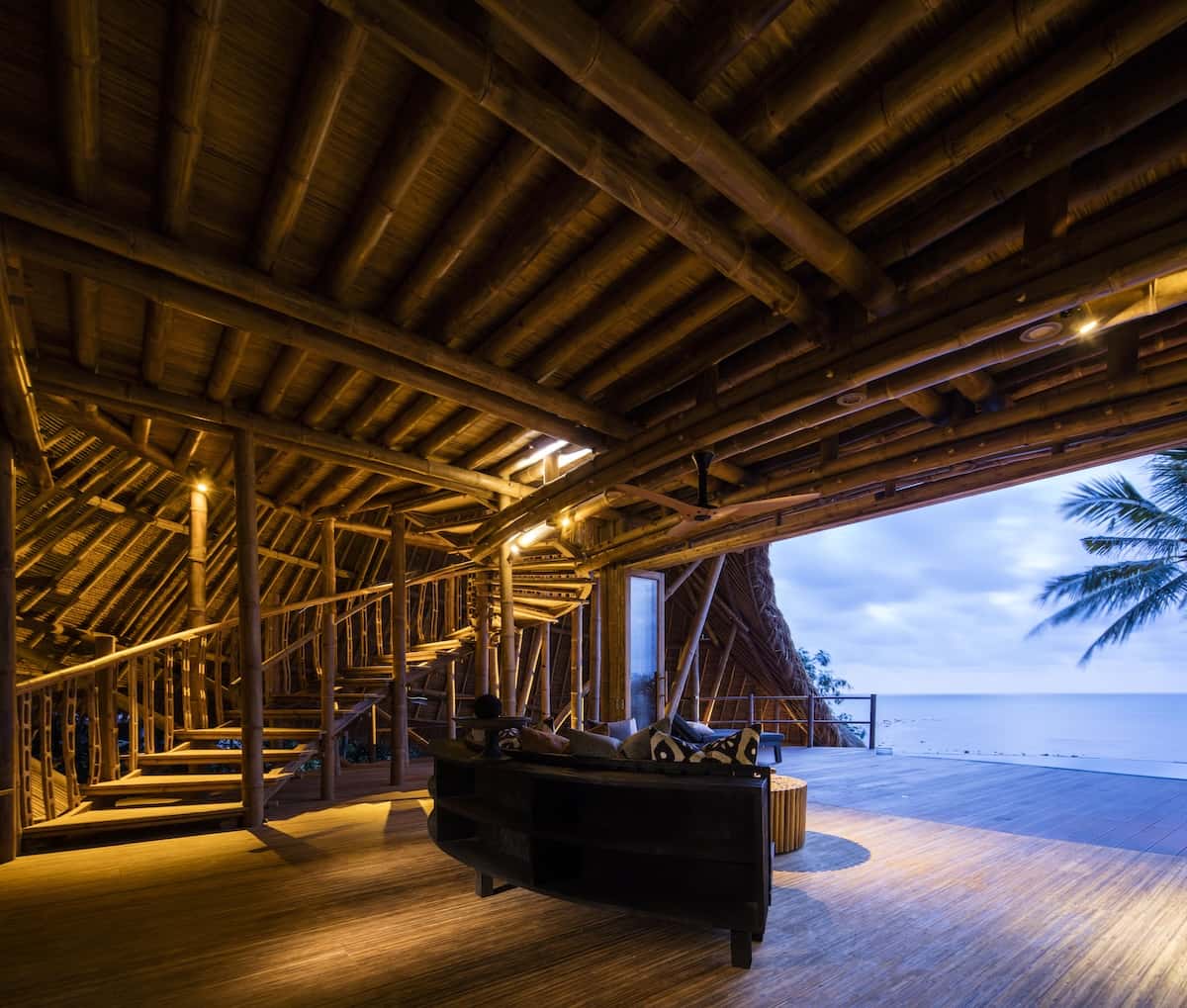
Surprisingly, for a resort that feels so at ease with its surroundings, this way of building with bamboo isn’t native to Bintan – it came from Bali. “The construction team never cut the big trees,” Jimmy explains as we walk the property. “They burned and smashed rock instead.” Each villa took three months – 990 large bamboo pieces, 500 medium pieces, 500 meters of smaller pieces and 4,700 layers of Alang Alang grass for every roof. Ten years later, none of the bamboo has been replaced.
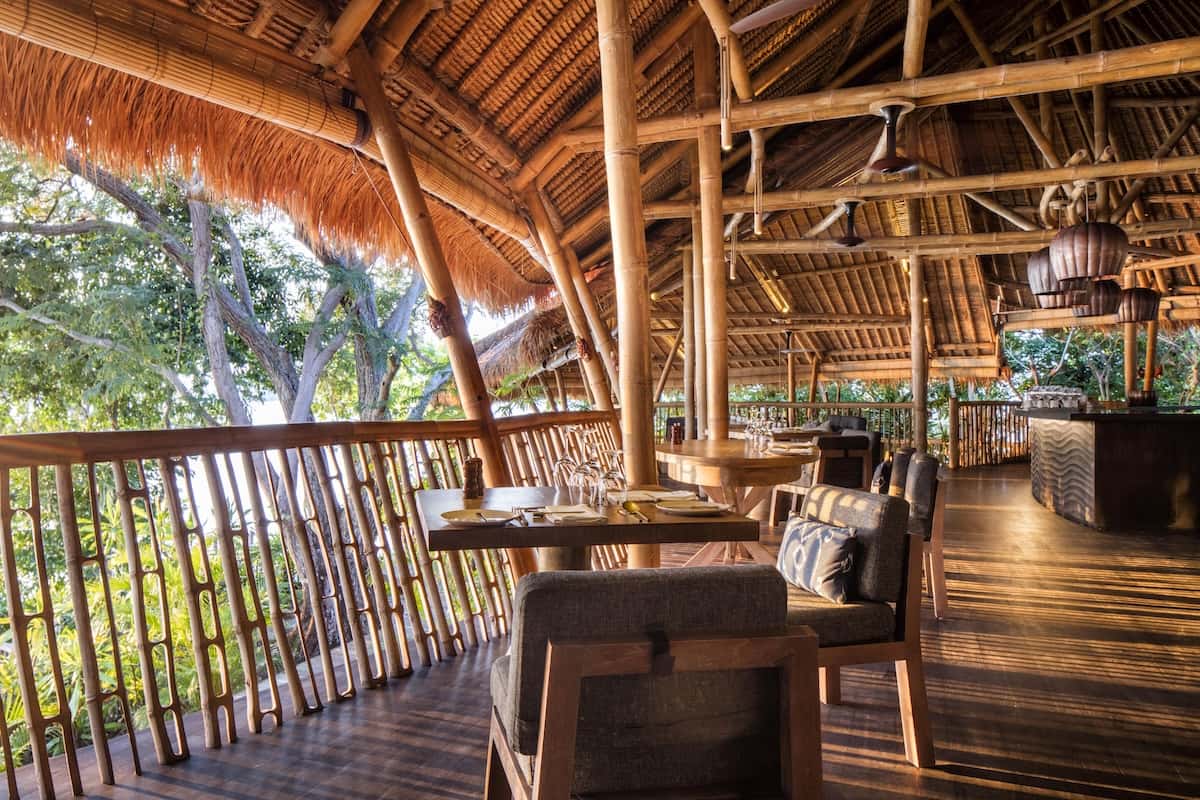
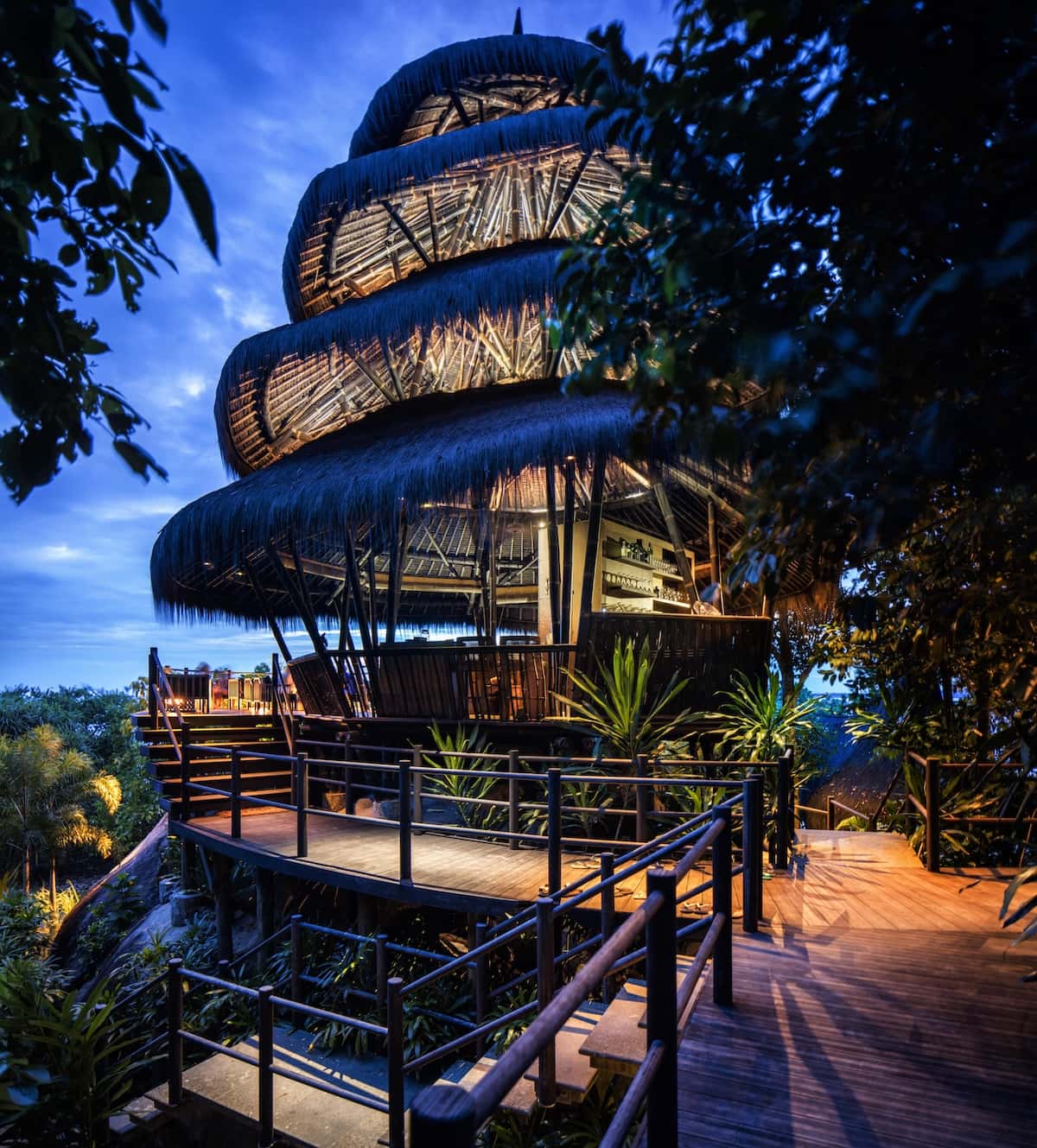
They used black Ijuk roofs woven from palm sugar tree fiber – too dark for the rooms but perfect for the bar and restaurant – that will last 40 years without maintenance. It’s durability that comes from doing things properly the first time, with local materials, local labor, and knowledge transferred to Cempedak’s staff along the way.
A Bare And Beautiful Escape From Singapore
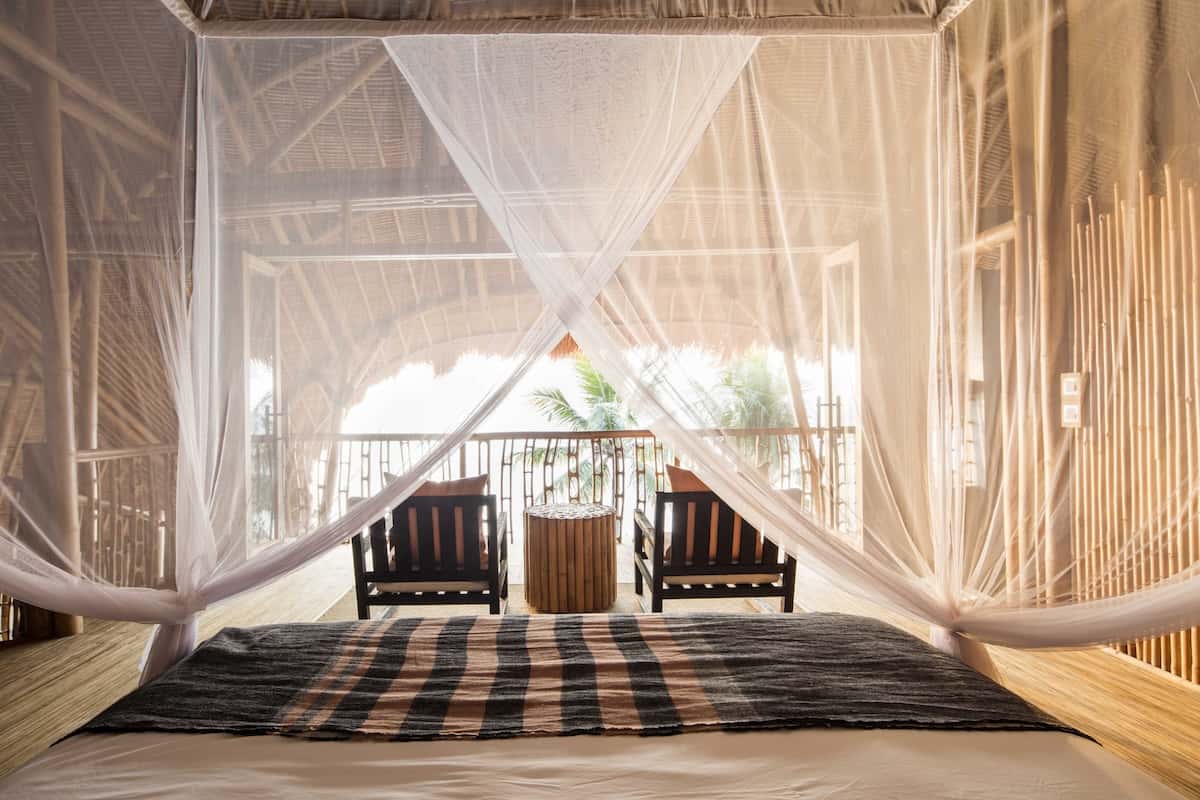
The bare, beautiful bamboo villas melt into hillsides and coastline – two open floors with a curved sofa that mirrors the bay below, living space on the ground level, a bedroom up the spiral staircase.
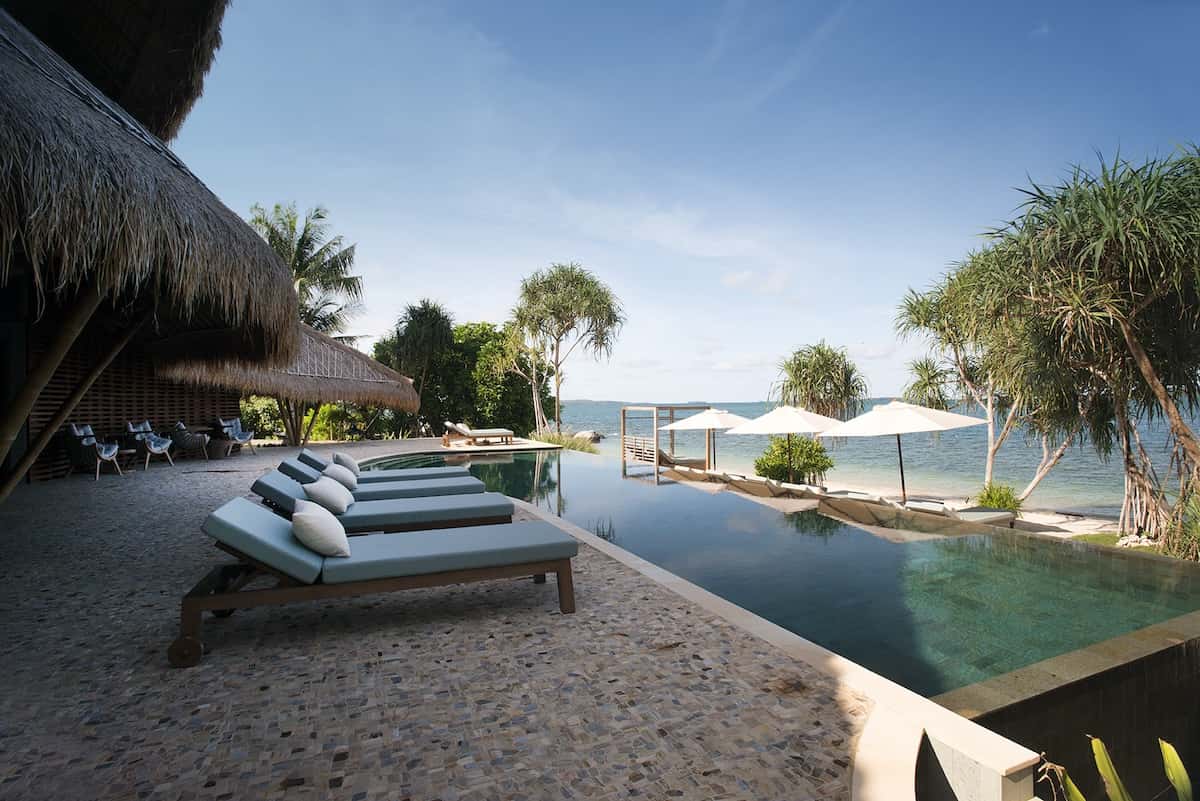
There are no TVs – oriental pied hornbills in the trees provide a shrieking soundtrack – just widescreen sea views and plunge pools that drop off into nothing. And you lock the door at night with a wooden peg – otherwise it’s open to the jungle.
“Ninety-eight percent of guests check in as pairs,” Jimmy explains about the tranquility. “The rest travel alone or with one or two friends. Maximum three people per villa with an extra bed downstairs. No families. No kids. We have Nikoi for that,” Jimmy says. Nikoi Island, the sister property that opened in 2007, caters to multigenerational travel – grandparents, parents, kids, everyone together. When couples mistakenly book Nikoi, reservations will redirect them. “Look, we have another island, no kids.” Then they invariably move everything to Cempedak.
The story starts back at Nikoi. The Australian co-owner, Andrew Dixon had arrived in Singapore in the 1990s and began looking for weekend escapes that felt like the beaches and farms back home.
In 2001, he met future partner in the project, American Peter Timmer, on Bintan’s east coast – Peter had been living on Bintan for 18 years. They heard about an island for sale and they hired a fishing boat to check it out. They found white sand beaches, pristine reefs, rock formations, and dense rainforest. It was an untouched paradise 50 miles from Singapore.
It started as a personal getaway – a shack on the beach and a swaying hammock for the kids. But camping weekends turned into late-night conversations (probably over rum – we like to think so anyway) about what the island could be. Friends got interested and invested. And construction began in 2006. None of them had hospitality experience, but they had vision and determination – they wanted a private island, not a resort.
Simple architecture, good food and genuine service in a spectacular natural setting. Local dishes, relaxed staff not bound by training manuals and fake smiles. A place that harmonizes with the local environment and community, and gives back to guests and neighbors.
Two decades later, Nikoi became what they imagined. Then they took everything they learned and built Cempedak.
One Less Decision
The builders followed the island’s natural flow, carving paths through rock and keeping trees intact where they stood. The restaurant team works the same way, paying close attention to each guest.
The menu is fixed, discussed in advance, which might feel restrictive.
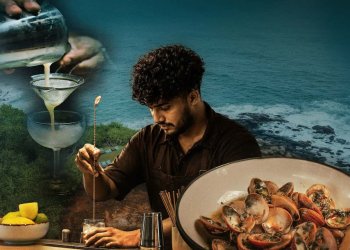
The restaurant sits on a rocky point with sunset views, serving Indonesian-international fusion on daily set menus that change with what’s available at local markets and from their seven-hectare farm on mainland Bintan that supplies vegetables, chickens and eggs. Daily deliveries are strictly quality controlled at the base before taking the ferry to the island. Even the small garden on Cempedak contributes – papayas, bananas and chilies supplement the larger farm’s output.
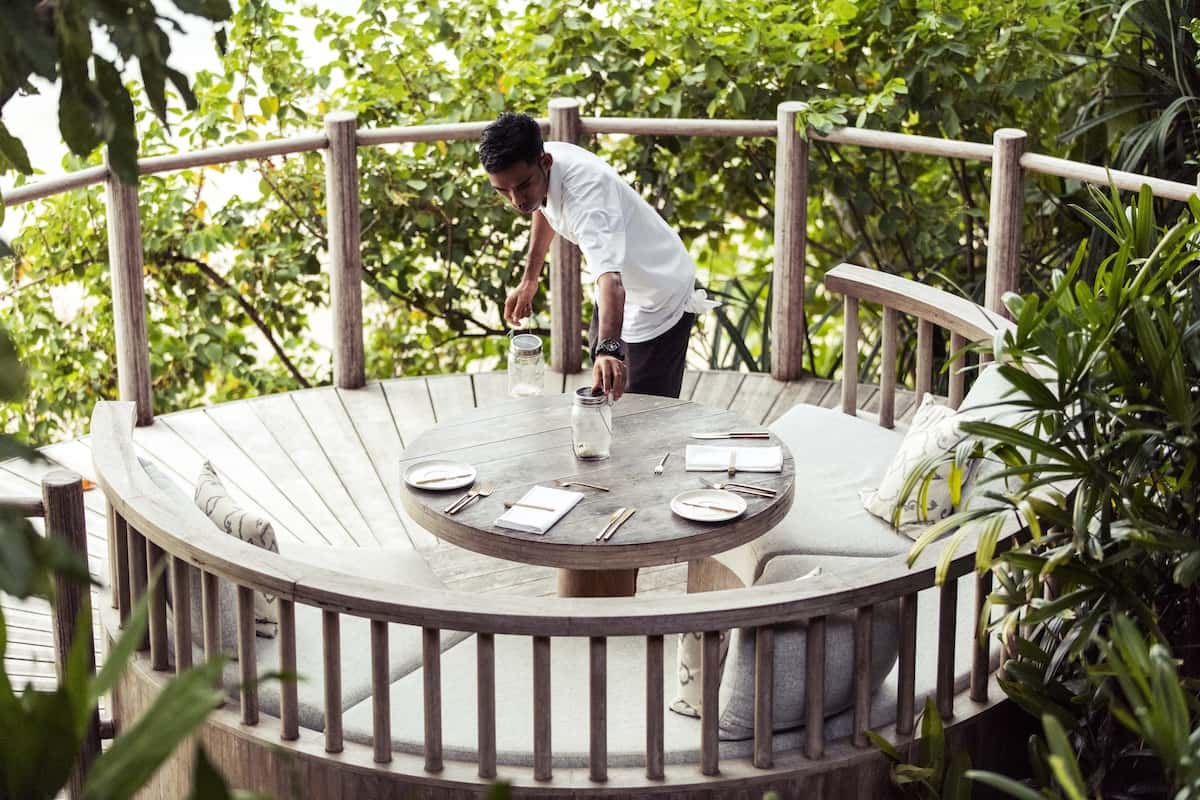
The fresh ingredients are prepared simply – barbecued seafood, local dishes, tropical fruit. The set menu approach means almost zero food waste – what little there is gets transformed into compost by black soldier fly larvae, who then sacrifice themselves as chicken feed. It’s a closed-loop system that works. And you can take picnic hampers to nearby deserted islands if you want total seclusion, or eat in tree-shaded pods if you don’t.
The environmental consciousness extends to guest experience in ways that feel personal rather than performative. “We learn from day one,” Jimmy says. “We know your name, we record it. Learn how much you eat. Then we order based on what you eat.”
And when the food’s this good, the approach to menus, chalked up on the board, is just one less decision you have to make that day.
Ocha, one of the staff, warmly insists we eat more as the plates keep coming. “Oh that?” Jimmy says. “It’s a compliment to the chef.”
Night Walks And Wildlife
The island’s staff double as well-informed nature guides – a resort policy of upskilling the team. They’re trained by naturalists from Singapore – proper training based on actual research. “Sometimes a guest might be an expert,” Jimmy says. “So, we have to be prepared,” he smiles.
So, they know exactly where the kingfishers sleep. They’ll walk you out after dark, point at a specific branch, and there one is – motionless in the flashlight – pointing it out with: “You want to see the kingfisher?” before averting the light to let the kingfisher proceed with its dreams.
Before the resort opened, they surveyed the island’s wildlife. Those Oriental Pied Hornbills – the loud, striking birds with the casque on their beaks – have established a healthy population. And that’s the goal of keeping the balance right.
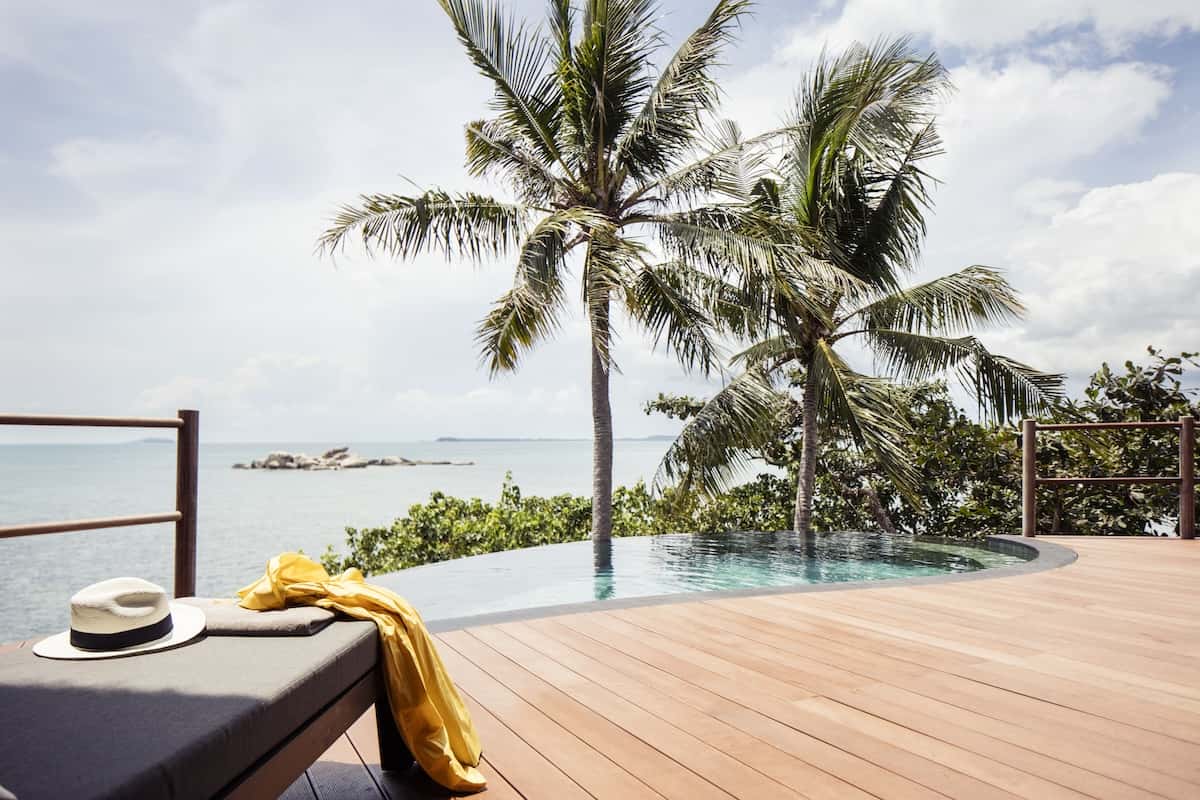
Sea turtles surface in the shallows to breathe before diving back down. Eagle rays jump. Dolphins pass by. And although green turtles mostly nest on Nikoi Island from late March through May, with the last hatchlings emerging in September, Cempedak gets some nesting too, though the beach here is smaller.
The resort has its own marine biologist monitoring coral reefs and turtle activity. There are two types of monitor lizards on the island. The black water monitor can grow massive. The brown clouded monitor stays under a meter. They never relocated them during construction. Pangolins used to appear on night walks – nocturnal and shy. But since the pandemic, they’ve been harder to find.
In the garden, stingless trigona bees nest in cracks in the rock and hollow wood. And the garden itself grows papayas, bananas, and chili padi – small contributions compared to the seven-hectare farm on the mainland, but everything edible ends up somewhere in the kitchen.
The Long Run
Cempedak joined The Long Run, a global community of sustainable resorts built around what they call the Four Cs: Conservation, Community, Culture, and Commerce. The idea is balance – you can’t just run a business and ignore the environment, the sea, the land, the local community.
The organization holds annual conferences that rotate locations. Once, they booked out all of Nikoi for the event. Members come, visit properties, share ideas, and look hard at best practices.
“If I hadn’t started work here, I might not know about all this,” Jimmy says. “Like how important nature is.”
Guests are choosing resorts based on sustainability now, he assures us – it’s part of the booking decision, not an afterthought.
What The Place Actually Is
Jimmy doesn’t oversell the diving. “I don’t want to say, ‘Oh, it’s beautiful.’ No, it is not true. This is what it is.” The water can be murky. And you can’t compare it to, say, Raja Ampat. There are things to see – snorkeling at Point Break is seven minutes away, there are reefs to the south – but it’s not the reason to come.
The clearest water is May through June, then again October through November. July and August bring the south wind, which is gentler than the north wind that dominates December through mid-March. “Monsoon season” sounds worse than it is. Rain doesn’t last all day. As long as the wind keeps blowing, it pushes the weather away.
“People think it’s going to rain,” Jimmy says, looking up at the clear sky. “It’s not really happening.” Anyway, all year, there’s things to do. “Chill in the pool. Kayak out to see the turtles. Take the nature walk. Read. Sleep. Or dream like that kingfisher,” Jimmy advises as we instinctively take our shoes off.