


Ten years is an eternity in the restaurant business. Most places close within two. But Dim Tu Tac now has six locations across Ho Chi Minh City, two MICHELIN Bib Gourmands, and international competition wins. Still, Kelvin Tiet, the Vancouver-raised CEO who turned the brand around in 2015, acts like he’s three months from failure. He’s not being modest. He genuinely believes it. And that obsession with improvement is probably why the city’s most beloved dim sum chain is still here.
The man in the business suit standing in the dining room – arms crossed, scanning the space – looks like any regular guest waiting for friends. He’s not. Six days a week, Dim Tu Tac’s CEO Kelvin Tiet visits a different branch to watch guests and listen to what they’re saying, intent, even after ten years, on getting a bit better every day.

How Dim Tu Tac Turned Ten
The desire to improve is the one thing Dim Tu Tac couldn’t live without. “We lose that and the brand is finished,” Kelvin shakes his head. So he’s there every day, watching and listening.
He gives the impression he’d rather be thinking about the next menu, or offering motivational talks to the chefs, or scanning the dining room again, or catching up with his long-serving staff – like Kelly, who has been here for ten years, “actually eleven this year,” she gently corrects us – than sitting down for this interview.
“I’m always putting myself in the shoes of the customer. I genuinely want to understand people,” he explains, looking around the room again.
But he eventually takes a seat anyway – one of the last tables remaining – right at the back beside the window to the kitchen where rows of ducks hang and behind them, the chefs flicker, constantly moving, like the place itself. He’s still the fast-talking salesman who joined the fledgling brand in 2015.

“Communication is like a superpower,” Kelvin says, leaning forward. “If you can convey your vision and have people understand what you’re saying, you’re at a tipping level.”
It’s not just talk. He runs regular training sessions with his team on communication – not the blanket politeness of typical service training, but something deeper. “I need my team to communicate with our customers and with one another in a way that people are comfortable with,” he explains. “Not just polite, but comfortable.”
It’s why he talks to his staff personally, constantly. Why some of them, like his core team members, would tell you, “He’s very picky, but he actually cares.” And why, even when competitors offer higher salaries, most choose to stay.
That’s another reason for Dim Tu Tac’s longevity, he reckons. “All these people are sticking around. That’s sustainability – human sustainability.”

Anything Is Possible
The name Dim Tu Tac means ‘anything is possible’ – a fitting motto when you look at the packed dining rooms today. Big tables of colleagues catching up, whole families with grandparents sat next to grandkids, dating couples and friends.
But in 2015, Kelvin had just three months to turn around the struggling first location in District 4. “We chose to focus,” he remembers. “On one moment and one menu – nothing else.”
Mother’s Day was coming up, and no one in the market had really capitalized on it. So they built a Mother’s Day menu and trained the entire team to sell it. “Everyone was aligned around talking about Mother’s Day and understanding those dishes,” he continues.

“We repeated the message again and again, ran role plays, and made sure everyone was clear and confident. We didn’t try to do more or worry about anything else. We focused on doing that one thing properly.”
And that became the playbook for what followed.
“You can survive mistakes, slow periods, and change. But once the drive to improve disappears, the brand stops moving forward and slowly becomes irrelevant,” he contends.

From Greatest Hits To New A La Carte Menus
Ten years on, there’s a new a la carte menu just launched. There are Chef’s Specials, born from the inspiration of those chefs busy in the kitchen – where everyone speaks Cantonese – with seafood cooked in a clay pot with mala spicy sauce and oil-poached coral trout.
For Women’s Day they offered handcrafted cakes. For the Full Moon Festival, a moon cake making workshop for kids. And to celebrate ten years last summer, a greatest hits menu in two volumes with BBQ honey-glazed pork, a casserole with chicken, abalone, and basil leaves, and deep-fried salt and pepper pork ribs.
Every visit feels reassuringly familiar and excitingly new. “How do I keep making you come once a week? That’s what I’m always thinking about. Nothing’s forever,” he frowns.

Chefs Not Cooks
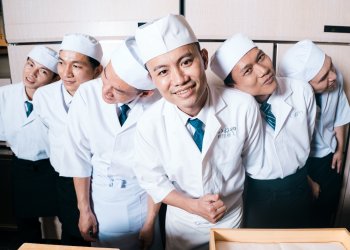
Last year, shortly after the ten-year celebrations, Kelvin decided to test Dim Tu Tac’s commitment to quality on the international stage, taking three chefs – Li Shu Chun, Li Jian Xiong, and Wang Li Wu – to Macau for the Macao International Chinese Cuisine Chef Competition 2025.
Other dim sum restaurants might simply call them cooks. “I mean, they even call themselves cooks. But if you can do all that, you should be proud of it. It’s not an easy job. So at Dim Tu Tac they’re chefs. And that’s important.”
They deserve the title more than most. Right now they’re busy handmaking satay sauce, chopping fresh greens and cooking fish at the perfect temperature for the right length of time, making its fins raise up to salute the effort.
And Kelvin is still flushed with pride at “competing against the best Cantonese chefs and restaurants in the region and coming away with two awards” – Dim Tu Tac’s ‘Creative Dim Sum Dish’ and ‘Main Dish First Runner-up’ titles.

A Little Bit Better Every Day
Those join two MICHELIN Guide Bib Gourmand commendations, which noted that “the Dong Du branch seats over a hundred and is always busy, particularly at lunchtime,” while highlighting Dim Tu Tac’s “large selection of dim sum, BBQ dishes, soups, seafood and much more.”
But Kelvin’s not listening. He’s squinting at the new dish – shrimp wontons with a spicy chilli sauce – from the new a la carte menu that Kelly has placed on the table, and as we taste it, he’s carefully studying our reaction. Still, after ten years, trying to get a little bit better every day.


 Wink Hotels' is a new kind of Vietnamese hotel made for the modern traveler and ready to take on the world.