


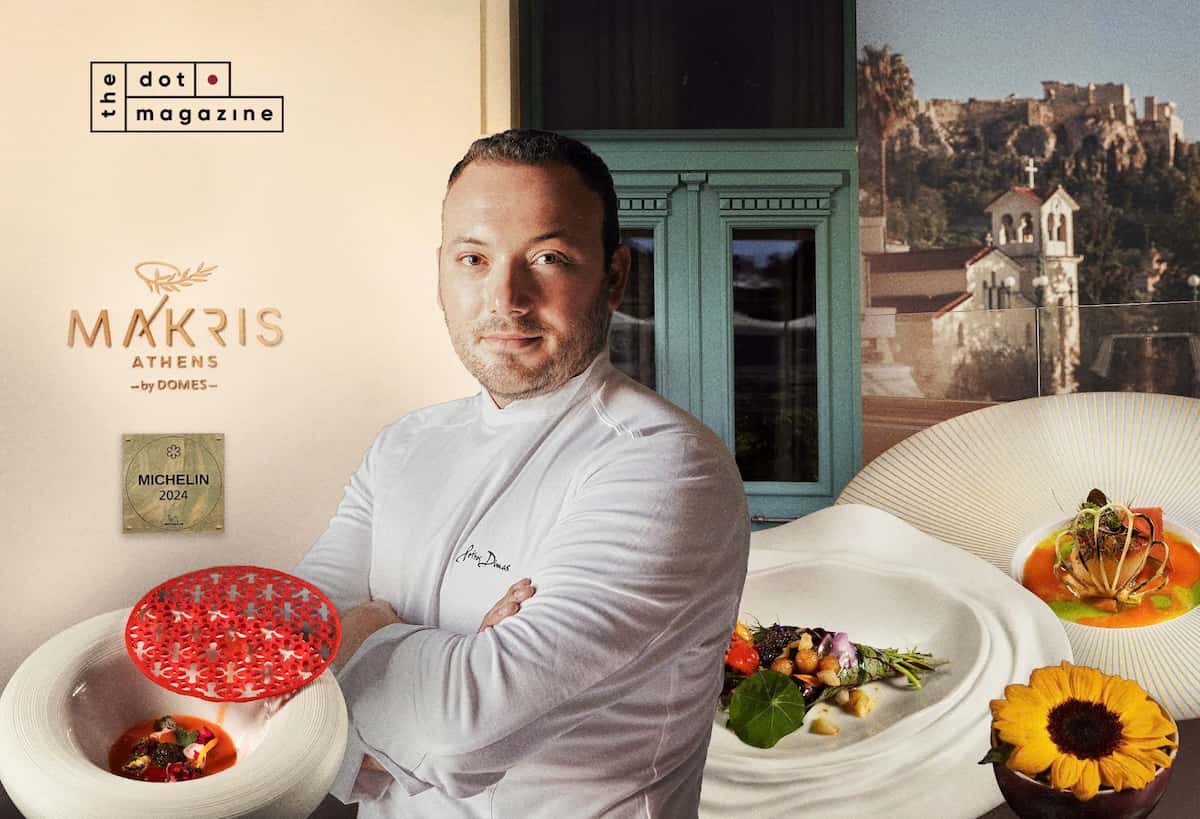
Athens is a city of layers – ancient ruins below, the Parthenon above, and modern life squeezed in between. At Makris, Chef Patron Petros Dimas has turned that tension into movement.
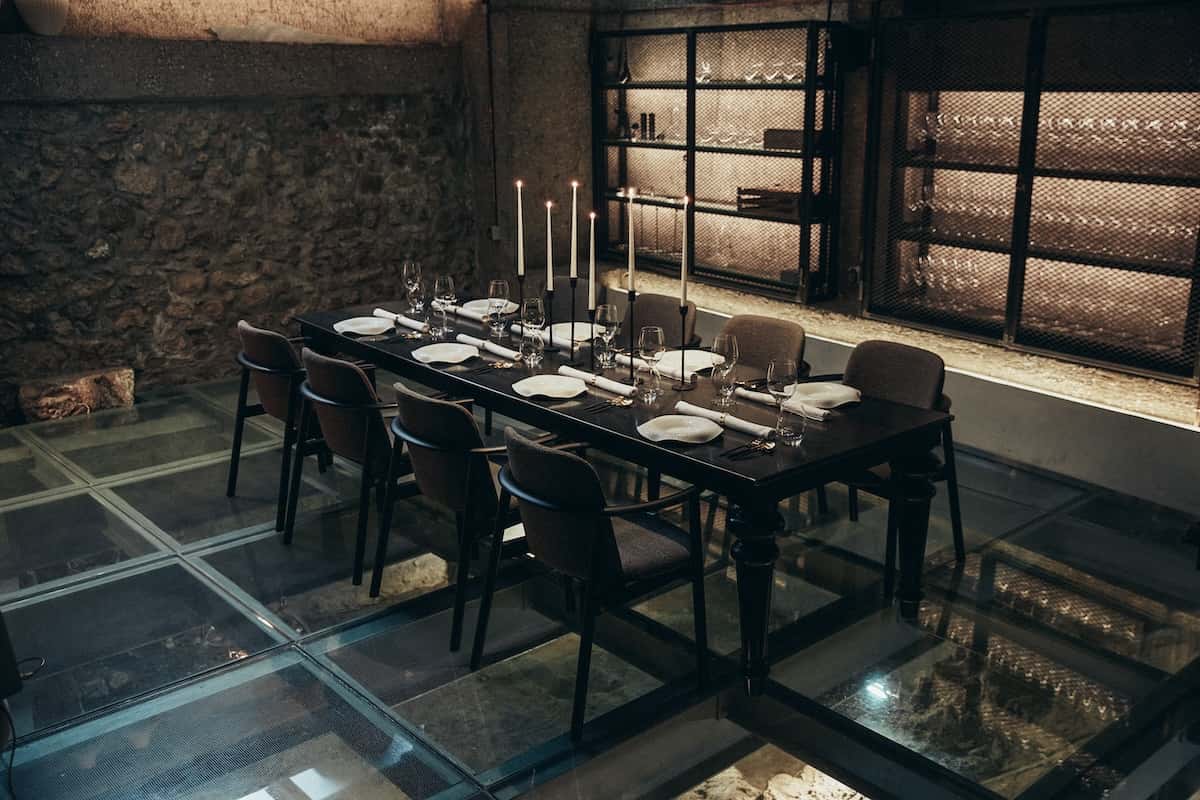
The Parthenon’s above. Beneath are ruins – you can see them through the floor of the restaurant. In between, Chef Patron Petros Dimas’ Makris is movement: Christos drips olive oil onto a cocktail, sous chefs confer at their station in the center, and smashed ceramics swing from the ceiling. Upstairs, a brass ornamental olive tree tilts on the table; olive leaves circle inside a glass bowl, and Dimitris, the head waiter and “a graduate of the art academy of Makris,” splashes spiced carrot, daubs sabayon and draws chive oil lines on the plate, while the head sommelier, proudly pops and pours a bottle of elegant Venetsanos Saint John made with 100% Assyrtiko grapes.
The Parthenon still looks on, impassive. Below, the ruins remain. But in between, Makris is movement.
A Map of Greece
Makris is a meeting place too, but not only for people. The Athens restaurant is the gathering point of produce from across Greece. The menu starts with a map, helping to pinpoint their provenance: Arta caviar, Kozani saffron, pistachios from Egina, Kilada red shrimps, honey from Taygetus.
Most of the ingredients – vegetables, herbs, aromatics, edible flowers – come from the same place: Makris’ farm at the foothills of Corinth, and a place that’s “at the heart of the restaurant’s creative process.”
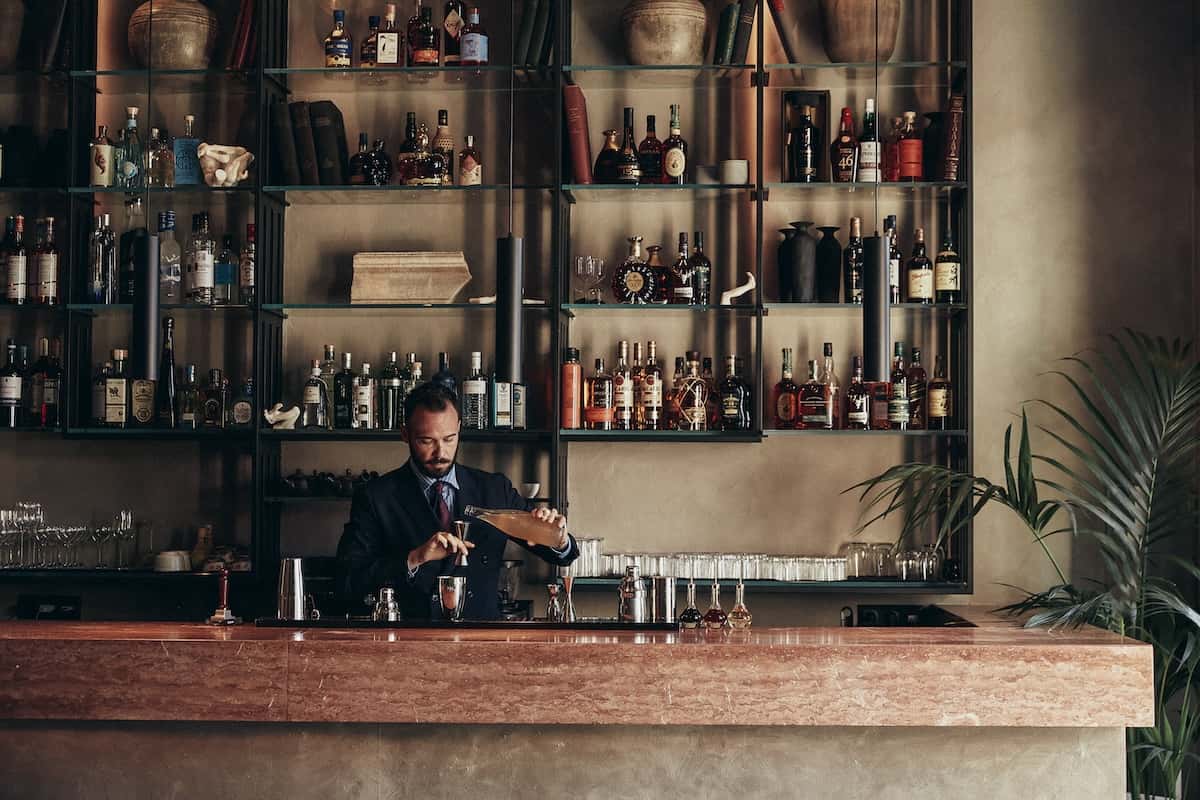
“I’m from Naxos,” Christos Klouvatos explains – in his olive green jacket, a splash of white pocket square – placing himself on the map as the olive oil drops settle onto his Vineyard cocktail, something “between a Gimlet and a Martini.” The drops are infused into the drink’s Tanqueray 10 gin to aromatize it, then frozen, extracted and reused. He watches them closely. The drops hold their shape on the surface and relief crosses his face.
“In Greece, we have this ritual – xematiasma. When someone feels ill, your grandmother drops olive oil into water to diagnose the mati, the evil eye. If the oil floats, you’re fine. If it breaks apart or sinks, you’ve been affected,” Christos elaborates. “It looks like you’re okay,” he smiles, reassuringly.
It’s a good example of the way the cocktails follow Makris’ DNA – sustainable and cyclical, technical and terroir-driven, story-rich and satisfying. “We want to make drinks that are gastronomic, in some way, and that follow the restaurant’s zero-waste philosophy,” Christos agrees.
Between Ancient and Modern
Makris Athens sits above archaeological ruins in Thissio, the neighborhood where Chef Patron Petros Dimas grew up. It’s a place where ancient foundations and modern sidewalks occupy the same block.
The restaurant – which earned its Michelin star in December 2024, thirteen months after opening – is the fourth Makris, part of the Domes group, after Corfu, Milos, and Crete. But it’s the first without a Domes resort beside it.
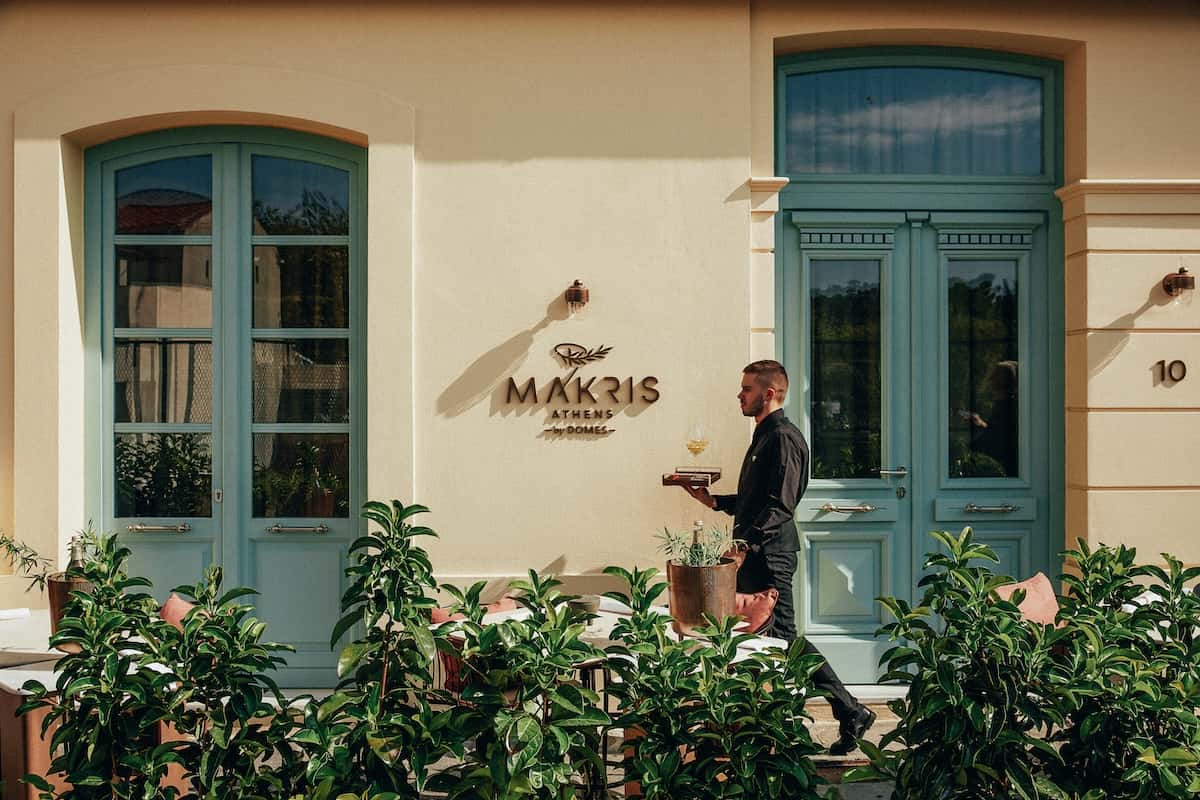
The neighborhood around it doesn’t promise much these days. Astiggos pedestrian street veers off Ermou’s main drag like a kid wandering off from its family. There’s a live band playing at Diplylo Restaurant, there’s an Irish pub called The James Joyce, and a Museum of Illusions. Then Makris Athens appears behind a low hedge of Mediterranean shrubs, the boundary between sidewalk and terrace pleasantly blurred.
The facade is soft yellow, simple and elegant, with the restaurant’s name in modest bronze lettering: ‘MAKRIS ATHENS’ with a small olive branch above. Its sage-green doors are slung wide open revealing warm light and abstract paintings, upholstered chairs and white tablecloths.
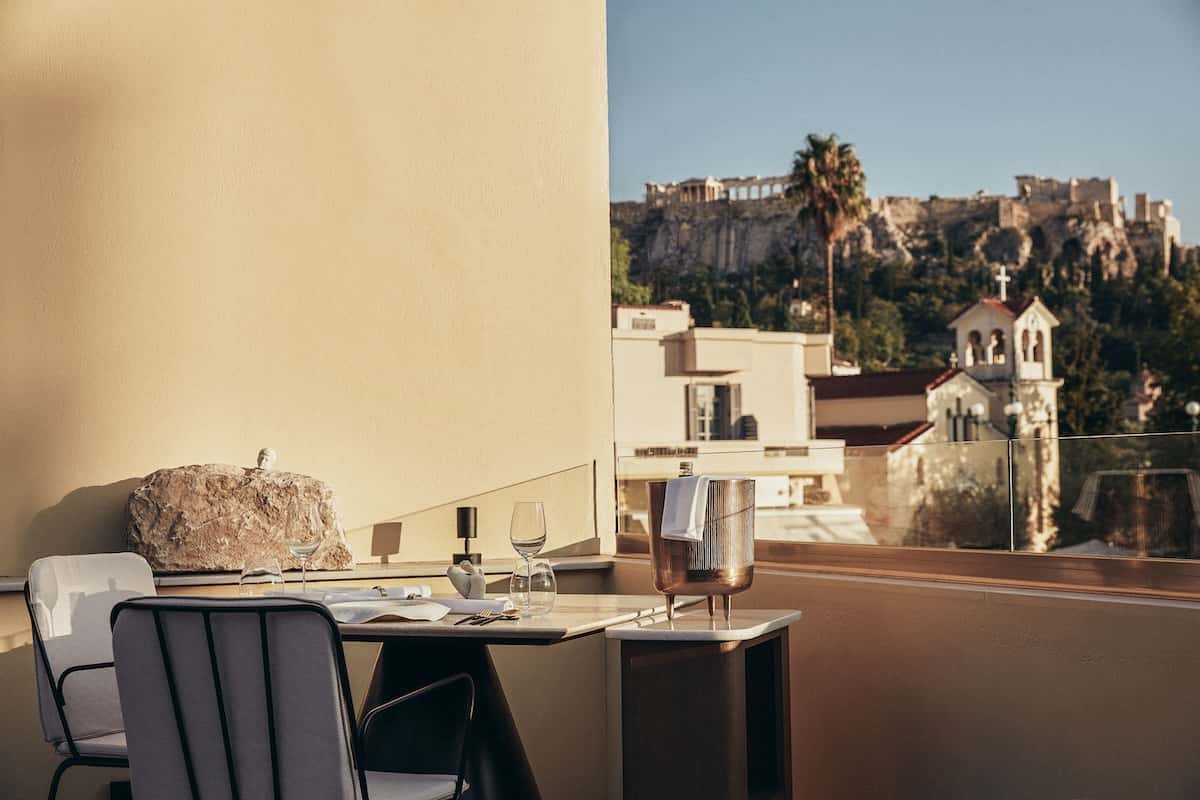
In summer, the ground floor is busy with diners and others stopping at the bar for a drink with Christos before tackling the steep stairs to the rooftop, where most guests gravitate. The team follows dutifully with half-finished cocktails.
If the website overpromises Parthenon views – there are views, from certain seats at the edge of the long, two-tiered, open-air space – it quickly becomes apparent that the views aren’t the main attraction anyway.
Genesis And Utopia
The cuisine – the real draw – is offered as menus called Genesis and Utopia, with plenty of customizations: add Blue Breton lobster or Red Hellenic shrimp (listed, tantalizingly, as a chef’s signature addition), swap the Hellenic Pork Iberico for duck fillet or A5 Kagoshima Wagyu, and finish with a Hellenic cheese course. Drinks follow suit: a Hellenic wine pairing, a global selection, or cocktail and juice pairings.
The Chef’s welcome is a crisp red disk of tomato – pure Mediterranean flavor: sweet, acidic, sun-ripened intensity – the surface dotted with flowers and discs of truffle to enhance the earthiness. It sits on a plinth of creamy white. This dish, and all that will come, elevates Greek ingredients to artifacts.
Three snacks arrive set in a ceramic seabed – blues and greens glazed to look like tidal pools that cradle shells crusted with barnacles and coral. Red crabs dance, an octopus waves its tentacles, a starfish seems to wiggle. As each gyrates, the flavors dance too – from the sour crab tart, to the smoky starfish and deeply savory octopus.
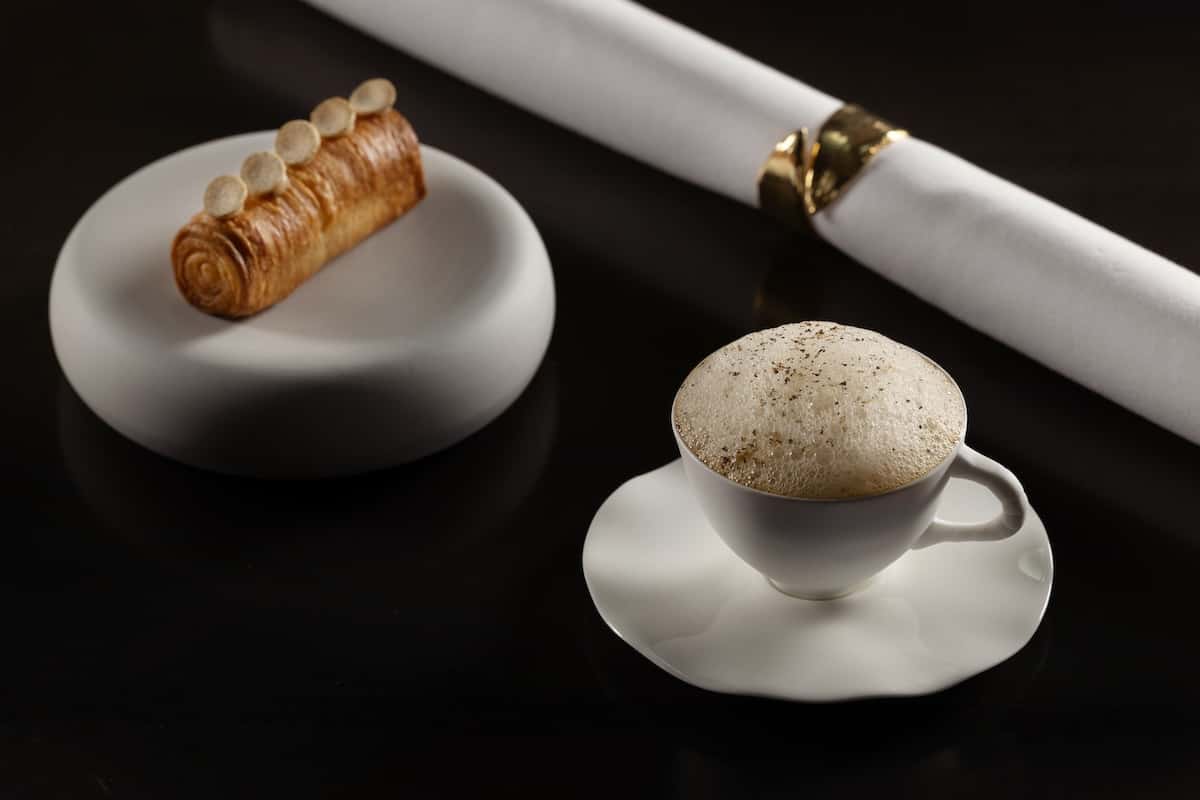
The golden Manousakis X Karanika The Illustrious Hartman-Molavi Extra Brut’s tiny bubbles effervesce – matching the brioche and nutty flavor of the mushroom cappuccino with brioche feuilletée lined with truffles.
The Bouquet From The Farm
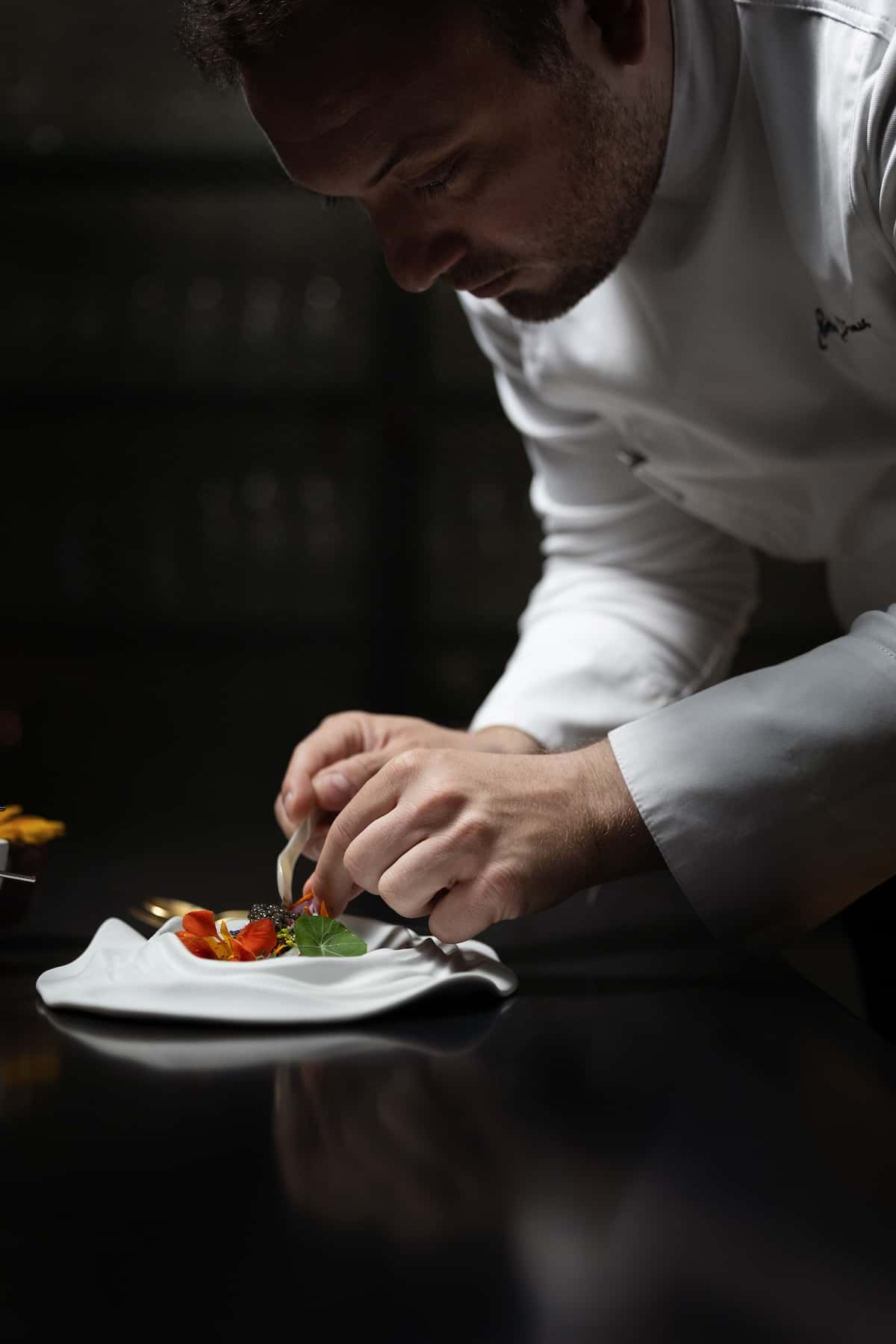
Another signature dish, the Bouquet from the Farm, features 20 or 30 different aromatic herbs, edible flowers, and greens, cut fresh and presented hours later. It’s deeply personal – the chef has called it “the highlight of my menu” – and evokes the family garden.
The mix changes with the seasons, prioritizing contrast: mild and peppery greens, soft and structured textures, color and calm.
It arrives with lobster, tempered by herbaceous notes and accented by the saltiness of Beluga caviar. The dressing – olive oil, aged vinegar, nuts, and dried fruit – is stirred gently, not blended, keeping each element visible, each bite slightly different.
Even the hare, inquisitively driving the car on the label of the Lightfoot dry white, seems to be going at full tilt. The wine itself – a single variety, single vineyard expression made from Lagorthi – is floral, light-colored, low-alcohol. A perfect companion to the fresh greens and flowers garnished with beluga caviar that Dimitris tops with a vinaigrette of extra virgin olive oil and macadamia nuts.
Edible Abstract Art
The two-temperature langoustine is edible abstract art. There’s raw tartare beneath a flower of purple radish and on the other side langoustine lightly cured, crowned with crispy ginger. Between them, a spicy carrot sauce and a sabayon made from the unused tail pieces – nothing wasted as per the Makris mantra.
Dimitris squeezes on lines of bright green chive oil, mimicking the abstract paintings downstairs, while casually claiming to be “a graduate of the Art Academy of Makris Restaurant.”
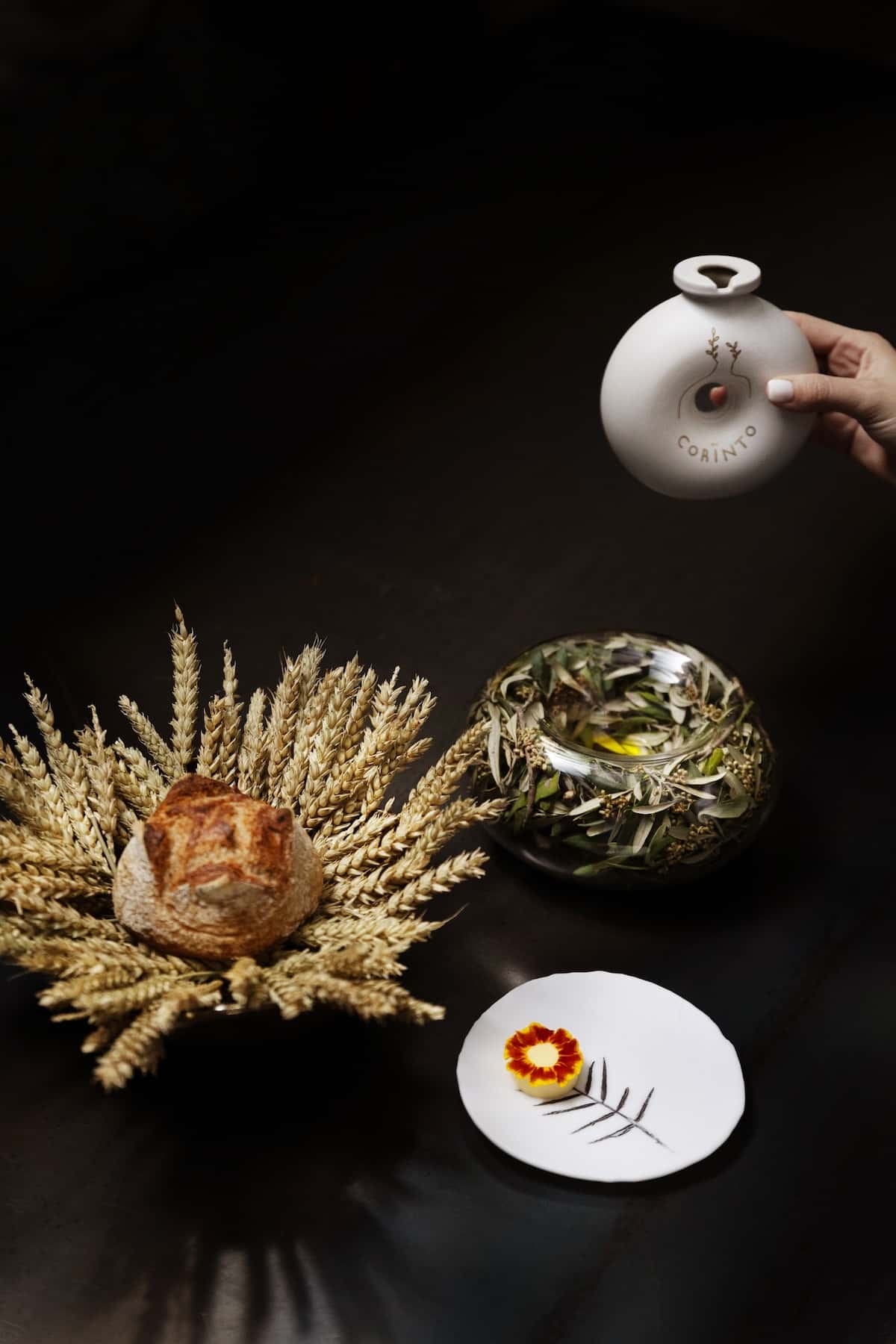
Next, the bread course is pure kinetic Grecian bounty – wheat sheaves point outward all around the sourdough’s cradle.
“What kind of olive oil do you like, spicy?” Dimitris asks, miming an itchy, throaty gargle to demonstrate the effects of the spicier olive oils.
In the glass bowl packed with olive leaves that swirl around, Dimitris decants the olive oil – one of nine on the special olive oil menu. This one’s from Dr. Kavvadia’s centenarian grove on Corfu.
Kavvadia was an orthopedic surgeon who treated his olive trees like patients – permaculture and sustainable farming before those terms existed, convinced that properly produced olive oil held healing properties. Only strong, healthy, happy trees would produce the fruit he wanted. The local Lianelia variety, centuries old, tended with that kind of attention.
The Greek Coast On A Plate
The hake arrives from Greek waters, pan-seared until the skin crisps. Around it: zucchini in multiple forms – raw ribbons, charred coins, purée – all from the Corinth farm. The rockfish sauce is built from Mediterranean fish bones and heads, concentrated and briny, the kind of base Greek fishermen’s wives use for kakavia soup. The smoked mussels bring wood-fire char and chew, cutting through the hake’s delicate sweetness. It tastes like the Greek coast: fish, vegetables, and smoke.
The Iberico pork raised organically in Greece comes with white asparagus, fresh peas, chanterelle mushrooms, and wild garlic – seasonal vegetables that shift with availability. White asparagus is grown buried to prevent sunlight, giving it a delicate, almost sweet flavor. The chanterelles add earthiness. And the wild garlic cuts through the richness.
The pork is precisely cooked – rosy throughout with caramelized crust. The jus uses warm spices, bridging Mediterranean and Middle Eastern flavors. You can substitute A5 Wagyu for an upcharge, but that misses the point. This is about Greek products, even if the pig’s ancestors came from Spain.
A Final Act of Motion
Then the ice lolly. The chef forms a goat’s milk caramel lolly with liquid nitrogen at the table, rolling it in nuts, delivering it with a conjuror’s flourish. A final act of motion – sweet, theatrical, and ephemeral.
The Parthenon still watches from above. The ruins still rest below. But here, in between, Makris keeps moving – olive oil drops floating, chive oil lines being drawn, liquid nitrogen smoking, and smashed ceramics swinging. Movement as philosophy. Movement reflecting Greece itself: ancient and alive, rooted and restless.