


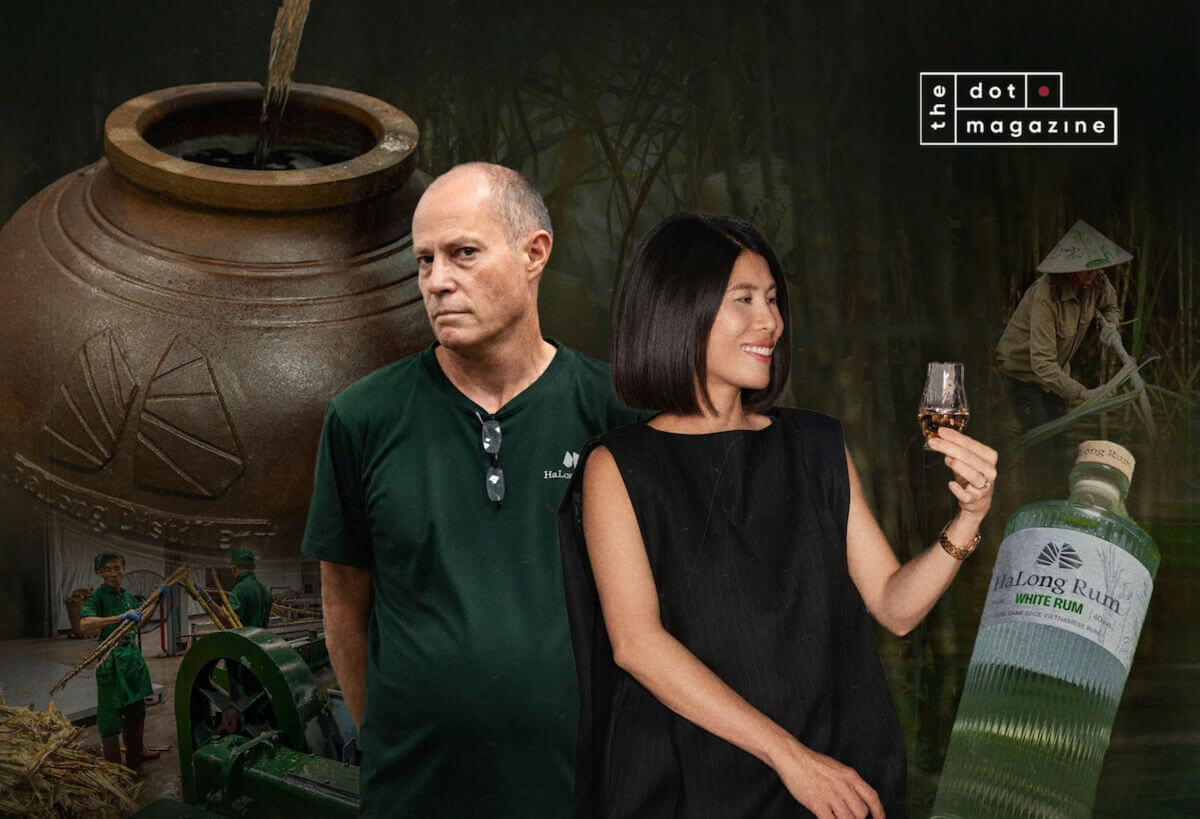
HaLong Rum – built on home distilling, fresh cane juice from the banks of the Bưởi river, and clay pots sourced from Vietnam’s rustic pottery kilns – is producing a pure cane spirit that could only have come from right here and right now.
You might conclude that HaLong Rum was born of three things: a restless former engineer named Arno Bolliger partaking in some semi-legal home distilling; Ha Long locals’ hatred of bootleg rice wine hangovers; and a tenacious female entrepreneur, from Ha Long, who put all these pieces together. The distillery opened in September 2022 — and produced its first spirit the same month.
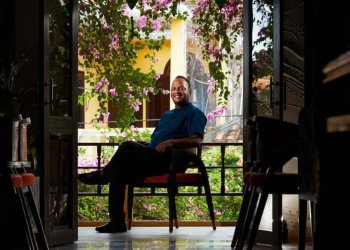
“They nicknamed Arno’s spirit ‘rượu tây,'” Giang, the aforementioned entrepreneur breaks out laughing. “And they really loved it.” The former engineer beside her, Arno, is nodding and smiling at the memory. He looks like he has already been everywhere you are thinking of going. Small and wiry, when something amuses him – and lots of things do – one side of his face breaks into a lopsided impish grin that closes one eye.
HaLong Distillery Is Building An Identity Around Vietnamese Rum
“Vietnam has been growing sugarcane for roughly a thousand years,” Arno reckons, suddenly serious again. But it had, until very recently, no rum industry to speak of.
As Giang sees it, the colonial sugar industry was around in Vietnam – but it never produced a rum culture. The French colonial alcohol monopoly was rice and corn-based; the sugarcane went into export, not into barrels. “The colony made the distillery to export the sugar. They also wanted the alcohol – they called it ‘mẹ nấu,’ or ‘mother of alcohol.'” The difference is that whatever sugarcane spirit existed was a byproduct, not a product. Nobody built an identity around it.
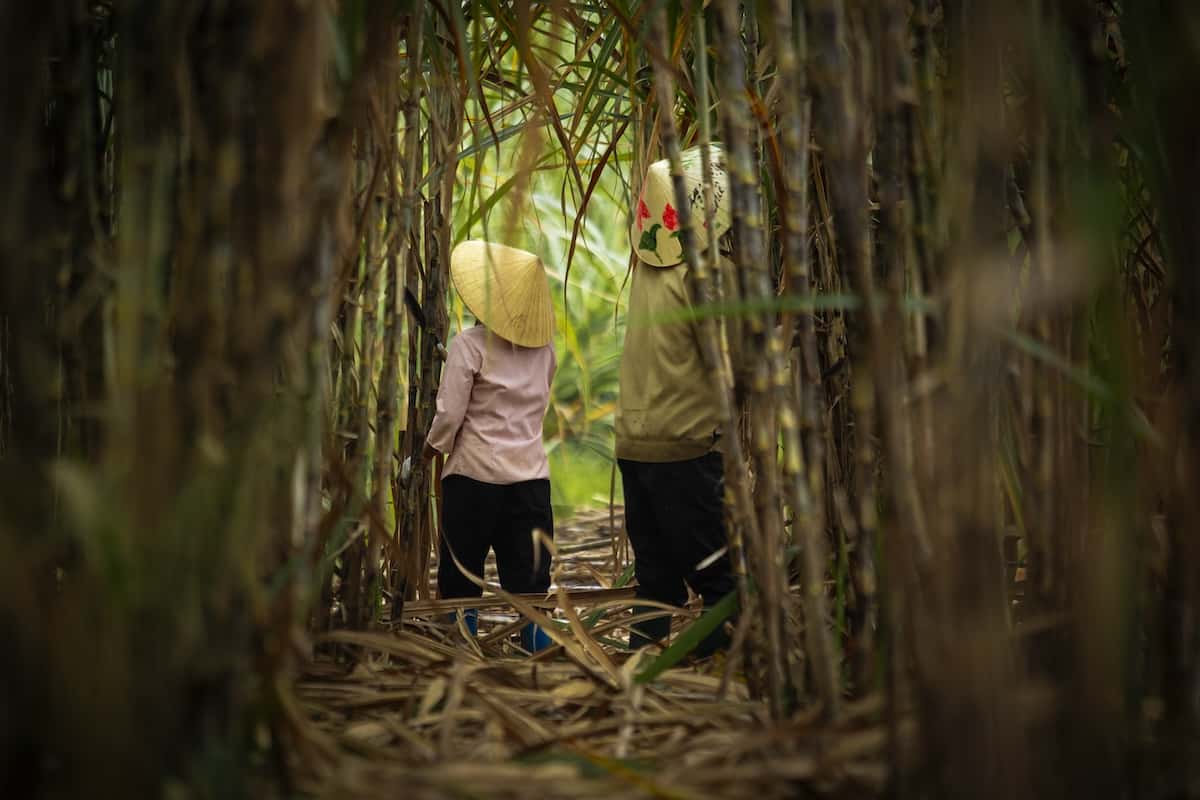
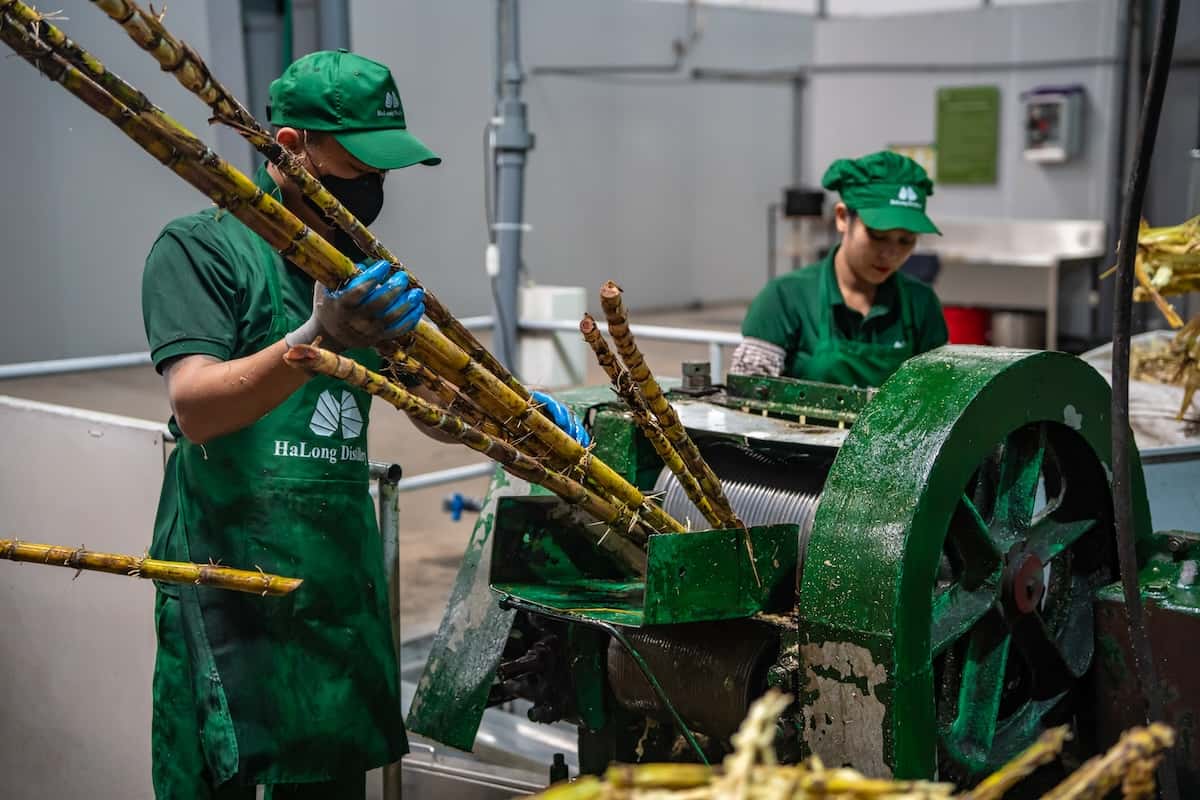
It arrives at the distillery the same day from Thạch Thành, in Thanh Hoá province, where the cane grows along the Bưởi river – forklift loads of it stacked against the wall, still green and dripping. On the processing floor, workers in HaLong Rum Distillery green overalls are feeding the stalks by hand into a heavy iron mill – the cane goes in whole, pressed fresh with the peel on, the juice going straight into natural yeast fermentation.
The Still That Started It
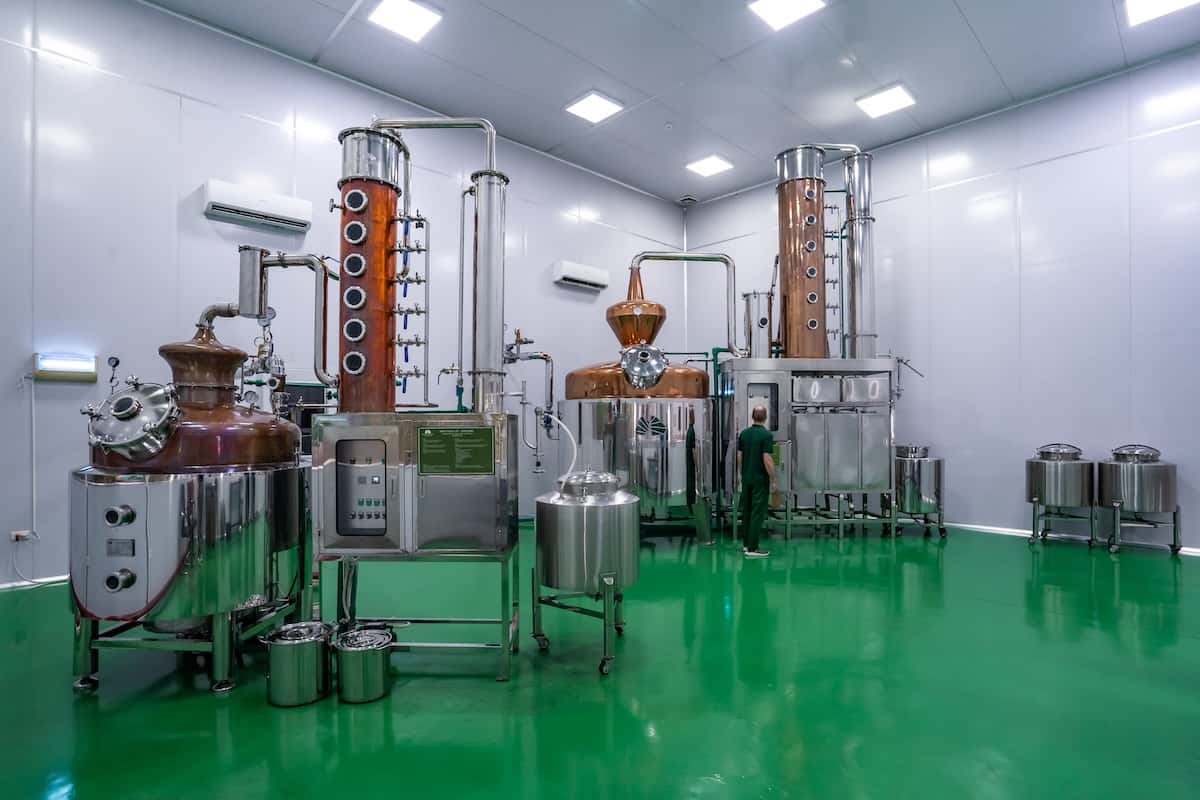
In one large, spotlessly clean room – in fact Giang’s obsession with cleanliness is evident everywhere you look, every surface wiped and every tool in its place – are two custom-built stills, both designed by Arno and fabricated in Hanoi, one at 1,000 litres.
There are no computers and no automated machines. Arno works by temperature and time, cutting the heads and tails by hand to keep the heart of the distillation – the fraction that carries the flavor – and discarding the rest. A copper pot still draws out the rich aromatics of the fresh cane juice wash; a column still gives the spirit its clean finish.Together the stills bring the spirit off at 88% ABV before dilution and blending. “We haven’t started with the 1,000-litre still yet,” Arno interjects with obvious anticipation.
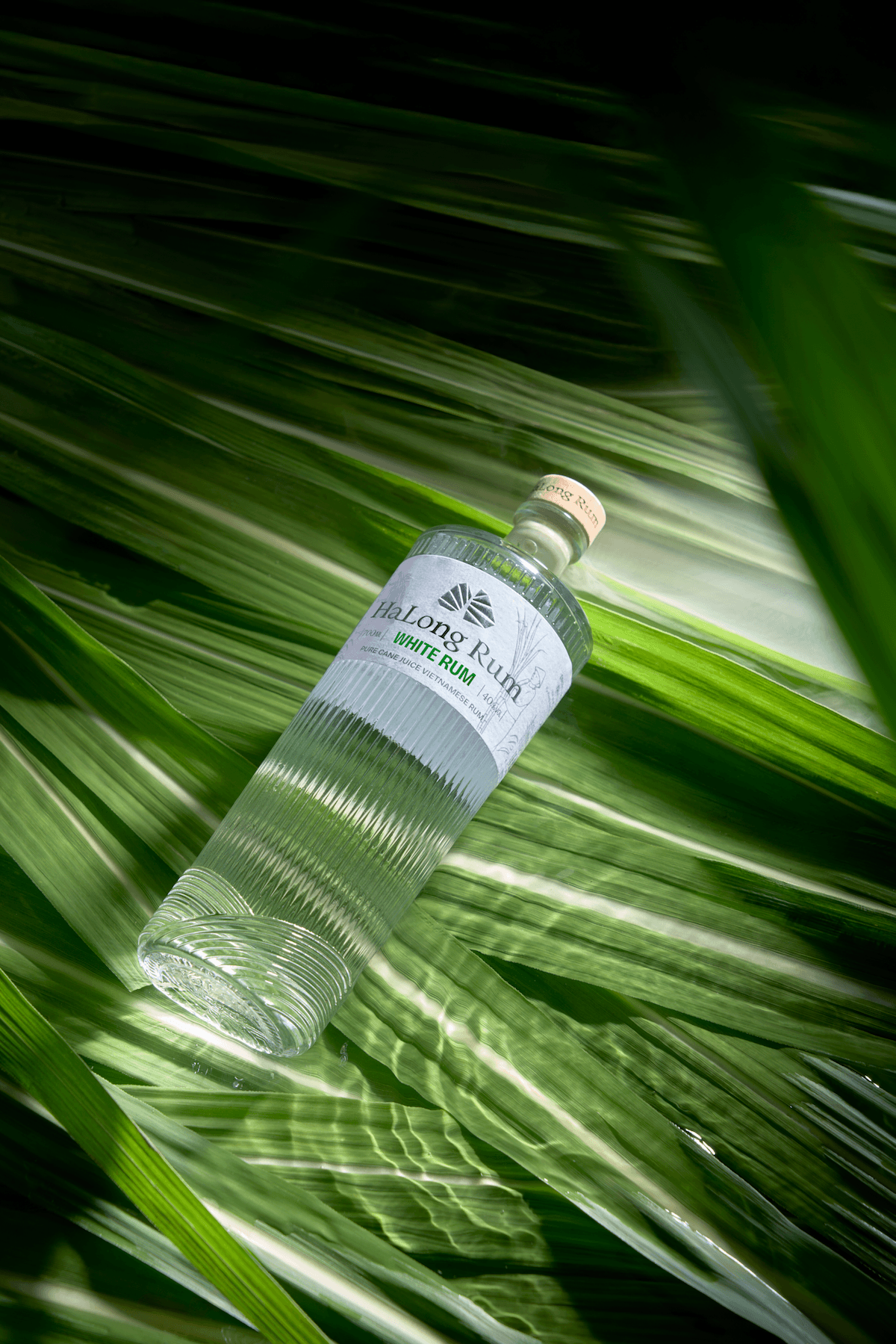
Still, the result is a rhum agricole – the style of rum made not from molasses but from fresh sugarcane juice pressed straight from the cane. Martinique provided the benchmark as the only island where it carries a strictly governed AOC designation, though the style is produced across the French Caribbean islands and beyond.
It’s the kind of rum that still tastes of the field it came from.
In the tasting room next door, his original still is on display – barely knee-height, all gauges and copper piping. He stares at it fondly, hands on hips, like a man looking at an old photograph of himself. Then he starts pointing out the tweaks and adjustments he’d made to it to anyone within earshot.
The Pots From The Kilns
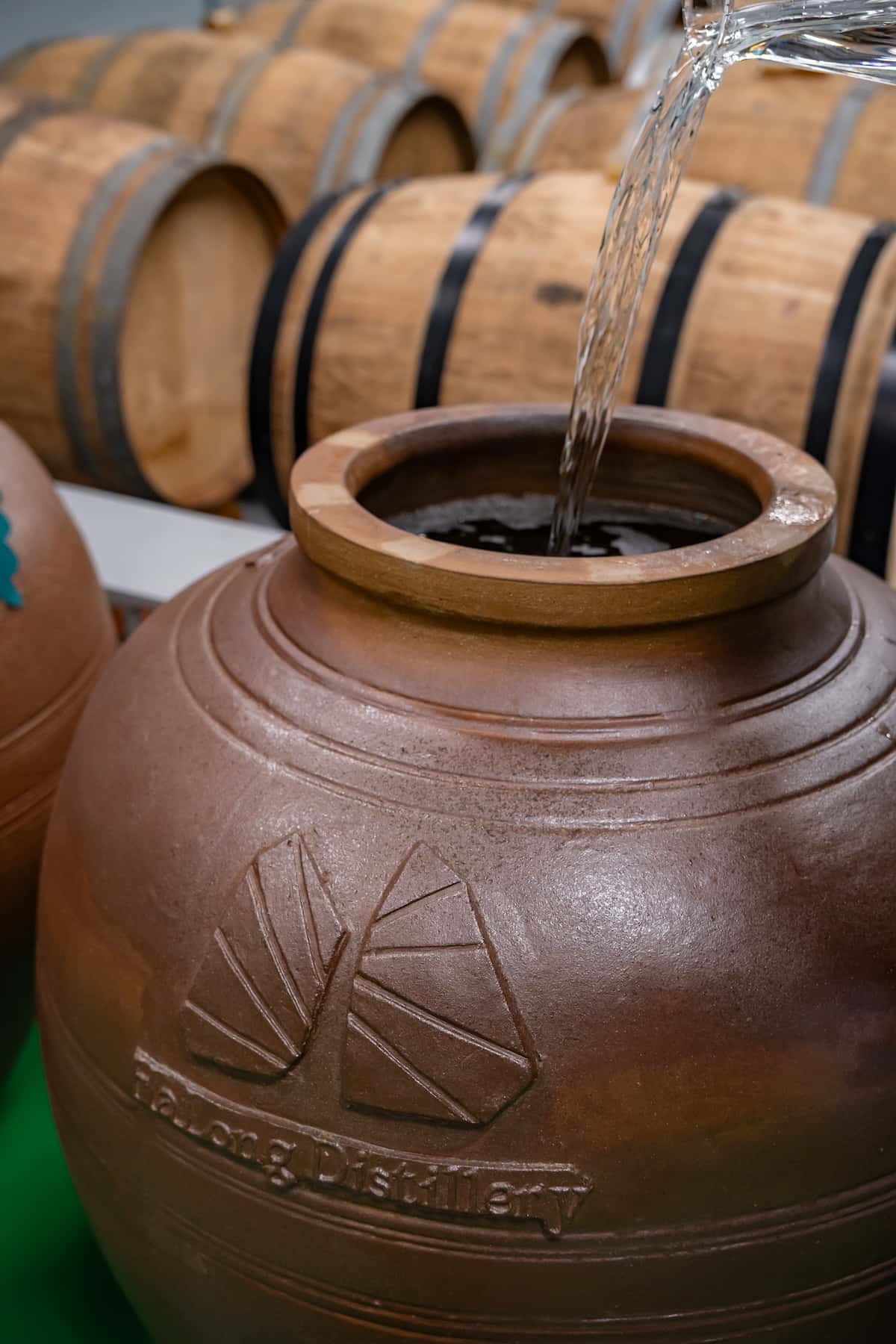
Through the window, lines of clay pots kneel before stacks of barrels – two aging traditions sharing the same floor, one ancient and one borrowed. The clay pots are where HaLong Rum takes on a quality entirely its own – and it’s a point in the narrative Giang clearly enjoys retelling.
The pots themselves, she remembers, are the result of a search that took her across two of Vietnam’s great pottery traditions. She started closest to home in Đông Triều, a district in the same Quang Ninh province as Ha Long Bay, whose ceramics heritage stretches back to the Trần dynasty in the 13th century – the royal ceramics centre of medieval Vietnam. From there she tested and settled on pots from Ninh Bình, a well-known craft region in the Red River Delta.
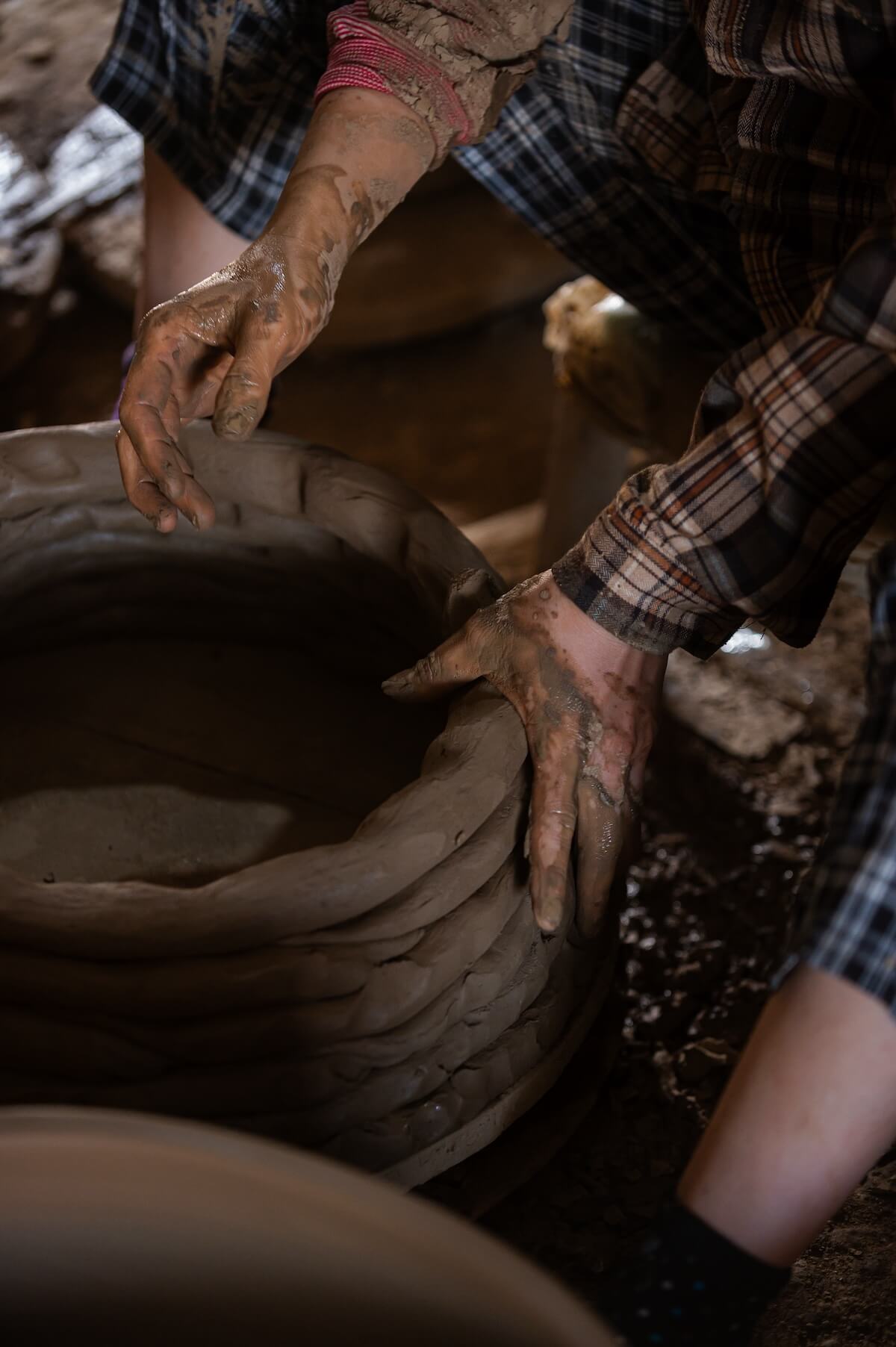
What she was testing, each time, was the soil. Its mineral composition. And how it behaves after firing. Each pot comes out of the kiln and is soaked in water to seal it – the same process used to prepare clay vessels for nước mắm for generations – and the mineral character of the clay is what interacts with the spirit during aging, slowly, through micro-oxidation, the porous vessel breathing in a way no steel tank or oak barrel can replicate. They are larger than you expect. Waist-height, rounded, the HaLong Rum logo pressed into the terracotta before firing, each one lidded with a painted conical hat that is either a charming piece of branding or a practical solution to keeping dust out, and is probably both. Wheel-thrown by hand, kiln-fired, soaked and sealed.
Beyond the clay pots are lines of barrels. The mango wood ones are stained dark brown along the staves, the oak, maple and smoke-treated hickory stacked either side of them. The angel’s share is high across all of them – but particularly with the mango wood, the tropical heat pulling more from each barrel than any distiller in a cooler climate would willingly lose. But what remains is concentrated, intensified and changed.
The Result Is Softer
The Golden Rum spends three months in clay first, then moves into the barrels for a full year – the oak bringing structure and a soft vanilla, the maple adding subtle sweetness that sits underneath and the smoke-treated hickory giving the finish a low, warm depth. “Mango wood is not too strong,” Giang says of the expressions that rest there instead. “Not like oak. Oak is too heavy. Mango wood is sweeter.” The result is softer – a gentle woodiness and a light bitterness at the finish.
What the clay does to the spirit is easier to taste than to explain. “The aging increases and flavors increase,” Giang says. “You don’t feel the burning,” she adds, tapping her throat for effect.
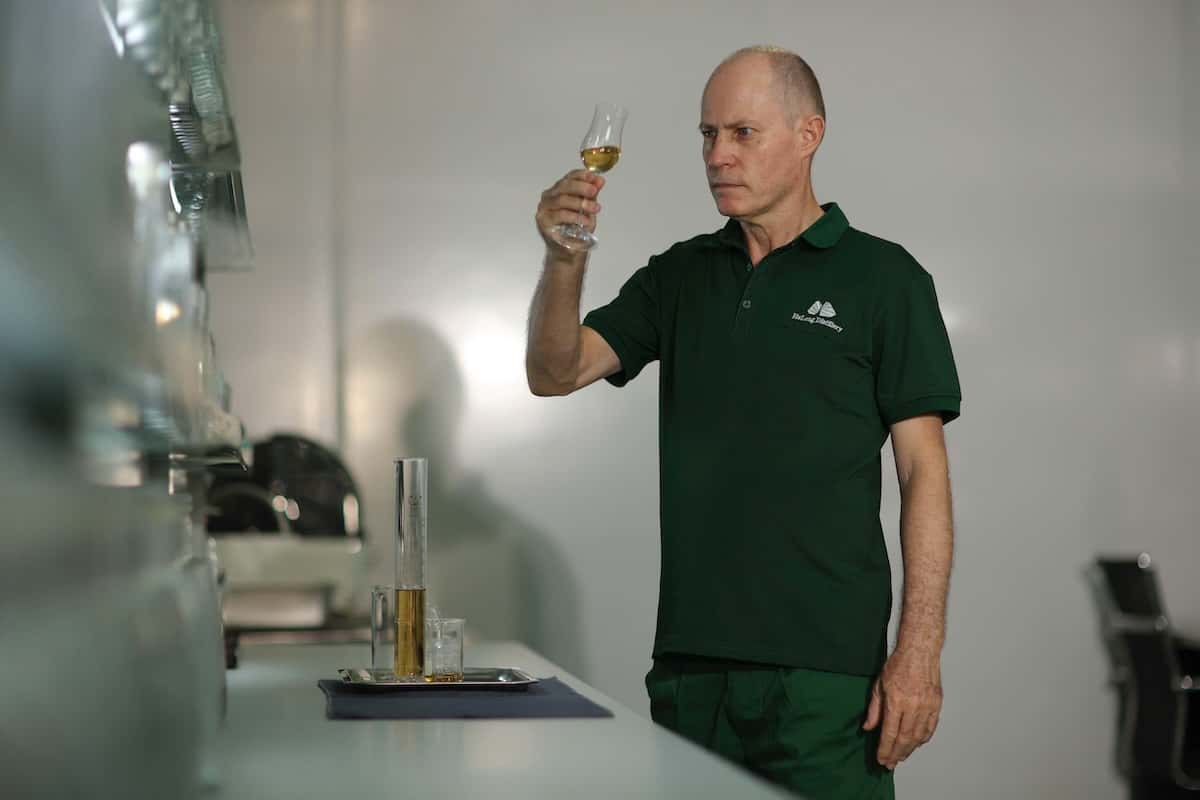
Arno has disappeared twice already to the production floor, turning, for a moment, back into the tinkering hobbyist in front of his 25-litre still, returning each time with something new: samples he’s diluted to one ABV, then adjusted to another, each adjustment altering the spirit, releasing aromatic compounds, shifting the texture, changing where the flavours sit on the palate. The distillery’s bartender puts one of the samples into a punchy daiquiri that she sets on the table without much ceremony.
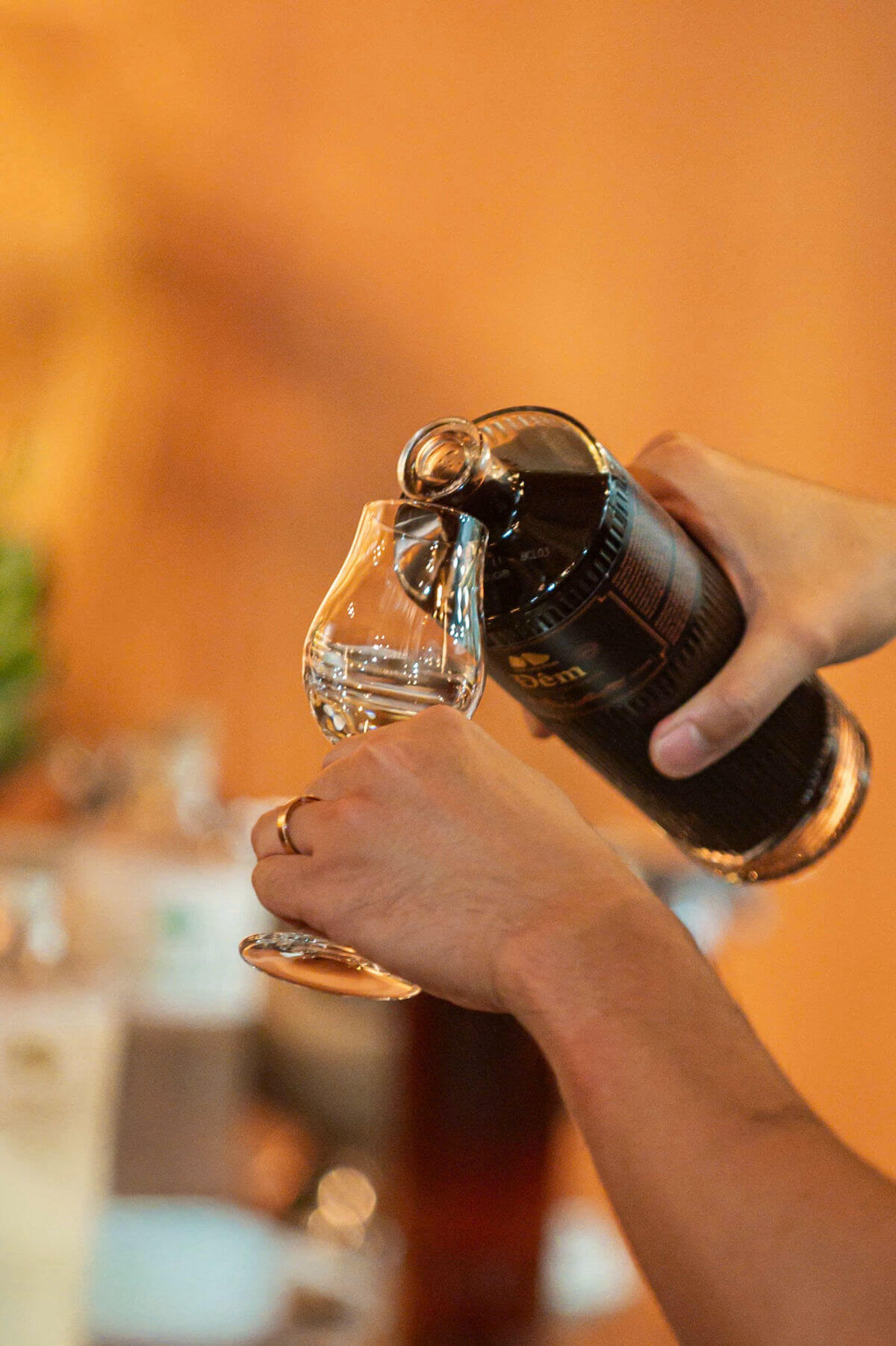
HaLong Rum Distillery’s Constant Experimentation
Then they uncork a bottle of Đêm – their coffee liqueur, with its white rum base run through Arabica from Son La, medium-roasted, and layered with Vietnamese sugarcane and fresh pandan leaves before returning to the clay pots. Here, it’s offered as an espresso martini. Arno watches each reaction with the focus of someone constantly running experiments.
Then there’s a special edition. Fifty-seven percent ABV. No added sugar. Nearly eighteen months in clay. “That shows us really what the clay pot is doing,” Giang says proudly.
It’s a long way from selling rượu tây by the jerry can. Here, the sugarcane is cut the same morning from the fields along the Bưởi river. The clay pots are sourced from soil that has been making Vietnamese vessels since the Trần dynasty. And the mango wood comes from trees that grow in this heat. Arno’s face creases into that lopsided grin at the thought.