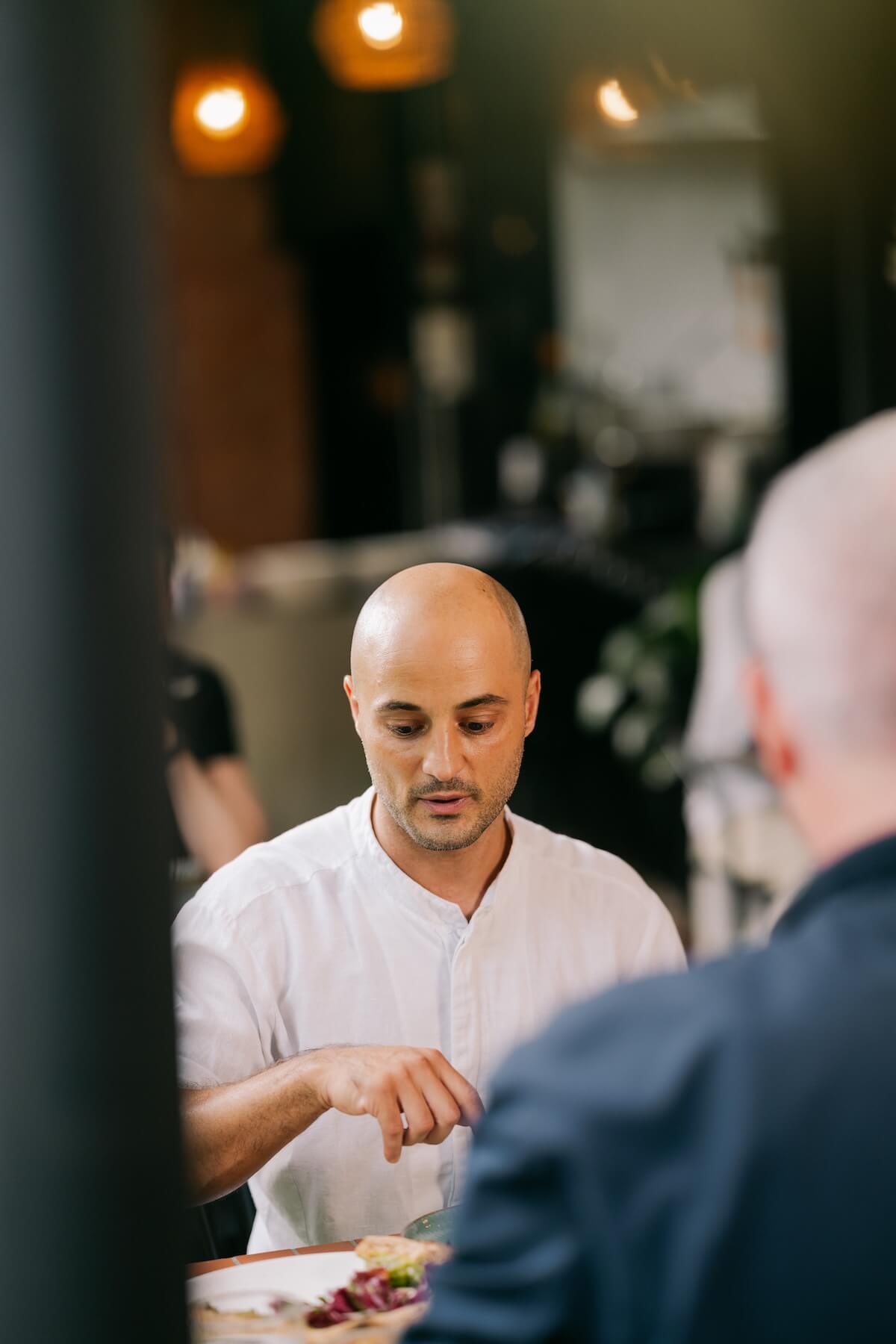



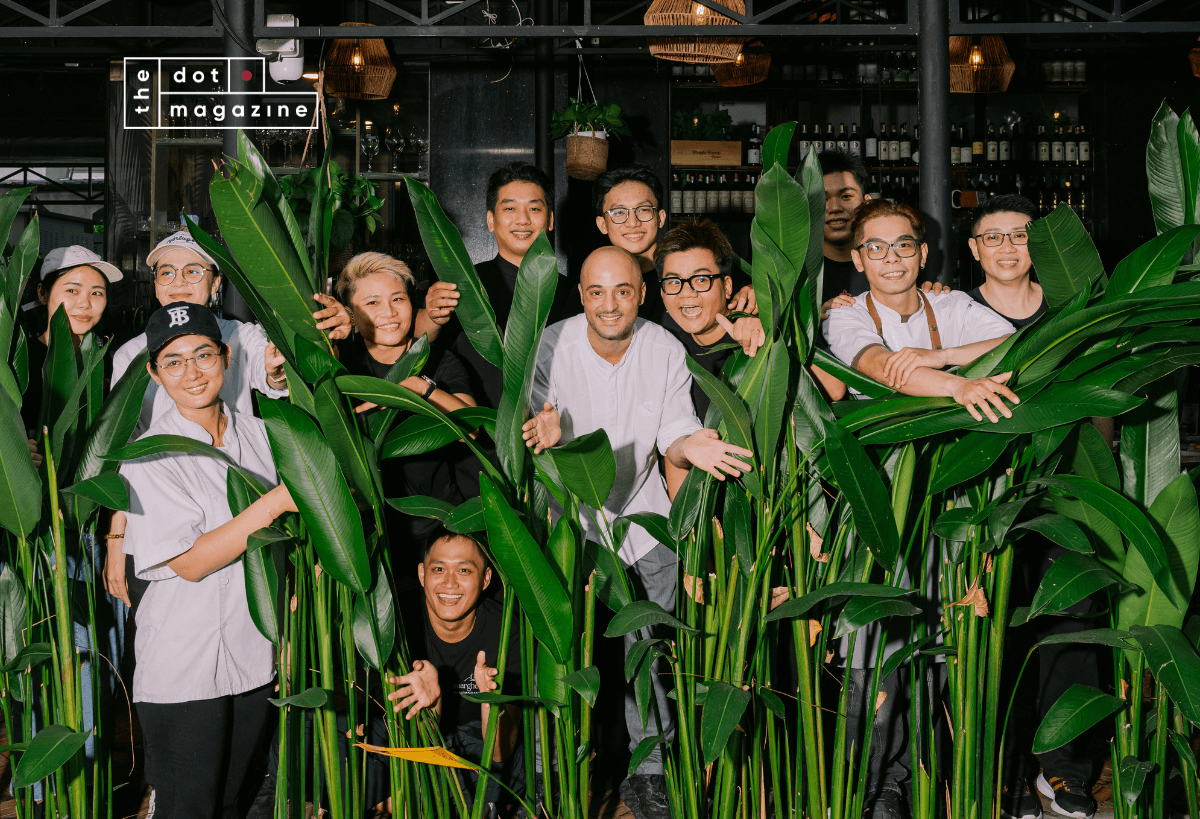
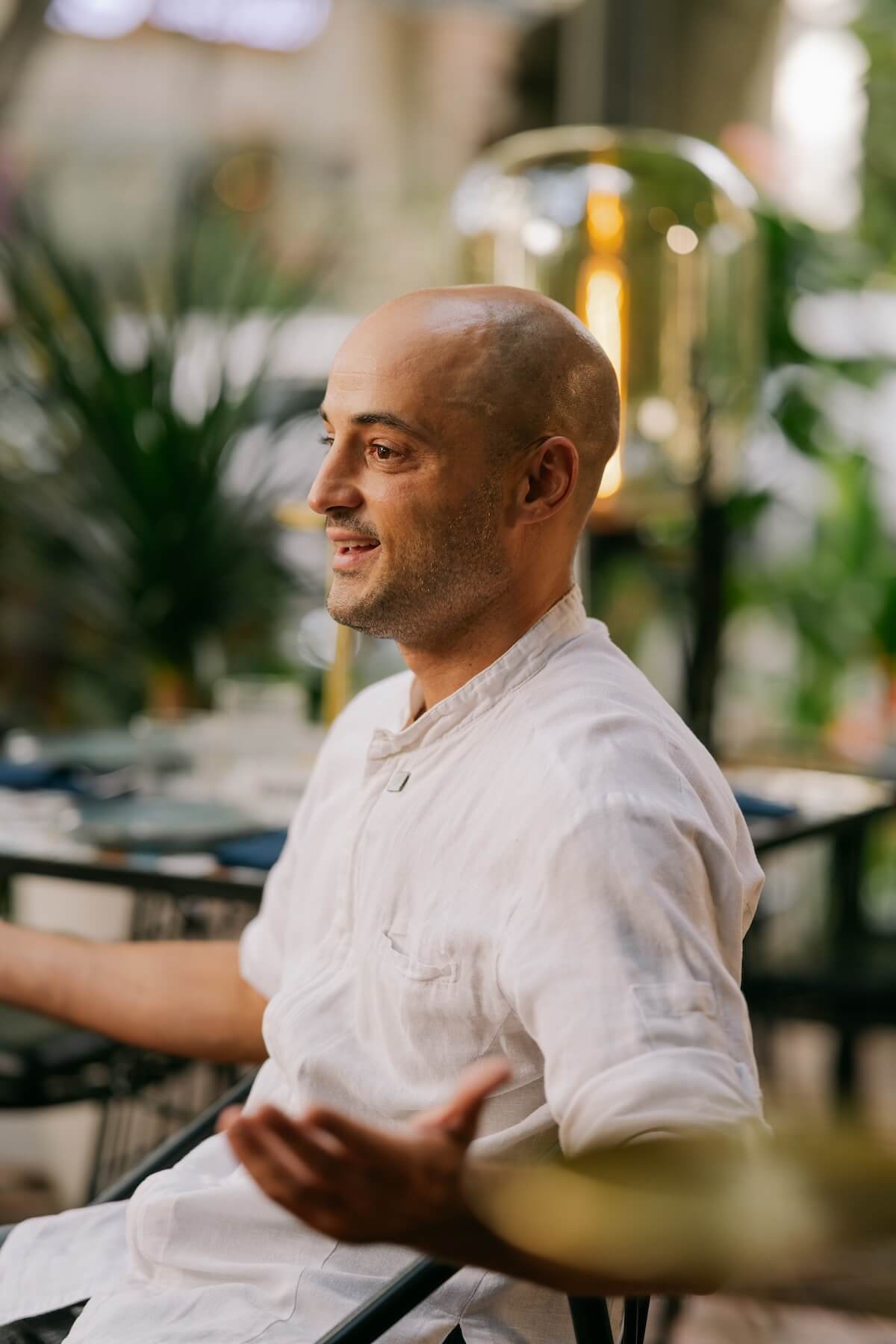
Ciro Sorrentino dreams about pizza most nights – just ask his wife. She’s the one who has to listen to him talking in his sleep. Lately, his award-winning Saigon pizzeria called Margherí, in District 7, is probably to blame. It’s packed every night, six nights a week. Plus there are new pizza recipes he’s always playing around with in his head. The next one, he says, will include a tomato San Marzano base, oregano, garlic confit, black garlic cream, anchovies, gremolata, fresh basil and a few drops of Phu Quoc fish sauce. Italian, just like him, but very Vietnamese too. This is home, after all.
“Oh man,” Ciro Sorrentino says, widening his eyes, “I dream of pizza every night – just ask my wife.” Sometimes she hears him talking about pizza in his sleep. “She’ll ask: ‘Last night you didn’t sleep?’ I’ll say, ‘No, I slept, but I also have to think about pizza.'”
It’s not only pizza on his mind. It’s pizza culture too. The social bit. The part where a community converges over a shared slice or two. It’s all he remembers.
He grew up watching Antonio de Curtis – whose stage name was Totò. Antonio was a Neapolitan actor his father idolized.
“He was a comedian and a poet, and everything to us,” Ciro remembers warmly. In the 1954 film ‘Miseria e Nobiltà,’ Totò’s family wins just enough from a bet to afford one pizza between them – then orders a second anyway. Having money, or not, you don’t shrink your appetite. “Through humor, he showed the simplicity, the dignity and the soul of Neapolitan people,” Ciro nods.
Memories Of Maradona De La Pizza
“I must have been seven or eight years old and we were in Pompeii, in Italy. And two times a week, we’d go to eat pizza, me and my dad,” he remembers – Pompeii is twenty minutes from Naples, in the shadow of Vesuvius, with ash and buried streets on one side, the chaos of Naples on the other.
“We’d go to the same place every time. The pizza shop we called Maradona De La Pizza. This amazing guy was working, but not even that fast. He just enjoyed talking with the customers. To people waiting in line like us,” he remembers, relishing talking about pizza some more. “And I enjoyed it because I saw so many people, who didn’t know each other before, swept up in the moment and talking together.”
L’arte Di Arrangiarsi
Aged thirteen, the family moved north to Rimini, on Italy’s Adriatic coast, roughly 500 km from Naples. “It’s different in the north,” he says. “You stay an hour, but it’s stressed. You have to eat fast.”
Despite that, and having lived in Central America, Switzerland and now Vietnam, “I’d still say I’m from Naples,” he asserts. People there have a certain underdog hustle. They call it l’arte di arrangiarsi – the Neapolitan art of making do, of adapting under pressure. “Like when I opened my first pizza restaurant in Italy,” he remembers. “I used all my savings and had to paint the walls and help finish the construction myself. It was very crazy. But that struggle is character building – it’s very, very important in Naples.”
Those struggles, like a true Neapolitan, didn’t deter him. In fact, another of his pizzerias became the original Margherí, opened in Cesenatico – a short drive down the coast from Rimini – beside the canal Leonardo da Vinci is credited with designing. Cesare Borgia sent him there in 1502 to fix a harbor that kept silting up; the sketches survive in one of Leonardo’s notebooks, the Codex L. Nobody can prove he laid a single stone himself, but the canal still cuts straight through the middle of town, boats and all, five centuries later.
Ciro was still running Margherí Cesenatico remotely when he moved to Vietnam.
Albanian Elvis, World Champion Dough Spinning And Lessons From The Long Bar
Three men, he says, shaped him, “not only in pizza making, but in life.”
The first was, improbably, called Elvis, an Albanian pizza chef at a 600-seat pizzeria in Rimini where thirteen-year-old Ciro started working “for fun” after the move north. Elvis taught him the thin, crispy base he still uses today. And more than the technique, the sense that this wasn’t work at all. “It was one of the best times of my life,” Ciro says.
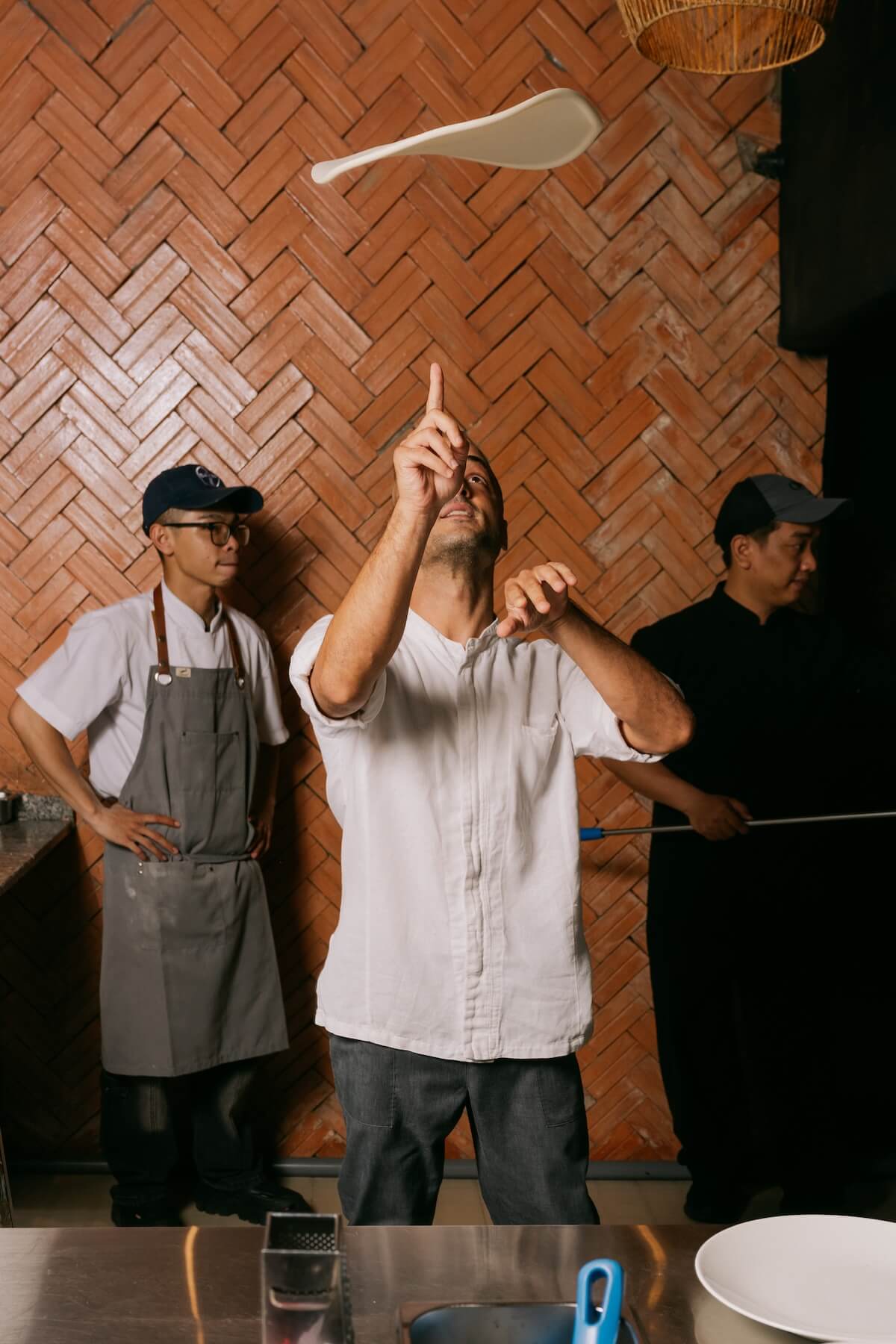
The second came from studying with world-champion acrobatic pizza instructor Christian (Ciro still has the moves, but maybe not the time to show them, with Margheri being so busy). Christian’s father, Michele, taught Ciro the foundations of authentic Neapolitan pizza. But it wasn’t just his technical knowledge that influenced me,” Ciro remembers, “it was his endless, contagious passion for pizza.”
The third was Giovanni Parrella, executive chef at The Reverie Saigon’s The Long at Times Square and R&J, who hired Ciro before he landed in Vietnam.
Giovanni, Ciro confesses, had seen his pizza acrobatics and pictured him spinning dough walking down the length of the bar. It never happened – Ciro ended up behind the pass, not performing in front of it. What he got instead was closer to a masterclass in everything that isn’t pizza. “He didn’t teach me anything new about pizza,” Ciro says. “He taught me how to look beyond it – service, consistency, running a successful pizzeria.”
In something of a reversal of destiny, when Giovanni eventually decided to move back to Italy, he bought Margherí Cesenatico outright from Ciro – while Ciro, having followed him to Vietnam, went on to open a new Margherí of his own, this time in District 7.
They’re still close. And Ciro always drops in to see Giovanni when he’s in Cesenatico. The last time, the restaurant was short-staffed on the night they came in, and Ciro ended up on the floor himself, his wife alongside him, running food and clearing tables to help out.
The Mixture Makes It Special
He’s happy here though.
This Margherí is in Phu My Hung, District 7 – Saigon’s planned, leafy satellite district with its wide roads and artificial lakes, a world away from the horn-and-scooter chaos of District 1.
Ciro picked it on purpose. Ninety percent of the seating is outside, wrapped in greenery, and even on a full night – which is most nights, six nights a week – nobody feels boxed in. Every table gets its own pocket of privacy. That’s the whole point, he says: come after work, order a pizza, and forget the day happened. “Over there,” he says, pointing to the pavement outside, “you’re in Vietnam. Here,” he continues, gesturing to the boundaries of Margherí, “you’re in Italy.”
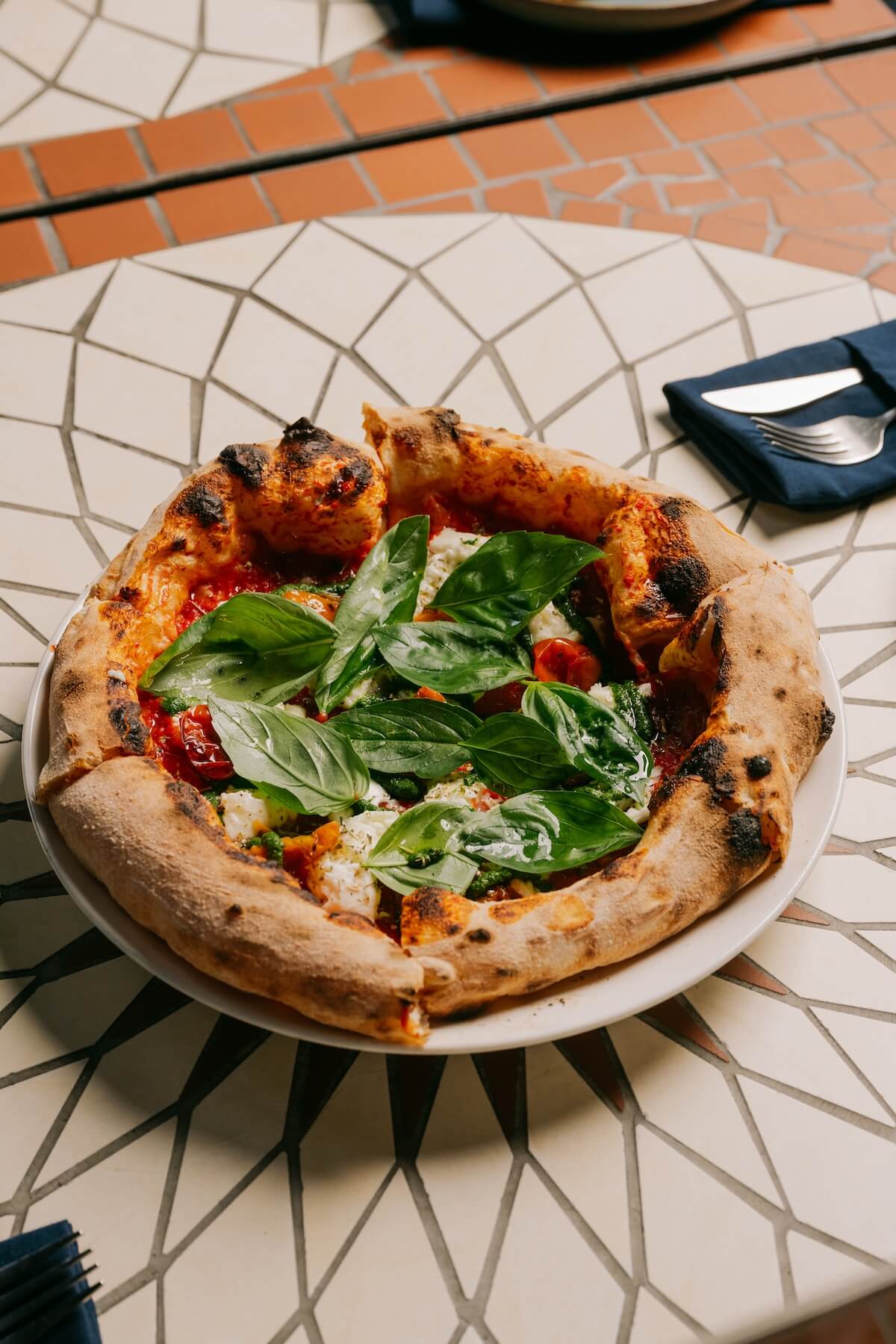
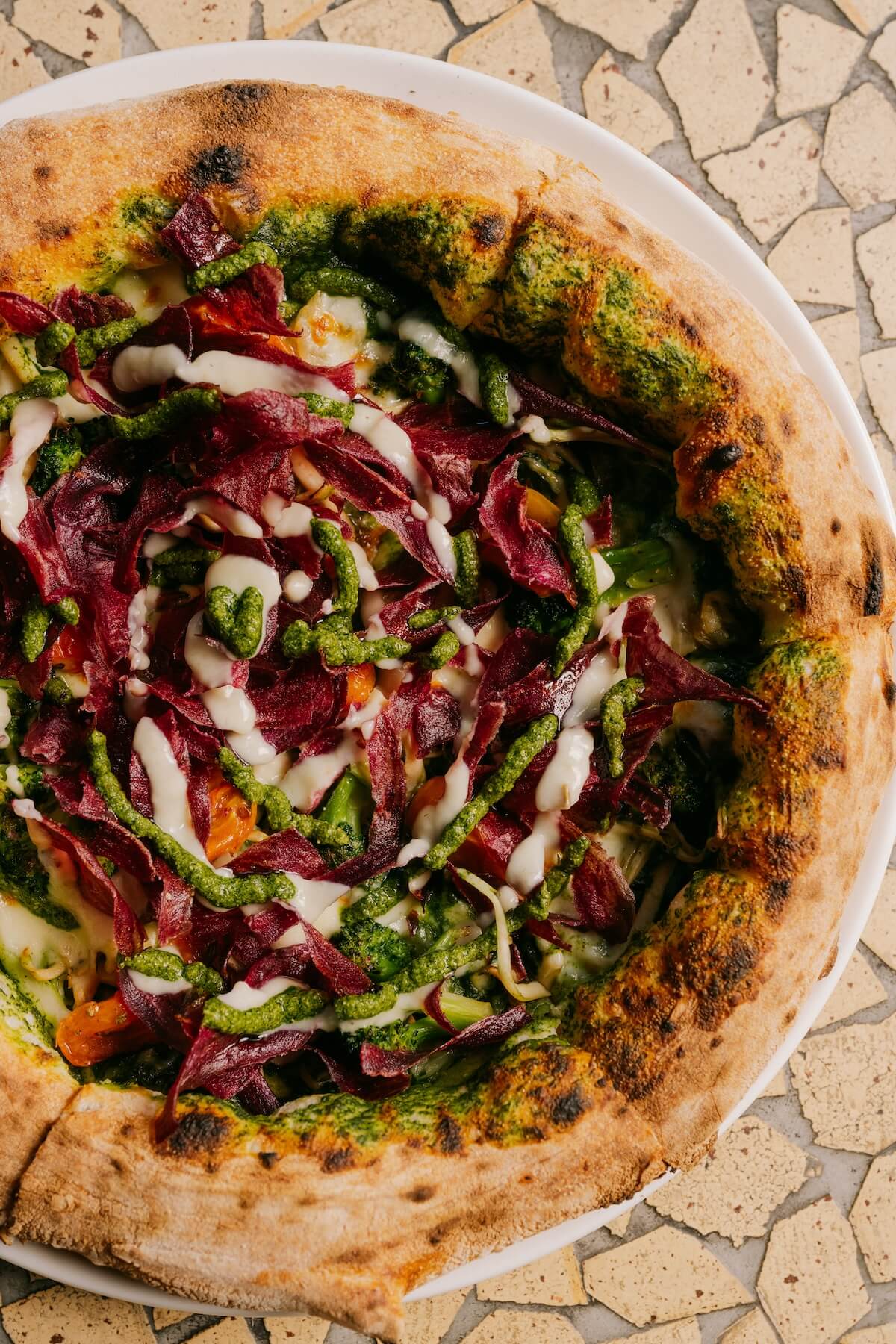
On the menu, he’s a classicist first. His own favourite – Bella Italia in Vietnam, sold as Regina Margherita back when he ran his own place in Italy – doesn’t try overly hard: San Marzano tomato, buffalo mozzarella, pesto, basil, oregano. Nothing hides behind anything else, “but the mixture of flavors make it special,” he nods.
The ragù Napoletano is close to his heart too. His mother made it every Sunday at four in the morning back in Naples, and he still cooks it from memory. It’s one of two pasta bestsellers on the menu, alongside the crab ravioli – and as far as he knows, nobody else in the country serves the ragù. “Not even one restaurant,” he says, visibly pleased about that.
Ciro Dreams Of Pizza
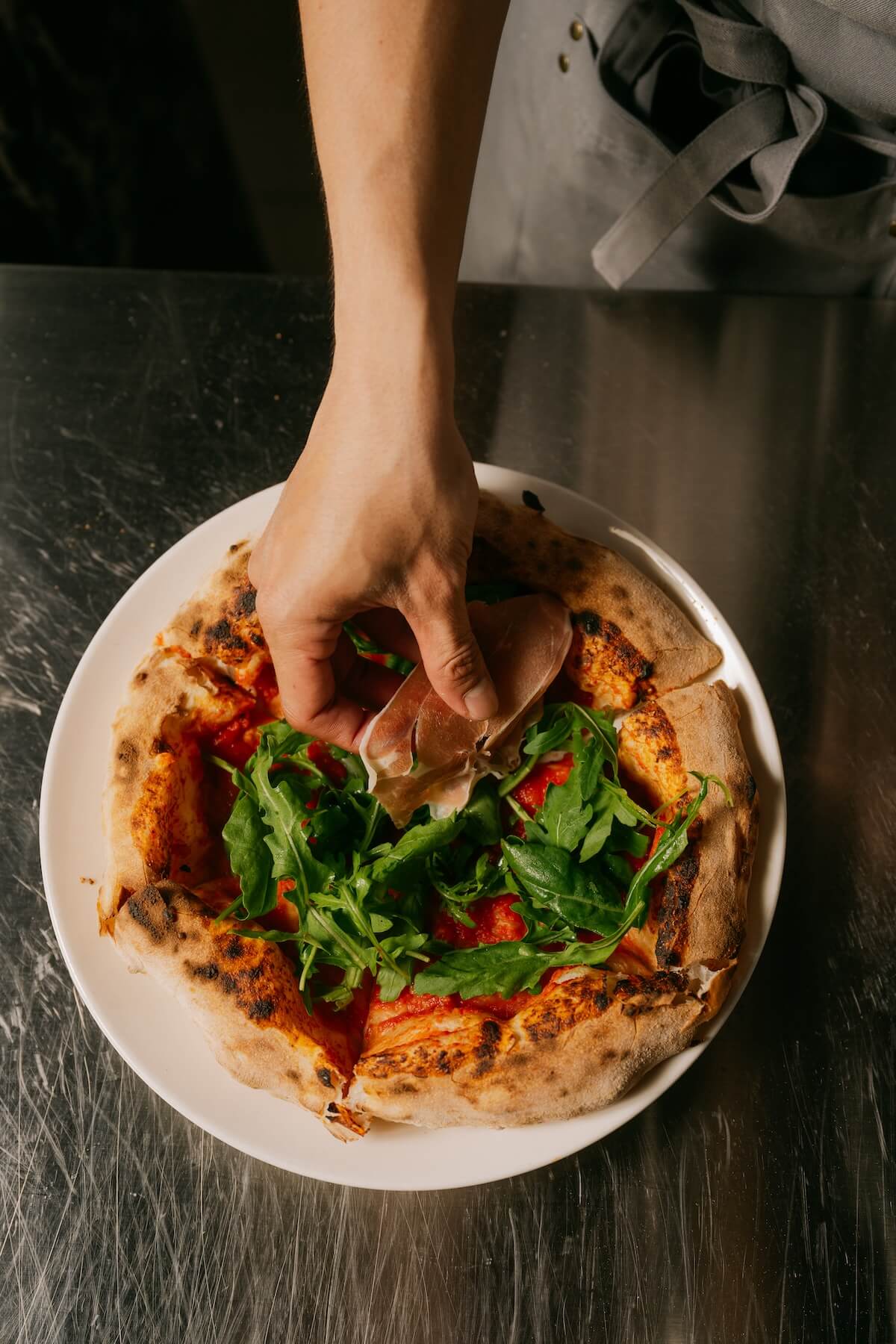
Ciro’s not confined to the classics though. He’s working on a pizza he’s calling MarinAsia – a marinara built on a San Marzano base, finished with oregano, garlic confit, black garlic cream, anchovies, gremolata, fresh basil and a few drops of Phu Quoc fish sauce. He talks about the balance like a true modern pizza chef: the sweetness against saltiness against umami, Naples and Vietnam meeting in one bite.
In the same way, he’ll still tell you he’s Neapolitan. But twelve years in, with a family of his own here, something’s shifted.
“I’m not Asian,” he says. “But I’ve lived here so many years that this is home.” And these days, when his wife hears him talking pizza in his sleep, it probably isn’t about margherita anymore. It’ll be marinara with a shot of fish sauce.