


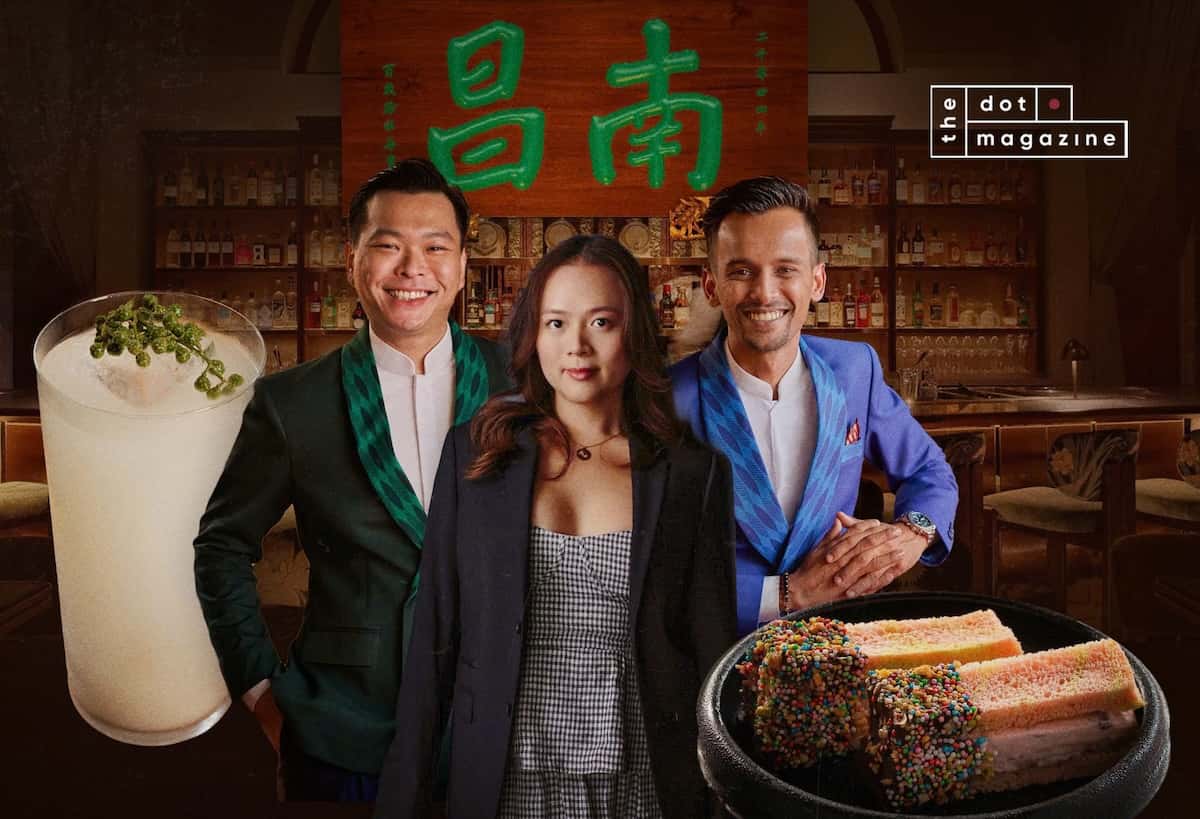
 When Tan Yeok Nee built his house on Singapore’s Penang Road in 1885, he split it in two. His family lived at the back. At the front, he did business and met clients. More than 140 years and five lives later, it’s still arranged the same way. While the back now holds the offices of the group that owns the house. The front belongs to guests again, this time at Bar Kap, a cocktail bar in the merchant’s old living room. The Bar Kap team thinks he would approve.
Kavish Hurrydoss, the general manager, sets a large wooden box down on the table. It’s so big it hangs over the edges, leaving the table lamp clinging on behind it.
Menus Enclosed In A Wooden Box
Inside its hinged lid, there are four wooden blocks, each a different shape. They’re inspired by different objects in the house. The blocks match shapes carved into the box. When they’re fitted back in, they open a drawer of menu cards for one of the four chapters – Kapitan, Station Master, Order and Dynasty.
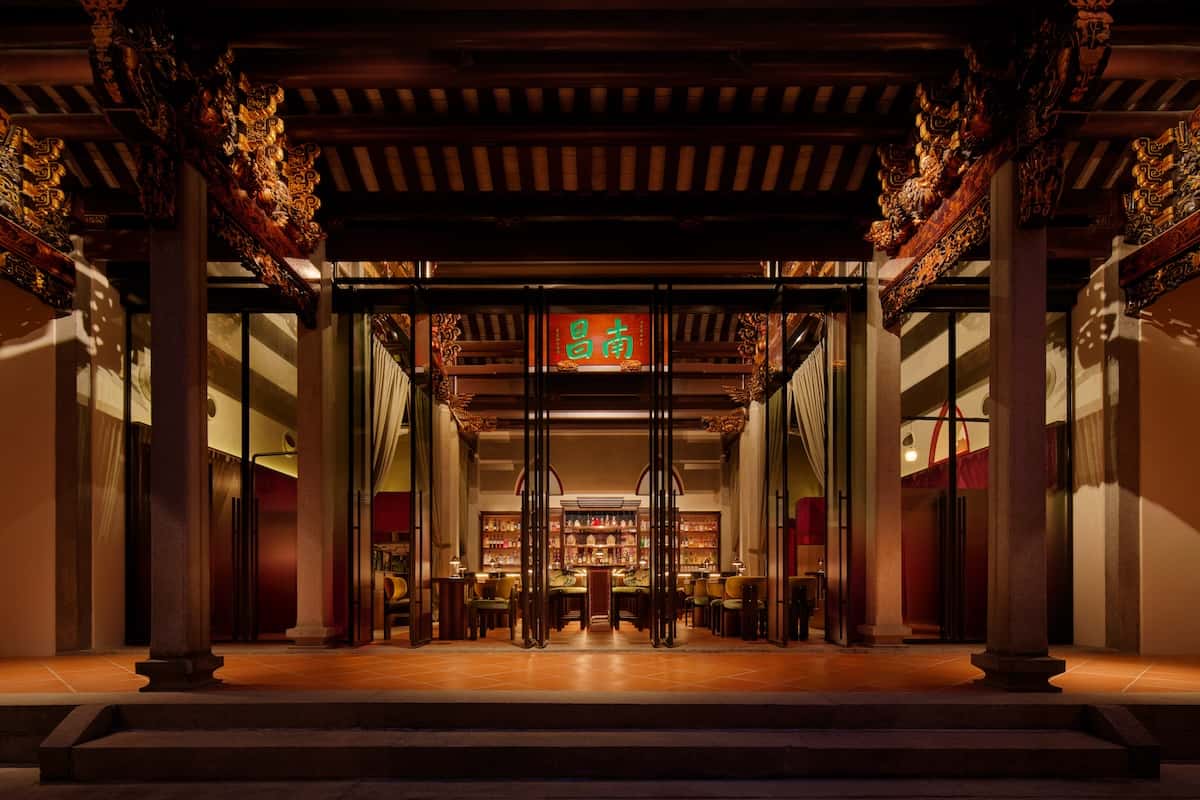
The box distracts, for a moment, from the gold-leaf phoenixes under the eaves, the green glazed tiles along the roof and the carved timber screens that frame each door of this restored mansion – the last of the Four Grand Mansions that once stood in Singapore.
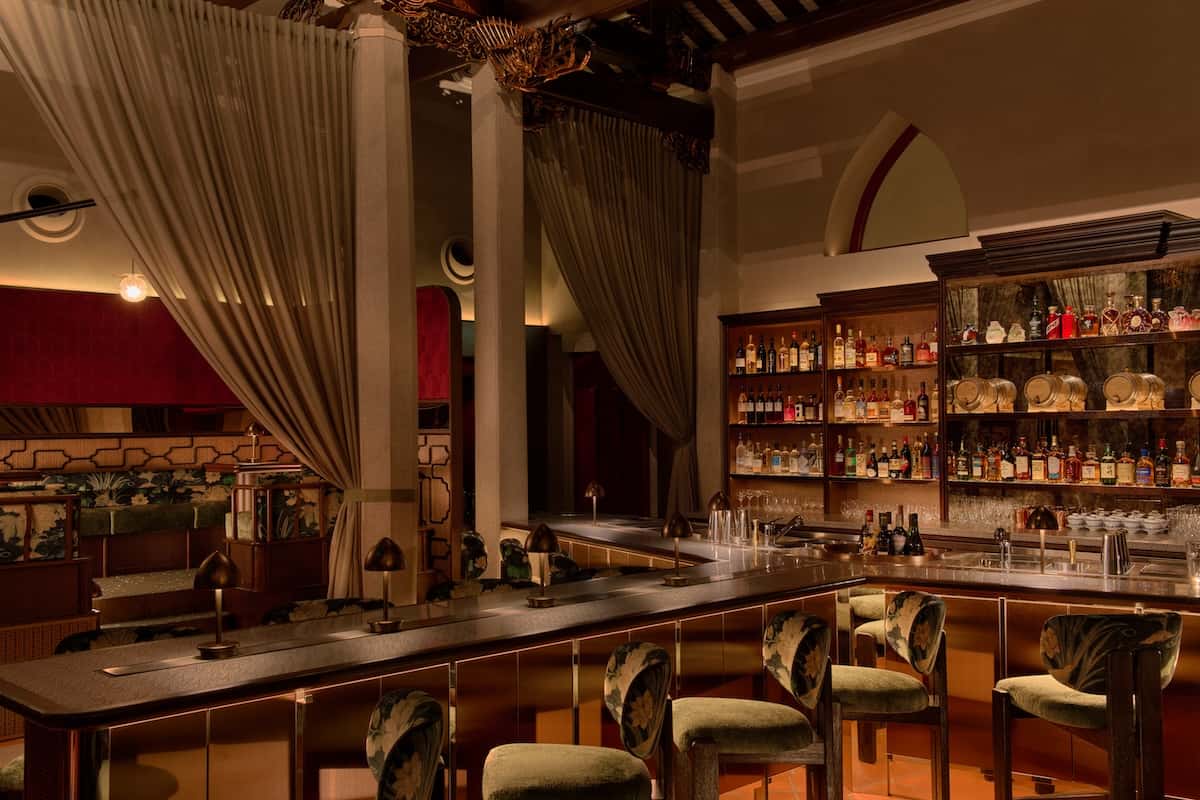
The bar takes over the old living quarters of the house. Those original timber beams still run overhead. Mirrors around the room catch glimpses of the carvings and throw them back down at you. Behind the bar are pointed-arch windows, added when the house became a home and school for Eurasian girls. Above them hangs a sign that reads 南昌 – the name of a soap factory founded by the Karim family, whose foundation restored the house.
A Y-shaped counter fills the middle of the main hall, which holds 46. The shape brings more of the room up to the bartenders.
Bar Kap Brings People Together
“We wanted a communal space,” Kavish says. “And the lacquered architectural beams in the main hall are some of the most beautiful in the house. All of them date from when it was built, so we wanted guests to look up whenever they sit down. A classic straight bar counter wouldn’t have let us do that.” The counter also brings people together, “which is what a bar should do at its core.”
The entire space is a well-judged balancing act between heritage house and hip bar. “We needed to bring the idea of a bar into the house without pulling away too much from what the house is,” he continues.
The build was the quick part. The idea started in early 2025, when the team’s friends Tom Hogan and Bobby Carey of Studio Ryecroft came on to conceptualize the bar. The project properly kicked off in August 2025. The licensing and paperwork were done by late December, and so was the design.
Construction began in February, in the middle of Chinese New Year, which added its own challenges. It took about six weeks. “Kudos to the contractors,” Kavish says. “The design and approval process took far longer than the build.” Bar Kap opened on May 12.
“That design stage was a joy, because everyone on the team, including Miss Chai, was incredibly detail-oriented,” he says. Chai Karim is the principal of Gaia Lifestyle Group. The team geeked out over details most guests will never notice. “The countertop is finished so that you don’t see a clear reflection of the beam above, only fragments of it. That’s deliberate. We want you to see the beam, but not have it in your face.”
It’s not the only deliberate touch. Kavish has three favorites guests tend to miss.
Geeking Out Over The Details
The first is the payment system. Most bars leave a big black terminal on the counter. Bar Kap has small iPads built into the counters instead. “We still collect payment at the end of the evening, but we don’t want to remind guests of it all night,” he says. “You won’t see a single big black box at Bar Kap.”
The second is the music. Everyone hears it, but nobody sees the speakers. They’re hidden around the room and angled for the best sound.
The third is the wavy golden panels on both walls of the main hall. Most guests take them for decoration. They’re acoustic panels. “The main hall has a very high ceiling, so there would be a lot of echo,” Kavish says. “Guests see them but don’t know their purpose, which is great.”
A Bar In Three Rooms
There are three rooms, Kavish explains. The first is the main hall. “That room is the living room of Tan Yeok Nee,” he says. In 1870, Johor made Tan Yeok Nee its Major China, the highest Chinese post in the state. The bar’s name nods to the Kapitan, the title Chinese community leaders held across the region.
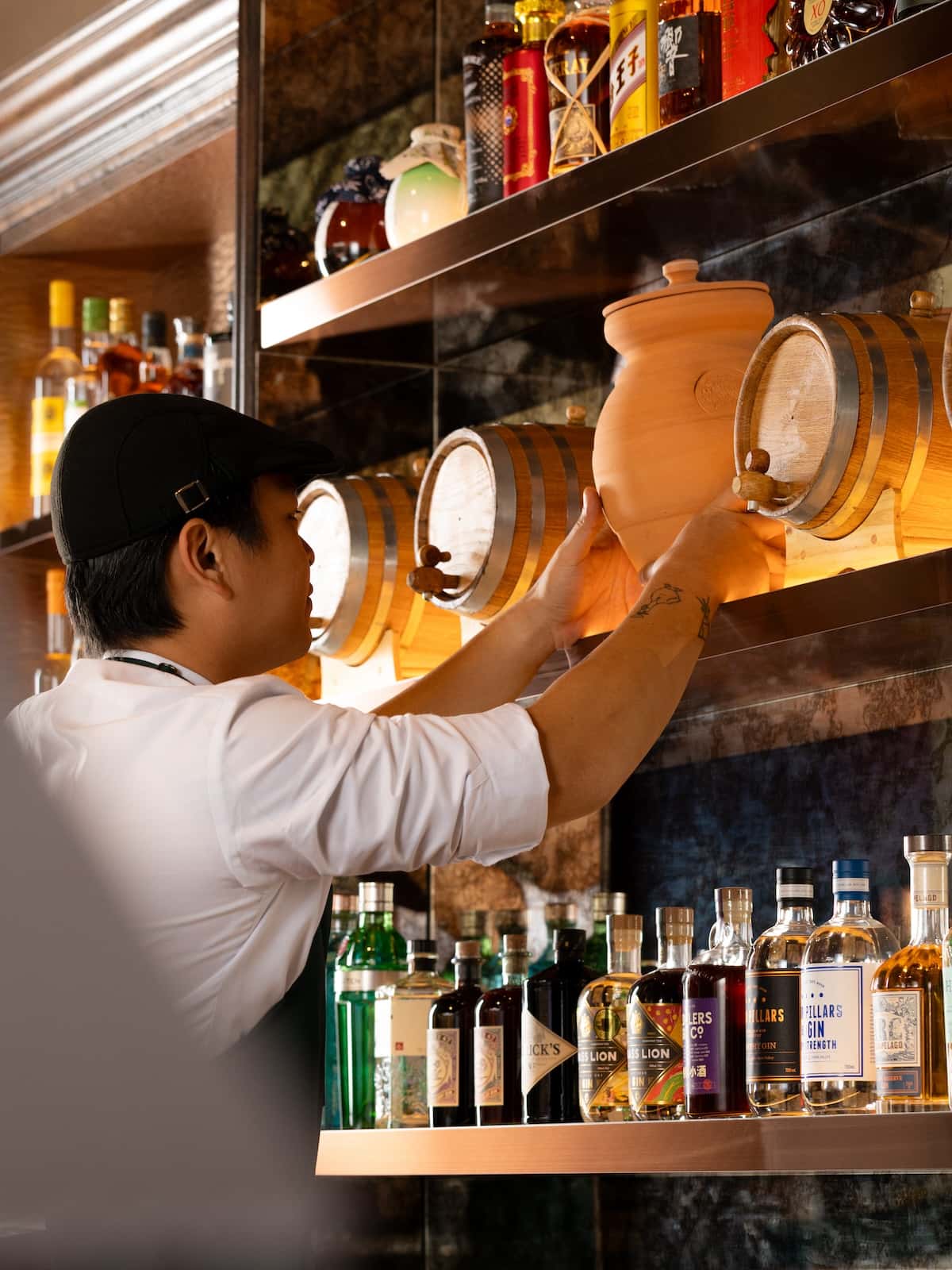
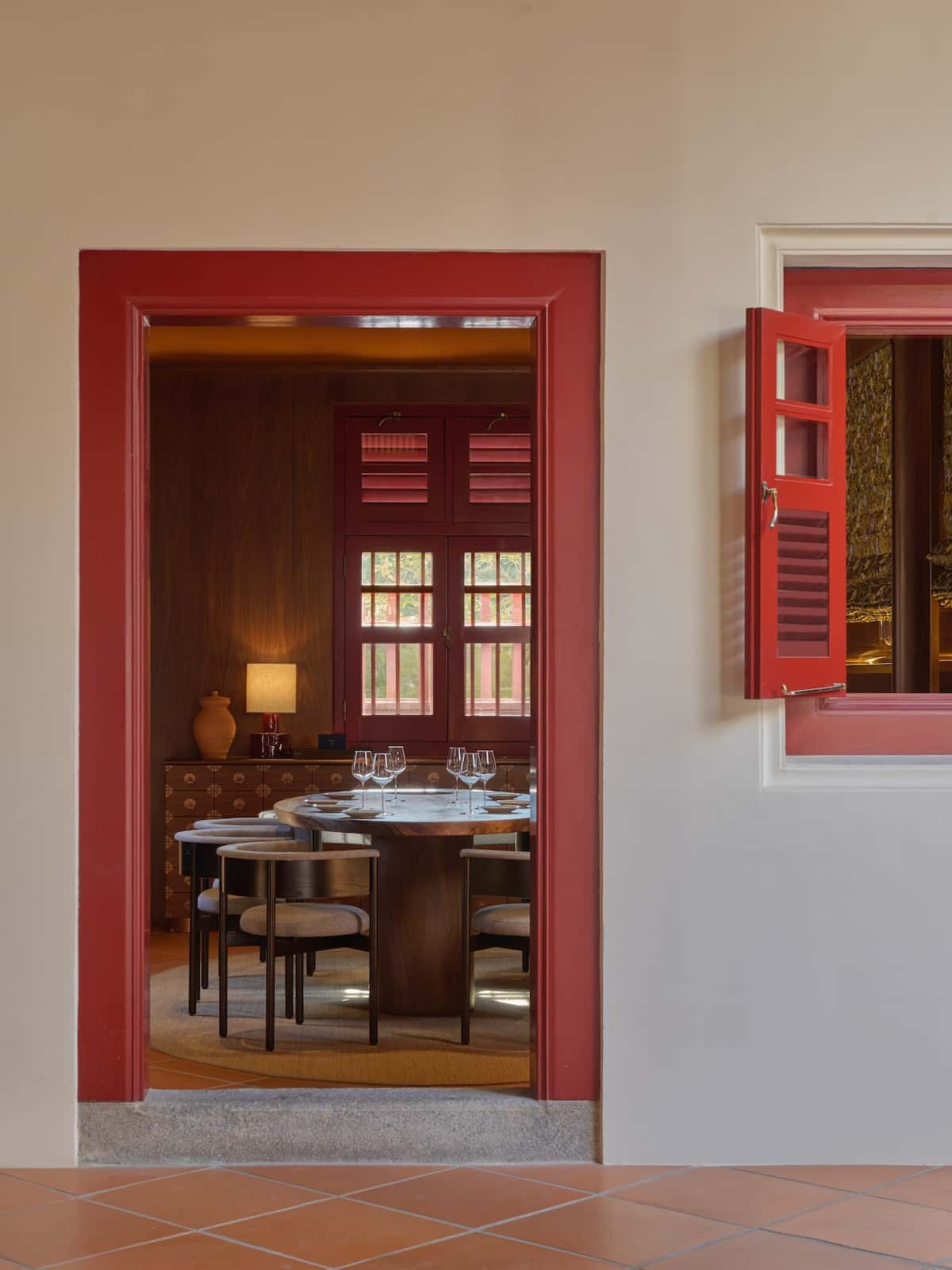
Then there’s the 14-seat Carriage Room, off to the right of the bar, which was once the house’s carriage porch. It is now dressed as a private train car in fabric, timber and painted brass, a nod to the British station master who lived here. Finally, across the courtyard, the eight-seat Chamber is styled as a Chinese medicine apothecary. Instead of remedies, its mid-century cabinets hold the purple clay jars the bar uses to age cocktails. Kavish presses a remote and the curtains covering them slide back, revealing row after row.
Clay, like the house, carries a lot of history. “If you go back through the history books, there are wonderful beverages made in clay,” Kavish says. “Baijiu spends time in clay, and in Georgia they make wine aged in clay. Clay is also prominent in Chinese culture, and because the house is a Teochew mansion, it fits naturally.”
Subtle Notes
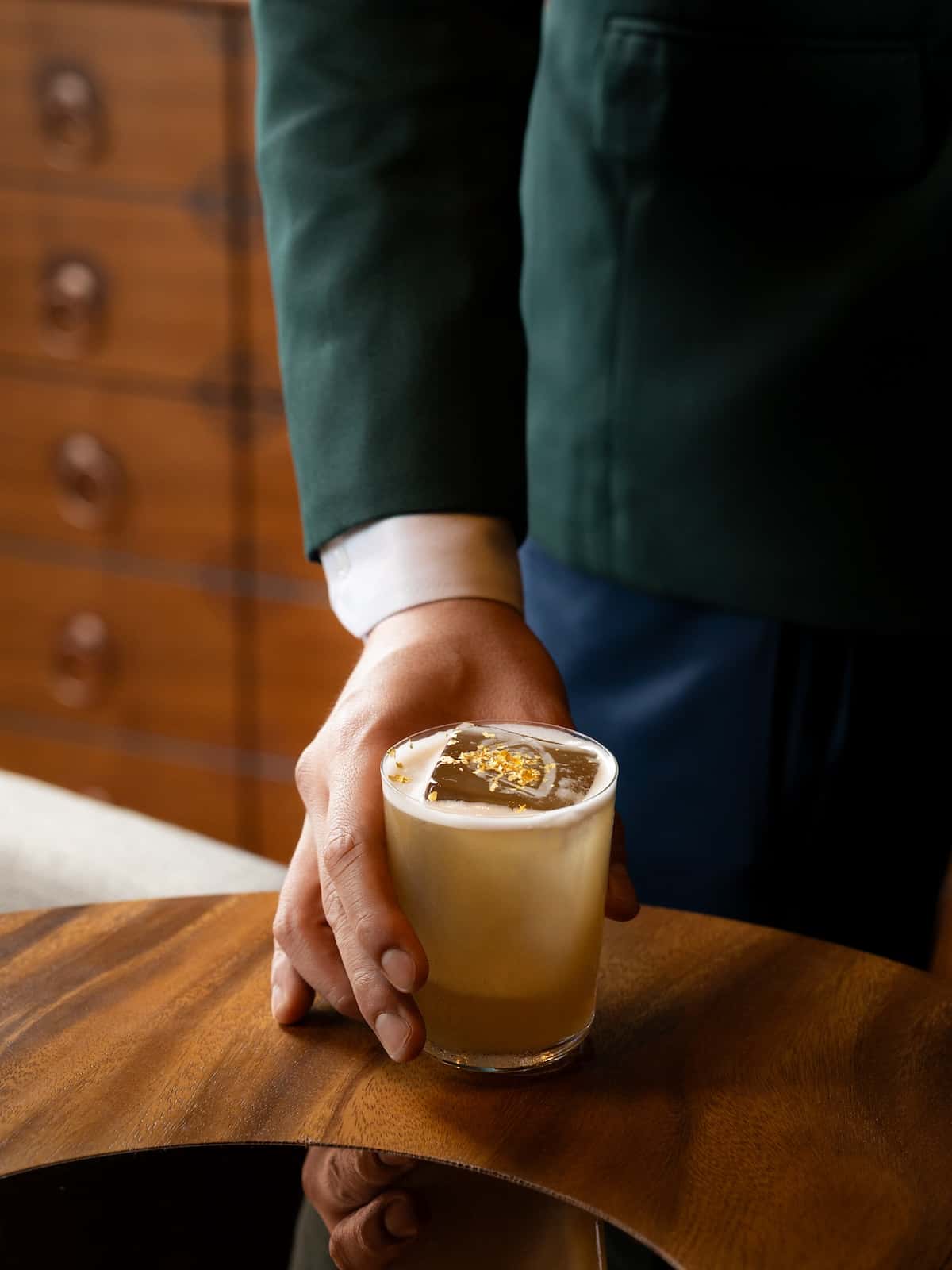
Kavish knows of no other bar aging cocktails in clay on this scale. At first, it was a trip into the unknown, with very little research to go on. “At the start, we didn’t know how it would turn out,” he admits. “What we found is that it’s different from barrel aging. A wooden barrel imparts flavor to the drink. Clay, in a sense, extracts from it. If you put a very high-proof cocktail into clay and let it age, over time it softens, gaining more texture, more roundness and some very subtle notes.” In some drinks, the clay adds a touch of salinity.
“Bar Kap started from one idea: embrace the 140 years of history the house already has, because history is one of the things money can’t buy,” he says. Eight people help him “chase perfection every single day.”
Bar manager Edwin Tan came from Sago House and The Cufflink Club. “Edwin runs the bar, supported by Chris, our assistant head bartender, and Sherwayne, our senior bartender and resident prep wizard,” Kavish lists off. “Our newest member is Schyler, a junior bartender who had never worked in a bar before Bar Kap. On the floor, Grace Nirmalan, our assistant general manager, lives up to her name as the most gracious of hosts, with Mee Kee, Aiden and Trisha supporting her.”
Past Lives
The house, it quickly becomes clear, has lived multiple lives. Tan Yeok Nee built it in 1885. He was a Teochew merchant who made his money in pepper and gambier and ran spirits and opium farms in Johor and Singapore. Then the railway came. It took the land in front of the house for a station, and a British station master moved in. From 1905, it was St Mary’s Home and School for Eurasian Girls, then the Salvation Army’s headquarters until 1991. Most recently, it was a traditional Chinese medicine clinic. The house was made a national monument in 1974. And the Karim Family Foundation restored it and opened it to the public in 2025.
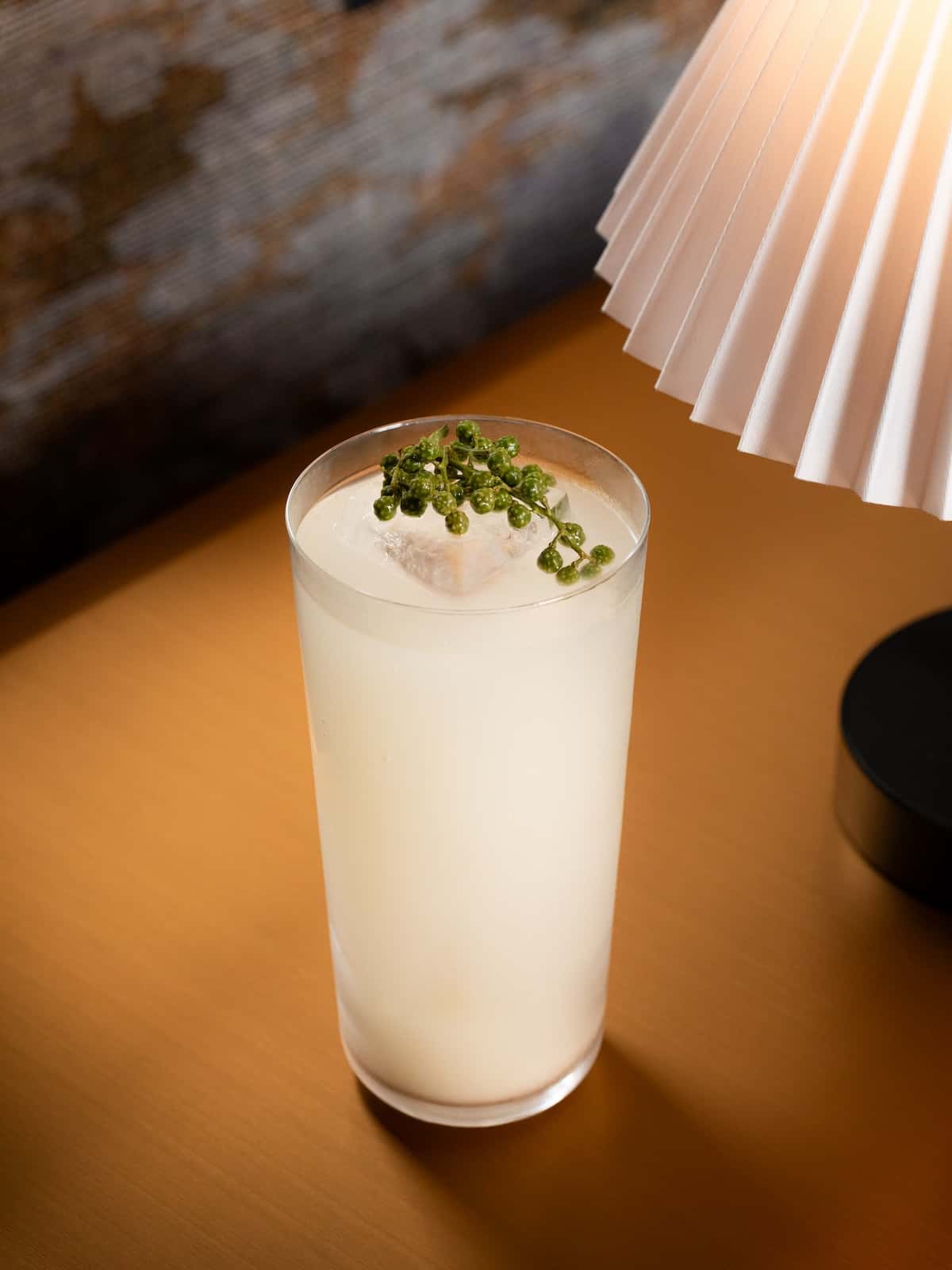
The menu follows those lives in order. Each chapter has three cocktails and one without alcohol. Kapitan belongs to Tan Yeok Nee. Its Pepper Peddler mixes baijiu, gin and makgeolli with long pepper, the spice that built his fortune. It is one of the bar’s best sellers, at 10 to 15 a night.
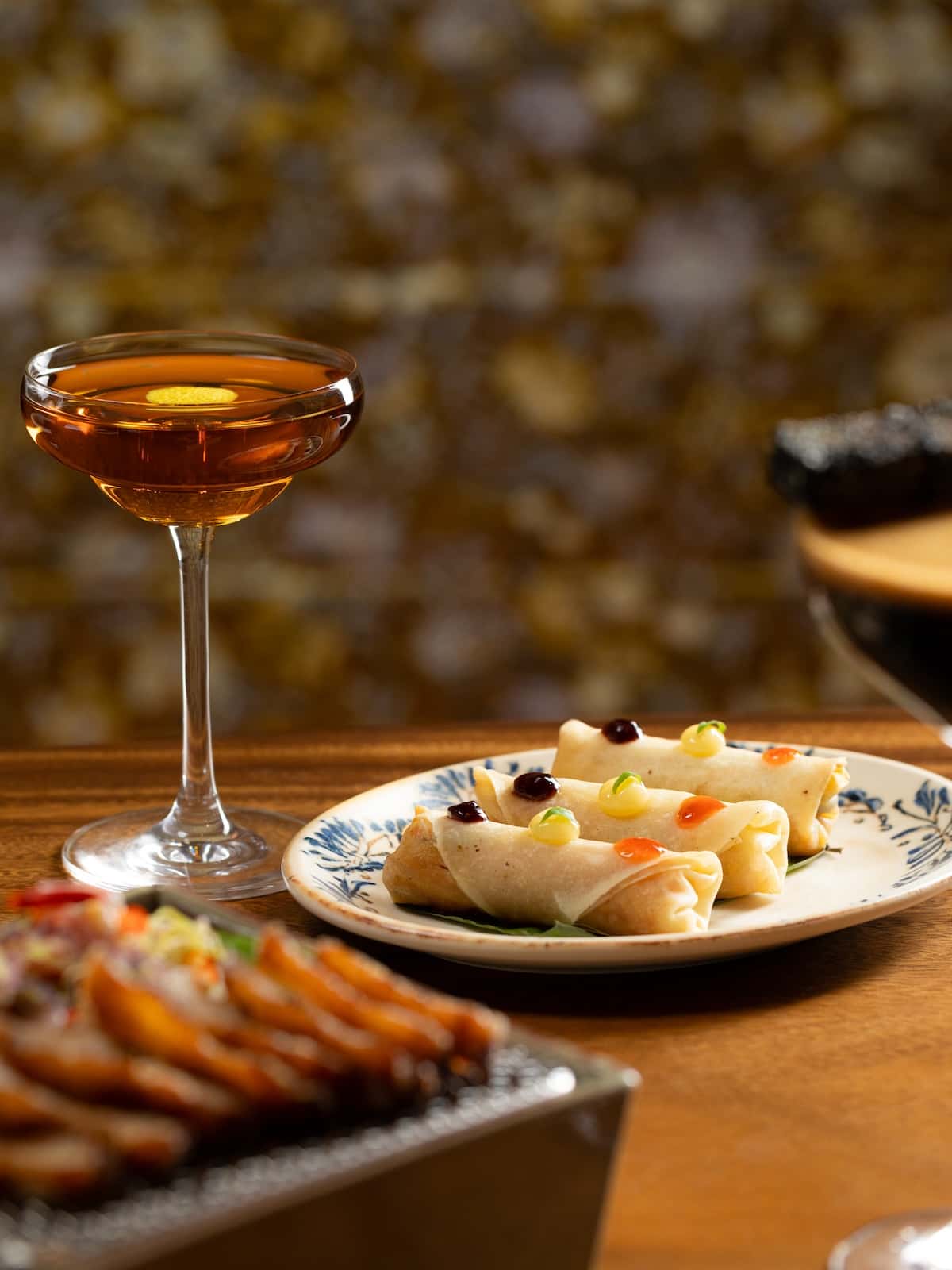
Station Master has Tank Road, named for the old railway hub down the street. It is scotch, Campari and burnt orange, built like a whisky sour. Its Dynamo is aged in purple clay jars, part of what the bar says is Singapore’s first clay-aging program. The clay softens it and takes some of the sweetness out of the amaro.
Taking Orders
Order, inspired by the school and Salvation Army years, takes a quieter turn. Lights Out is a martini of gin, secco vermouth, mandarin and pandan, poured at the table. Dynasty reflects the house as it is now. Its TCM Drawer No.3 is soy milk, ginger, honeydew, chestnut honey and gula melaka, served in a ceramic cup – referencing its time as a clinic.
Local flavors run through the list. “There’s the Johor Express, which uses calamansi, a flavor every local knows,” Kavish says. “We also work with barley and oolong tea in other drinks, like the Last Call.”
There is a full food menu too. The Mee Kapitan tosses house noodles with minced pork, shrimp paste, pork lard and sakura ebi in a spicy mala sauce. It reminds people of bak chor mee, the local favorite, with a modern twist.
A Destination Bar In Singapore
“In many bars I’ve visited, the food feels like an afterthought,” Kavish says. “At Bar Kap it couldn’t be, because we’re a destination. There aren’t other bars in the vicinity. So the food menu had to be versatile. Some guests come for an aperitif and a snack before dinner elsewhere, and others want to settle in for drinks and a full dinner. The program is designed for both.”
The sense of place carries into the food as well, like the ice cream sandwich. “In Singapore, ice cream vendors put a scoop between slices of rainbow bread,” he says. “We reinterpreted that in a modern way and presented it well.” Bar Kap’s comes with raspberry ripple, peppermint or sweet corn ice cream.
Three months after opening, the team is still geeking out on the details, like how much of the story to tell guests. That begins at the booking. “Someone booking a business meeting, a date, an anniversary or just a drink needs a very different approach,” Kavish says. “Then at the door, our hostesses are trained to pick up small nuggets of information from guests – basically reading the temperature. That gets passed to the whole service and bar team.”
“We’re all well versed in knowing when to give the full big picture, like the House of Tan Yeok Nee being built in the 1880s, and when to stop explaining the concept,” he says.
True To History
The house is also the headquarters of the Karim Group, which owns the bar. At the back, where Tan Yeok Nee kept his family, are the offices. At the front, where he did business and met clients, the team hosts guests at the bar, and the house’s other outlets, Jing Studio tea room and Loca Niru, the group’s French-Japanese fine-dining restaurant.
“So we’ve kept true to how he structured the house,” Kavish says, “and I think he’d be pretty happy about that.”