


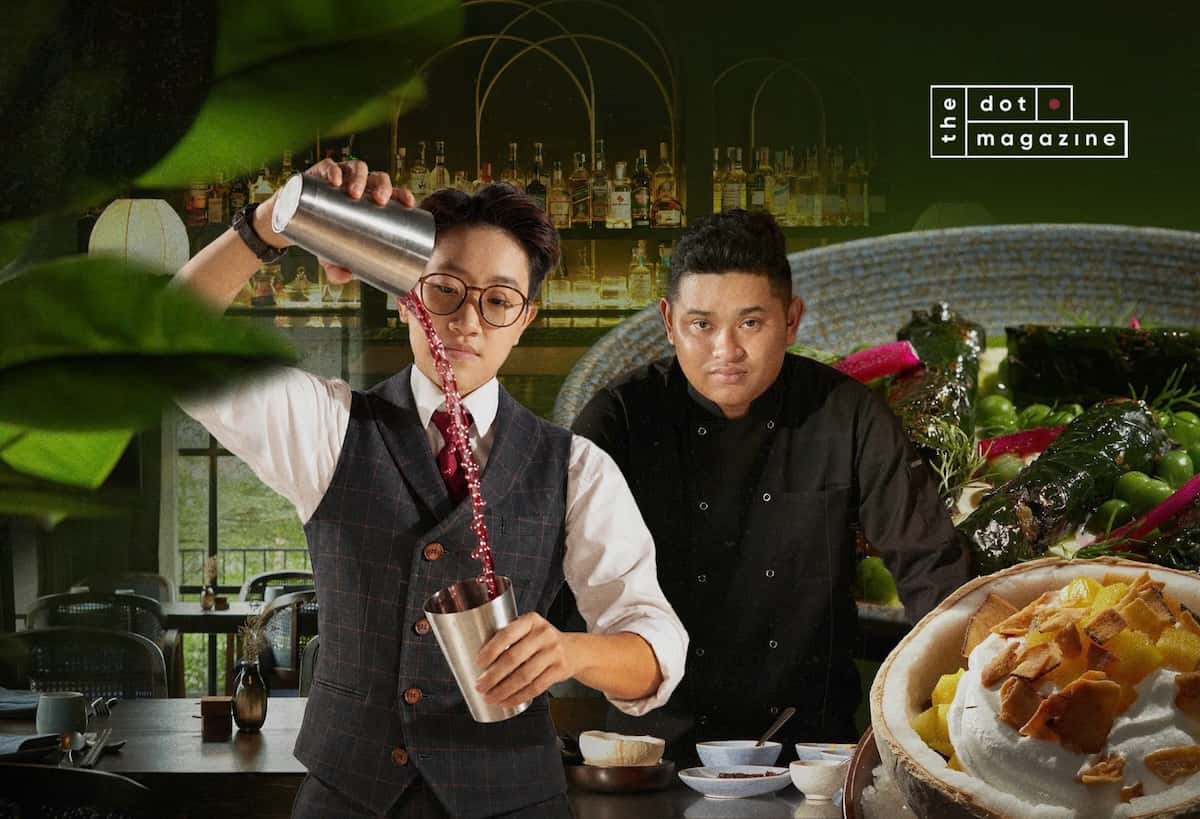
 Ky Vat and The Keepsake share an address in Danang and a name – kỷ vật is Vietnamese for keepsake. Downstairs, the food keeps its feet on the ground. Upstairs, the drinks take off around the world.
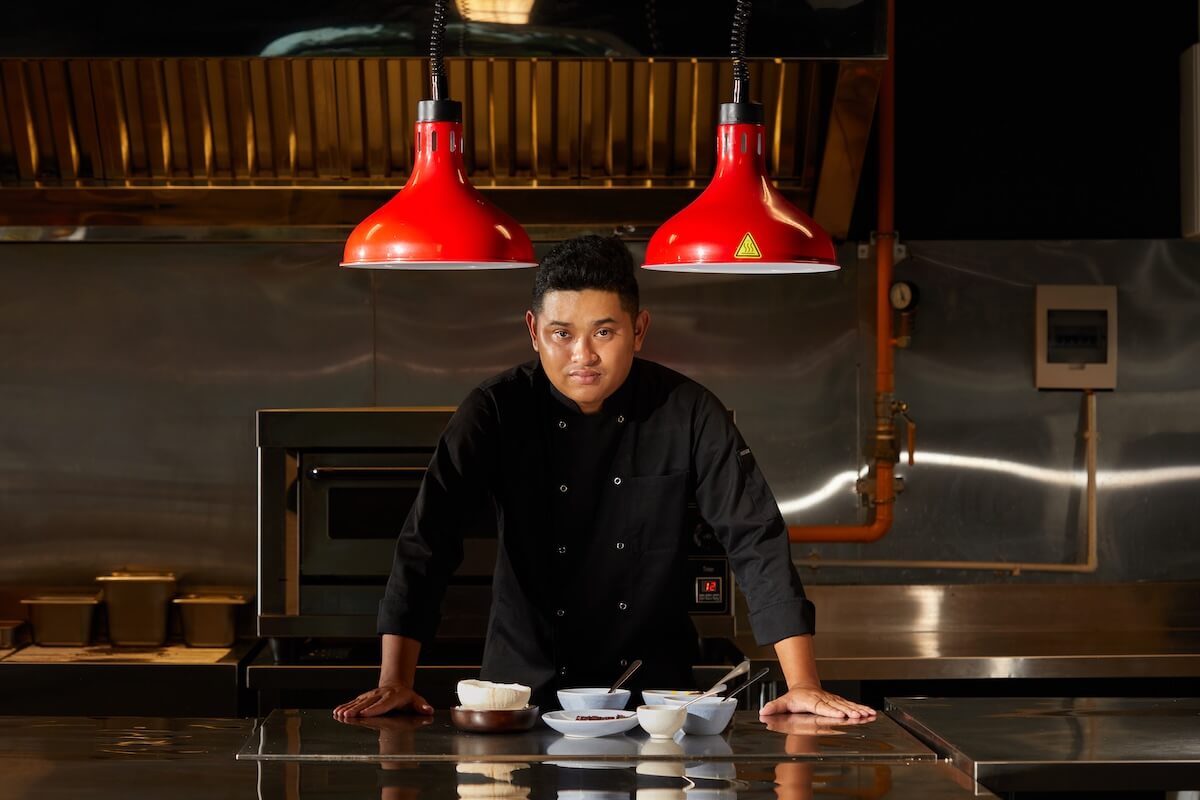
“You know you have gone too far when the guest needs an explanation before they can enjoy it,” Chef Nguyen Bao Tuan says, admiring the full room at Ky Vat, the modern-Vietnamese, seafood-driven Danang restaurant which he helms – friends talking over each other across a tray of grilled bề bề, a family on vacation reaching for the last skewer of satay, dating couples on their second glass of wine.
Tuan spent 10 years in hotel kitchens, working up from the junior ranks to chef de partie and then sous chef – hot kitchen, cold kitchen, banquets and a handful of outlets in between. Then he left hotels to consult, writing menus for Vietnamese, seafood and brunch concepts, training more than 40 cooks and helping open three restaurants. But a consultant usually writes the menu and is gone before the guests arrive. Tuan wanted to stay for moments like this.
Coastal, Generous, A Little Unexpected And Very Vietnamese
And because Ky Vat is where he gets to cook his own way.
That means seafood bánh cuốn, still its wholesome and warming self, with crab, prawn and fish cake tucked in under silky rice sheets and chili tom yum on the side. “It’s coastal, generous, a little unexpected and still very Vietnamese,” Tuan says.
Ky Vat, then, is shot through with childhood memories and sharpened by the techniques he developed in five-star kitchens. The creative touches come in “only when they make the dish better.”
Take his bún bò Huế, built on a lobster bisque base. It still tastes like bún bò Huế. The seasoning, the memory and the intangible feeling of comfort are still there. “The technique gives more depth; it does not erase the original,” he says.
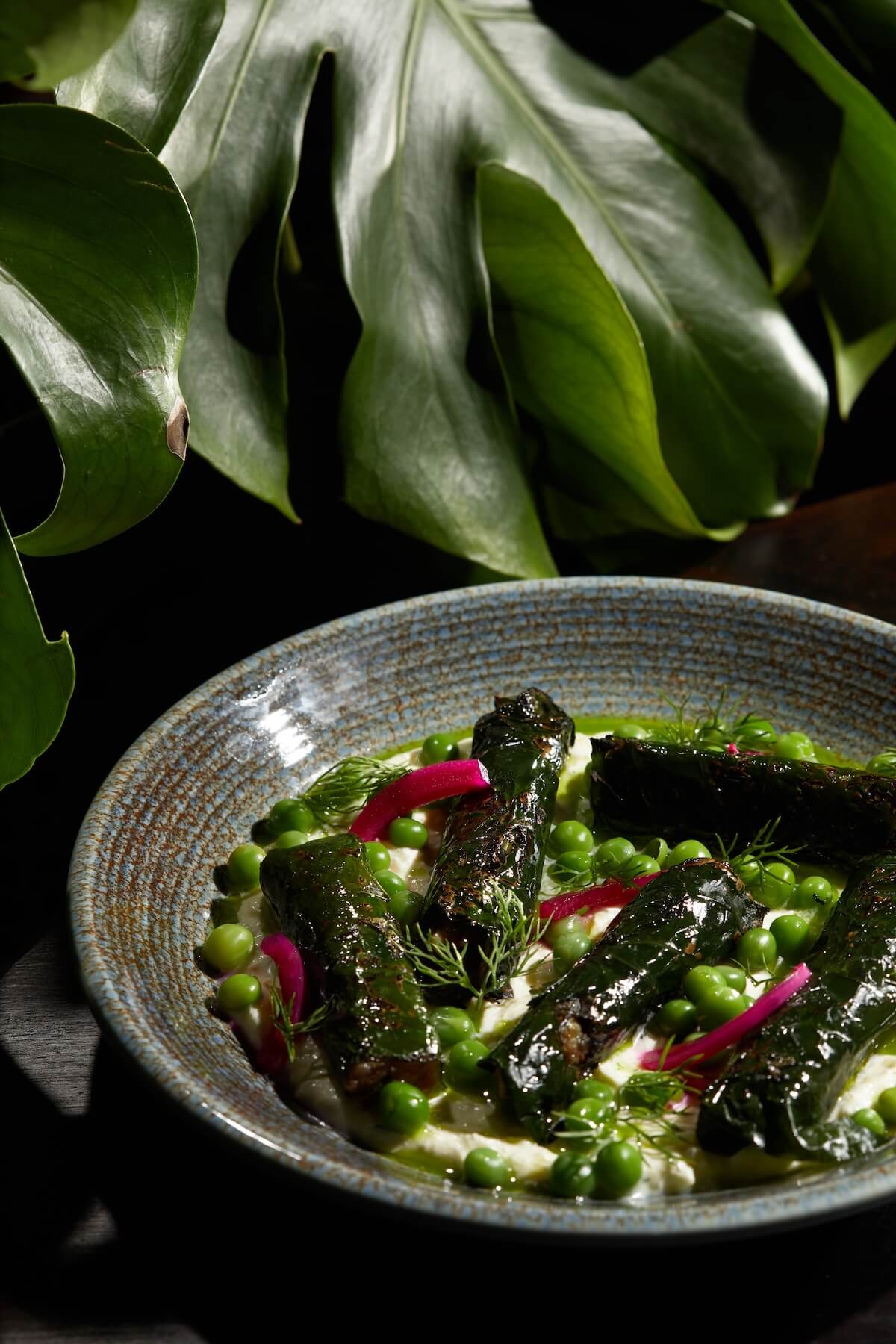
Then there’s the beef tartare that tastes like pho, only here you wrap it in rice paper. And there’s the kind of honeycomb cake Tuan ate as a child – “personal, but still very easy to enjoy” – now with salted coconut cream, pandan custard and mango.
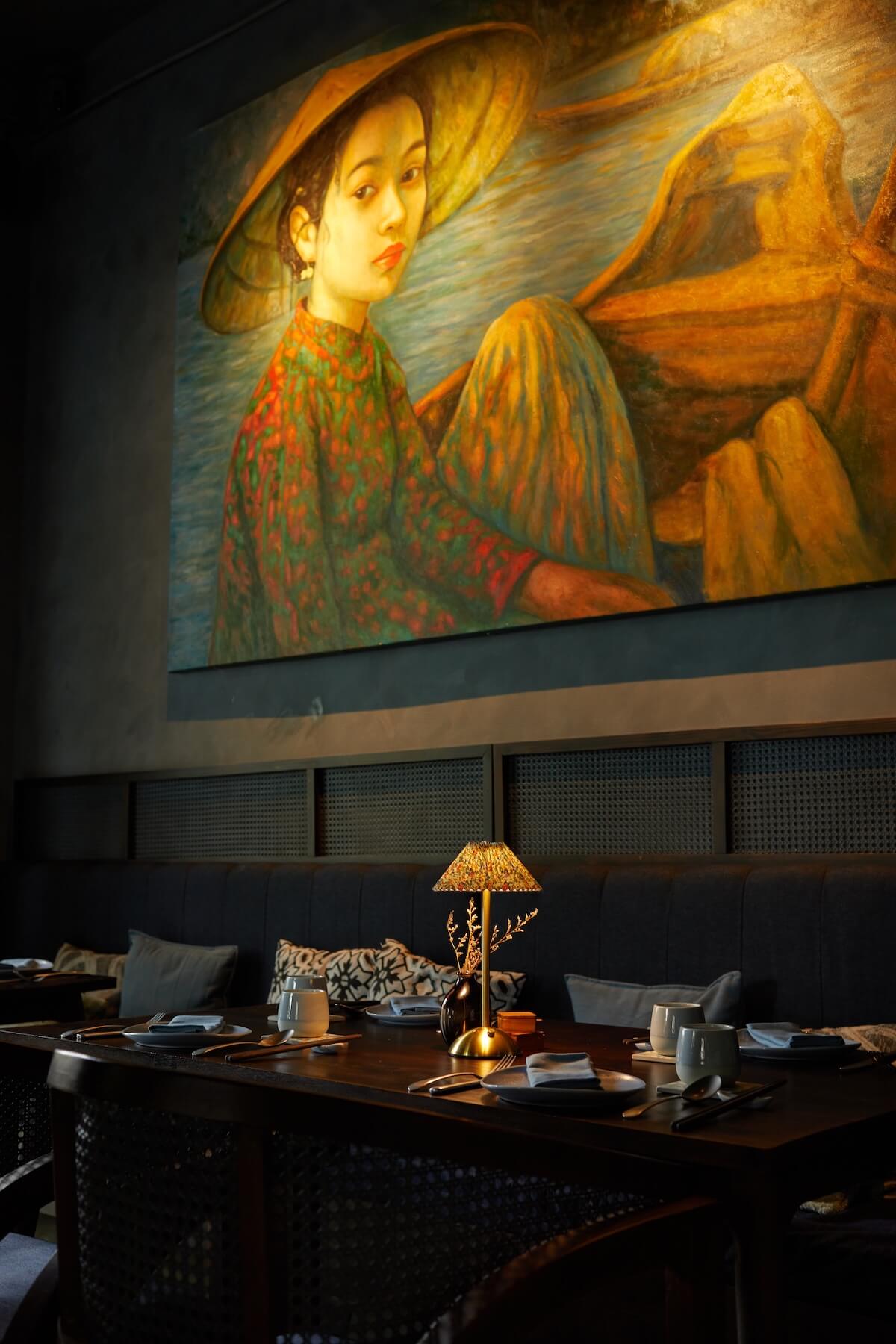
In the painting on the wall behind him at Ky Vat, a woman in a nón lá looks out past the boats and the river pictured around her, and everyone sitting in front of her in the restaurant.
They keep the lighting low in the room, matched to the painting, as if out of deference to her. The decor takes its cue from her too. Black wire cages hang at different heights, woven into the shape of Vietnamese bamboo fish traps. Underfoot, blue, sage and ochre tiles spill across the polished concrete in free-form shapes, like pools left by the tide – the same shape reappears in Ky Vat’s raised dining room.
Ready For The Next Thing
She has the face of someone who has watched ships come and go along this coast for centuries. She doesn’t look easy to please, but she seems to approve of the food.
Perhaps it’s his reverent attitude she appreciates. “You can’t replace a plastic stool, a steaming hot bowl of noodles from the pot, smoke from the grill and the sheer speed of a local restaurant. That would be arrogant,” he admits.
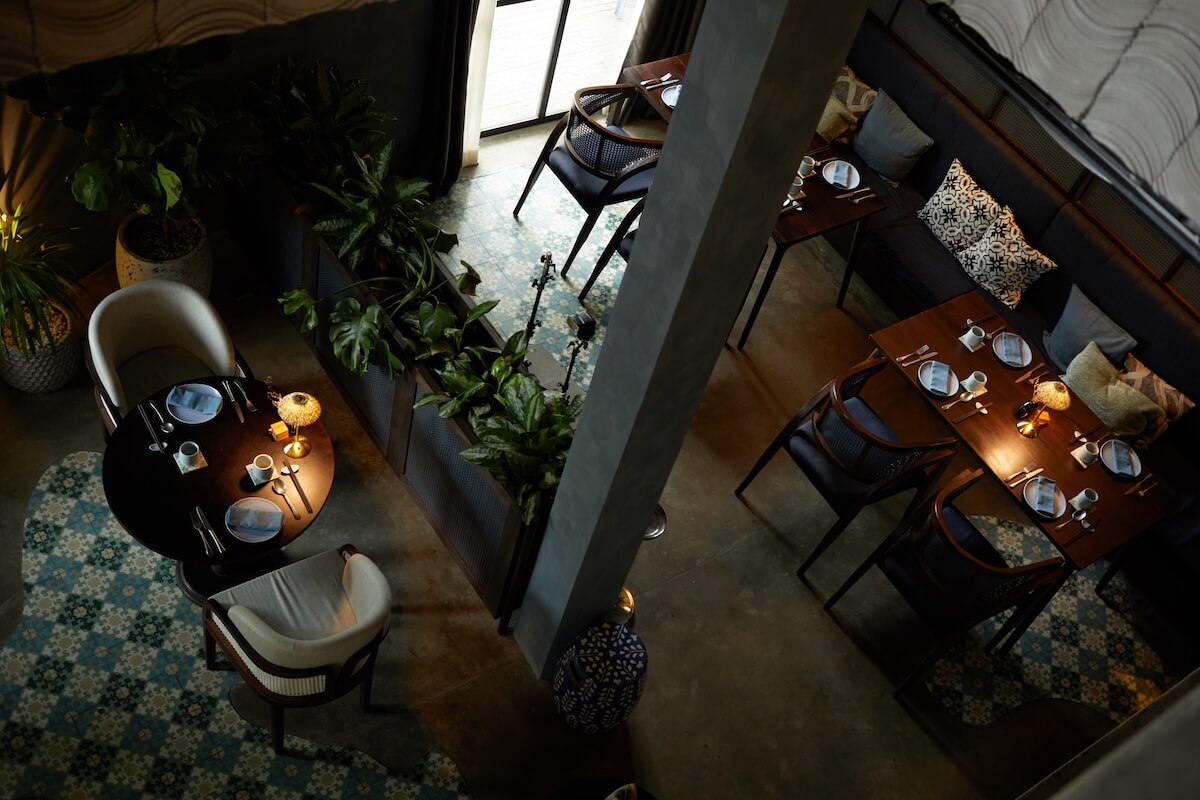
Ky Vat isn’t trying to. It started out as mostly seafood, like plenty of places in town. Now Tuan thinks the city wants something more. “Danang is ready for the next thing,” he says. To him, that means modern Vietnamese.
And anyway, the street still finds its way onto the plate. “It tastes coastal, but there’s not only seafood, and throughout there’s salt, chili, acidity, herbs, smoke…and comfort,” he says, smiling.
While he’s been talking, a steady stream of people has been heading through the black space beside the painting that leads to the stairs.
We follow them up to The Keepsake.
Alive Till Forever
The staircase immediately transports us somewhere else. The brick walls are painted deep red and hung with paintings like a stage set. A candle flickers on every step. Brass table lamps stand on little wooden shelves fixed halfway up the wall, an unusual place to keep a lamp.
Between them the frames crowd in – ornate gilt ovals, plain wood and black. The paintings are as eclectic as the frames. There’s a windmill, a gray seascape and a pencil sketch of a face. Across the middle, in gold lettering, the wall says, “Keep this alive till forever – that is, if forever exists.”
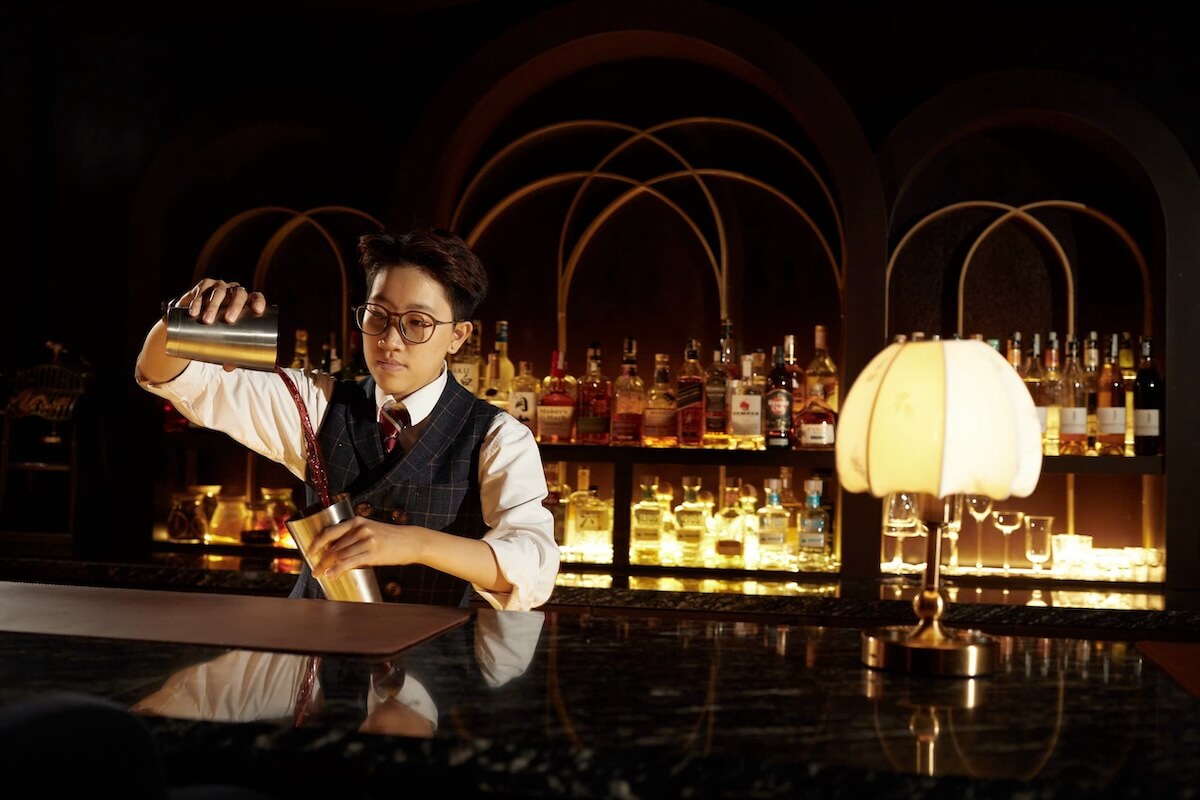
At the top, a padded red door with an ornate brass handle opens onto the bar. The ceiling is coffered and painted black. Behind the counter, the bottles stand inside a row of tall arches, each one traced in thin brass and lit from behind like a chapel window. The counter itself is black granite flecked with white. At one end, a lampshade embroidered with blossom glows and red velvet armchairs wear fur throws. In another corner, a fringed lamp lights a globe and a stack of old suitcases. It looks like the home of someone who came back from a grand tour and never unpacked properly.
The Keepsake Is For Dreamers
Downstairs, Ky Vat keeps its feet on the ground. It’s Vietnamese, with a twist. Upstairs is for dreamers, and the menu, called ‘Around the World’, is the hot air balloon out of here.
The drinks are elegant and well balanced. And, like the food at Ky Vat, they start somewhere familiar. ‘Nero 1919’ is a Negroni at heart, ‘Yuzu Silk’ is a whisky sour and ‘The Siam Colada’ is a piña colada. Then they set off across the world.
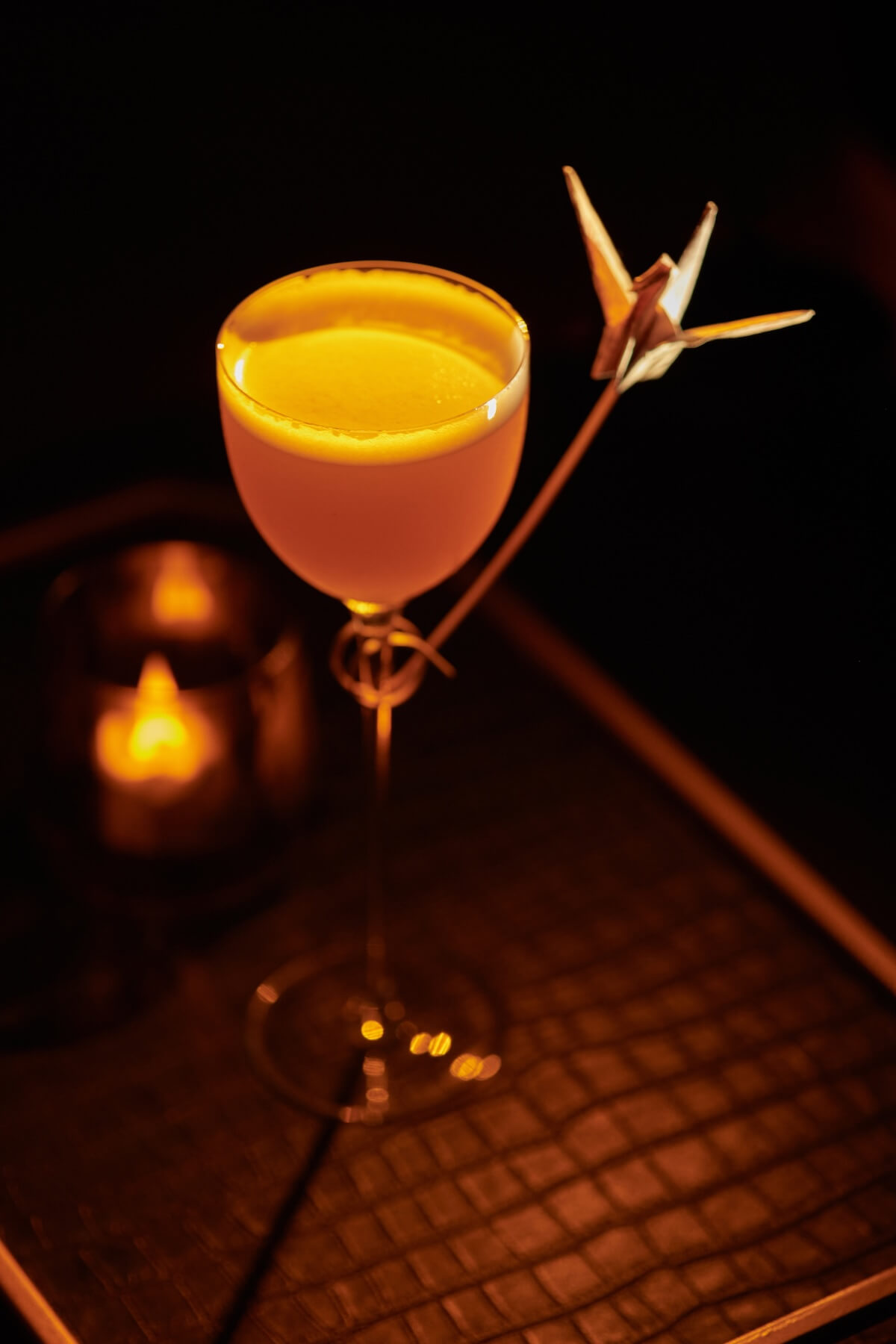
“The ‘Yuzu Silk’ is soft and sharp at the same time – egg white on top, yuzu underneath, the whisky holding it together,” says Nguyen Quan, who the bar calls its curator, as Linh Phan carefully pegs a paper crane to the stem of the glass. “The ‘Nero 1919’ is the opposite. Dark, dense, a little sweet, with cherry and cocoa where the bitterness usually is.”
“We wanted some very solid cocktails. Without being too creative,” he says. “That’s why we kept it to only eight.”
The eight that made it each stand for a country, sketched in pencil and watercolor on its own panel of a fold-out menu, with a faint skyline behind the glass. Thailand’s colada comes with passion fruit, coconut foam and roasted rice. Mexico gets ‘Mi Corazón’, made with agave, sapodilla, coriander and lime and finished with chili salt. Korea’s ‘Midnight Bingsu’ is vodka, soju, Midori, blueberry and fresh mango, imagined as a bowl of shaved ice.
The Comedown
When Chef Tuan said giving explanations means you’ve gone too far. He could have been talking about The Keepsake. Nobody needs an explanation up here either. Each panel of the fold-out menu gives the country, the ingredients and the price, and that’s all you need.
The last stop is home. Vietnam gets ‘Good Morning’, with Sampan rum, Vietnamese coffee and condensed milk, served in a floral china teacup with a key stenciled onto the foam. It’s a cà phê sữa đá that has stayed out all night. To avoid the same fate, it’s our last stop too.
Every balloon comes down eventually. Ours lands back on Lê Hồng Phong, down past the candles and the woman in the nón lá, and onto the street, where the plastic stools are still out.