


Not every great opening gets a press release. Sometimes it’s in a villa tucked off a side street, a speakeasy behind a bookshelf, or a wine bar that started as someone’s living room and kept the same vibe in venue two. What’s common to this list is lots of places have taken a far eastern angle from Nikkei cuisine, the lauded blend of Peruvian and Japanese cultures, to sushi bars (and not sushi bars), and even fresh fish treated like its in a yakiniku joint.
Look close and the pattern emerges. A sizable Nikkei restaurant in a five-star hotel. A sushiya insisting – politely but firmly – that it is not a sushi restaurant. A yakiniku grill that swapped meat for fish. Japan, it seems, is taking over.
The rest of the list fills in around it: a Tibetan kitchen (admittedly not as new as the rest) run by filmmakers who had never worked in hospitality, a Basque izakaya on the riverfront, a nightclub with a pacing strategy, and a tasting menu that puts tiny cow-shaped biscuits in the dessert. None of it was coordinated. All of it is worth your attention.
Here are nine places that have opened, some have settled right in, and all have earned a spot on the list.
Nikura and Pisco Hana
Finally, the hoardings are down outside JW Marriott Hotel & Suites Saigon’s signature space, revealing Nikura – an expansive Nikkei concept (with over 90 seats and with another 40 set to be added in the courtyard) helmed by Peruvian chef Ivan Casusol Rossi.
Across the hall is Pisco Hana, a bar and lounge with a speakeasy soul serving the sort of reliably good classics every hotel bar should – Martinis and Manhattans – alongside a creative signature menu by Nguyen Huu Phu, formerly of Hybrid and Irusu. The concept celebrates local talent throughout: Jade Nhat Anh joins as restaurant manager and somellier, bringing some stellar service and sake additions to the wine list.
The open kitchen features raw wood blocks and three looming bell-shaped lights etched with icons around the sides, with softer touches up front – colourful patterned sofas and chairs, Peru’s Vinicunca (or Rainbow Mountain) painted on the plates and more green peaks for chopstick holders.

The menu leans heavily into seafood, with the citrus-forward acidity that defines the cuisine running through a signature red snapper ceviche and salmon with coconut citrus sauce. There are braised unagi rolls, and grilled octopus. And beetween the dishes, gyotaku prints – the traditional Japanese fish-printing technique originally used to record catches – depict fish and octopus dancing across the menu.
Through Pisco Hana’s secretive wooden door, the menu is divided into five sections: bright citrus, warm spice, deep umami, fruity, and fermented. The Tiger Milk from the umami section, arrives topped with a crispy fish-bone garnish that slides neatly onto the rim of the glass. It’s a gently smoky signature with some heat that builds steadily, and has a long mineral finish.
Why: Nikkei cuisine in Saigon at scale and a bar-lounge with a speakeasy soul.
Where: JW Marriott Hotel & Suites Saigon, Hai Ba Trung, District 1
Vore Saigon
Vore – as in carnivore or herbivore – marks the return of Long Cuong, former head chef of Esta. His new restaurant occupies a villa tucked into an alley off Nguyen Binh Khiem, with a bright open kitchen and counter seating downstairs and a dining room above.

The 12-course menu rolls along at a comfortable pace and features food that looks like food: a scallop and mangosteen cracker shaped like a starfish, a maple-leaf biscuit, a signature Long An mallard duck with layered mushrooms for feathers and a black garlic sauce for a head. Even the dessert – built around surprisingly sweet Moc Chau strawberries – arrives with a milk foam inlaid with tiny cow-shaped biscuits.

Fun as the presentation is, the dishes are consistently layered in flavour, and the young Vietnamese team navigate the service with ease. Chef Long Cuong – the kind of chef who’d rather explain a dish than take a bow for it – appears between courses to talk through the food, unhurried and genuinely pleased to do so.
Why: Twelve courses that look like fun and taste like a chef who has something to say.
Where: 25/61 Nguyen Binh Khiem, District 1
Contact: Website | Facebook | Instagram
Papi
Papi is designed around a simple insight: people don’t want the same energy all night. The space is built to move – a bar area for the early social hours, a sofa section for those wanting something more settled, and a dance floor that gradually becomes the centre of everything as the night builds. The shift is deliberate and the pacing considered. Most guests only notice it in retrospect, once they’ve stayed long enough to feel it happen.
The bar program is headed by Tung, a mixologist with 15 years behind the counter, winner of Diageo Reserve World Class Vietnam 2013 and a top-16 finisher at the global final. Jason, founder of Mami Cocktail Bar and 84 Proof Whisky Bar, adds energy on both sides of the counter. Music direction comes from Nimbia – producer, early pioneer of electronic music in Vietnam, and a familiar name to anyone who followed The Remix or The Heroes. The Art Deco bones of the space are built to outlast the moment, all considered materials and strong lines.

And there’s one misconception the team think it’s worth correcting: Papi is walk-in friendly. The bar area is substantial and intentional and the extended cocktail menu there to be explored. Table bookings, then, are not a prerequisite for a good night.
Still, the seat to find is the Side Hustle area – intimate enough to settle into, close enough to the standing zone to feel the room build around you, and positioned perfectly to step onto the floor when the energy demands it.
Why: Nightlife with a plan and a side hustle.
Where: 123 Le Loi, District 1
Contact: Instagram
Yakiuo Ishikawa Thao Dien
The concept sounds simple enough: yakiniku, but with seafood instead of meat. First opened in District 1, in a poky izakaya-style basement space beneath a branch of Kin Hotels, the second Yakiuo Ishikawa, in Thao Dien, is more design-conscious with outdoor seating in a lively store-front bar area, and counter seating and booths inside.

The format is omakase (although there’s an à la carte for anyone with commitment issues) – with courses guided by the chefs, each ingredient introduced and explained as it arrives at the grill – and the focus throughout is on premium seafood sourced directly from Japan. Behind it is Lanh Phan, a fish importer turned restaurateur whose portfolio already includes MAGURO Studio and SABI Sky Omakase.
Each table has a grill, the attentive chef daubs with sesame oil, before dabbing the cuts of fish on the BBQ, occasionally clicking on a flashlight to check the condition of the fish.

The dish to anchor the experience is the Signature Sanshokudon – uni, otoro, and ikura over red vinegared rice – which does what the best Japanese food tends to do: lets exceptional ingredients do that talking.
Additional theatre comes in the form of an occasional whole-tuna cutting demonstration, where chefs break down the fish in front of guests and the most prized cuts are offered in a small auction. It’s the kind of moment that reminds you where the ingredient actually comes from – and how much of the craft happens before anything even touches the grill.
Why: Yakiniku but fish with an omakase format and tuna auctions for good measure.
Where: 79 Xuan Thuy, Thao Dien
Contact: Website | Facebook | Instagram
Itadaki Saigon
Chef Katsuhiro Ichimoto – former head chef of Azabu, a Michelin Guide Vietnam selection for three consecutive years – is careful to point out one thing: Itadaki is not a sushi restaurant.
The distinction matters to him. The omakase here is built around multiple techniques applied to each ingredient, drawing out what he calls its fullest expression, rather than following the conventional sushi-and-sashimi path.
The space is calm and intimate with warm modern lines with quiet Japanese aesthetics, and the counter seat is the one to book – close enough to watch Ichimoto work, and to understand the precision the concept is built on.

The most quietly extraordinary detail is the tableware. Many of the plates were brought personally from Japan, and some are genuine antiques – pieces over 250 years old, passed down through the chef’s family. It’s not a detail that announces itself, but once you know, it adds a different weight to the meal. Serving omakase on ancestral ceramics is rare anywhere; in Saigon, it’s singular.
Vietnamese ingredients don’t appear centre-plate, but the chef weaves them into seasonings and preparations throughout – a quiet intellectual thread for guests paying attention. He’s happy to explain, for those who ask, perhaps with a reminder that this isn’t a sushi restaurant.
Why: Omakase served on 250-year-old family ceramics that is definitely not a sushi restaurant.
Where: Ground Floor, Suzu Saigon Hotel GF, 16 Ngo Van Nam, District 1
BOCĀO Basque Izakaya
Julien Thabault – the French chef formerly of Stoker and Octo – has opened his most personal project yet, this time with his friend Ruben, a native of Alicante and the reigning Saigon Paella Competition champion (he runs the weekend paellas here at Bocāo). The concept is Basque: fire, fresh seafood, good ingredients left largely to speak for themselves. As far as either of them know, it’s the first Basque restaurant in Saigon.

The location is right on the Thao Dien riverfront, Landmark 81 across the water, a breeze, boats passing, and enough distance from the city’s noise to feel like a minor escape. The terrace fills first, but Julien will tell you the bar seats – with a direct view of the kitchen – are the underrated ones.
The format borrows from izakaya culture: plates arrive as they’re ready, the drinks keep coming, and no one is about to hurry you out. It’s lively without being loud, and the wine list – boutique, carefully chosen, with a few bottles that never appear on the menu – reflects a chef who knows what he’s doing beyond the kitchen.

Start with a gilda and a glass of vermouth. The pinxto – anchovy, olive, piparra pepper – is about as classically Basque as it gets, and the pairing is almost unreasonably good. Move to the grill from there: the Hokkaido scallops have been on since day one for good reason. And leave room for the Basque cheesecake. Guests have been known to order a second.
Late in the evening, the lights drop, the music lifts and the bottles outnumber the glasses and that’s when the place really finds its rhythm. Just walk in and find out.
Why: Basque food on the Thao Dien riverfront.
Where: 12 Nguyen Van Huong, Thao Dien
Contact: Facebook
2cms
The point of the name 2cms, as the founders explain it, is that if you’re sitting two centimetres closer to the person next to you by the end of the night, they’ve done their job.
2cms started as a living room in a PVC modernist apartment building – secret gatherings, good wine, curious people – before graduating into something more official.
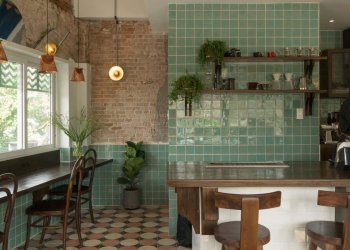
The format is a small neighbourhood wine bar where the lights are low and the list adventurous, focused on artisanal producers working organically and with minimal intervention in the cellar.
The food is a monthly-changing tapas menu of no more than ten dishes, helmed by Hanoian chef Viet Nguyen, who learned to cook from his mother before passing through Ngoam, Itria in San Francisco, and Albi in Washington DC. Resident chefs from around the world cycle through for week-long takeovers. And the wine menu rotates every two weeks.

The team is small and worth knowing. Nhi – sharp-eyed, relentlessly stubborn, deeply reluctant to be called a sommelier. Nam – sensitive, light-averse and the force behind the bar’s signature mood lighting and its bread lamps.
Where you sit depends on the night. The stone bench outside suits people-watching and maybe first dates. The table by the kitchen is for those wanting to disappear a little. The bar seats are for solo visitors, conversation, and the curated art pieces left deliberately within reach.
Some pairings exist only for a week. The wine you want may already be gone. That’s the point – come back. And get a little closer.
Why: Natural wine, rotating tapas, and a name that doubles as a mission statement.
Where: 72 Huynh Man Dat, Binh Thanh
Amane
Four co-owners. One conviction. If they were going to open a sushi restaurant, that restaurant would do one thing properly and commit to it fully.
Amane, then, is a sushiya in Japan Town devoted almost entirely to nigiri – not contemporary and definitely not fusion, just fish, rice, and the Edomae philosophy behind them.

Edomae, as the team will happily explain if you ask, is not about luxury or theatre. It’s a technique rooted in curing, preserving, and marinating fish, developed long before refrigeration existed. Today it’s about balance, maturity of flavour, and knowing when to stop.
The space is calm and counter-focused, with no loud soundtrack and no dramatic plating – only instrumental Japanese music, the wood in front of you, and the chef’s hands shaping each piece.
The biggest challenge the team faces, they say, isn’t competition. It’s expectation: Saigon is accustomed to bold, dynamic flavours, and Edomae asks for a different kind of attention. But when someone leans forward, quiets down, and takes that first piece slowly – that’s when they know it’s working.

Sit at the counter and order the omakase and let the sake tasting carry you across the courses – a curated selection chosen to move fluidly through the meal rather than pair rigidly course by course. Regular guests often arrive already knowing what’s in season, asking for the week’s specials before they’re offered.
Two seatings run each evening. Guests from the first frequently stay on, moving to the table at the back as the second begins. The room, already quiet, softens further.
Why: Pure Edomae nigiri in Japan Town that deserves full attention.
Where: 15F, Le Thanh Ton, District 1
Contact: Website | Facebook | Instagram
Om Momo
We’re a little late on this one, but any excuse to celebrate hitherto unseen cuisines (at least in Saigon).
Om Momo, Vietnam’s first Tibetan restaurant, arrived quietly – tucked away from the city’s noise, as its founders intended. It has spent its first year proving that momos deserve a permanent place in Saigon’s dining conversation.

The two founders, Tsering and Anto, are Tibetan filmmakers who wrapped a film project that led them into the restaurant business. Even though they knew nothing about it, they opened anyway.
The space has the feel of somewhere time moves differently – prayer wheels and prayer flags visible through the window, cosy enough that the city outside becomes background noise. But this is not a Buddhist vegan retreat. Tibetans love meat, and the menu reflects it – though vegetarians are well looked after too.
The momos are the focus, but the tender beef shapta is worth ordering alongside them. For drinks, Tibetan butter tea and a pot of Tibetan rose tea are the honest pairings – though the house cocktails hold their own. There are also six chili sauces on offer, not the three on the table, and a seventh – a secret, for the heat-seeking – available on request.

The most revealing detail about Om Momo might be that the owners occasionally send out free desserts and drinks to tables, quietly and without explanation, when a guest has moved them in some way.
Why: Tibetan momos in Saigon, opened by filmmakers who had no idea what they were doing but quickly got the hang of it.
Where: 11/2 Street 57, Thao Dien




 Wink Hotels' is a new kind of Vietnamese hotel made for the modern traveler and ready to take on the world.