


 Vietnam is the world’s second-largest coffee exporter – most of it cheap commodity robusta for instant blends. Saigon’s specialty scene is different. Roasters source directly from highland farmers. Baristas train for international competitions. And the best cafes in Ho Chi Minh City champion Vietnamese coffee by rewriting its reputation entirely. Coffee arrived in Vietnam in 1857. What followed – colonial plantations, sidewalk culture, apartment cafes, now the specialty movement – makes Saigon one of Asia’s most interesting coffee cities. You just need to know where to look to find the best coffeeshops in Ho Chi Minh City (spoiler alert, it’s right here).
 Vietnam is the world’s second-largest coffee exporter – most of it cheap commodity robusta for instant blends. Saigon’s specialty scene is different. Roasters source directly from highland farmers. Baristas train for international competitions. And the best cafes in Ho Chi Minh City champion Vietnamese coffee by rewriting its reputation entirely. Coffee arrived in Vietnam in 1857. What followed – colonial plantations, sidewalk culture, apartment cafes, now the specialty movement – makes Saigon one of Asia’s most interesting coffee cities. You just need to know where to look to find the best coffeeshops in Ho Chi Minh City (spoiler alert, it’s right here).
Saigon is coffee. Bitter and bold, and sweet in the end. The traffic swirls like a long stir through condensed milk. The lights blur the way caffeine blurs your vision for a split second before sharpening everything into focus.
Coffee In Vietnam: A Bit Of History
Coffee arrived in Vietnam in 1857 when a French Catholic priest brought a single Arabica tree. Let’s call it missionary work with benefits.
By the late 1800s, the French had established plantations around Saigon initially as a commercial crop for French settlers using local labor. The drink itself was reserved for the elite – French colonists, officers and urban intellectuals.
The Vietnamese adapted the French brewing method but made it their own, using sweetened condensed milk (because fresh dairy was scarce) to balance the bitter robusta beans that thrived in Vietnam’s climate.
The second half of the 20th century saw Saigon’s streets fill with ‘ca phe coc’ – makeshift sidewalk cafes. These were basic setups with plastic stools, no design and often tucked under trees or in small lanes. The proprietors served coffee using fabric net filters (‘ca phe vot’), a meticulous process requiring patience.
People didn’t care about the traffic roaring past. Quite the opposite – they’d sit for hours, reading newspapers, chatting with friends and watching the slow drip of the phin filter. Coffee became a social ritual, not just a beverage. ‘Di ca phe’ (going for coffee) meant meeting people, working, or simply thinking about life while waiting for your brew to drip.
From the 2000s onward, the old style started fading. Free wifi, air conditioning, music and better design became priorities. Still, corner location cafes with seats facing the street remained coveted spots.
The Best Coffeeshops In Ho Chi Minh City: The Evolution
Coffee became something people not only drank but felt and saw. Price increased to reflect not just the coffee but the service and location. Then, around 2015, Saigon’s most distinctive coffee evolution emerged: apartment cafes.
You’ll recognize the one at 42 Nguyen Hue, a nine-story building from the 1960s that originally housed American military advisors and government personnel. By the early 2000s, it had fallen into neglect. Then in the 2010s, young entrepreneurs and artists transformed the dilapidated apartments into independent cafes, boutiques and creative spaces.
The transformation was technically illegal at first (residential spaces turned commercial), but it became a cultural phenomenon. Each apartment became a unique cafe with its own design ethos – from minimalist Japandi to vintage nostalgia to industrial chic. Visitors could browse floors like a library, ducking into different spaces. Similar apartment cafes sprouted on Ly Tu Trong Street (built by the French in 1866) and Ton That Dam Street.
Coffeeshops In Ho Chi Minh City: Introducing Their Modern Iteration
Alongside apartment cafes, specialty coffee culture took root in the late 2010s. Places like The Workshop – probably the true Saigon original – XLIII Coffee, a coffeeshop as art installation imported from Danang – Hummingbird Café & Roastery, whose first location in an old house has now become Enigma Mansion, one of the city’s best cocktail bars, but now happily hides in an alley of busy Vo Van Than, and Grandmum – where The Dot Magazine’s gets its supply of freshly roasted beans – began focusing on transparency, bean quality (SCA scores above 80), and diverse brewing methods.
How We Chose The Best Coffeeshops In Ho Chi Minh City
Our criteria: quality of beans and roasting, consistency in execution, a meaningful contribution to Vietnam’s coffee culture, and spaces worth sitting in for longer than it takes to drain a cup. We mostly skipped chains in favor of independents specialty coffee shops in Ho Chi Minh City doing genuine work. Some are famous, some are hidden, but all deserve your time and money.
Your Quick Guide To The Best Coffeeshops In Ho Chi Minh City
Short on time? Here’s your cheat sheet.
Corner spots are most coveted. That means chains like Katinat are worth a visit – even though we’ve focused on indie start-ups here. Their locations at the Dong Khoi and Ly Tu Trong crossroads and further along Dong Khoi at its crossroads with Mac Thi Buoi, or the one on Nguyen Sieu, are particularly good for people watching.
Every Half is coffee chain of the moment. It’s seems to have gathered all the energy of its predecessors and turned them into distinctly modern Vietnamese coffee shops with a touch of retro style. Take the cool dilapidated villa energy at Ngo Van Nam, in District 1, or the flagship branch in Thao Dien, at 62 Hoang The Thien where they’ve moved their roasting operations.
For something unique, go to Grandmum, a small shop that has living-room vibes (there’ll probably be a kid playing and someone else tinkering on the piano) but these might be the best beans in the city, freshly roasted, perfectly prepared.
Aside from that go to Okkio at 151 Dong Khoi (turn right at the end of the alley and up the stairs) for its views of the Opera House. Mellow out at A Cafe Specialty Coffee after banh mi at Banh Mi Bay Ho or banh cuon at Banh Cuon Tay Ho 127. Feel the breeze and the energy of Thao Dien’s mostly expat community at Dolphy. Or dive into Saigon’s most caffeinated street, Nguyen Sieu, with 3T Egg Coffee, a branch of Katinat (all of which are best experienced at night, when this end of the street becomes packed), or back up to Bosgaurus and Cason for something more refined.
Or just follow your nose.
The Best Coffeeshops In Ho Chi Minh City
These are cafes we’ve visited repeatedly over years of living and working in Saigon. We prioritized places that shaped the city’s specialty coffee scene or represent its current direction.

Every Half Coffee Roasters
Co-founder Bi grew up in Buôn Ma Thuột, Vietnam’s coffee heartland, sneaking sips of his parents’ coffee as a kid. After more than a decade working in Vietnam’s F&B industry – including stints at The Coffee House and Urban Station Coffee – he co-founded Every Half in 2016 with Vo Duy Phu.
The name comes from a belief: every half coffee bean has its soulmate. Coffee lovers will eventually find their best cup.
Every Half started as an online platform sharing coffee with friends. Demand grew. In 2021, they opened their first cafe and roastery in Ho Chi Minh City. Multiple locations followed.
The mission centers on Vietnamese robusta. Not cheap commodity stuff. Fine robusta – carefully sourced, properly processed, skillfully roasted. They’re challenging the narrative in a world where arabica dominates. Bi sources beans directly from Dien Bien, Pleiku, Lam Dong, Dak Lak, Buon Ma Thuot. Light to medium roast profiles preserve natural flavors instead of burning them dark.
The results speak. Every Half won Overall National Winner Vietnam at the Global Coffee Awards Origin. Their Fine Robusta Cư M’gar took gold in the filter category. International recognition proving Vietnamese coffee competes at the highest levels.
But it’s not just about quality. It’s about climate resilience. Coffee production faces existential threats. Arabica is especially vulnerable. Robusta? More resilient. More sustainable long-term. Every Half also champions liberica – a species most farmers ignore. When processed correctly, it produces incredible coffee and grows almost anywhere, even at low altitudes. As climate change shrinks suitable coffee land, alternative varieties become essential.
In June 2025, they opened a new flagship cafe-roastery in Thao Dien spanning a 20-meter plot with natural lighting and balsa-toned architecture. Most roasting operations moved here from the original Vo Thi Sau location. The facility runs partly on solar power – approximately 100 kWh daily through a partnership with XSolar.
Their cafes often blend mid-century architectural preservation with modern coffee culture. The Vo Thi Sau flagship, tucked in an alleyway, carries tropical vegetation creating cool, comfortable ambience. Pet-friendly. The kind of place you settle into for hours.
Menu offerings span single-origin pour-overs, espresso drinks, creative cold brews like Coconut Blossom and Citrus Punch. Fresh baked pastries. Beans available for purchase. Pricing stays accessible – premium coffee without excluding regular people. Making high-quality Vietnamese specialty coffee accessible to the masses drives their whole operation.
Bi doesn’t claim fixed definitions of what makes coffee “best.” Each coffee has its own personality, origin, identity. The goal is helping people find their coffee soulmate. And along the way, building a more transparent, sustainable, climate-resilient coffee industry in Vietnam.
Why: Quite simply the specialty coffee chain of the moment. All previous coffeeshops in Ho Chi Minh City have been leading up to this.
Where: Võ Thị Sáu – 232/23 Vo Thi Sau, Ward 8, District 3 | Ngo Van Nam – 19A Ngo Van Nam, District 1 | Pasteur – 34 Pasteur, District 1 | Thi Sach – 26 Thi Sách, District 1 | Tu Xuong – 6E Tu Xuong, Ward Vo Thi Sau, District 3 | Thao Dien Flagship – 62 Hoang The Thien, Ward An Khanh, Thu Duc City | Ton Duc Thang – Saigon Riverside Office Center, 2A-4A Ton Duc Thang, District 1
Contact: Website

Bosgaurus Coffee Roasters
Nguyen Canh Hung worked as an engineer before business trips to Berlin and Amsterdam introduced him to specialty coffee. He tasted fruitiness and sweetness he’d never experienced. Inspired, he opened Bosgaurus Coffee Roasters in 2016.
It’s named after an endangered Southeast Asian bison. The parallel is intentional, like everything at Bosgaurus – Vietnamese coffee faces extinction risk buried under commodity robusta reputation. Bosgaurus Coffee Roasters exists to prove Vietnamese coffee belongs on the world map.
The original Saigon Pearl location sits in a French villa facing the Saigon River. It has a minimalist laboratory aesthetic. Transparent glass walls. Stainless steel everything. And a climate-controlled basement that maintains beans at 20-22°C. Recipes are dialed daily with refractometer readings. Every detail tracked.
Hung focuses on Vietnamese arabica through direct trade relationships. Exclusive lots of anaerobic and aerobic washed Catimor from Da Lat. Also sources Ethiopian, Kenyan, Brazilian coffees. Light roasts dominate – showcasing complexity. But he keeps dark roasts for traditional ca phe sua da. Made with arabica instead of robusta.
Bosgaurus Coffee Roasters has trained Vietnam’s barista champions. Tran Han won National Barista Championship twice while working here. And the cafe hosted World Barista Championship events bringing international champions to Vietnam.
The 2023 Opera House flagship treats coffee-making as performance. Oddly, there’s another across the street in the lift lobby of the Nexus Building. Beyond coffee there are excellent waffles, quick brunches and tropical juices. Now with four locations across Ho Chi Minh City. And complete transparency from seed to cup.
Why: A specialty coffee in Ho Chi Minh City pioneer still with an eye for a killer ca phe sua.
Where: Saigon Pearl: 92 Nguyen Huu Canh, Villa 1D5, Ward 22, Binh Thanh | Opera House: 12 Nguyen Sieu, Ben Nghe Ward, District 1 | The Nexus: 3A-3B Ton Duc Thanh, Ben Nghe Ward, District 1
Contact: Website

GRANDMUM Cafe
Hidden down an alley in Tan Dinh, not far from the Pink Church, GRANDMUM Cafe feels less like a coffeeshop and more like stumbling into someone’s living room. Piano. Turntable. Art on the walls. Wine fridge. Classical music playing. The space is tiny, intimate and almost residential. Finding it requires determination – taxi drivers struggle with the address and so, most likely, will you.
Owner Lê Nhã Thi is Vietnam’s first AeroPress Champion. She’s also a Cup of Excellence judge, wine enthusiast, food critic, and ran curated specialty coffee tours on Airbnb until that became passé. Her life revolves around sensory experiences. Everything tasty. Everything refined.
This isn’t a scalable business model. It’s a personal project. Lê sources beans from global roasters – Apollon’s Gold, Tim Wendelboe – heavily favoring Nordic roasting styles. Light. Aromatic. Complex. She keeps a La Marzocco for espresso drinks but the pour-over counter is where she’s most at home.
Menu offerings span single-origin filter coffees, espresso-based drinks, fresh-baked pastries. But the real draw is Lê herself. She offers Vietnam Coffee Omakase experiences – curated tastings with pairings. Cupping sessions for serious visitors. Workshops. Each customer gets bespoke treatment. Even a simple phin-brewed Vietnamese robusta receives her full attention.
The atmosphere encourages meditation. Slow coffee. Conversation about flavor profiles and processing methods. You don’t rush through Grandmum. The vinyl collection sometimes materializes on special occasions. Regulars linger over Panama Geishas while discussing terroir and fermentation techniques.
Grandmum represents a different approach than most cafes on this list. The scale is intentionally small. The focus is ruthlessly narrow. Quality over everything.
Why: Quality over everything at Le Nha Thi’s hidden gem. Plus buy the beans to show recipients what Vietnamese coffee can be.
Where: 86B1 Alley 82 Vo Thi Sau, District 1

The Workshop Coffee
A real original still going strong. Opened about eight years ago when Saigon’s specialty coffee scene was barely a murmur, The Workshop staked a claim on the second floor of a 100-year-old French colonial building at 27 Ngo Duc Ke, just off Nguyen Hue Walking Street. The entrance is hidden at ground level – you climb a century-old staircase past until light spills from the top floor.
Inside you’ll find cathedral ceilings, exposed brick, industrial-chic bones softened by warm light and a massive central island where baristas work like it’s theater (the real theater, Saigon Opera House, is a couple of hundred meters away).
Siphons bubble, pour-overs swirl and the La Marzocco pumps steam. The menu lists origins and tasting notes for beans they source and roast in-house – Vietnamese arabica from Da Lat alongside international offerings. You can order it anyway: Chemex, V60, Kalita Wave, cold brew and espresso. Plus, there’s some flavorsome small plates for lunch, and beans to take away, if you want to savor the moment a while longer.
Why: A downtown original that’s still pouring.
Where: 27 Ngo Duc Khe, District 1
Okkio
Okkio now operates six locations across Saigon, each with a distinct location and design. The Duy Tan shop occupies a French colonial villa connected to a modern glass extension – Indochine meeting Bauhaus. Another sits inside the HCMC Fine Arts Museum grounds, modern design contrasting against colonial bones. A third overlooks the Opera House on Dong Khoi – a remarkable location. Then another is on expat Thao Dien’s main street Xuan Thuy, with a few benches outside embedded in the store front for the ultimate, and traffic, watching location.

The menu balances Vietnamese classics (filter coffee with condensed milk using premium robusta honey beans) with pour-overs, cold brews, and signature drinks. The food’s serious too – shaking beef, brunch plates, Japanese milk in the lattes. But coffee remains the conductor.
Why: A design-conscious dream with unique locations and great cups of coffee.
Where: Okkio Le Loi 120-122 Le Loi, Ben Thanh Ward, District 1 | Okkio Duy Tan 41/1 Pham Ngoc Thach (or 1 Alley 41 Pham Ngoc Thach), Ward 6, District 3 | Okkio Dong Khoi (Opera House) 151 Dong Khoi, Ben Nghe Ward, District 1 | Okkio Thao Dien 110 Xuan Thuy, Thao Dien Ward, District 2 (Thu Duc City) | Okkio Fine Arts Museum 97A Pho Duc Chinh, Saigon Ward, District 1

Lacàph Coffees of Việt Nam
Timen Swijtink arrived in Vietnam in 2006 at 20 years old with five weeks to explore and no particular plan. Thirteen years later, he’d built a life – businesses, connections…and he had a wife. But something gnawed: none of those ventures connected meaningfully to the country he loved. Then, shortly after meeting his wife, he knew. It was time to create something celebrating her country. Its culture, its flavors and its people.
Enter Scott Sehoon Bahng, a Korean coffee professional who’d just landed in Vietnam. Timen brought consumer brand development know-how. Scott brought roasting expertise and a palate calibrated for specialty coffee. Together they hatched a plan: share Vietnamese coffee and culture with curious people everywhere.
They traveled to four provinces hunting beans. There they met farmers. Drank coffee. Listened to stories. And they found what they were looking for – beans from Sơn La in the north down to Lâm Đồng in the Central Highlands, from families who’d grown coffee for generations alongside experimenters pushing new fermentation techniques.
Scott started roasting. By early 2020, they had their signature blends ready: Phin (predominantly robusta, heavy and earthy), Filter (100% arabica, lighter and smoother), Espresso (balanced between both).
The name itself is the mission. ‘La cà’ means to hang out. ‘Cà phê’ means coffee. Mash them together and you get Lacàph. Pronounced ‘lacaf.’ A brand for hanging out over Vietnamese coffee.
What sets them apart isn’t just quality beans – though their Phin Blend won 2 stars at the Great Taste Awards, with Filter Blend and Luỹ each earning 1 star, proving Vietnamese coffee can stand among the world’s best. It’s the storytelling.
Farmers’ stories line the walls at Lacàph Space in Saigon. Flip the coffee bag and you read about who grew it, where and why. The Lacàph Space hosts hands-on workshops – Saturday Sessions teaching home brewing, egg coffee experiences complete with videos about the Hanoi barista who invented it in 1946 when milk cream was scarce. As with everything they do, it’s not just selling coffee. It’s opening a door to Vietnam.
Their Lab Series pushes boundaries. Farmer Ngọc, a craft beer fan, combined BiA (beer) with pulped coffee cherries in fermentation tanks for 36 hours. The result was a honey-processed coffee with flavors nobody expected.
That’s the modern Lacàph approach – respect tradition but experiment tirelessly.
So try a cup at their main Lacàph Space, or at Lacàph Dong Khoi (in the same building as the branch of Okkio), that really is a simply a convivial coffee bar, with four counter seats which are perfect perches for talking coffee with the barista or striking up some conversation with a neighbor. There are some more seats at the side as the labrynthine old building leads on to Kohei’s cocktail bar and Brothers Men’s Boutique Salon.
Why: Coffees for the curious, for those who seek these cooly-located caffeine fixes in Ho Chi Minh City.
Where: Lacàph Space (Main Location) 220A Nguyen Cong Tru, Nguyen Thai Binh Ward, District 1 | Lacàph Dong Khoi Upstairs at 151 Dong Khoi, Ben Nghe Ward, District 1
Contact: Website | Facebook | Instagram
Hummingbird Coffee & Roastery
Three coffee geeks opened Hummingbird in 2018 with a mission to produce quality specialty coffee, support Vietnam’s local coffee industry and spread the happiness that comes from a properly made cup. Leading them was Trần Bá Hòa – a CQI Q Grader who’d studied roasting in Korea and Australia, spent years judging the Vietnam National Barista Competition, and approached coffee with the kind of seriousness that can either intimidate or inspire depending on your mood.
They started small. A rooftop cafe on an old apartment building at Ton Duc Thang in District 1 – now the cocktail bar Enigma Mansion. But Hoa had bigger plans. In 2019, they moved into a 1950s French colonial villa tucked down an alley on Vo Thi Sau, District 3 with its high walls and exposed ceiling rafters inside that embrace the building’s past.
Hummingbirds are the only birds that can fly backwards. For Hoa, that’s the perfect metaphor for specialty coffee’s evolution over the past decade. Coffee lovers no longer just consume at the endpoint – they’re flying backwards through the supply chain, studying origin, variety, processing methods, understanding transparency and collaboration at every stage.
Hoa initially dreamed of multiple locations with different styles but maintaining consistent quality. Reality hit hard. Too difficult to keep standards uniform across cafes. In 2021, he made the call to consolidate. One cafe. One roastery. New location. Quality over expansion.
The coffee comes from Vietnam, Ethiopia, Kenya – beans roasted in-house with profiles that lean slightly more developed than European specialty roasters but lighter than most American counterparts. The menu is extensive but unwavering in its focus: coffee first, complemented by home-baked goods made fresh.

Why: Another OG coffeeshop in Ho Chi Minh City in a quiet alley, perfect for a coffee and catching up with emails.
Where: 103bis Vo Thi Sau, District 3
MANKI Specialty Coffee Bar
MANKI True Artisan Cafe in Ho Chi Minh City used to hide on the first floor of 42bis Ly Tu Trong – one of those old apartment buildings that, at least on that floor, has been colonized by coffee and boutiques. It was rustic, charming and cozy in that way that feels effortless but absolutely isn’t. First, you had to pass the grumpy end-of-level guardian, Mr Hai, the temperamental gatekeeper to the building.
It was worth it. The coffee knowledge here was profound – not performative – and the execution matched the ambition. Now, the founders have flipped the concept into Pinkbeans Coffee Roasters, a coffeeshop with beans roasted in-house.
What made MANKI different was the vibe. It wasn’t a library. Or a workspace with coffee as fuel. It was a place that actively encourages conversation – between customers, between founders and guests, between baristas and anyone curious enough to lean over the brewing bar and ask questions.
Now they’ve up and moved while scaling down a touch. MANKI Specialty Coffee bar is, they say, as modest as usual, “a small coffee bar with an all-coffee menu.” This is the still the best of Saigon’s coffee culture. Independent, quality-focused, unpretentious, and built by people who genuinely care about what’s in the cup.
Why: MANKI scaled down at its new location, with the same caffeinated attention to detail only now with added intimacy (and the old vintage location which now as a roastery and coffeshop, called Pinkbeans).
Where: MANKI Specialty Coffee Bar 134/12/3 Bui Thi Xuan, District 1 | Pinkbeans Coffee Roasters 1st Floor, 42 Ly Tu Trong, District 1
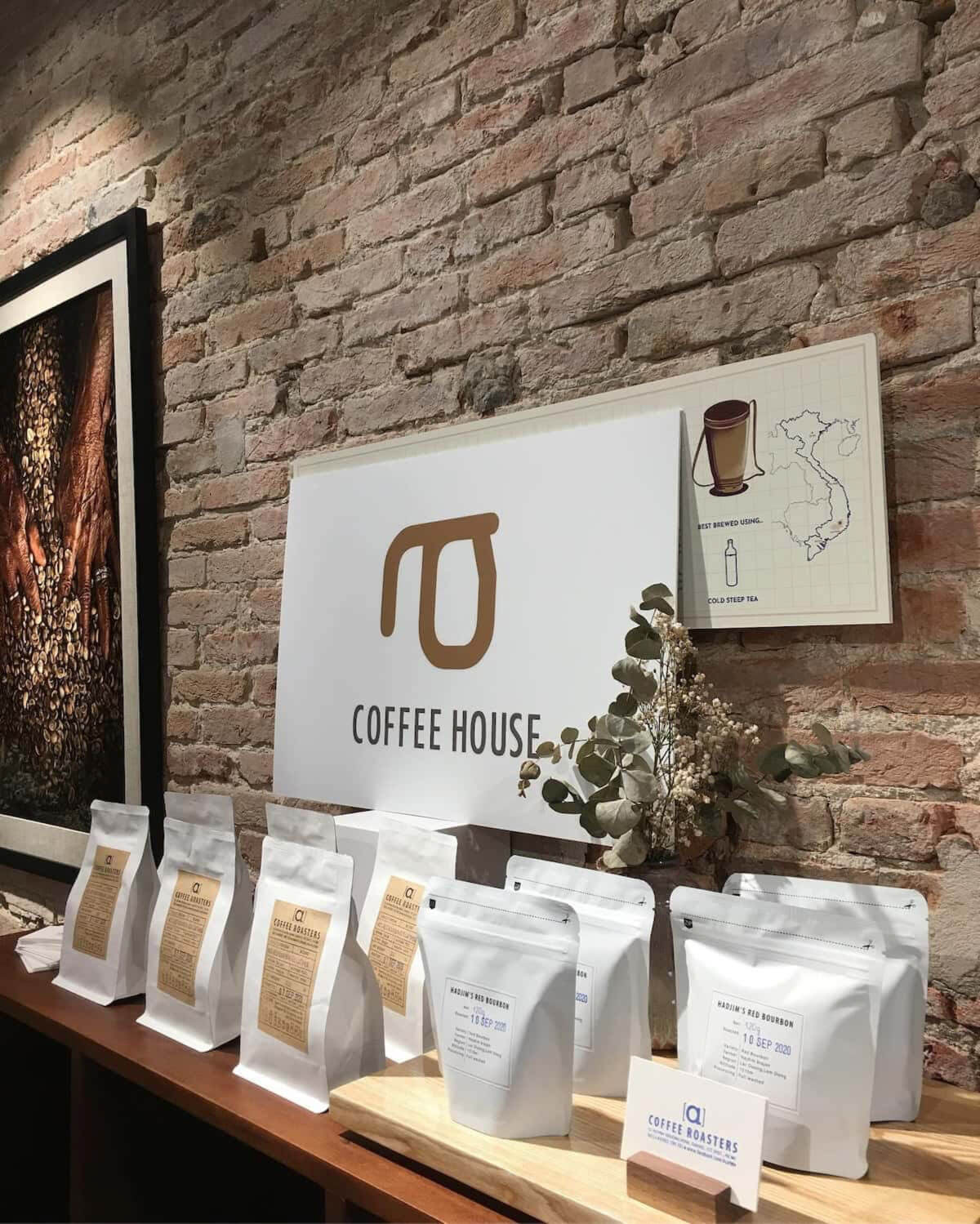
A Cafe Specialty Coffee
Another true original. A Cafe Specialty Coffee, sometimes written [A] Cafe, a relation of The Workshop, was doing artist collab coffee bag labels and artisan brews before some of these upstart operators were born.
A Cafe Specialty Coffee opened on a quiet side street in Dakao. It’s quite a magical enclave with The Pi, one of Saigon’s best neighborhood cocktail bars, a brand of Red Door, another cool local coffee brand, and banh mi at Banh Mi Bay Ho and banh cuon at Banh Cuon Tay Ho 127 all on the same lane.
The name is minimal – literally just “A Coffee House” – and so is the approach. No flash. No branding excess. Just a humble cafe doing what it says: serving house-roasted coffee (you’ll sometimes see them in the back room roasting another batch).
Expect fresh beans and various brewing styles depending on what you want – pour-over, espresso, or Vietnamese phin.
What makes A Cafe Specialty Coffee worth the detour is its role as a quiet pioneer. Before Every Half’s empire, before Bosgaurus turned coffee into theater, A Cafe Specialty Coffee was already roasting specialty beans and serving them without fanfare. It represents Saigon’s early specialty movement – small-scale, quality-focused, built by people who cared about coffee before it became cool to care about coffee.
It’s a neighborhood spot that happens to serve excellent coffee to people who know to look for it. There’s stacks of arty books on the tables and shelves and a piano at one end, where you might catch a pianist tinkling away at. Otherwise, the vibe is meditative, the staff warm and passionate, ensconced (happily you suspect) behind a row of used coffee sacks. And their local arabica beans are the best value for pour overs at home or as gifts.
Why: One of Saigon’s original specialty pioneers still quietly roasting on a Da Kao side street
Where: 15 Huynh Khuong Ninh, District 1
Contact: Facebook
Cafe Slow
Nguyễn Phương Quỳnh and Nguyễn Anh Phương opened Cafe Slow in July 2020 at the end of a tranquil alley in District 3 where the only traffic was kids playing football. The entrance sits next to a canary-yellow pagoda with lanterns and fire-breathing dragons, making Cafe Slow’s understated facade look even more subtle by comparison.
Quỳnh is the coffee brain. She spent years at Kafeville in Hanoi where the owner painstakingly mentored her in Italian coffee technique, nurturing her palate for high-quality specialty brews. She developed Cafe Slow’s blend herself – a careful balance of Colombian and Brazilian arabica that strikes the equilibrium she’d been subconsciously searching for. It avoids the heart-pounding intensity of typical Vietnamese robusta while maintaining enough body to feel substantial.
The space is warm and comfortable, split across two floors with vintage design in yellow-brown tones and minimalist decor. Natural light floods through large windows. The outdoor area is thick with greenery, creating genuine serenity despite being steps from Saigon’s chaos. The brewing equipment lines the back counter – espresso machines and apparatuses perfectly lit and staged, drawing you to the bar stools to watch baristas work.
Now, with the crackle of vinyl, Cafe Slow has spread to three locations, each as spirited as the last (and the latest of which, fittingly, is in Hoi An).
The latte is outstanding – aromatic, flavorful, perfectly textured. The Vietnamese-style ca phe sua balances bold sweetness with just-right thickness. The sourdough croissant completes the experience.

What Quỳnh and Phương created here is substance over style. The design is beautiful but the coffee matters more. Patrons appreciate good things without needing them announced loudly. The vibe is relaxed, welcoming, suitable for focused work or casual meetups. Dog-friendly too, if that matters to you.
Why: Outstanding lattes in a tranquil alley with vinyl vibes and genuine pandemic survivor grit
Where: 27/63A Huynh Tinh Cua, Ward 8, District 3 | 39-41 Le Van Mien, Thao Dien | Thon Tra Que, Hoi An
Bluish Cafe
Bluish Coffee & Beer sits at 15A Truc Street in Thao Dien – an expat-heavy neighborhood where cafes compete for attention with slick interiors and carefully curated aesthetics. Bluish doesn’t play that game. It feels like stopping by a friend’s house who happens to serve excellent coffee and has impeccable taste in music.
The main tones are brown and white with touches of green. Wooden furniture emphasizes the rustic image. Black and white lifestyle frames hang on walls. The sound system and turntables bring nostalgic, vintage energy to the space. Upstairs, vinyl lovers can experience playing records themselves, browsing through collections spanning 80s-90s artists to current genres. Working or drinking coffee while exploring new music playlists works perfectly here.

Bluish positions itself as “a comfort place for music analog lovers” and they’ve nailed that brief. It’s unpretentious, welcoming, and run by people who genuinely care about both coffee and music culture. The kind of place you come back to not because it’s trendy but because it feels right.
Why: Coffee meets vinyl in rustic Thao Dien comfort – a home for music analog lovers
Where: 15A Truc Street, Thao Dien, District 2 (Thu Duc City)
XLIII Coffee
43 Factory Coffee Roaster launched in Danang when specialty coffee was still strange to the Vietnamese market. They chose the difficult road – importing beans from distinguished producers worldwide, roasting with extremely light profiles to preserve origin flavor, educating customers about what they were drinking. In May 2023, they rebranded to XLIII Coffee. Same values, bigger ambitions.
The Roman numeral stands as a declaration of maturity. XLIII respects its roots while reaching for something larger. Today they operate four locations – the Danang headquarters with roasting facility, Hoi An’s cultural space, and two Ho Chi Minh City spots including the newest in a sleepy side stret of Thao Dien.
The Saigon flagship at 178A Pasteur is striking – an all-black, truly minimal interior that feels more like a gallery than a cafe. Glass walls, clean lines, a central brew bar where baristas work with scientific precision. You enter through what looks like a garden at ground level, climb up, and suddenly you’re in this peaceful oasis where soft light and monochrome palette create space for your senses to settle.

Staff take time explaining beans – origins differ by season and availability. Every coffee comes with detailed flavor notes. You can order single-origin pour-overs, espresso flights, signature cold brews. The focus is the coffee’s intrinsic flavor. No sugar, no condensed milk mixing. Pure taste from Ethiopia, Kenya, Colombia, Vietnam, and beyond.
XLIII’s philosophy centers on five strategies: transparency, traceability, ethics, responsibility, transitioning toward sustainability. They partner directly with farmers, maintain focused operational scale, and prioritize educating customers about coffee culture. The packaging and labels emphasize the coffee variety name, growing area, farming information. Respect for producers, complete value conveyed to customers.
The equipment exists at the intersection of technological artistry – La Marzocco Strada MP, Mahlkönig E80 Supreme, Ditting 807 Lab Sweet. Tools calibrated to unlock each bean’s potential while maintaining absolute consistency.
Prices sit on the premium side. This isn’t budget coffee. But every sip justifies the cost. The staff are highly trained, passionate, often walking guests through origin, roast, and brew method. It’s a haven for coffee purists and curious drinkers willing to spend a little more for genuine quality.
XLIII isn’t continuation – it’s evolution. Taking everything 43 Factory learned and pushing further, dreaming bigger, reaching wider. They’re helping redefine how Vietnamese people understand specialty coffee while elevating Vietnamese coffee’s status on the world map.
Why: Gallery-minimal precision coffee with premium beans and zero compromises
Where: 178A Pasteur, Ben Nghe Ward, District 1 | 19 Road No. 2, Thao Dien
Contact: Website | Instagram | Facebook

RedDoor
You’re navigating a cul-de-sac off Le Van Sy so narrow you’ll probably have missed it three times, or sidling past scooters into the upper floors of the 151 Dong Khoi building, or ducking into that Dakao lane, Huynh Khuong Ninh – and in each case, you’re looking for a red door. Find it, and you’re in.
RedDoor operates three locations across the city, each with its own personality, all running on the same unhurried frequency. The tagline is “where we yield to the present and enjoy a cup of coffee,” which could be marketing blurb until you’re actually sitting down in one of them and realize forty minutes just disappeared.
The Le Van Sy original is the most atmospheric – three rooms built around a tree that grows straight through the roof, a turntable playing classic Vietnamese records, a coffee menu handwritten on paper filters pinned together. Beans from Vietnam, Kenya and El Salvador. The cold brew has been stewing for 24 hours. The ca phe sua da is done properly.
The Dong Khoi outpost, in the same building as Lacàph and Okkio, with Opera House views and rotating art exhibitions – leans into the gallery-cafe crossover with an international bean selection that changes with the seasons. There are almond milk cappuccinos, excellent V60s and a serious wine list for when the afternoon stretches long.
The Dakao branch, meanwhile, sits in what is quietly becoming one of the best micro-neighborhoods in District 1 – the same lane as A Cafe Specialty Coffee, The Pi, Banh Mi Bay Ho – where the cold brew mocktails (mulberry, lime, dried orange zest) are worth the detour alone.
Just slow down and find the door.
Why: Three very different spaces, one consistent commitment to unhurried specialty coffee and the art of being somewhere.
Where: RedDoor Dakao – 28 Huynh Khuong Ninh, District 1 | RedDoor in D1 – Floor 2, 151/3 Dong Khoi, District 1 | RedDoor Le Van Sy – 400/8 Le Van Sy, District 3
Contact: Website | Instagram | Facebook

Hoff Coffee Brewers
Nguyễn Mạnh Khiêm opened Hoff Coffee Brewers in the 42bis Ly Tu Trong apartment building with a slogan painted on the wall: “Coffee is fruit so it tastes like fruit.” That statement tells you everything about his approach. He’s technical, precise, and slightly obsessive about the details most cafes ignore.
Khiêm studied roasting and spent years refining his understanding of coffee before opening Hoff. But his fixation isn’t on the beans alone – it’s on water. He talks about water quality the way other roasters talk about origin. “98% of a cup of pour-over coffee is water,” he explains while making a siphon. “You can’t make a good cup of coffee without good water.” He uses Brita Purity C 1000 AC filters achieving a TDS of approximately 50 mg/L and a pH of 7.5. He’s even co-founded a brand of water mineral additives specifically for coffee brewing. Too much information for casual drinkers, essential knowledge for geeks.
The cafe itself occupies two locations – the micro apartment spot on Ly Tu Trong and a larger cafe on Vo Thi Sau. Both serve specialty Vietnamese robusta and Da Lat arabica blends for espresso drinks, but Hoff also knows how to reach casual drinkers with creative offerings like bac xiu tran chau (boba milk coffee) and Hoff Béo, a rich milk coffee made with multiple dairy products blended for maximum creaminess.
The Ly Tu Trong location shares the building with MANKI, making it a double-hit destination for serious coffee drinkers. Minimal design, concrete textures, natural wood, sleek brew bar where baristas work with quiet confidence. Good for solo visits, coffee tastings, or quick recharges between meetings. The space is compact but never cramped. Every detail considered.
Khiêm’s approach feels refreshingly grounded. He cares deeply about precision without being pretentious about it. The coffee speaks for itself.
Why: Precision brewing in punky little stores where 98% of your pour-over is what matters most.
Where: 42bis Ly Tu Trong, District 1 (first floor) | 170A Vo Thi Sau, Ward 8, District 3

Aramour Coffee Roasters Thao Dien
Summing up Thao Dien’s dreamy enclave energy (although the traffic along Xuan Thuy may shake you from your reverie) is Aramour Coffee Roasters Thao Dien. It’s the joy of Thao Dien’s pretty side streets distilled into one coffeeshop.
At the heart of the space is the roasting operation itself – espresso machine, coffee roaster and display of take-home beans are front and centre as you walk in. The setup is multi-level and surprisingly expansive: a side walkway lined with outdoor seating, a shaded bench area at the rear, a rooftop patio surrounded by foliage and flowers and a tastefully decorated indoor upper floor with window-facing stools. The outdoor garden is charming but gets warm on sunny days – making the air-conditioned upper floor the sweet spot for a longer sit.
Aramour Coffee Roasters Thao Dien uses their own in-house roasted Vietnam-origin coffee beans across their Vietnamese, espresso and specialty drinks – well-prepared, refined and balanced. Signature like the egg coffee, iced banoffee latte, and salted cream macchiato latte are worth lingering over. And the staff are knowledgeable and passionate, always ready to offer recommendations or share insights into the roasting process.
Why: A multi-level roastery-café that does everything right – in-house roasted Vietnam-origin beans, a verdant garden courtyard, and a warm, knowledgeable team making standout egg coffees and iced banoffee lattes.
Where: 7 Le Van Mien, Thao Dien

The Orange Ball
The Orange Ball is a vision of what’s to come for the best coffeeshops in Ho Chi Minh City. Small. well branded. Distinctly local. Another of the kind of neighborhood spots every big city needs. It’s been obvious for a while that these side streets off Thao Dien, just as it turns into Nguyen Van Huong, are an entire world within a world. Objoff opening at one end with a little cafe by the river was the first sign. More recently XLIII Coffee opened. And there are artist studios and other boutique businesses around this village – it’s called Làng Báo Chí (which means Journalists’ Village) – of Street 1 and 2 (Đường số 1 and Đường số 2), and Truc Duong.
Here, at The Orange Ball, the name tells you everything: it’s a little orange-colored coffee shop with a distinctly blissed-out vibe – just a cool place to grab coffee, think Dirty Lattes and cold brews with a big slice of orange in them. Or drop the caffeine for a Matcha Coco, already a customer favorite.
Why: A neighborhood Thao Dien coffeshop in Làng Báo Chí with an orange aesthetic.
Where: 8 Street 2, Lang Bao Chi, Thao Dien
Contact: Instagram

Là Việt Coffee
Tran Nhat Quang was a professor before he became one of the more important figures in Vietnamese specialty coffee. He spent four years sourcing small lots of high-quality arabica from around Da Lat before opening his first cafe there in 2015 – a cavernous warehouse-style space where you could watch beans being processed in the glass-enclosed roasting labs, take a factory tour and then sit down to a cup of coffee that tasted unlike anything the Vietnamese mainstream had been producing.(we did and it was a magical afternoon).
The whole operation was built on a single conviction: Vietnamese arabica, treated with the same care and precision applied to the world’s best coffees, could compete with any of them.
The Saigon branches – there are two, in District 3 – bring that highland origin to the city. The philosophy translates directly: 100% Vietnamese-sourced beans, hand-picked at peak ripeness, roasted in-house across multiple profiles from light to dark.
The menu covers the full spectrum, from phin and V60 pour-overs using arabica that showcases the sweetness and mild acidity of Da Lat’s high-altitude growing conditions, to espresso drinks and ca phe sua da. Beans are sold to take home in a range of roast levels, which makes them among the better souvenirs in the city.
Là Việt’s guiding philosophy – “there is no specialty coffee, only special people who make coffee with all their hearts” – could read as a motto designed for merch. In practice, it describes something genuine: a farm-to-cup operation that now spans 18 locations across Vietnam and a showroom in the United States, built on an early, stubborn bet that the highlands around Da Lat had something worth fighting for.
Why: A Da Lat original with the farm credentials and the cups to back them up – and some of the best arabica beans to take home.
Where: 57A Tu Xuong, District 3 | 191 Hai Ba Trung (Alley 193), District 3
Contact: Website | Instagram | Facebook
The Running Bean
The Running Bean is less a specialty coffee destination and more a very good all-day cafe that happens to take its coffee seriously — which puts it ahead of most. The flagship on Ho Tung Mau in District 1 announces is unmissable: a monolithic glass frontage, outdoor patio seating and high ceilings inside that make the whole space breathe. A sprawl of different seating configurations mean there’s a corner for every purpose whether it’s morning solo laptop sessions, long weekend brunches or simply after-work wind-downs.

The coffee covers the spectrum – espresso drinks, pour-overs, Vietnamese phin, cold brews, and a rotating cast of signature options that lean creative (coconut coffee, iced taro and roasted almond latte) without tipping into gimmick. The food is the same register: a brunch menu that runs from eggs Benedict and sourdough croissants through Vietnamese favorites to pastas and rice dishes, cooked with fresh ingredients and more care than the format strictly requires.
With three locations in District 1 and two more in Hanoi it’s not a roastery story or a farm-to-cup manifesto. It’s a neighborhood cafe that works – busy, friendly, well-designed and consistently good in the cup. Sometimes that’s exactly what a city needs more of.
Why: A well-executed all-day cafe with serious coffee and a brunch menu that gathers the crowds.
Where: 115 Ho Tung Mau, District 1 | 33 Mac Thi Buoi, District 1 | 5 Nguyen Trung Truc, District 1
Dolphy Cafe
Dolphy opened in October 2013 when Thao Dien was still establishing itself as Saigon’s expat enclave. The name comes from dolphins — friendly, intelligent and team-oriented. The mission: “Happiness in a cup.” Straightforward. Unpretentious.
This isn’t a specialty coffee pioneer pushing boundaries. Dolphy doesn’t roast experimental fermentation processes or chase international competition medals. What it does is maintain consistent quality across 11 locations in District 2, District 7, and Binh Thanh. Same house blend everywhere: robusta and arabica sourced from Cau Dat and Buon Me Thuot highlands. Same Italian-style approach. Same reliable lattes that earned them recognition as one of 10 most drinkable cafes by Words magazine three years running (2015-2017).
The locations favor open-air corners facing major streets. You sit, watch traffic and drink coffee. Staff practice latte art between orders. Pricing stays accessible — 45,000 VND for a large cappuccino. The atmosphere encourages lingering. Motorcycles parked out front. Free wifi. Air-conditioned rooms tucked behind some locations. Post-cycling stops. Casual business meetings. Digital nomads setting up laptops.

It’s a different proposition than Workshop’s pursuit of excellence or Every Half’s mission to elevate Vietnamese robusta. Dolphy serves the community that wants familiar Italian-style coffee without chasing perfection. That has value. Just know what you’re getting.
Why: Breezy espresso kicks across Thao Dien.
Where: 28 Thao Dien Street | 31 Thao Dien Street | 8 Thao Dien Street | 55 Thao Dien Street | 25 Nguyen Cu Street | 3 Nguyen Van Huong
Contact: Website | Facebook | Instagram
What To Look For In The Best Coffeeshops In Ho Chi Minh
Ho Chi Minh City has thousands of cafes. The best ones, at least to our discerning eyes, share a few things. Quality beans with traceable origins. If they can’t tell you where the coffee came from, they probably don’t know and don’t care.
Look for intentional design that serves the experience – good lighting, comfortable seating, thoughtful acoustics. And remember, the best cafes contribute to Saigon’s coffee culture. Maybe they’re championing Vietnamese specialty beans or elevating robusta quality. They’re advancing the conversation, not just selling drinks.
But follow your nose. Saigon has thousands of cafes and some of them are chains, some are corners and some are institutions. A sickly sweet egg coffee at 3T or a Katinat perch on a busy intersection have their place. So does a dreamy branch of Phê La, or an original Starbucks on a bad jet-lag morning, or a Highlands when your phone is dying and you need the wifi and a short sharp kick of ca phe sua. No judgment here.
Just know that the city’s real coffee culture runs deeper than any of those – through the roasters and the Q Graders and the baristas who’ve spent years coaxing something extraordinary out of Vietnamese highlands beans. You’ll find it at Every Half, Bosgaurus, Grandmum, The Workshop, Okkio, Lacàph, Hummingbird, MANKI, A Cafe, and the rest on this list. The staff will be passionate. The coffee will be good. There will almost certainly be beans to take home, and probably a tote bag if you want one. More importantly, you’ll leave understanding Vietnamese coffee a little better than when you walked in. That’s worth seeking out. Just follow your nose.




 Wink Hotels' is a new kind of Vietnamese hotel made for the modern traveler and ready to take on the world.