


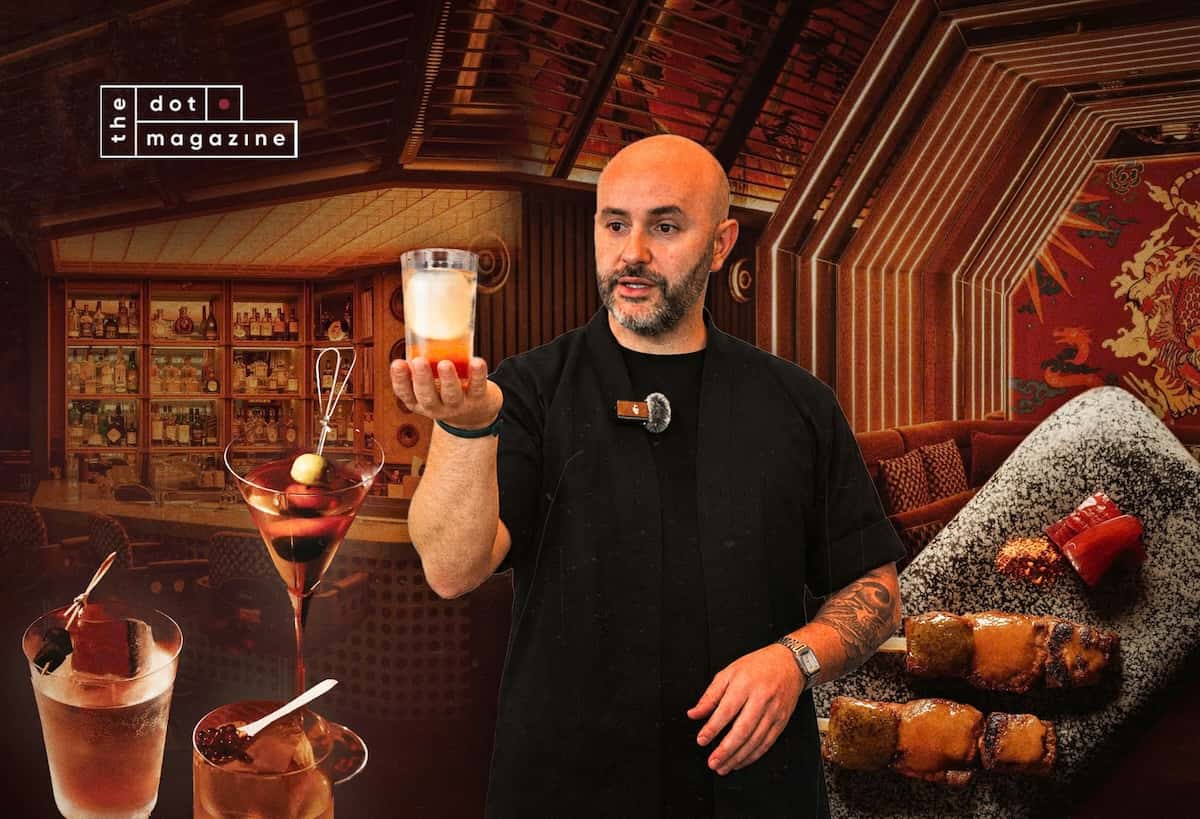
The way into Saikindō is through a fashion atelier at the end of the Four Seasons lobby. Past it, Marco Corallo runs a Japanese listening bar where the martini, the melon highball, the menu and even the name are preoccupied with time.
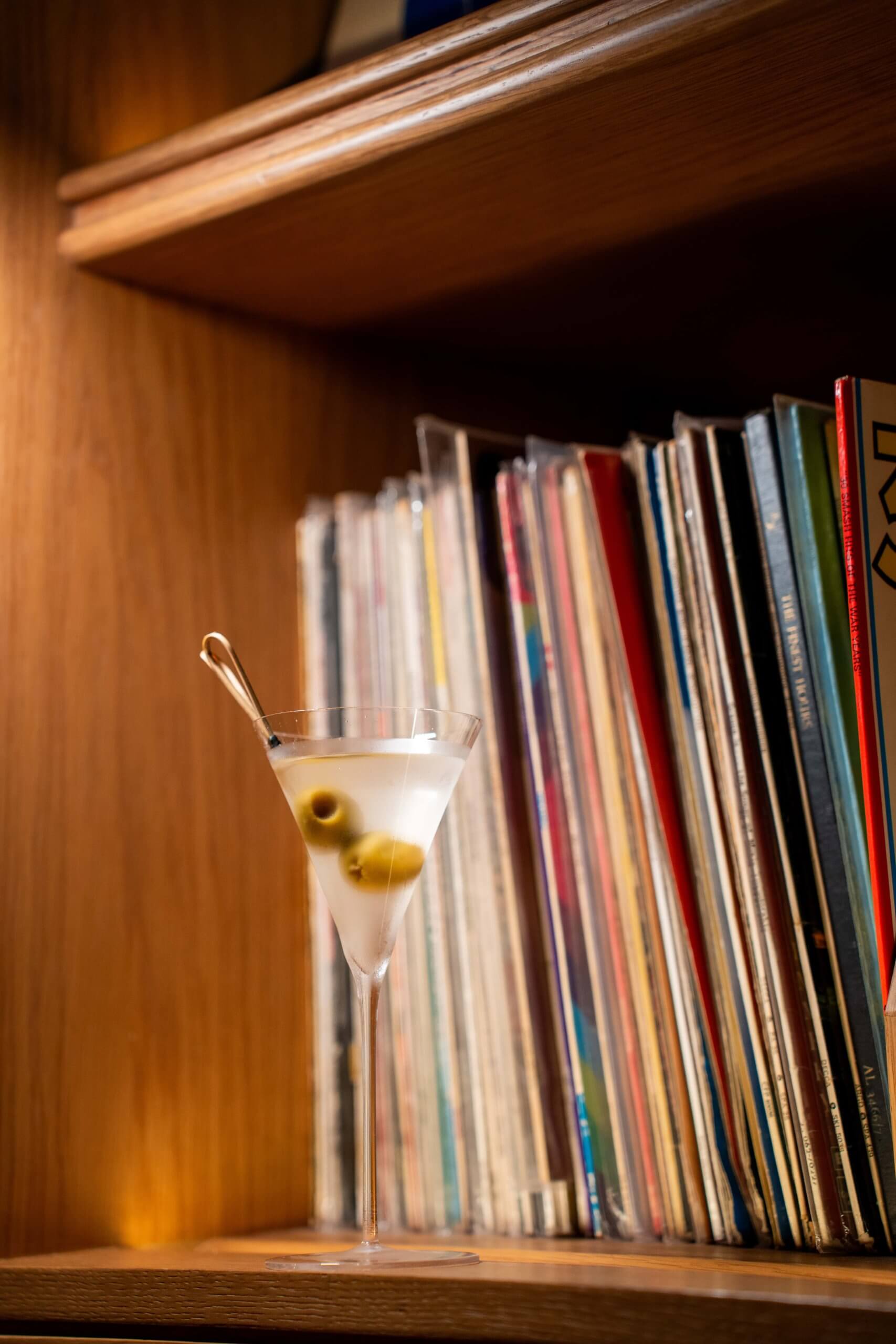
Martinis – aside from tasting like a good decision – taste like time. The first sip is freezing. The last is not. And the middle is somewhere in between. Marco Corallo has an olive for each.
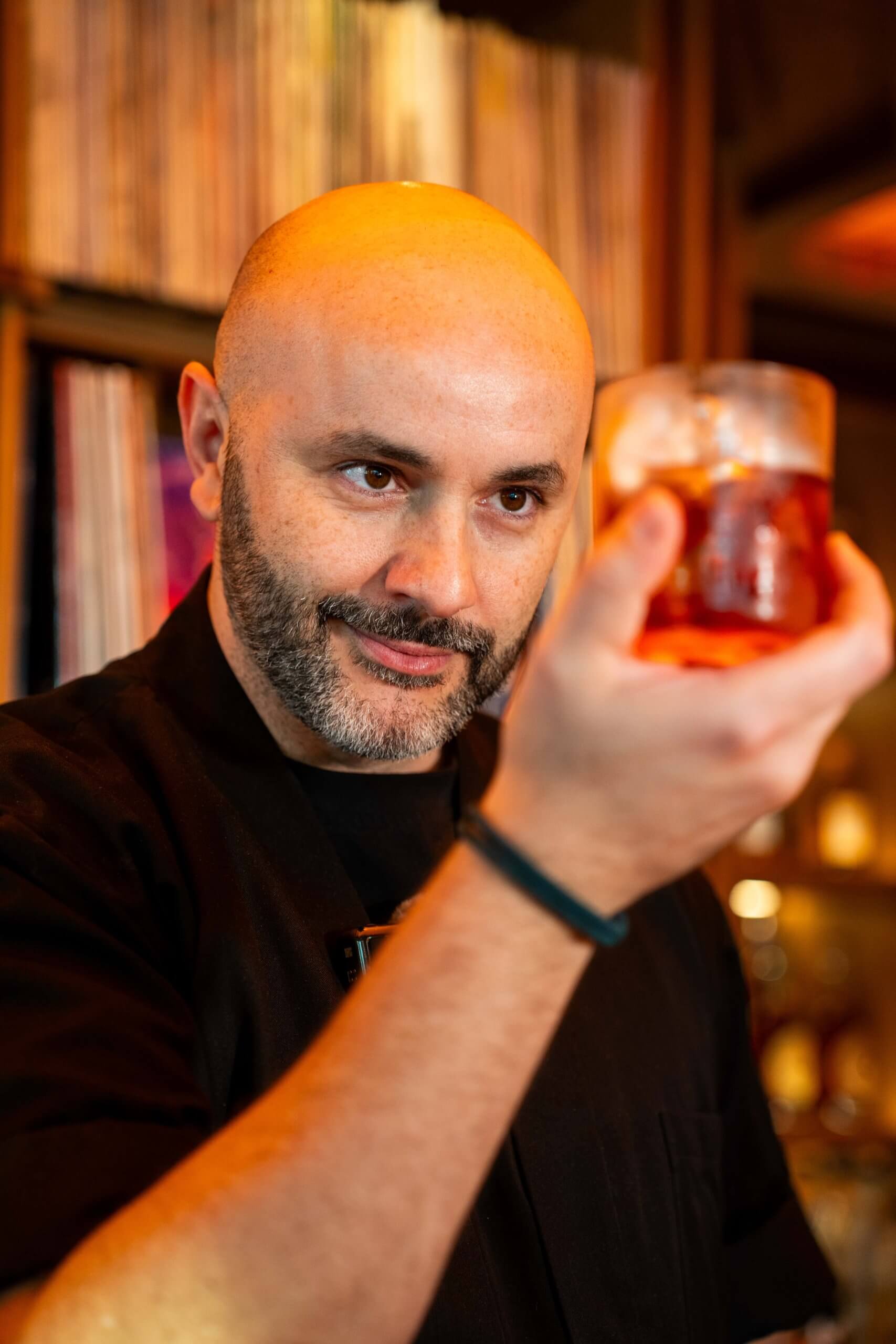
“It bothers me that your martini changes, but the olive stays the same,” frowns Marco, beverage director at Saikindō, the hi-fi listening bar at Four Seasons Hotel Abu Dhabi, and Four Seasons’ beverage ambassador for the Middle East.
The House Rule
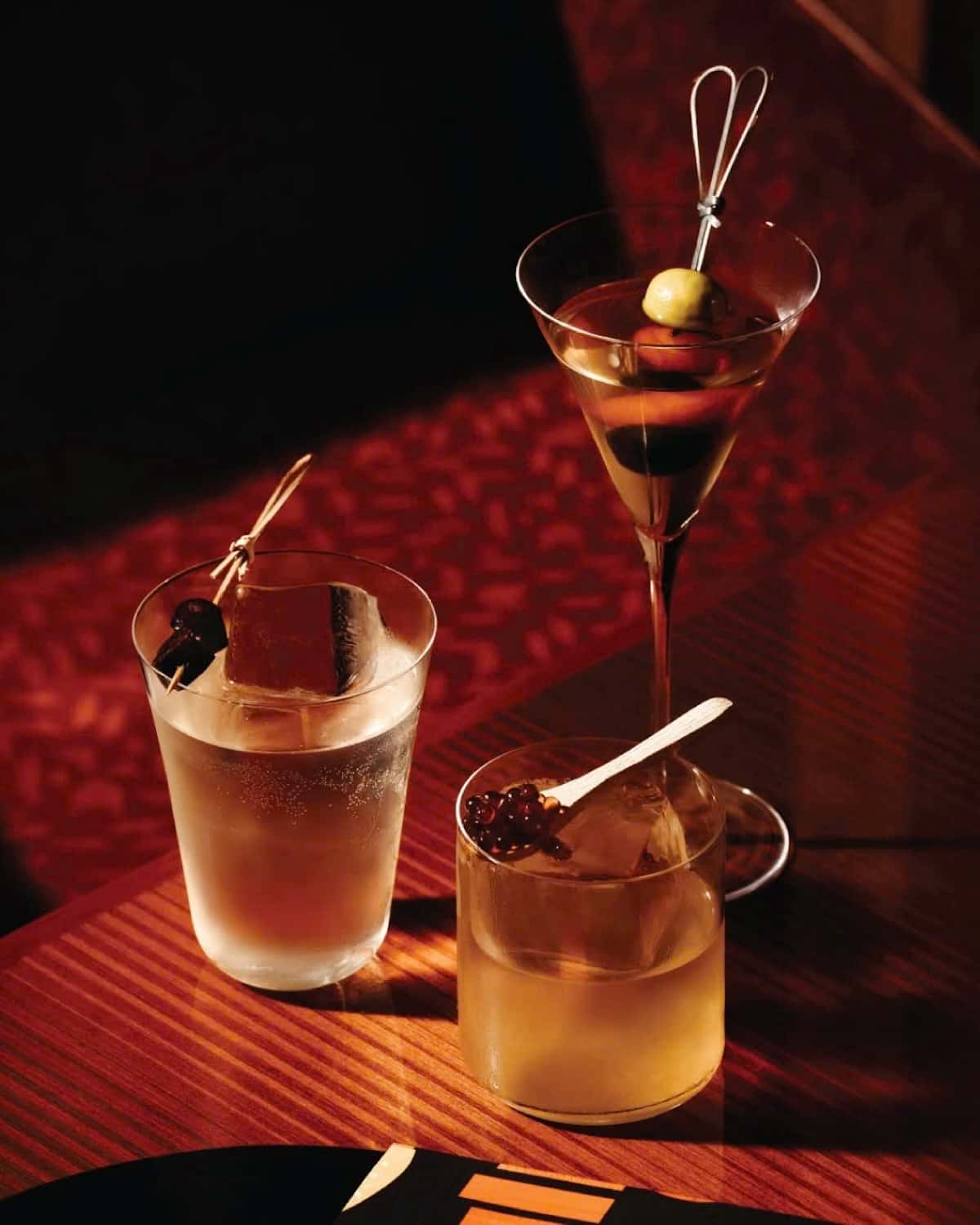
His answer is Loungin’, a dirty martini made with mezcal, redistilled shōchū with five citrus zests and dry mushroom vermouth that comes with three different olives. The first is a Kalamata from Greece. It’s black and goes with the opening sip, when the drink is at its coldest. The second is a Nocellara from Italy. It’s red, and creamy, and goes with the middle, as the martini starts to warm. The third is a green Lucques from France, stuffed with blue cheese, that’s saved for last.
When that comes is up to you. “It depends how fast you drink,” Marco says. Either way, by the final sip “you can actually have a bit of a stronger style of olive.”
The olives are a small detail. But they reflect the house rule. At Saikindō, time is an ingredient.
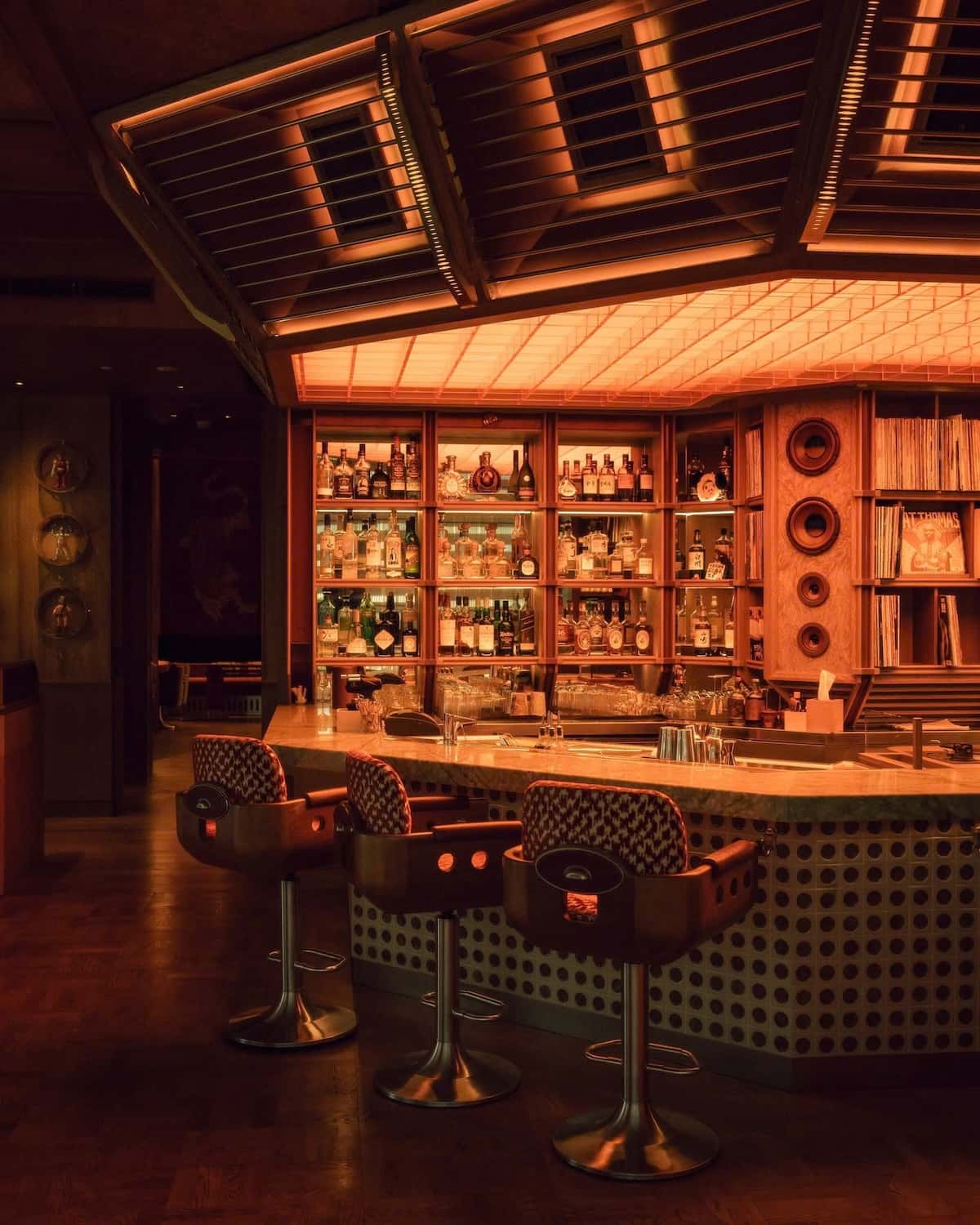
It’s in the music. Records play on vinyl through wooden speakers, the way they do in Japan’s listening bars. Marco calls this inspiration ‘Echoes in an Era.’ “Every side has to be cued, flipped and changed by hand,” he explains, pulling Common’s hip hop classic ‘Be’ from the shelf and cuing up Side One – the right record for this hour, with the last of the sun streaming into the smoking terrace.
Time After Time
Time is even on the menu. The list is split into Side One and Side Two, like a record. And tucked inside is an actual record you can slide out. Every drink comes with a genre and a tempo. Loungin’ is Hip Hop – R&B at 100 BPM. Time After Time is 130.
The drinks themselves were built from songs. “None of the team has sound-taste synesthesia,” Marco explains. It’s the rare condition where people taste what they hear. So instead they fed the research on it into an AI model. It listens to a track and maps its acidity, sweetness and bitterness, and the bartenders build a cocktail to match. Some drinks keep changing after they’re served. I Feel For You, a whisky highball with cantaloupe cordial, comes with frozen spheres of watermelon, honeydew and winter melon. As they melt, the drink gets more melon. Leave it a while and it’s a different drink.
And the next menu, called Oto no Kōsei (The Composition of Sound), is already in the works. This time guests get to adjust a cocktail the way a DJ adjusts a track – the lows for strength, the mids for style, the highs for aromatics and garnish.
Borrowing From Bōsōzoku
It’s in the design too. In October Saikindō won the SevenRooms Best Bar Design Award at The World’s 50 Best Bars – the first Abu Dhabi bar recognized in any category. Marco calls the look Metabolism 2.0. The original Metabolism was a Japanese architecture movement of the 1960s. Its architects, among them Kisho Kurokawa and Kiyonori Kikutake, designed buildings that could grow and change like living things – buildings that were never meant to be finished. Saikindō takes the movement’s circles and squares and repeats them across the walls.
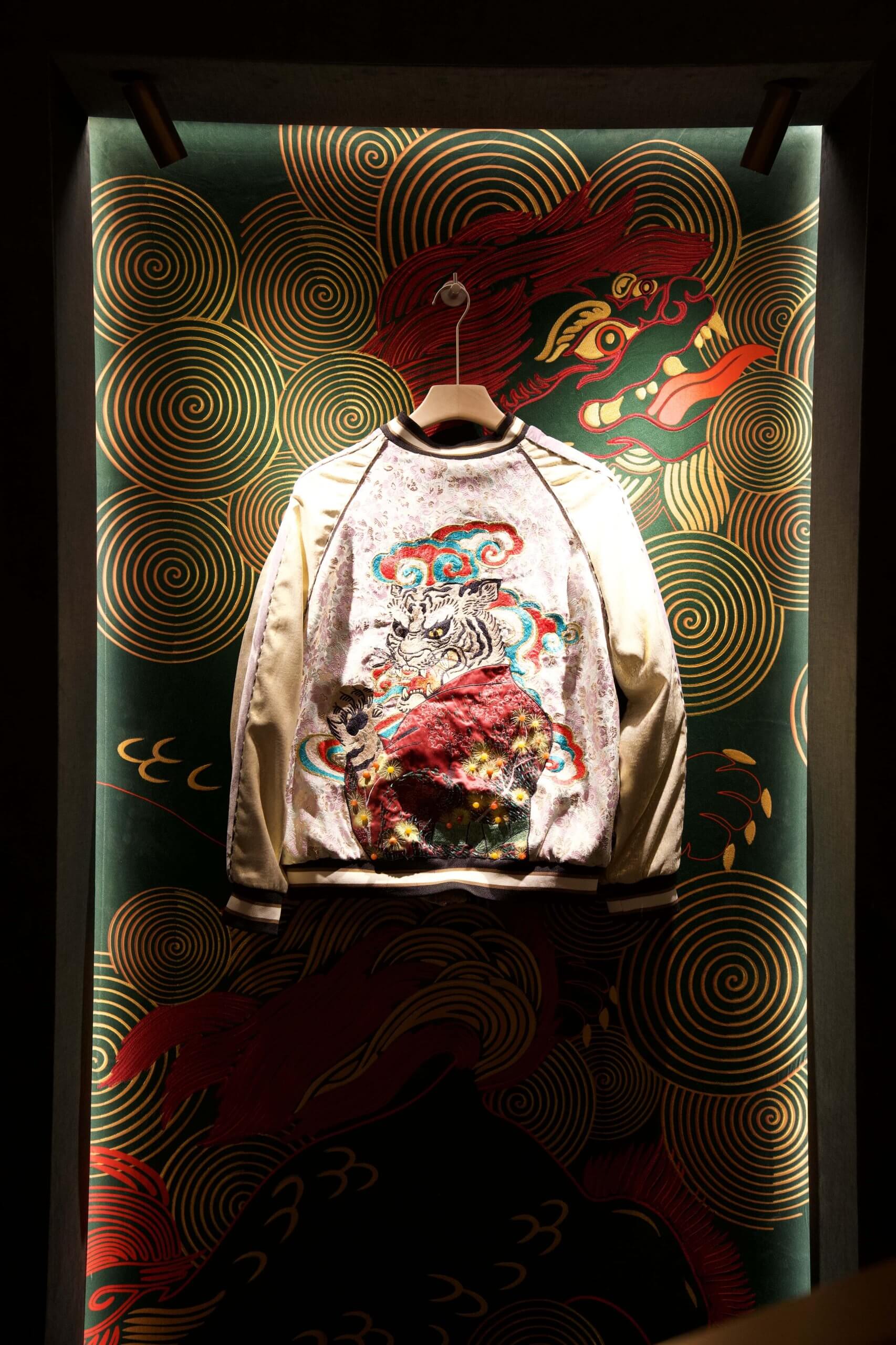
The tapestries and uniforms borrow from Bōsōzoku, the Japanese biker gangs that roared through the 1970s and ’80s. Members rode customized motorbikes and wore embroidered jumpsuits. The gangs have mostly gone. The look survived – in manga, anime and fashion, and now at Saikindō. Near the entrance hangs a Bōsōzoku jacket made entirely by hand in Japan. It isn’t for sale, although Saikindō can commission one for you.
And it’s in the night itself. Saikindō is split into five spaces, each with its own pace. The atelier at the entrance is the slowest. The brands on its shelves have no other stockist in the UAE, and there are vintage collector pieces and rare Japanese vinyl.
By the lift to the residences, an embroidery machine stitches the patches on the wall onto jackets, hats and T-shirts. The hi-fi bar is loud and fast, with the DJ and bartenders sharing a counter. The robata is brighter and quieter.
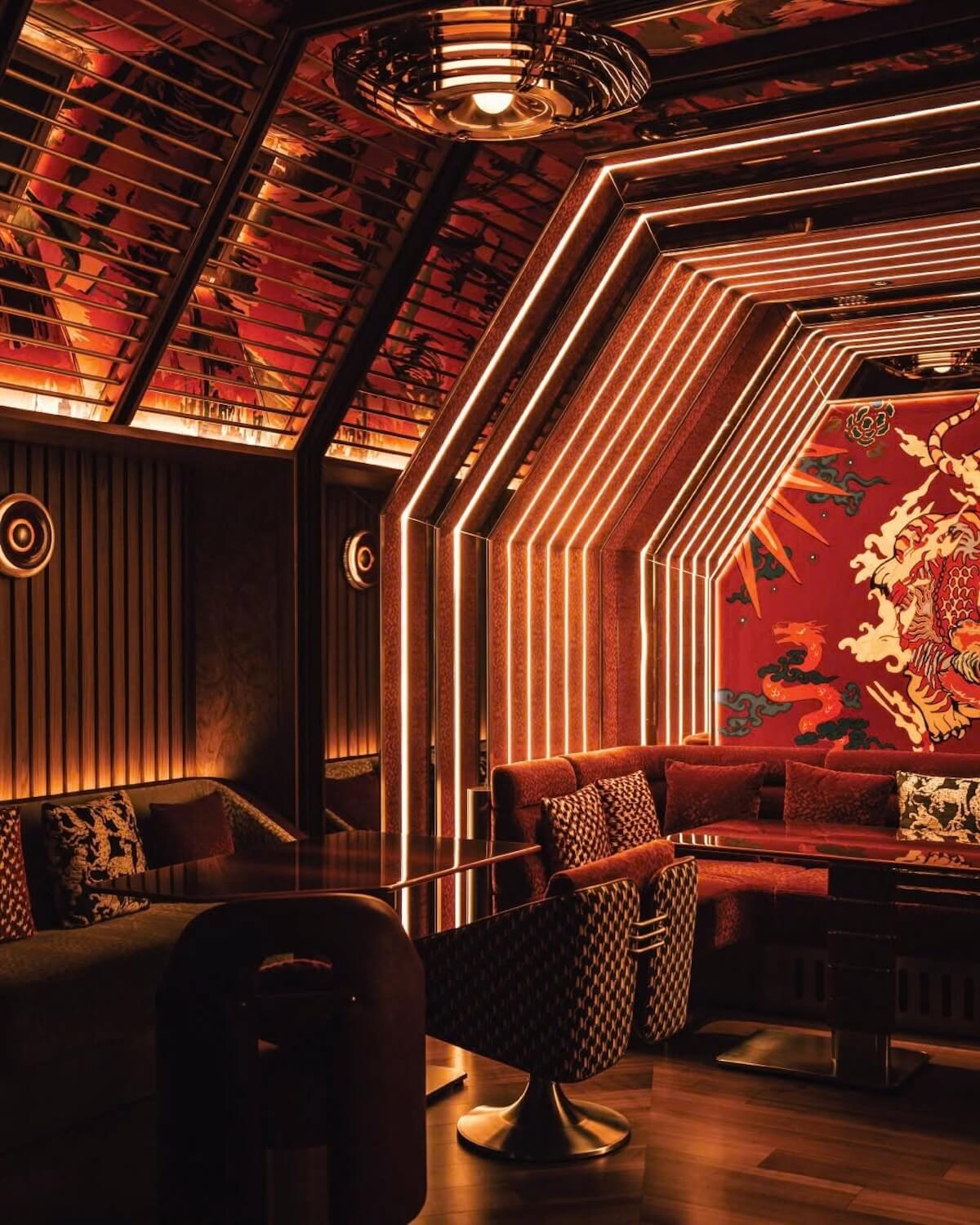
The terrace is where the smokers go. It’s indoors, but the windows open, Japanese-style, when the weather turns. It has bigger tables for groups and a cigar humidor made for the bar in Italy. Close the two doors on Kūkan – the private room that’s meant to feel like being inside a speaker but looks like a villain’s lair from an old Bond film, complete with its own DJ booth – and the rest of the bar disappears.
A Moment To Decide
Right now, Marco has settled into Bob Suri’s favorite seat in Kūkan. Like the room’s other chairs and its sofa, it’s a custom piece, designed by AvroKO in Bangkok and made in Turkey. Bob is the hotel’s general manager. He and Carlo Laiso are also the reason Marco is here.
Bob and Carlo, the hotel’s director of food and beverage, had worked with Marco twice before. They knew he DJed. They knew he loved Japan and its food. So the pitch was short. “Listen, we are building a place for you,” Marco recalls them saying.
It took him a moment to decide. “I said yes on the spot,” he says, clicking his fingers for emphasis.
Then they showed him the renderings. He told Bob they were beautiful, “but it’s never going to look that good.” He joined in June 2025, did six months of pre-opening and opened that November. Looking around the room now, he shrugs. “This is actually better than the renderings.”
Bob’s first instruction is the one Marco still lives by. “Don’t open a Four Seasons bar. Open a bar in Four Seasons.” Then he went further. “Be rebellious. Be natural and do something that really stands out.” When Bob traveled to Japan for the project, he was asked to name his favorite characters. Godzilla, King Kong and Ultraman are now on the wall.
That’s where Bōsōzoku really comes in. It’s the attitude as much as the look. “We wanted to be rebellious in the way we portray hospitality,” Marco says. He’s Italian, his head mixologist is Thai and his floor manager is Serbian. “We don’t have to try to be Japanese, because we will never be Japanese.”
How have you been lately?
The name does the rest. Saikindō is casual Japanese for “How have you been lately?” – the kind of thing two old friends say. Marco made it the team’s credo. Staff sit down with guests, rather than loom over them, and ask how they’re doing and what they need, the way you would at home. Even the name is a question about time.
Marco feels at home too. “I feel more at home here than at home, because we spend so much time together,” he says. He’s warned Bob already. “Listen, you need to kick me out of this place if you want me to leave,” he says. “It’s never happening.”
It’s Friday, one of the bigger nights at Saikindō. By the time we come back after dark, the curtains are down. They always are at night, so that no one inside feels like they’re in Abu Dhabi. “We call it the journey,” Marco explains – a trip “to a small corner of Japan.” The DJ has been on since eight. The hi-fi bar that was a sun-warmed, meditative listening room in the afternoon is now full. A couple dance in their seats at the bar, tables of guests dig into izakaya-style dishes and the staff strike up conversations. Like Marco, lots of guests are having such a good time they’re reluctant to leave.
Back in the lobby at the end of the night, it takes a moment to remember you’re in a hotel at all.
Like the martini, Saikindō changes the longer you stay.