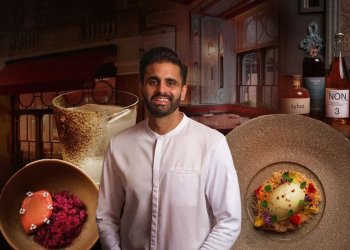



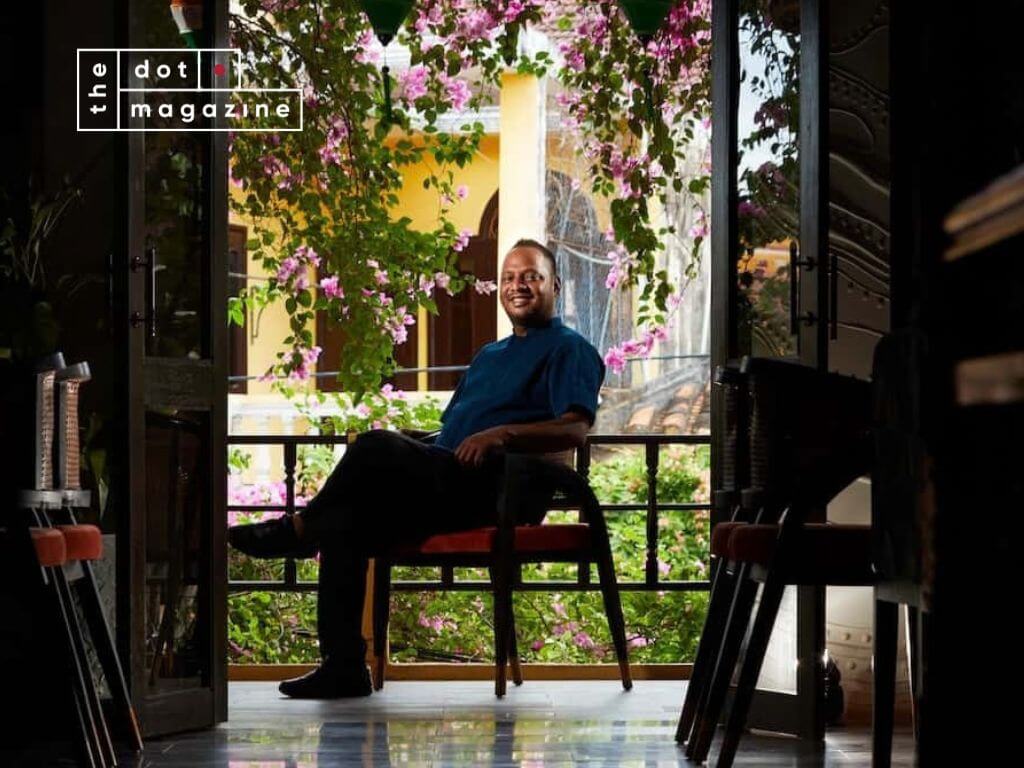
 Chef Sohan Singh Bisht has seen the world. Now the world is coming to him through the bronze doors of Indian restaurant Phirangg, his follow-up to Michelin Bib Gourmand RANG, in Hoi An’s old town.
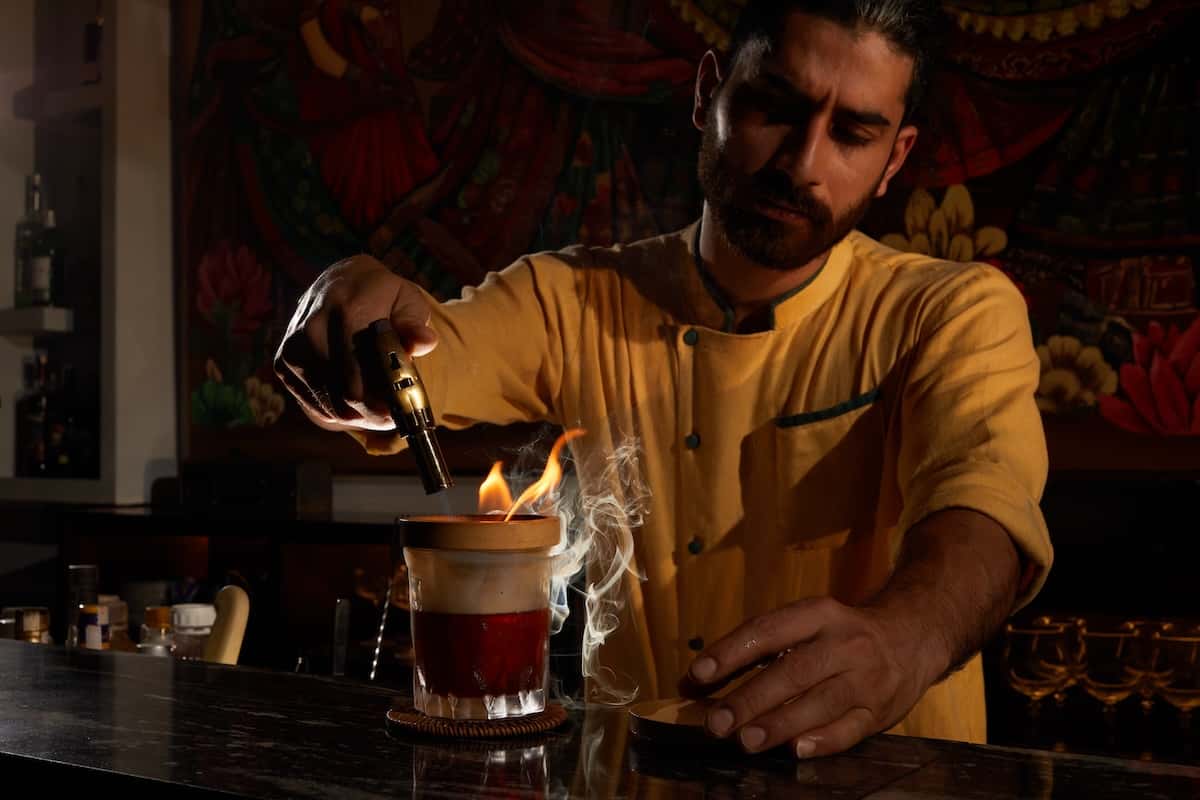
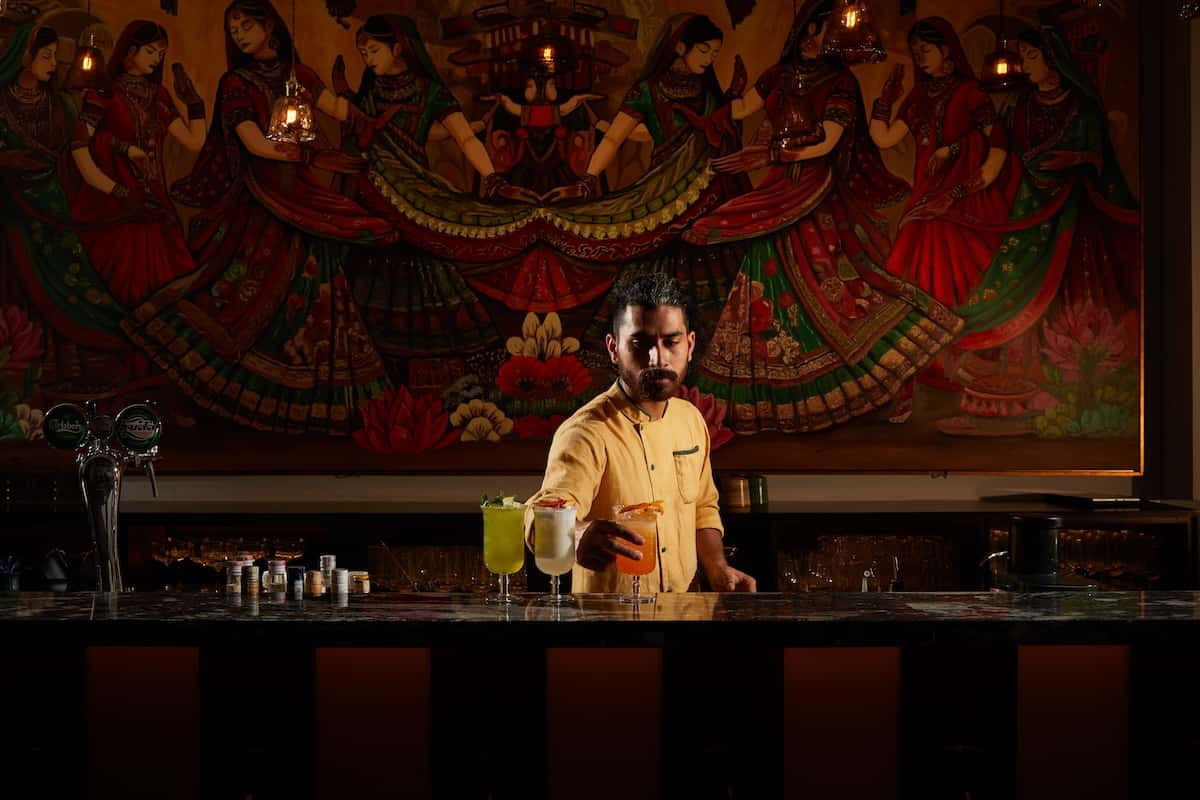
In front of the kinetic centerpiece – a five-meter artwork of six women in red and green lehengas, dupattas drawn over their heads and eyes lowered – bartender Devender, brooding with his ponytail swept back like a Bollywood idol, is making the kind of cocktails you’d expect to get in a Hauz Khas speakeasy.
The signature cocktail list is full of classics with Indian touches. The Masala Bloody Mary swaps the usual seasoning for chaat masala, black salt, green chili and coriander. The Kesar Vodka Martini is made with saffron-infused vodka and a touch of rose water, which turns it pale gold and floral. The Smokey Chai Rum Old Fashioned infuses dark rum with spice and Indian black tea, but keeps it classic with a sugar cube and bitters.
A Phirangg In Hoi An
The long bar Devender is making the drinks behind runs the length of the ground floor, which tells you this isn’t a traditional Indian restaurant, even though here at Phirangg, Chef Sohan Singh Bisht and team have dispensed with the modern culinary touches deployed at their first project – RANG in Danang.
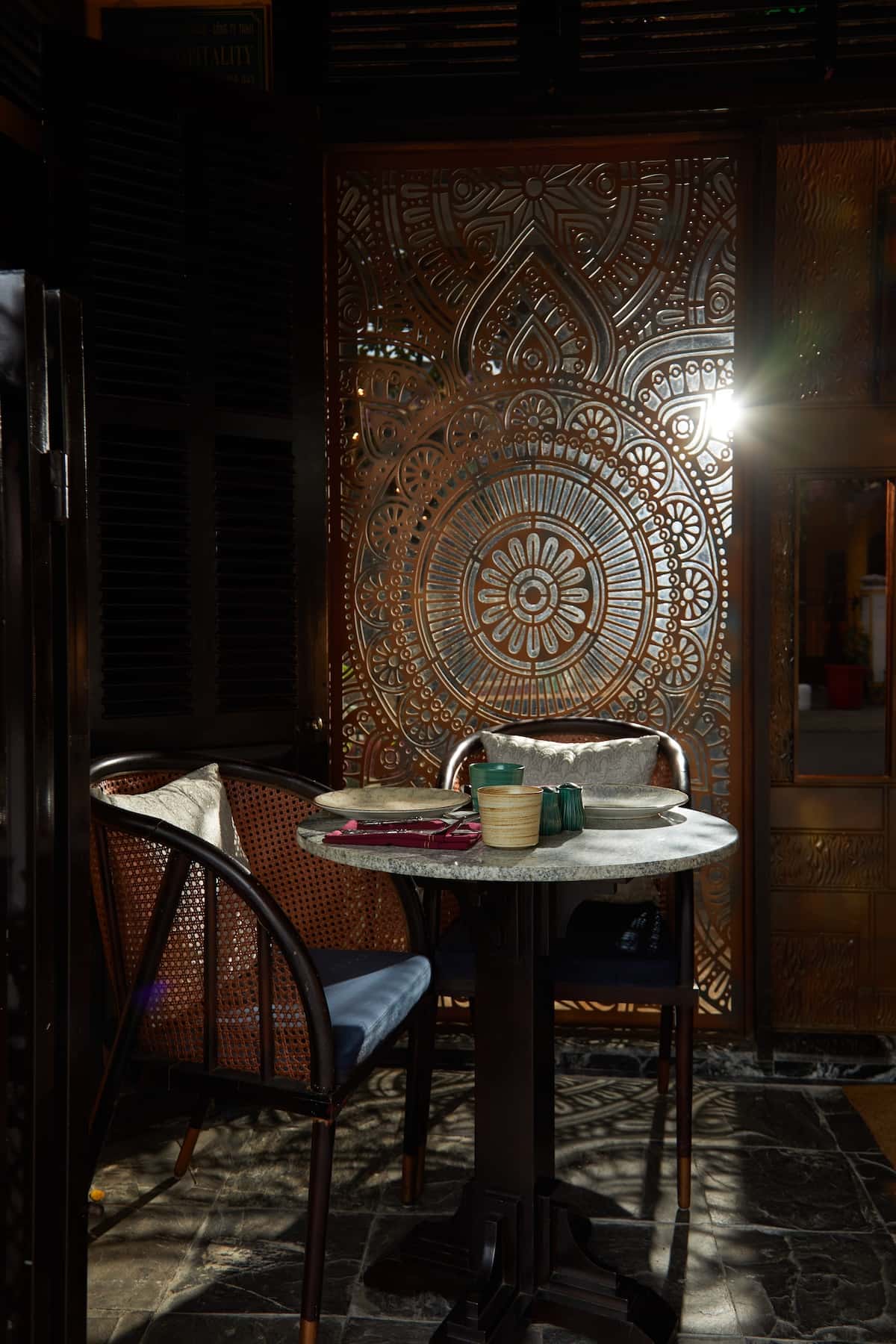
He has described the food there as “the soul of India with a Mediterranean breeze” – street food cooked with Mediterranean technique. There’s sweet potato gnocchi as chaat and tandoori octopus charred and served with almond romesco and herb gremolata. The room has carved Vietnamese timber, Mughal-style screens, murals and brass fittings. Five months after opening it earned a Michelin Bib Gourmand.
Here at Phirangg – a play on the Hindi word for foreigner that also connects the two restaurants, 30 kilometers apart – they’ve looked inward for a menu spanning India.
From Kashmir To Karnataka
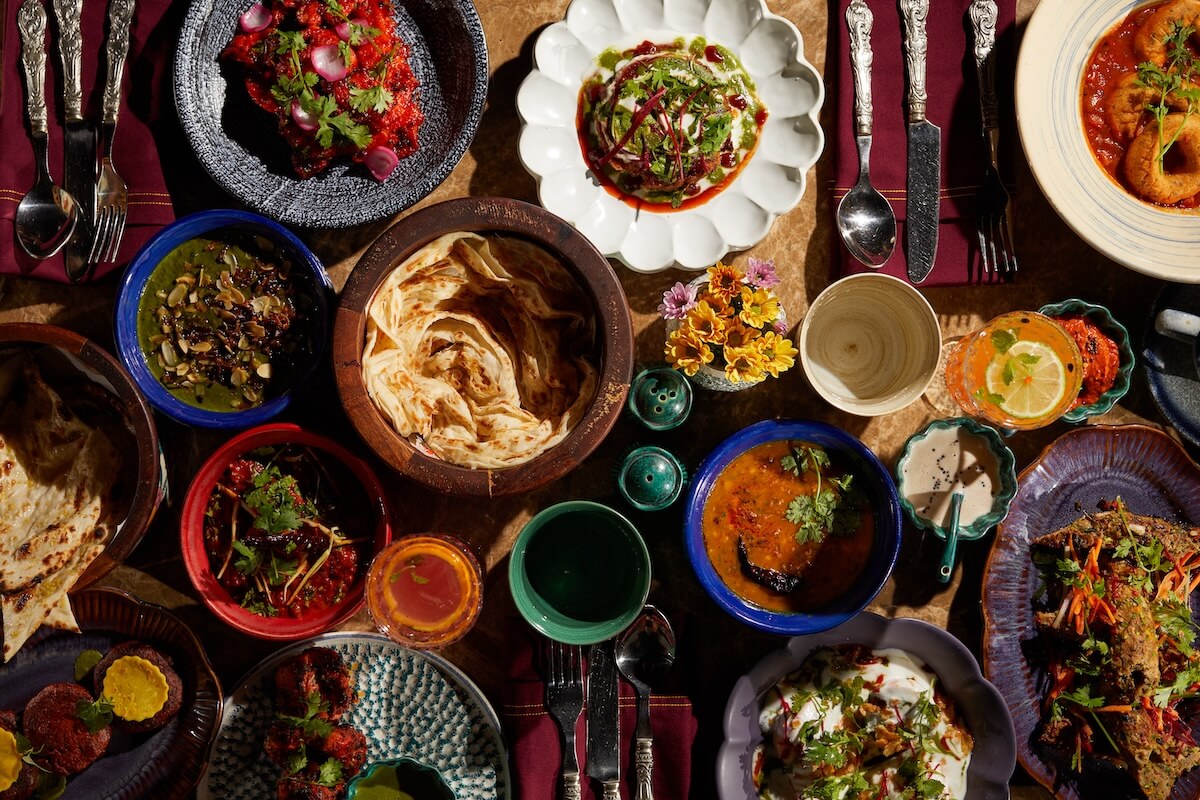
The menu forms a map. Nearly every dish carries the name of its home state, and you can cross India in a single order. There’s Kashmiri rogan josh with black cardamom and Rajasthani laal maas fired with red chilies and garlic. From Karnataka there’s Mangalorean ghee roast chicken.
From Bengal there’s chingri malai, king prawns in coconut curry, and from Kerala meen moilee – a mild-mannered, coconut-rich fish stew. The biryanis divide along regional lines too – Hyderabadi mutton, Lucknowi chicken, Kolkata vegetables and Malabar prawn – plus a house jackfruit version, Phirangg’s kathal. Even the plain rice has a postcode. The basmati comes from Dehradun and the onion pilaf from Uttarakhand.
Standing Out…A Little Bit
A lot of Indian restaurants have opened since RANG threw open its carved wooden doors in early 2024. “We stand out a little bit,” Sohan says modestly of his new opening. While most cater to Indian tour groups looking for a taste of home, “we want everyone to come in and enjoy Indian food,” he says, looking around the former coffee shop.
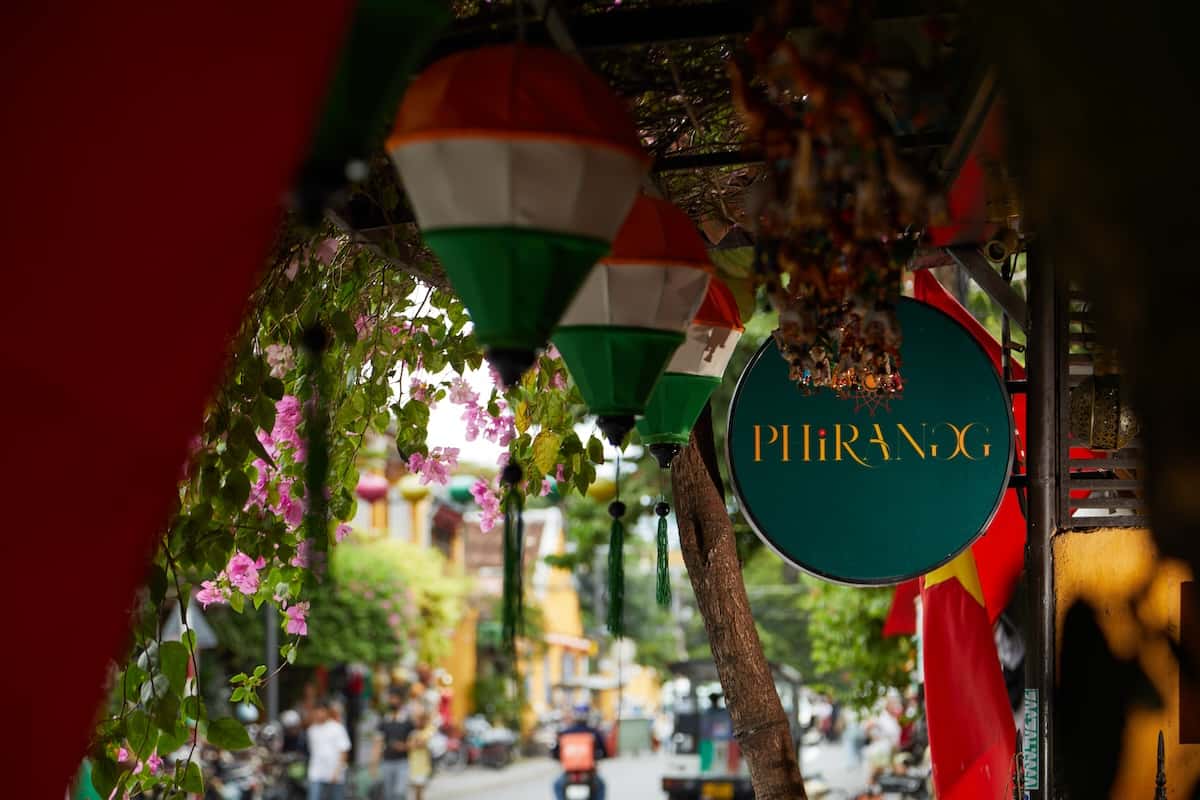
Hoi An Ancient Town has been a UNESCO World Heritage Site since 1999, and construction here is strictly controlled. Its low-rise, mustard-yellow shophouses have become a national icon. They appear in Mykolor paint ads and on postcards, and Hollywood came here to film The Quiet American. Posing for a photo in front of rows of colorful lanterns is an essential part of any visit.
Everywhere There Are Ornaments
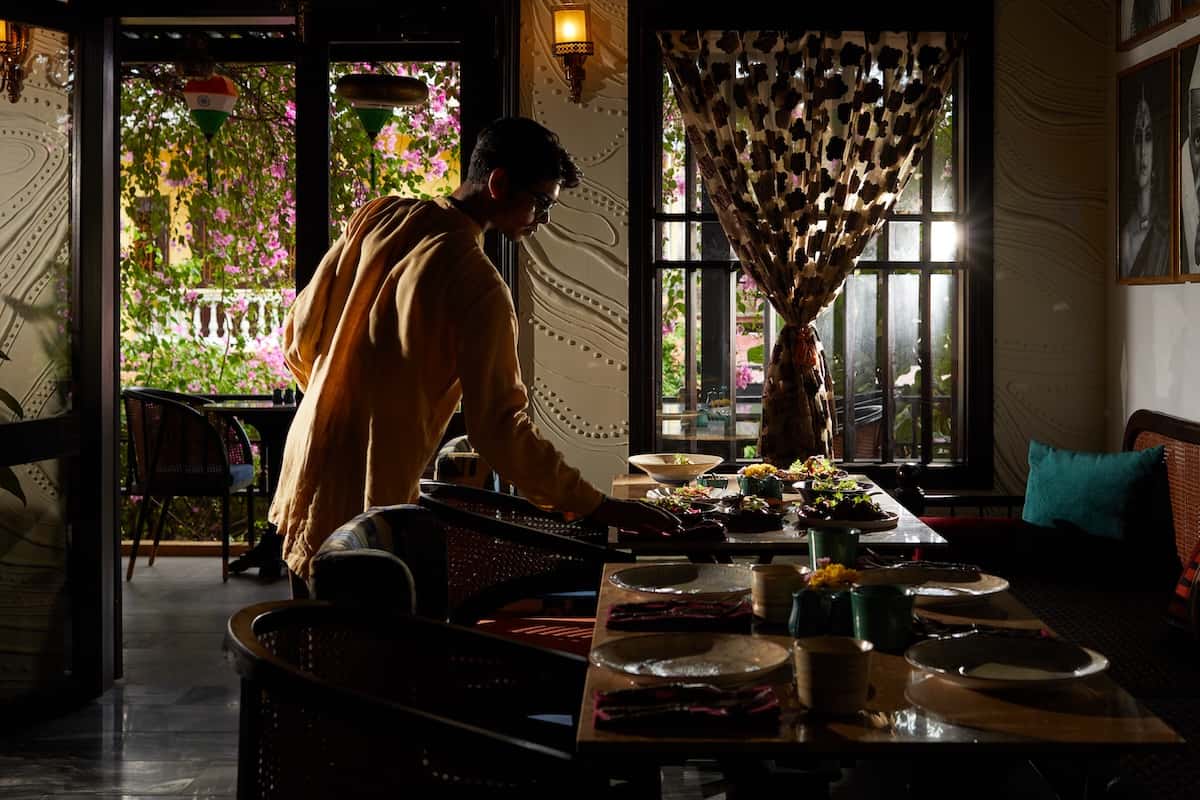
So it took some negotiations to conjure up this vision of India, with its ornate front doors whose two half-moon handles meet in a circle when they close. Inside, staff in prim kurtas – most of them brought over from RANG to give Phirangg the same head start – busy themselves among the guests, and everywhere there are ornaments.
There are brass elephants, pierced brass lanterns that scatter stars across the ceiling, beaded tassels swinging over the sign and heavy brass pots, while a bronze bull’s skull stares down from a wall.
Sohan and his brother collected them on a monumental shopping trip across India. The mural is the exception. That, he explains, was painted by the same Hanoi-based artist who did the three murals behind the bar at RANG: a woman draped in gold jewelry, a lion bursting with psychedelic color and a Kathakali dancer in full ceremonial makeup.
Here, they’ve swapped the bright colors for those six women in red and green lehengas, eyes lowered, filling the wall.
A Vision Of India In Hoi An
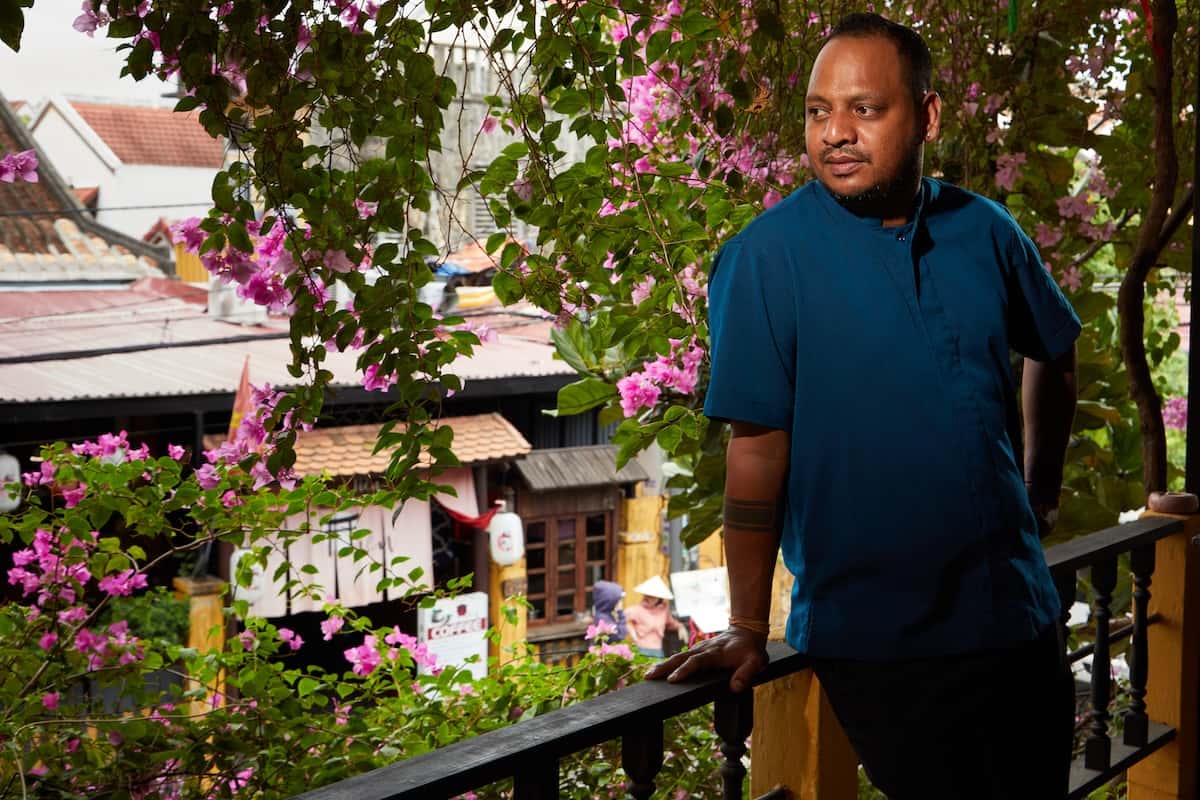
On the terrace, where we’re sitting, hangs a row of silk lanterns in saffron, white and green – the colors of the Indian flag. Bright pink bougainvillea spills from the roof around them. It’s a vision of India in Hoi An.
Before, this was a small coffee shop. “This second floor was empty – the owner kept his things there. So we took the entire place.”
It’s late afternoon. The lunchtime rush has abated and the day trippers are trudging back to their hotels. This is as sleepy as the ancient town gets, and Sohan is enjoying the peace and the pace of life here, a contrast to his native India, even if the menu is a return home.
Now India Comes To Him
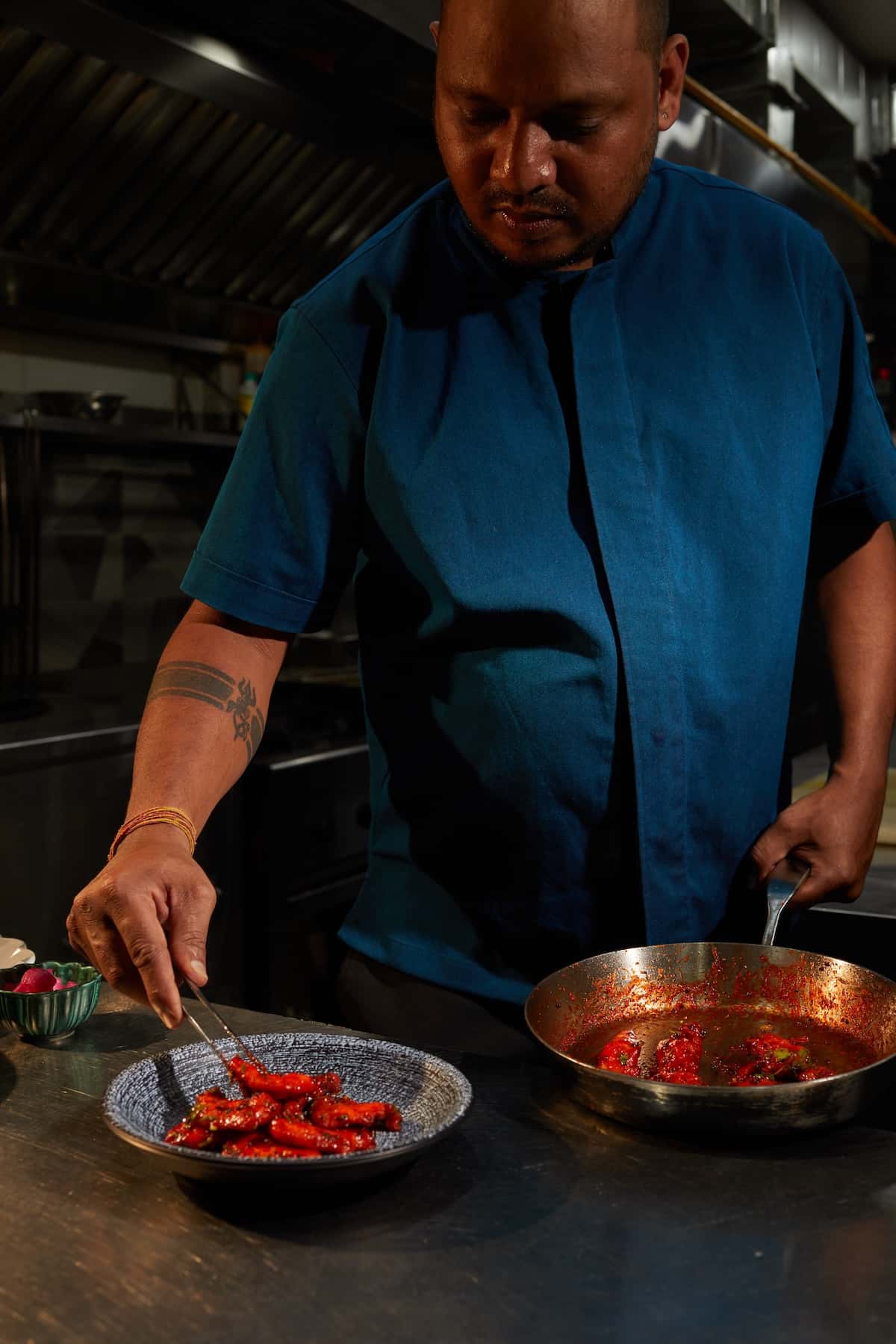
The seat on the terrace is comfortable enough, with the bougainvillea cascading down and lanterns swaying gently in the breeze, to prompt quietly-spoken Sohan to reminisce. He cooked his way across the oceans on cruise liners, he remembers, on one trip circumnavigating the entire globe. Then he ran kitchens in the Middle East, the Maldives, Australia and London. He’s seen everything, he says. “And there’s no need to do it again,” he laughs.
So he stopped. He settled first in Danang. Now he’s a short drive south in Hoi An, where his wife and son have joined him from Delhi. “I was worried whether he would adapt,” he says of his son. “Luckily, he’s happy.”
He’s done his traveling. Now India comes to him.
“In the north, where I’m from, our food is different,” Sohan says. “Every state has its own food. Punjab is different. Uttar Pradesh is different.” Where RANG serves contemporary Indian, Phirangg works its way across the country region by region, playing the hits.
Classic Indian Style
The pani puri is a good example. The crisp shells arrive hollow and puffed, with spiced water in a jug to be poured into them at the table. “This is classic Indian style,” Sohan says, nodding approvingly. One bite and the shell shatters, and the sour, spicy water floods in.
Next there’s galouti kebab – minced meat worked with spices into a patty so fine it barely holds its shape. “We mash it really, really tight,” he says. “By hand.” Little pastry rounds sit above and below it. It melts on the tongue, rich and warmly spiced.
The tandoori chicken tikka is the bestseller. It comes with green chutney. Plenty of kitchens make tikka with breast meat, Sohan says, and it dries out too quickly. This one is charred at the edges and juicy all the way through.
Then there are the breads: Amritsari kulcha and keema kulcha, roomali roti as thin as a handkerchief, and naan – plain, butter, garlic or chili and cheese. There’s also mandwa, a finger-millet roti from the Uttarakhand hills where Sohan grew up.
The missi roti comes out of the tandoor golden, flecked with red onion and green chili, blistered black at the edges and glossy with ghee. It’s earthy, nutty and just hot enough to justify another drink.
Then there’s the Malabar paratha, wound into a spiral and pulled apart into dozens of buttery, tissue-thin layers. It’s crisp at the edges and soft in the middle. Both come in prim little lacquered pots with wooden rims and lids, their cream sides painted with pink and yellow flowers and teal leaves.
Phirang means foreigner. The word goes back to the Persian farang. Hoi An has always been a phirang town. For more than 300 years merchants from Japan, China, Portugal and the Netherlands traded along the Thu Bon, until the river silted up and the ships moved up the coast to Danang.
Watching The Room Start To Fill Again
Now the foreigners arrive by bus, and they’ve been joined by a chef from the Himalayan foothills, his family and a dining room full of expats. Sohan doesn’t have to go looking for the world anymore. It comes through the door. Down Phan Châu Trinh the lanterns are coming on, and inside a table of “phirangs” is passing around the pot of paratha.
At the bar, Devender is mixing a Jaljeera Mojito – built on jaljeera, the cumin-spiked cooler sold from carts across north India, with rum, lime and mango soda. A focus on spirits makes sense. “Indian people don’t really drink wine,” Sohan says. Indian guests aren’t the only ones filling Phirangg, though. It runs on Hoi An’s dedicated residents and an endless stream of walk-ins.
From his seat on the terrace, Sohan watches the room start to fill again. India has come to him – on the menu, on the walls and around every table. And he seems happy too.