




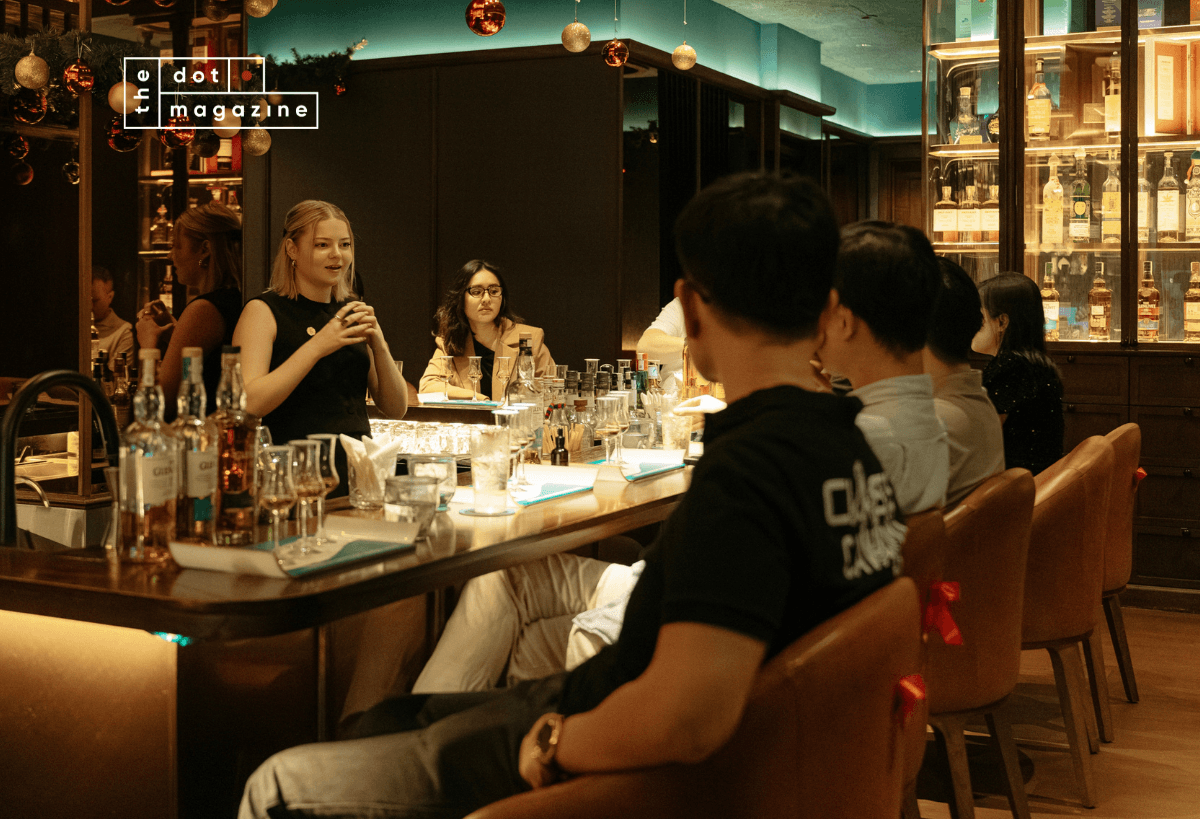
In whisky, a cask has never simply been somewhere for spirit to sit and wait. It may have held sherry, rum or bourbon; it may be made from American or European oak; and it carries traces of whatever came before. But at The Glenlivet, sometimes even the cask can be taken apart — and put back together differently.
A good whisky cask is often valued for its past.
One might have held bourbon. Another, sherry. Others arrive carrying the influence of rum, Cognac or red wine. By the time new-make spirit enters, the wood already has a memory, and what follows is a slow exchange between the two. Whisky takes colour, flavour and texture from the wood. The cask, in return, gets time. It is a relationship so familiar in Scotch that the barrel can sometimes feel almost inevitable. But what happens when, instead of simply choosing a different cask, you take two different kinds apart and rebuild them as one?
The Glenlivet did exactly that.
When Rum Meets Bourbon Before The Whisky Arrives
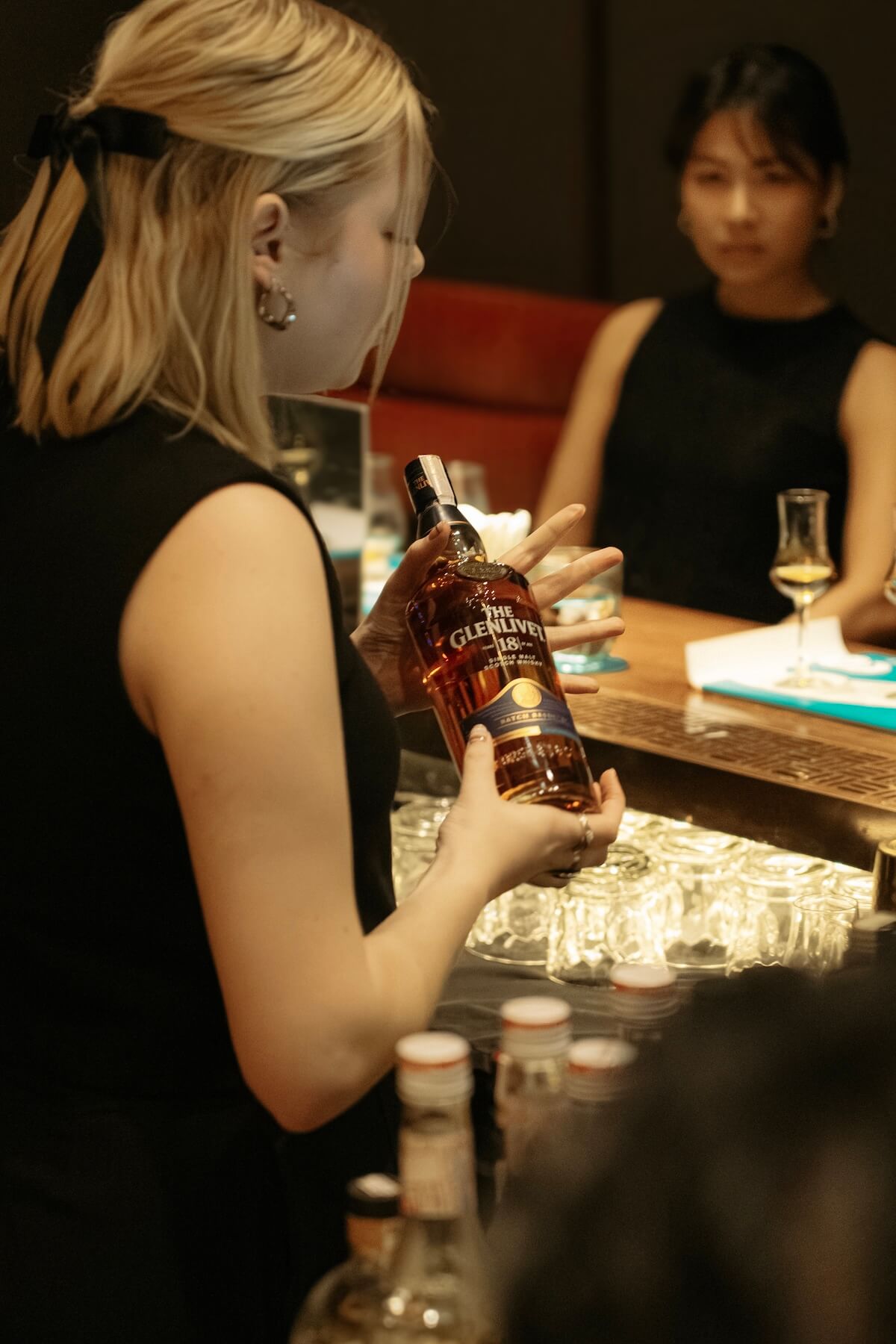
For The Glenlivet Fusion Cask, first-fill rum and bourbon barrels were selected and deconstructed, before their staves were reassembled into bespoke casks. A portion of the whisky was then finished in these newly constructed vessels. According to The Glenlivet’s tasting notes, the resulting whisky moves from orange, vanilla custard and coconut on the nose to apricot, peach, apple, toffee-covered banana and a touch of cinnamon on the palate, before returning to sweetness and orange on the finish.
But the more interesting detail is not necessarily the list of flavours. It is the logic behind them.
Traditionally, a distiller looking to introduce another dimension might move whisky from one type of cask into another. Here, instead of asking the liquid to visit two different worlds one after the other, The Glenlivet brought those worlds together first. The ingredients did not change. The structure around them did. It sounds like a small distinction. In a category where time is routinely measured in decades, it is also a neat way of questioning something that appeared fixed.
The Cask Was Never Standing Still Anyway
Whisky history is, in many ways, a history of movement. Casks that once carried one liquid travel elsewhere and begin another life. Bourbon barrels cross the Atlantic. Sherry-seasoned casks leave Spain. Rum barrels arrive with an entirely different aromatic history written into their wood.
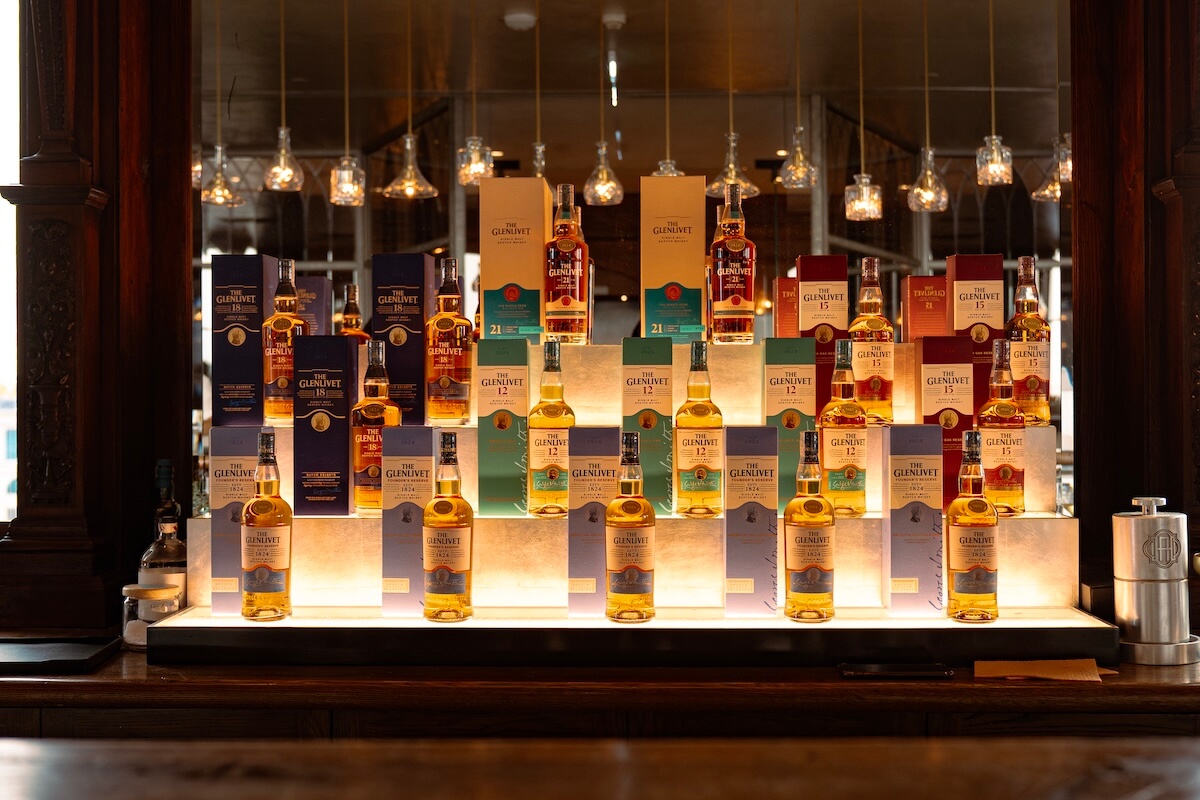
The Glenlivet Caribbean Reserve offers a more straightforward example. A portion of the single malt is finished in barrels that previously held Caribbean rum, introducing tropical fruit, caramel and banana notes to the whisky, according to the distillery. Captain’s Reserve takes another route, bringing Cognac cask influence alongside bourbon and sherry. Then there is Chapter One of the Groundbreaker Collection, created in collaboration with Malaysian artist Red Hong Yi. Part of the whisky was finished in double-charred American oak and European red-wine casks, a combination The Glenlivet says it had not previously used.
Every cask arrives with a different past. Every time whisky enters, that past begins another chapter. What makes Fusion Cask particularly intriguing is that it takes this idea one step further. Now the past of the cask itself can be rearranged. Rum on one side. Bourbon on the other. Then take both apart.
Two Hundred Years Old Doesn’t Mean Everything Has To Stay The Same
That idea feels particularly apt for a distillery that recently passed its 200th anniversary. In 2024, The Glenlivet marked two centuries since George Smith obtained his licence to legally distil in 1824. But rather than treating the anniversary solely as an exercise in looking backwards, the distillery used the moment to reinterpret familiar parts of its history.
A limited edition of The Glenlivet 12 Year Old, matured entirely in American oak and bottled at 43% ABV, arrived with packaging selected from more than 400 artworks submitted by artists across 42 countries. A public vote eventually selected a design by Colombian creative studio Studio Berdi. At the opposite end of the age spectrum was The Glenlivet 55 Year Old. Released as the first expression in the Eternal Collection and limited to 100 bottles, it was the oldest whisky The Glenlivet had released at the time.
One side takes something familiar and gives it another frame. The other waits 55 years. Between them sits a question that any 200-year-old distillery eventually has to confront: how much should remain, and how much is allowed to change? The answer might be sitting inside the cask.
Time Still Gets The Final Say
All this experimentation makes it easy to forget that whisky remains an unusually patient product.
Technology can move quickly. The Glenlivet extended its Sample Room into augmented reality in 2022. Packaging can be reconsidered. Cocktails can shift how and where single malt is consumed. New combinations of wood can be devised and tested.
But there is no skip button for maturation. The Glenlivet 12 Year Old still needs 12 years. A 55-year-old whisky still needs 55. Before packaging, technology or cocktail culture enters the picture, spirit spends most of its existence with wood.
There is an interesting tension here. Whisky is one of those categories where innovation can never completely outrun time. Something new can happen in the choice of cask, in how its staves are assembled, in finishing or eventually in the way the whisky is served.
But eventually, people have to stop doing things. And wait.
Sometimes Moving Forward Starts With Taking Something Apart
George Smith performed a rather different kind of deconstruction in 1824. Following the Excise Act of 1823, he obtained his licence and became the first legal distiller in the parish of Glenlivet, separating himself from the illicit distillers operating around him.
It was hardly a popular decision.
Threats followed, and Smith famously carried a pair of flintlock pistols for protection. Two centuries later, the stakes involved in rebuilding a whisky cask are considerably lower. Nobody needs a pistol to rearrange a few oak staves. But there is a thread connecting the two ideas: the structure already in place does not automatically have to remain the structure you inherit. Perhaps that is a more useful way of understanding the “pioneering” spirit The Glenlivet often invokes. It does not have to mean constantly producing something the world has never seen before.
Sometimes it means looking carefully at something everybody thinks they already understand. A whisky cask, for example. Where the wood came from. What it held before. What those individual staves might do differently. Then taking it apart. And putting it back together.
Drink responsibly.