



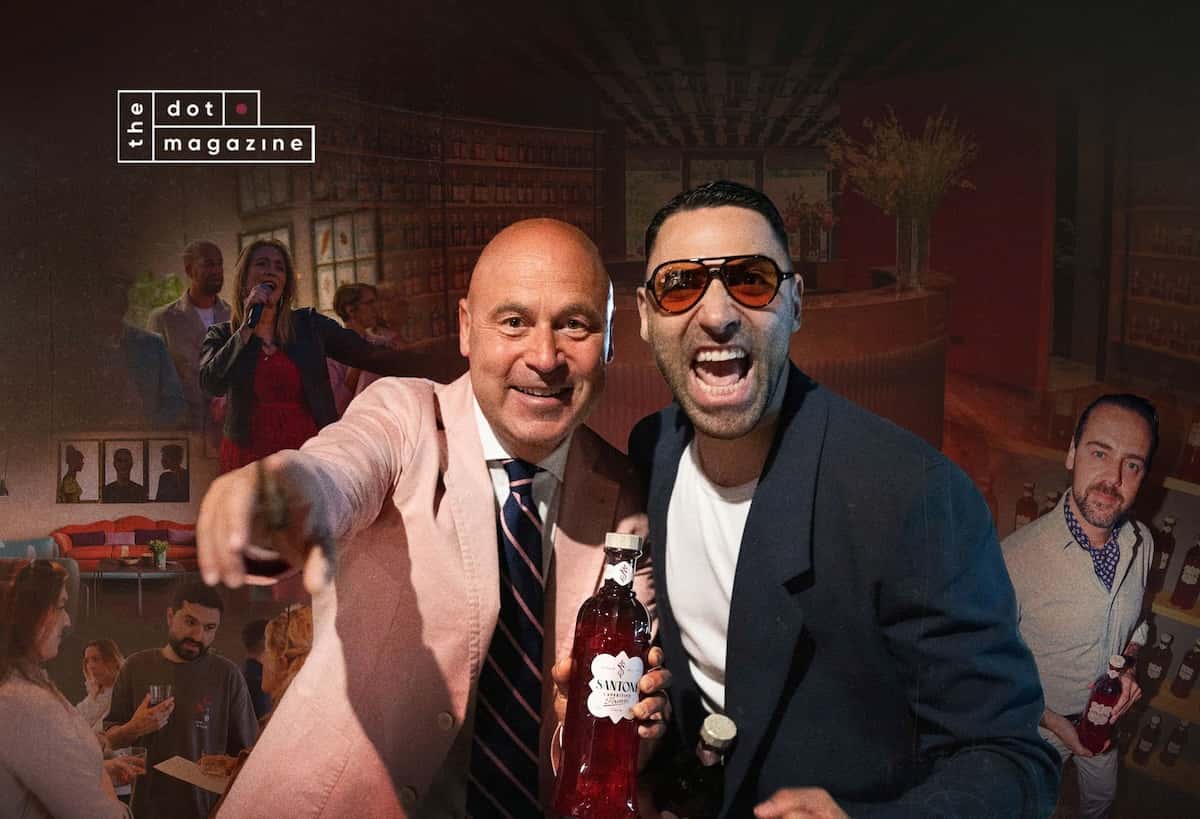
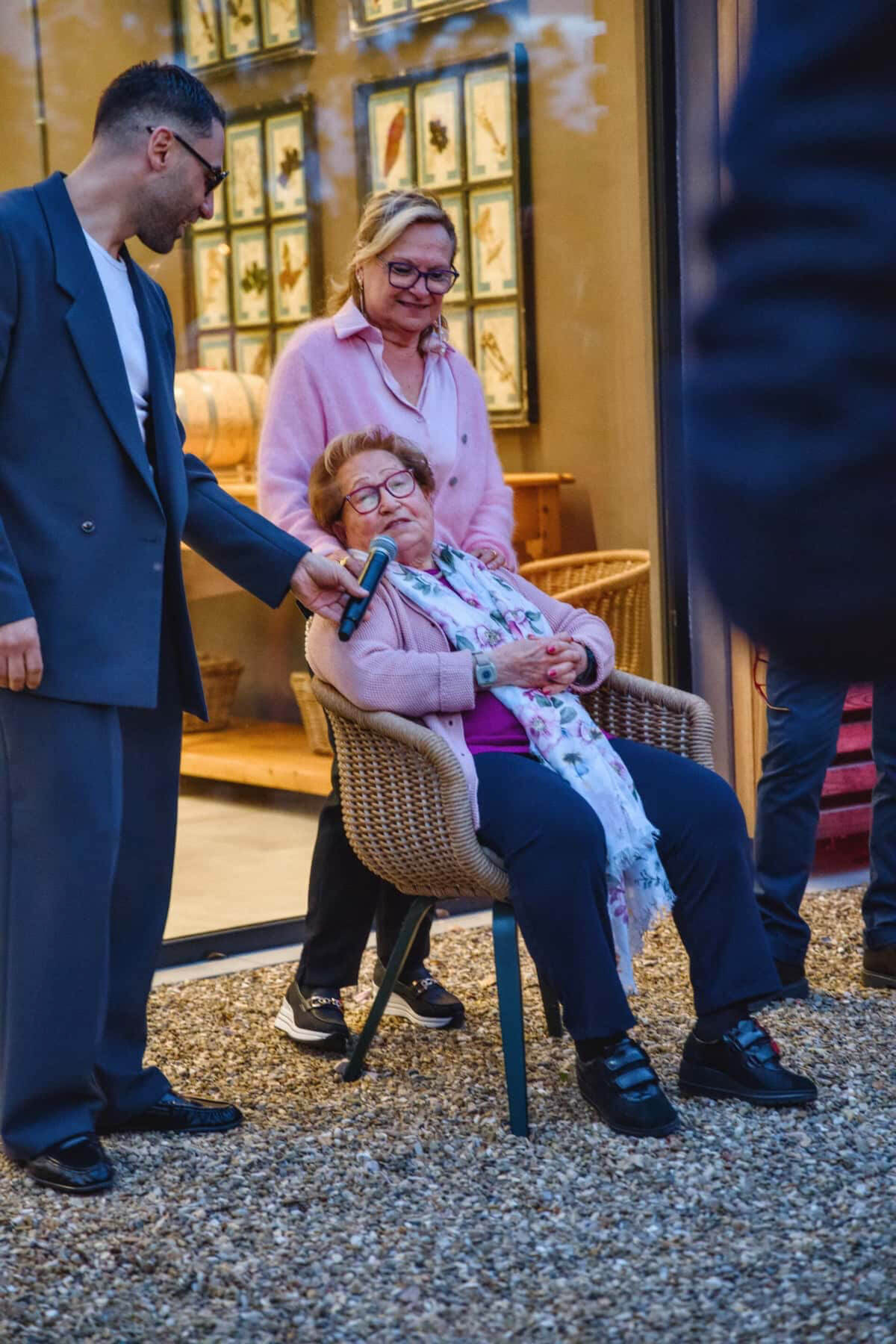
Franca Santoni once labeled bottles by hand in a garage, her baby asleep in a pram beside her, while her husband drove the day’s deliveries around a Tuscan spa town in a van so loaded it looked like it was running on one wheel. Tonight she’s settled into a rattan chair at the heart of a 5,000-square-meter distillery, a white floral scarf knotted against the spring chill, hundreds of people in front of her and not a flicker of nerves. Her son put her there. And he got the hundreds of people here too.
Behind Franca is a tasting room with glass paneling and greenery, a small table of silver decanters catching the light – part of Casa Santoni (Chianciano Terme, Tuscany), a distillery the family opened last July, with production, aging and hospitality spaces and a botanical garden feeding the recipes. And in front of her are hundreds of people – neighbors, local dignitaries, friends, some of the biggest names behind the world’s best bars and assorted global media.
Stefano Santoni Got Us All Here
Luca Missaglia, Managing Partner at Amaro Santoni, who’s helping to translate, notices Franca’s nonchalance. “I just asked her if it’s normal to be in front of so many people,” he says. “And she said, ‘My son, he put me here, I have to say something!'”
Her son, it’s fair to say, got us all here. We’re gathered for the launch of Santoni L’Aperitivo, Amaro Santoni’s new branding and bottling. It’s Florence in a bottle, as they describe it, only crafted in Tuscany. Inside are thirty-four botanicals built around Chinese rhubarb, the same root that gives the glass its color. There’s iris and olive leaf to represent the city itself. A fluted bottle shaped after the Duomo and a label drawn from the north door of the Battistero.
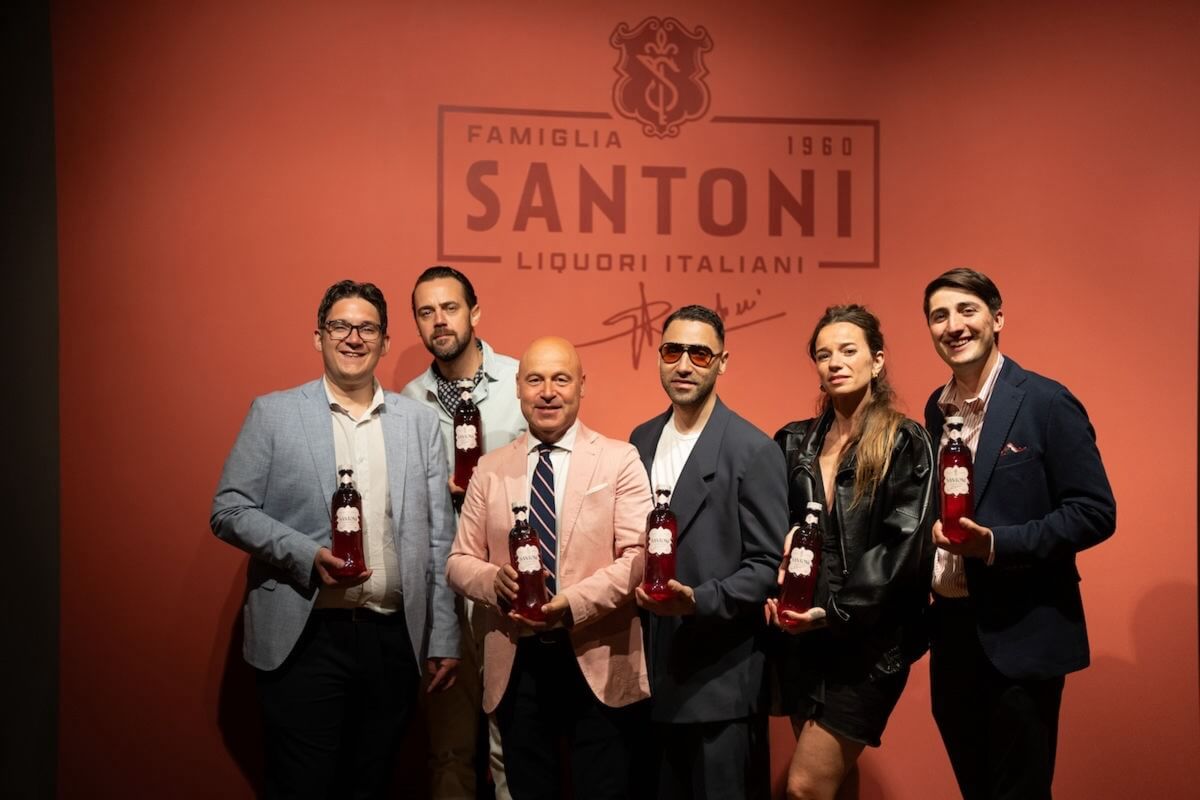
At the 360-degree bar at the heart of Casa Santoni, staff in pink suits are whipping up cocktails that show exactly what L’Aperitivo turns into. Stranger & Stranger – the London, New York and San Francisco packaging studio behind some of the most recognized bottles in spirits – took the full Famiglia Santoni range off the back bar and rebuilt it from the ground up. Their design director, Andrea Battello Hung, is here somewhere, lost in the crowd, and after scanning the audience for him, Luca gives up and sends the thanks out anyway.
Color As Saturated As A Tuscan Afternoon
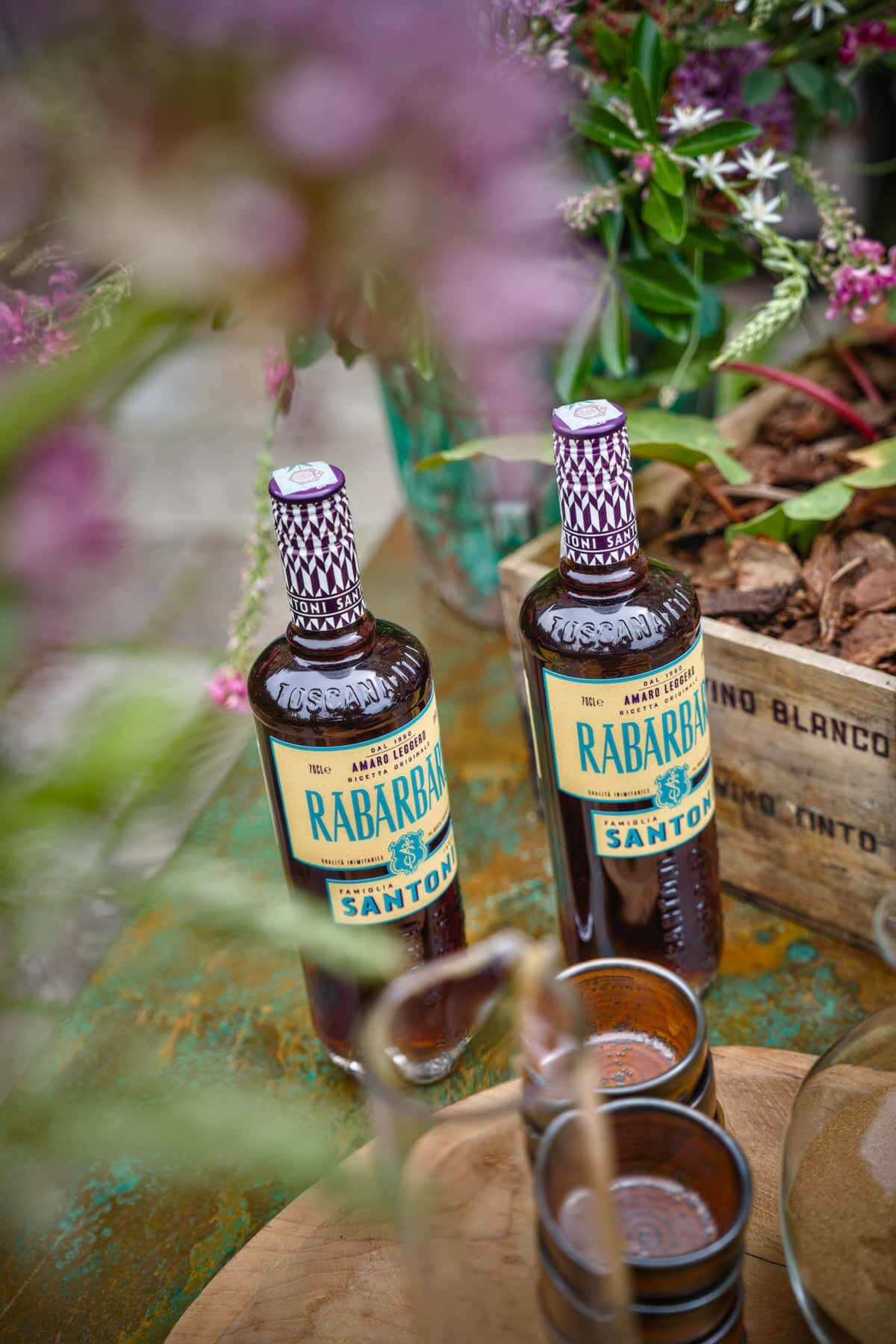
The brief, in their own words, was to fix packaging that felt a bit “dusty and recessive on shelves.” The solution was color as saturated as a Tuscan afternoon, Florentine tilework pressed into the glass and typefaces distinct enough that each bottling feels like an individual and part of a family. The work just won three awards at Vinitaly 2026 – including best in category for the Vermouth al Rabarbaro Black. For a family business approaching seventy years, it’s not a small thing to change how you look to the world. Stefano understood that – saying he needed to see the company from the outside, to understand what people were actually looking for.
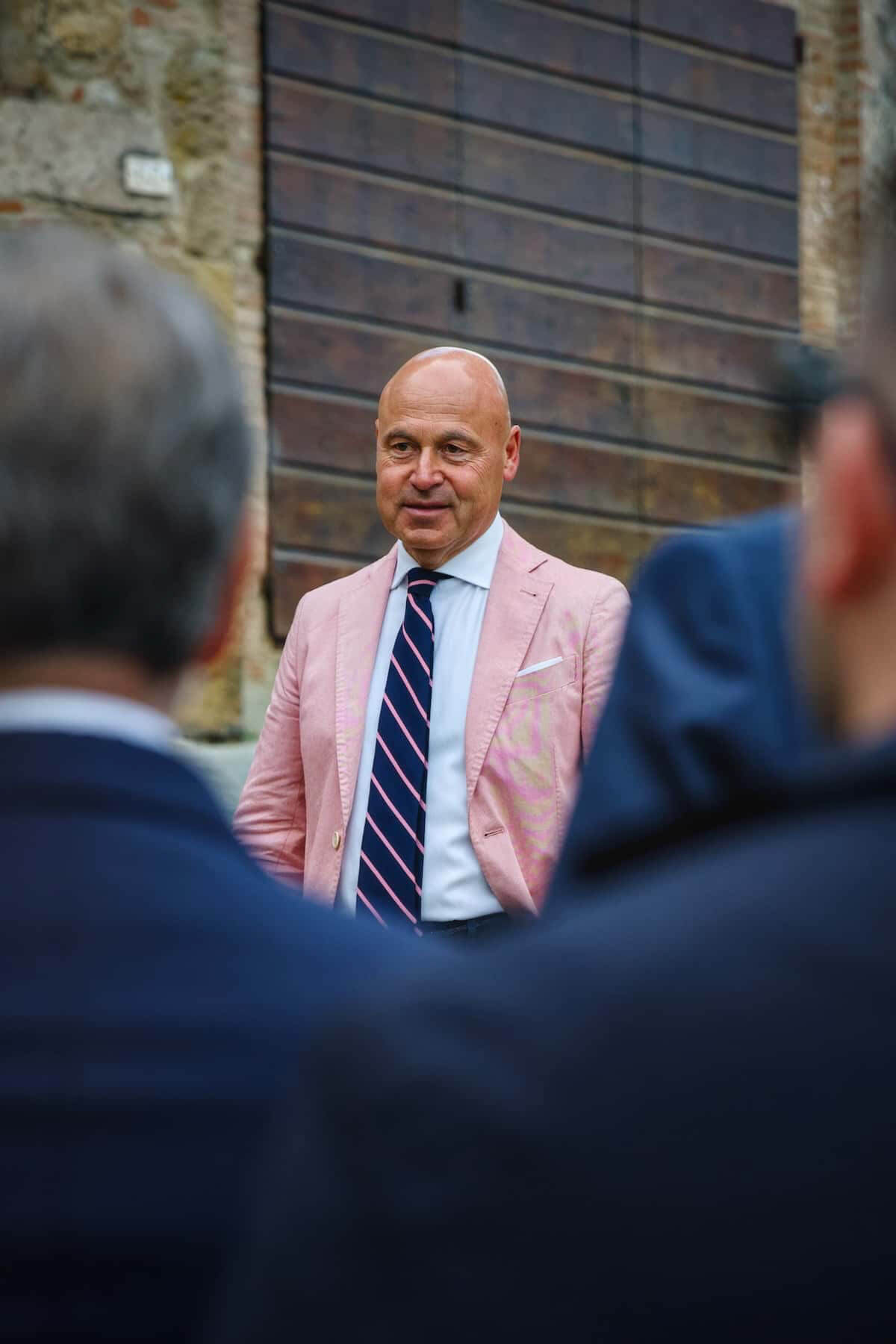
Stefano Santoni is hard to miss in a crowd. Broad-shouldered, pink linen blazer, the ease of a man who has been walking this ground for decades. We’d seen him earlier, standing in front of the Porta del Sole – the gate we’d all marched through on the way here – beside a bronze plaque that reads Gabriello Santoni dedicò il restauro di questa porta. His father had paid to restore the gate. Stefano stood there as if he hadn’t noticed the plaque, which probably means he’s stood there a hundred times.
Rhubarb In His Veins
Shortly before, in the distillery, Andrea – Stefano’s “right hand when it comes to production” – had been talking about rhubarb, the key ingredient in L’Aperitivo. “We know the rhubarb leaves and the stalk – but what’s used in liqueur-making is the root,” Luca translates. To make Amaro Santoni, rhubarb root is macerated in different cut sizes – combinations of powder and slices – each producing a different result. “I joke with Stefano that he has rhubarb in his veins, not blood,” Luca adds as an aside.
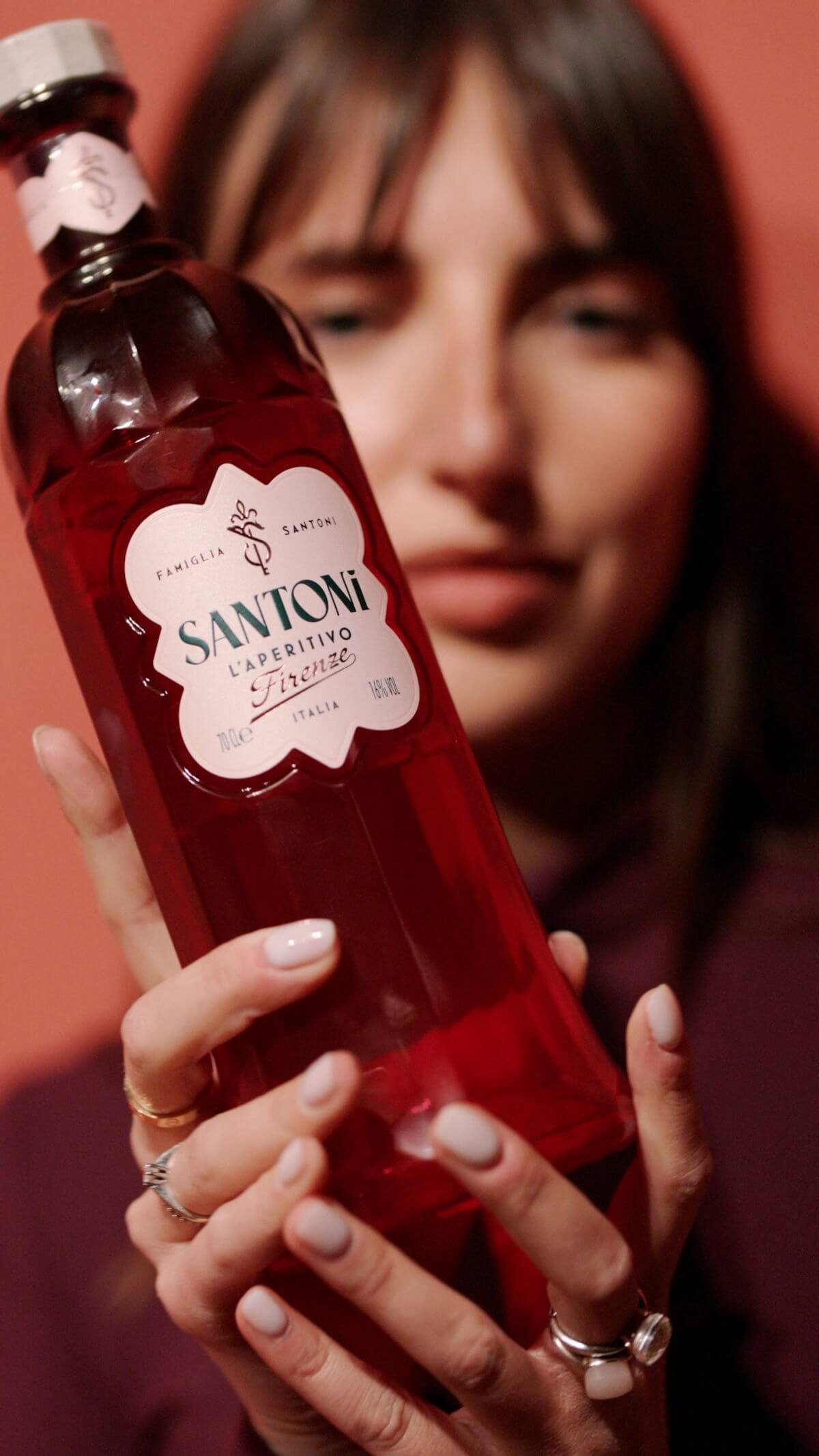
Then it’s broken down five ways: static maceration, dynamic maceration, decoction, distillation and steam distillation. Each method pulls something different out of the root. What survives all five is a concentrate so strong that only a few drops reach the final blend.
The other thirty-three botanicals never meet in one tank. Each is worked on its own terms – some as tinctures, some as essential oils, some distilled – so nothing gets flattened by anything else. Iris and olive leaf for Florence. Rose, elderflower, gentian and juniper for depth. They’re brought back together only at the end. The base is from here too: neutral alcohol made from organic wheat grown over the hill in the Val d’Orcia, beet sugar and spring water from Chianciano itself.
Santoni L’Aperitivo: Refreshed For The Way People Drink Now
It’s a recipe Stefano didn’t write. His father set it down in 1961. Stefano – twenty-eight years at the distillery before he took it over in 2013 – took the original apart and put it back together with the same bouquet, the same sixteen percent, only refreshed for the way people drink now.
At sixteen percent it’s built to be poured long. Four serves are being concocted at the Casa Santoni bar: with tonic, with prosecco, in a Paloma against grapefruit and salt and in a Negroni Rosa.
The recipe Stefano completed sat unlabeled for years. He called it an amaro because that’s what it was – but everywhere it went, people asked the same question: is this an aperitivo? Eventually the answer was yes. The bottle changed. The formula did too. But, roughly what we’re drinking tonight is the same liquid his father wrote down in 1961, only now in a bottle shaped after the Duomo, with a label taken from the Battistero doors.
It Was Running On One Wheel
The road to Casa Santoni runs through Chianciano Terme – a spa town in southern Tuscany where people came in the 1960s to treat their livers. Gabriello Santoni saw the opening. He built two low-alcohol drinks, a digestif and an aperitivo, and drove them around in a van so loaded it looked like “it was running on one wheel,” his wife and Stefano’s mom Franca remembers. Gabriello, she explains, started the business in their garage, where with her baby in a pram she’d label the bottles by hand while her husband did the deliveries.
“Hard times – but we made it through,” she says with a nod, looking around contentedly.
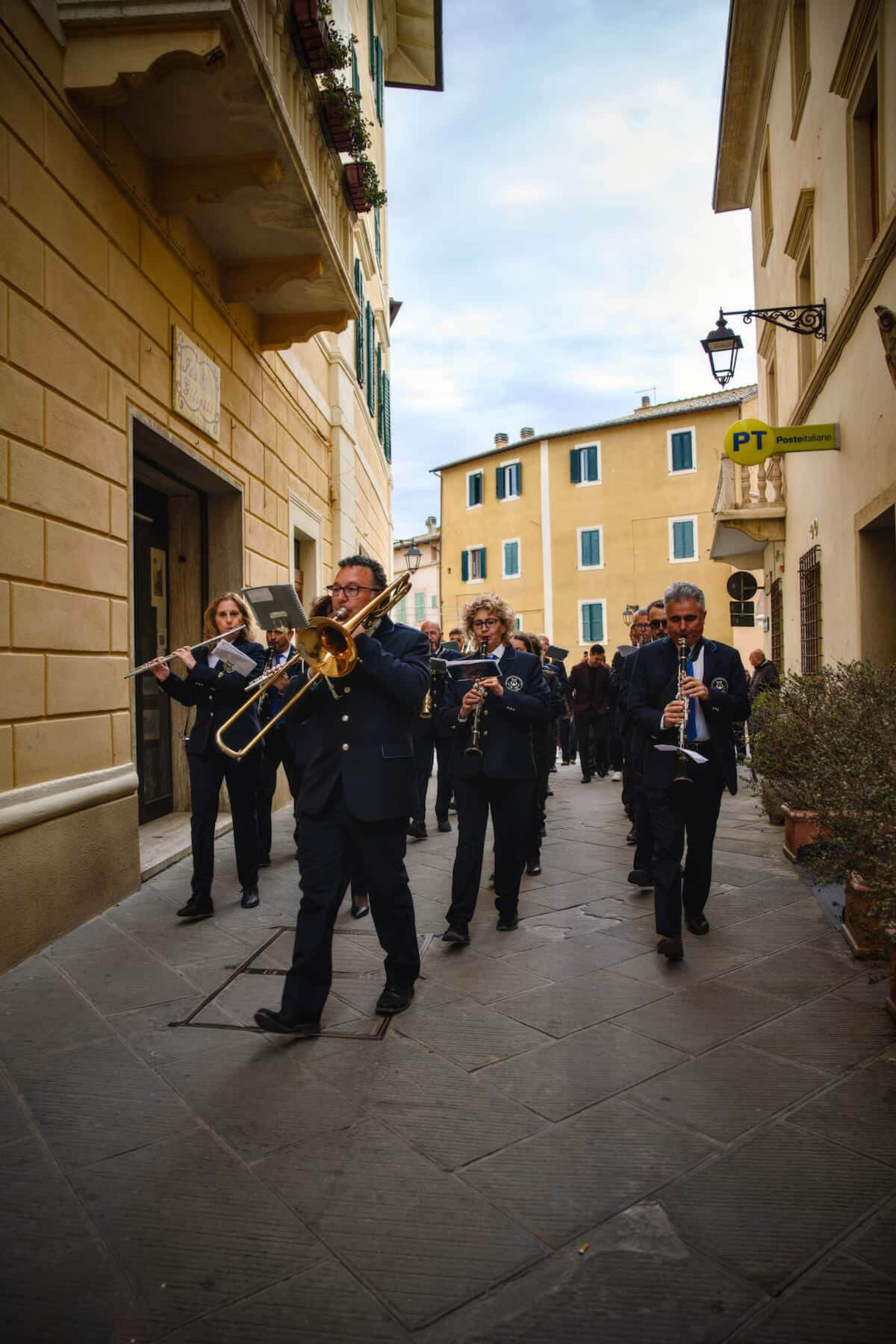
We’d walked through the town on the way here. Following the local band, we marched through the narrow lanes of Chianciano Terme, downward and out through the Porta del Sole – the trombonist who helped restore it happily standing for photos beside it. Along the way, we came to understand that it’s not just rhubarb that’s the root of Amaro Santoni. It’s this town too.
The Soul Of The Thing
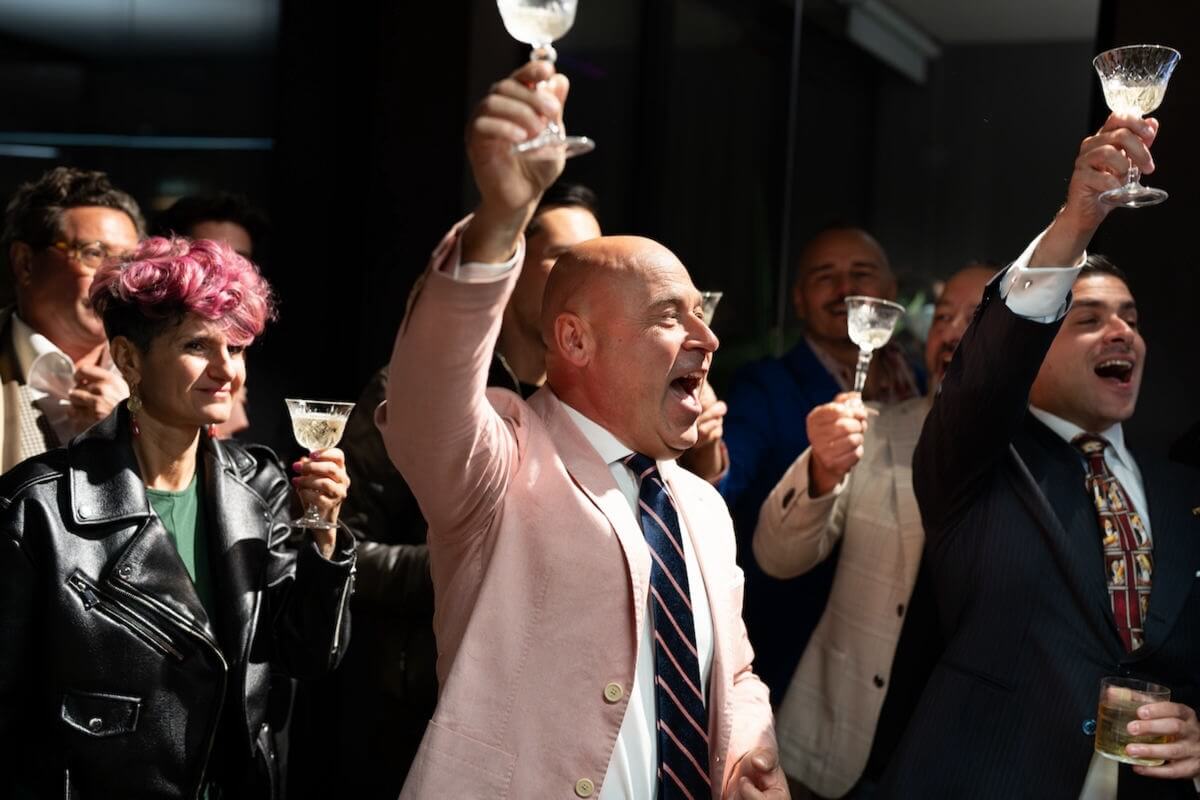
By now Franca’s been helped back inside, settled in the tasting room behind the glass, watching the unveiling from the one quiet seat in the building. Outside, the speeches come – Simone Caporale says a few words, then the maestro Salvatore Calabrese, then Stefano himself.
Rhubarb is the root of Santoni L’Aperitivo. The town is too. But the soul of the thing is behind the glass, in a rattan chair, watching her son lift the pink cloth off the plinth to reveal the new bottle of L’Aperitivo – the same liquid she once labelled by hand, sixty-five years on.