

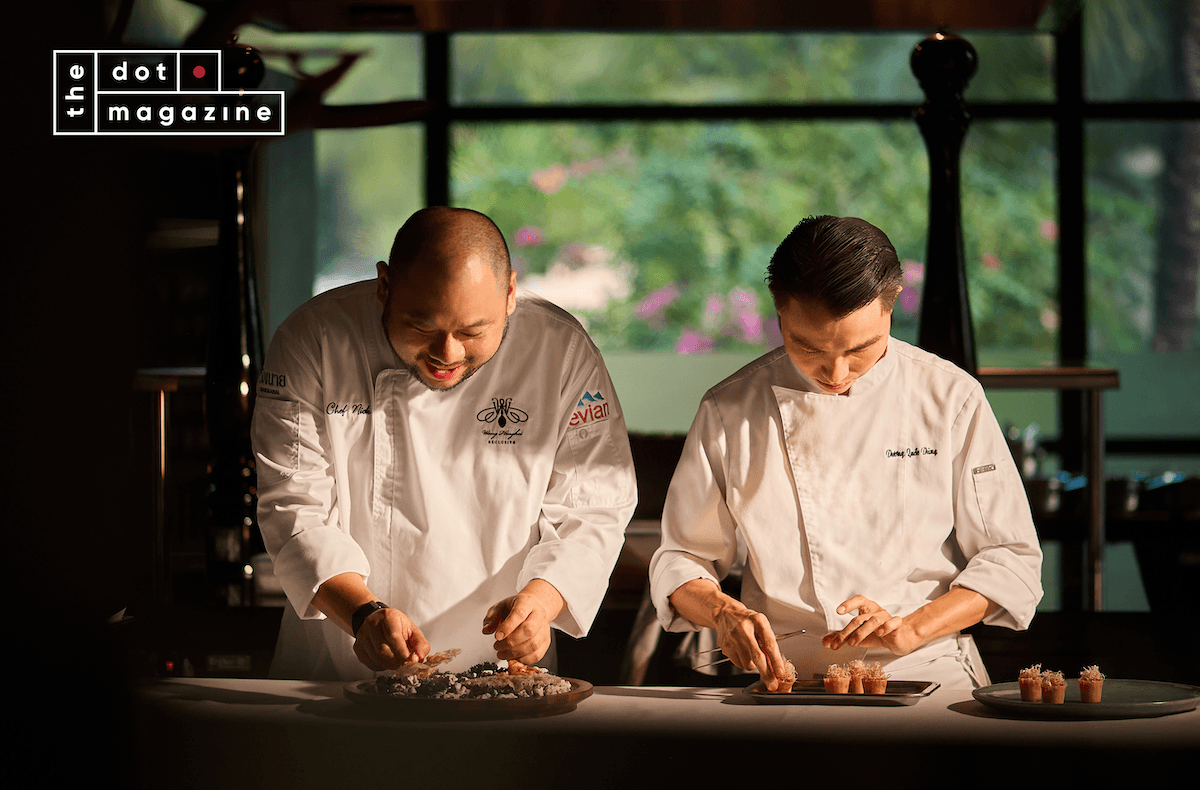
 InterContinental Phu Quoc Long Beach Resort’s LAVA Restaurant’s Chef de Cuisine, Duong Quoc Dung, has a philosophy. “I focus on illuminating the natural character of each ingredient, utilising technique only to elevate the product rather than overpower it,” he begins. That mindset could equally apply to the chefs he hosts as part of LAVA’s new ‘Shared Flame’ series.
It’s an approach he brought to special guest Nick Pavapaiboon – the Bangkok-based chef and founder of Wang Hinghoi – using LAVA to amplify rather than compete with what Nick does.
The Philosophy Behind ‘Shared Flame’
‘Shared Flame’ is InterContinental Phu Quoc’s new culinary platform, built around a simple belief that fire reveals character. It was conceived to unfold across the resort’s dining destinations – bringing in chefs from independent kitchens and IHG sister properties alike – and each chapter takes its own shape: a four-hands dinner, a residency, an intimate exchange.
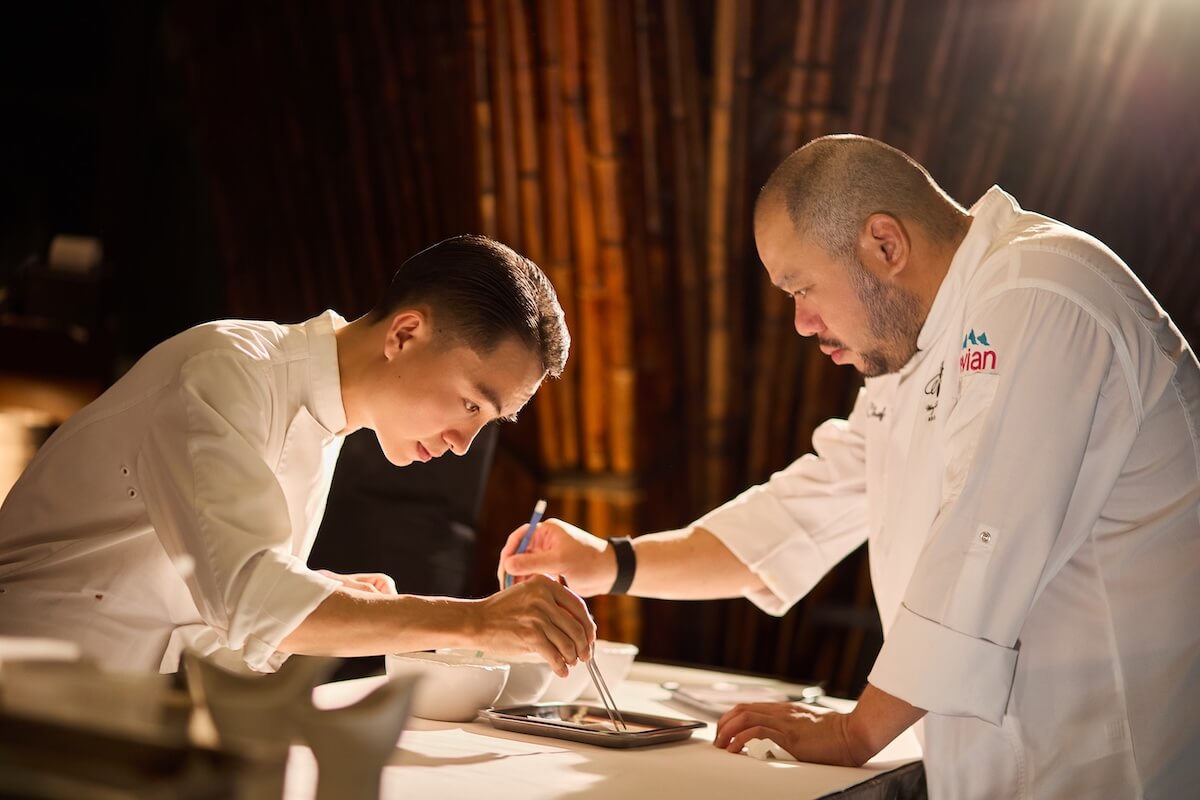
Chapter 1 introduced the concept through its simplest and most direct expression: two chefs, two cultures, two culinary identities and one shared flame. evian, whose commitment to fine dining in Vietnam runs through its partnership with Annam Group, was part of the occasion from the beginning as a considered presence at the table. It’s one that the team at InterContinental Phu Quoc Long Beach Resort felt belonged in a chapter about clarity, precision and letting ingredients speak for themselves.
LAVA Is Its Own Platform
LAVA Restaurant feels like its own platform. The restaurant sits on a small hill within the resort grounds, reached by a garden path. There’s a bamboo dome, an open-sky terrace and an electric-blue fossilized coral bar.
The structure was designed by Vo Trong Nghia, the celebrated Vietnamese architect known for his work with bamboo, and the sweeping arches draw on the island’s fishing heritage. “This bamboo is the most striking part of LAVA to me,” Chef Dung nods, tracing their line with his finger.
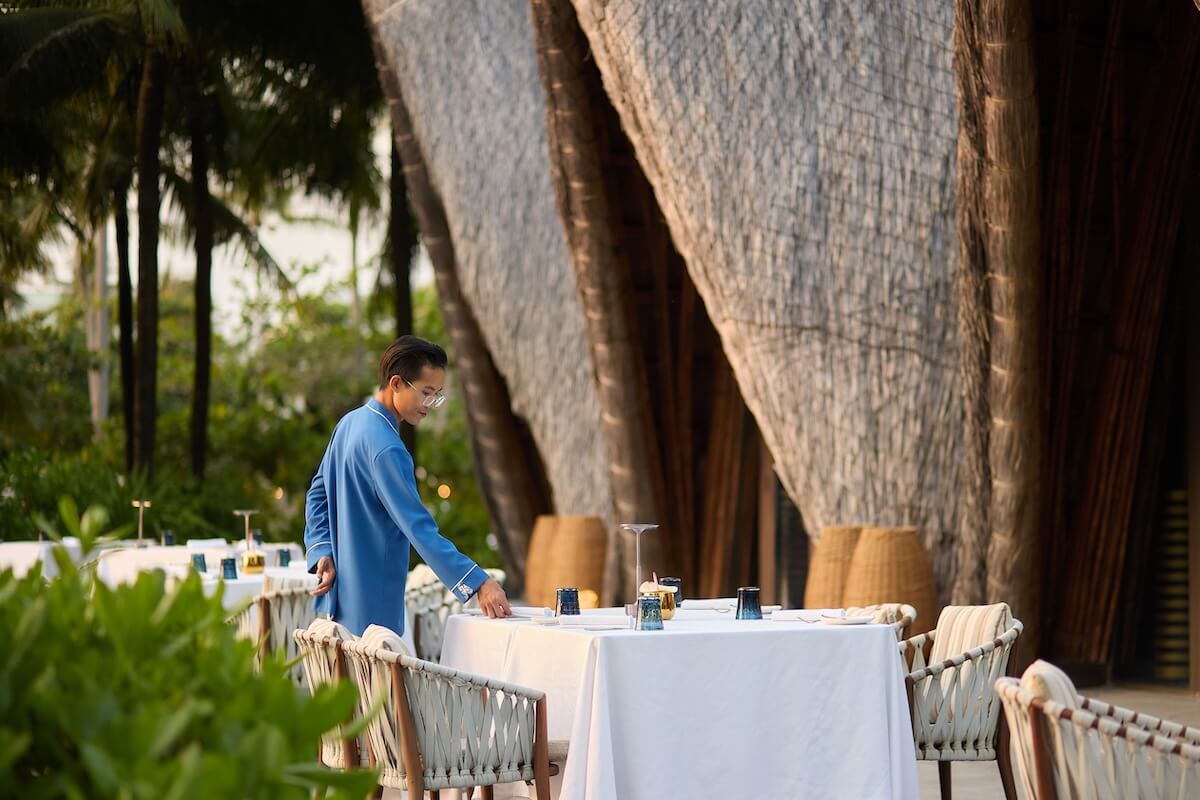
The vaulted space flows with fresh air, enlivening guests who have purposefully left the big city behind.
Rooting Dishes In The Landscape And Character Of Phu Quoc
At LAVA, the kitchen works over charcoal, flames licking the freshest catch from the local market and the best cuts from the land – tomahawks and premium beef – and Phu Quoc pepper, sim berries, island honey and herbs from the resort’s own garden come in when they “help root the dishes in the landscape and character of Phu Quoc,” as Dung explains it.
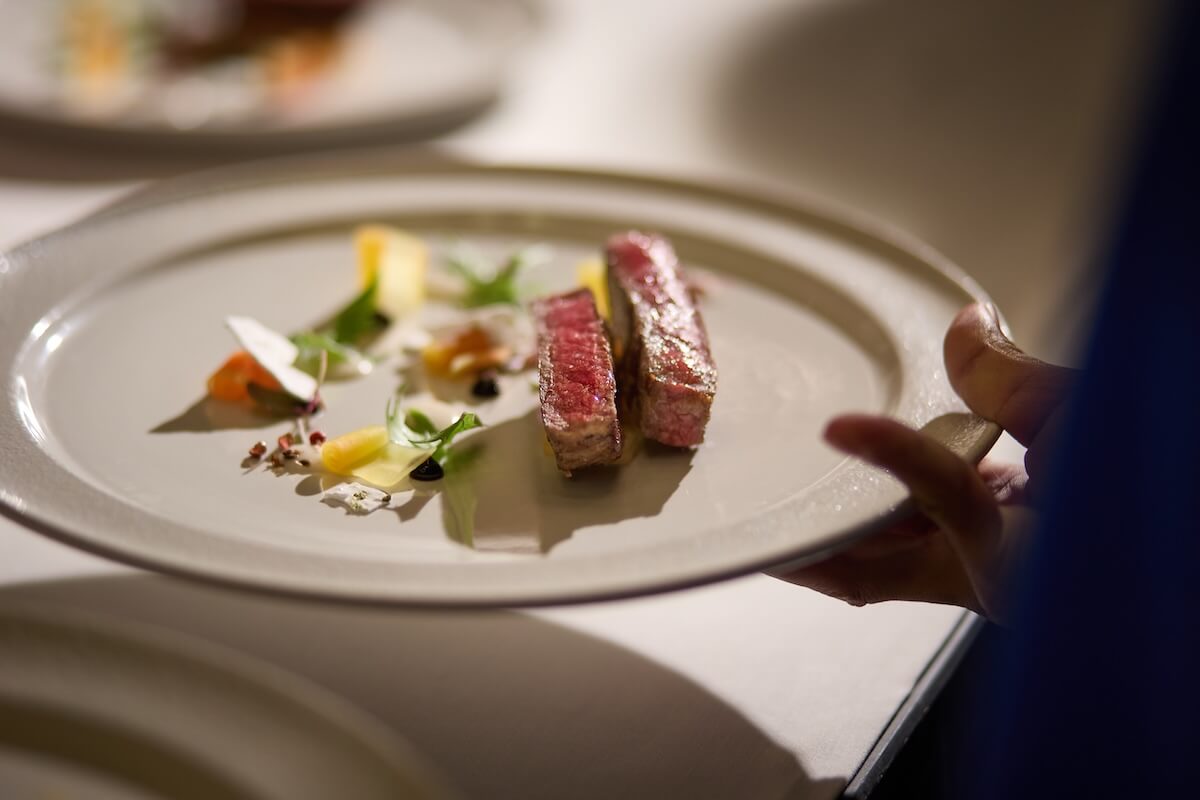
And all of this is what underpinned the ‘Shared Flame’ series. Two chefs making the spark that lights the flame.
Dung was precise about the differences going in. His approach is restrained and product-led – a dish built around a single central ingredient, technique in service of it. “Nick works differently: broader concepts, bolder combinations and a willingness to push at the edges of what a dish can do,” Dung smiled, excited at the prospect of cooking together.
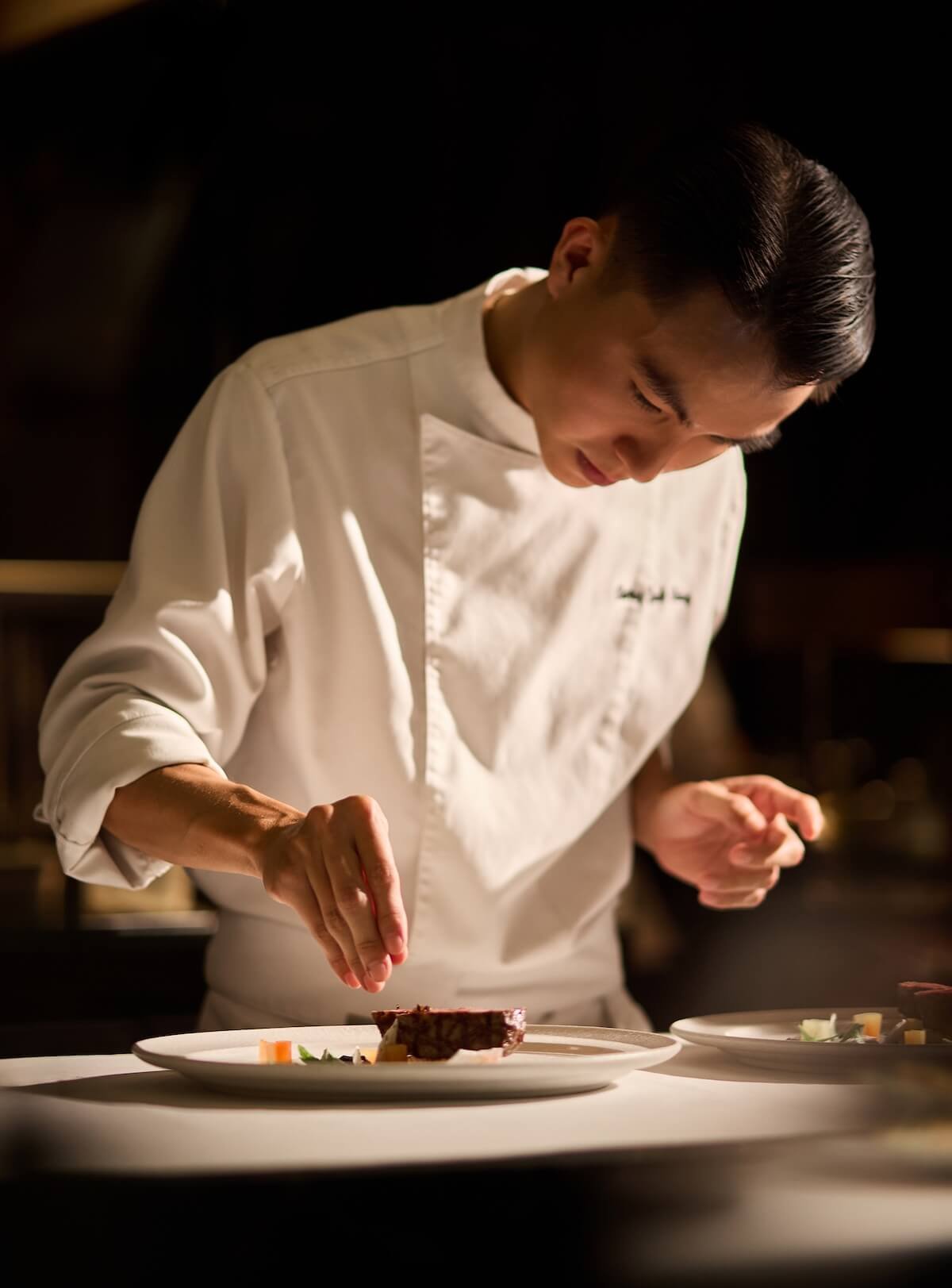
Introducing Evian Ambassador Nick Pavapaiboon, Chef and Founder of Wang Hinghoi
Nick Pavapaiboon took an unusual route to Wang Hinghoi, his contemporary Thai restaurant in Bangkok – and to his role as an evian Chef Ambassador. He trained as an engineer first, then opened a Thai restaurant in Houston, and then he came home.
He describes developing a dish, like an engineer would, in terms of variables – acidity, fat, texture, aroma and temperature – tested and adjusted until the balance is right. “Cooking is emotional,” he says, “but the process behind it is often highly analytical.”
What he landed on, after Houston and the engineering and the long way round, is a straightforward premise: Thai cuisine doesn’t need reinventing, it needs revealing. “My role as a chef is to reveal its depth, precision, and beauty.” Wang Hinghoi is where he does it – fine dining not as a departure from Thai food but as another lens through which it can be read.
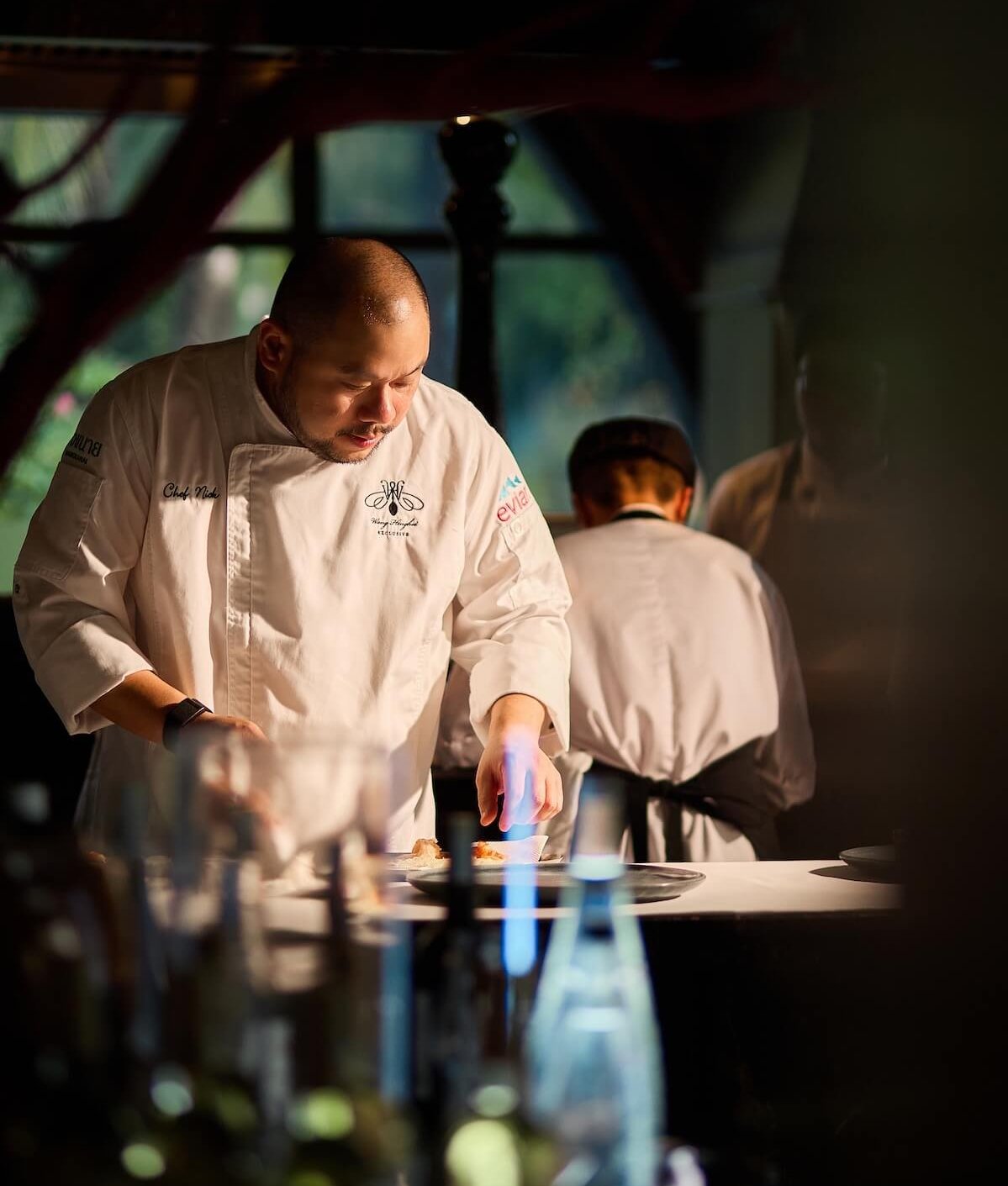
For ‘Shared Flame,’ he arrived without a fixed menu. The idea, as he described it, was genuine merger rather than alternation – some dishes beginning from Thai foundations and evolving with Vietnamese influences, others starting from Dung’s perspective and absorbing Thai elements. “Less about two chefs cooking side by side,” he said, “and more about two culinary perspectives creating something together.”
“Honour The Product And The People Behind It”
Duong Quoc Dung grew up on a farm. The food memories he carries from it are specific: vegetables and herbs harvested moments before cooking, the smell of food over an open fire. He doesn’t try to put those dishes on the plate at LAVA. What he tries to recreate is the feeling behind them. Their honesty and directness. Nothing is added that doesn’t belong.
That framework came early, from his first mentor, Chef Tran Hoang Linh at Urban Kitchen: taste constantly, keep your techniques clean and purposeful, honor the product and the people behind it.
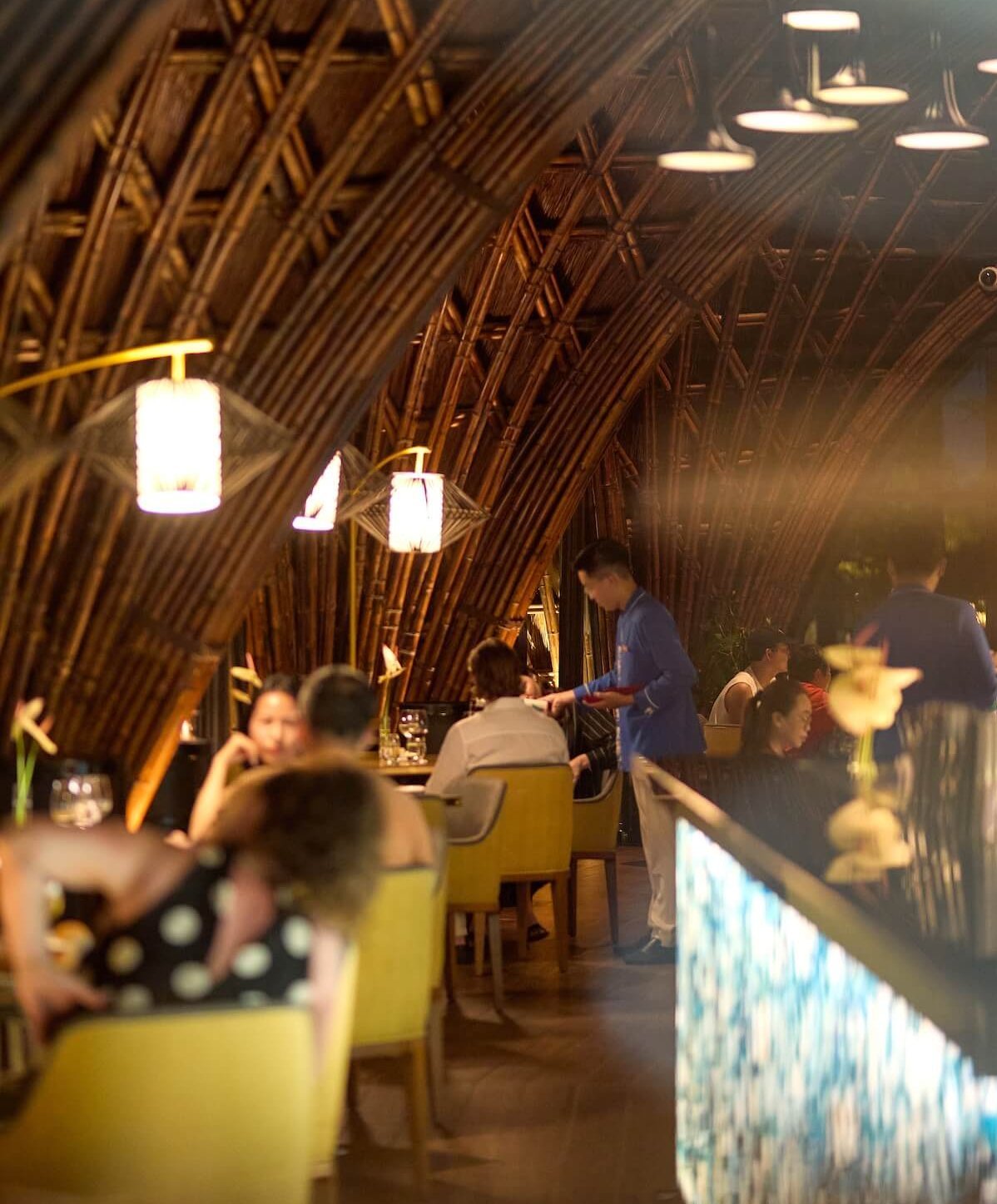
At LAVA, it translates into a kitchen built around what the island offers on any given day — local seafood, ingredients from nearby farmers and herbs from the resort’s own garden. Guests at his chef’s dinner don’t know what’s coming because Dung doesn’t either. He’ll decide when he knows what’s best that morning.
It was precisely that instinct that made the collaboration with Nick a natural fit rather than a calculated one. Where Dung works with restraint and singularity, Nick brings analytical precision and a willingness to push at the edges. Both share the same starting point: the product comes first, everything else in service of it.
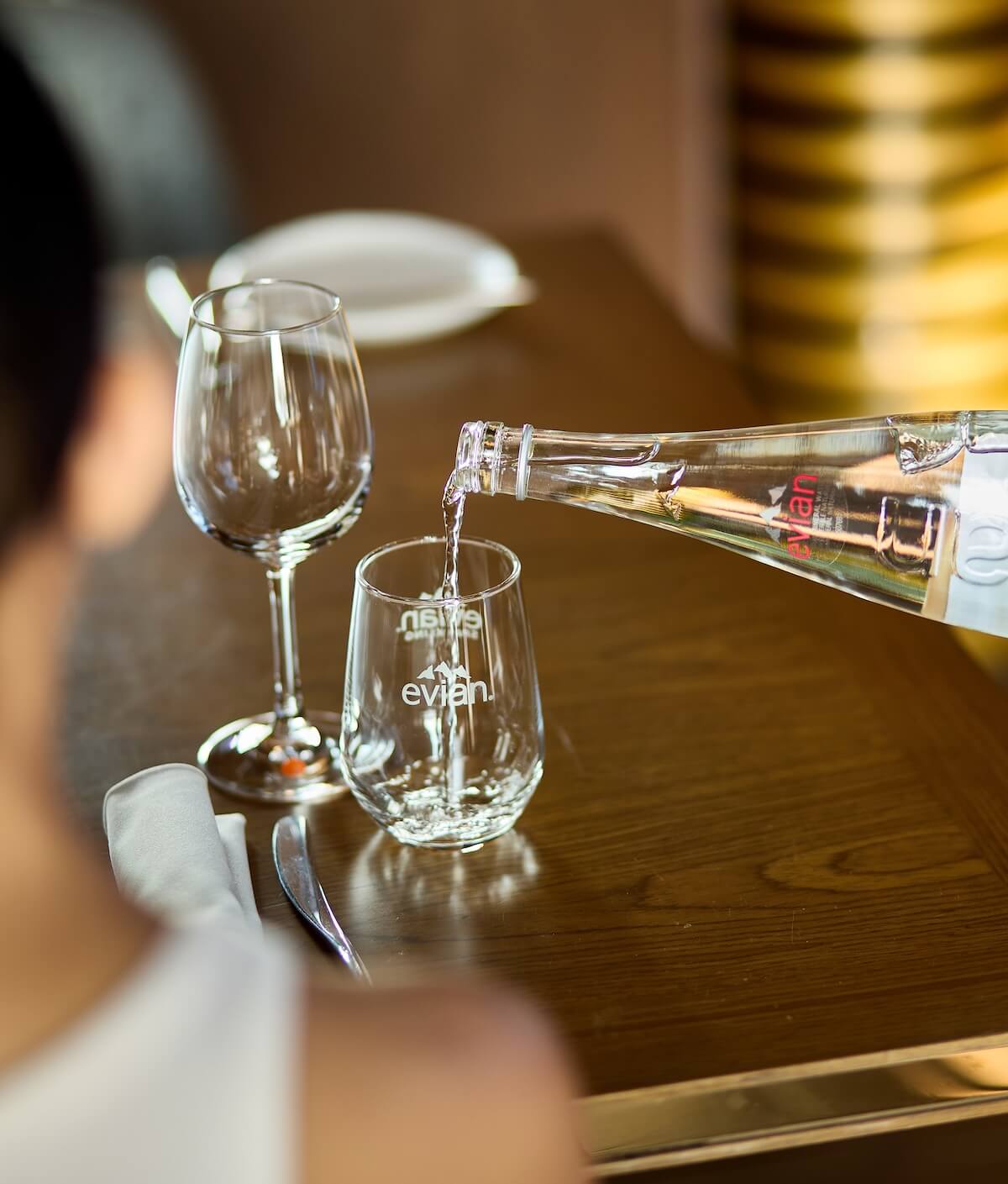
evian, present throughout the dinner in its role as palate cleanser, operates from the same logic — less about what it adds, more about what it preserves.
“Storytelling is not about altering flavors to impress guests,” Dung says. “It is about creating an experience where the setting, the ingredients, and the rhythm of the season all come together naturally.” Around the shared flame, that’s exactly what the three of them — two chefs and a water — made possible.
Somewhere Between Collaboration And Reinterpretation
The dinner ran across two nights – the 4th and 5th of April – and sat somewhere between collaboration and reinterpretation. Neither chef simply presented dishes from their own restaurant. The menu was built from both directions at once: some dishes beginning with Thai foundations and absorbing Vietnamese influences, others starting from Dung’s perspective and pulling in Thai elements – identities that didn’t alternate but merged.
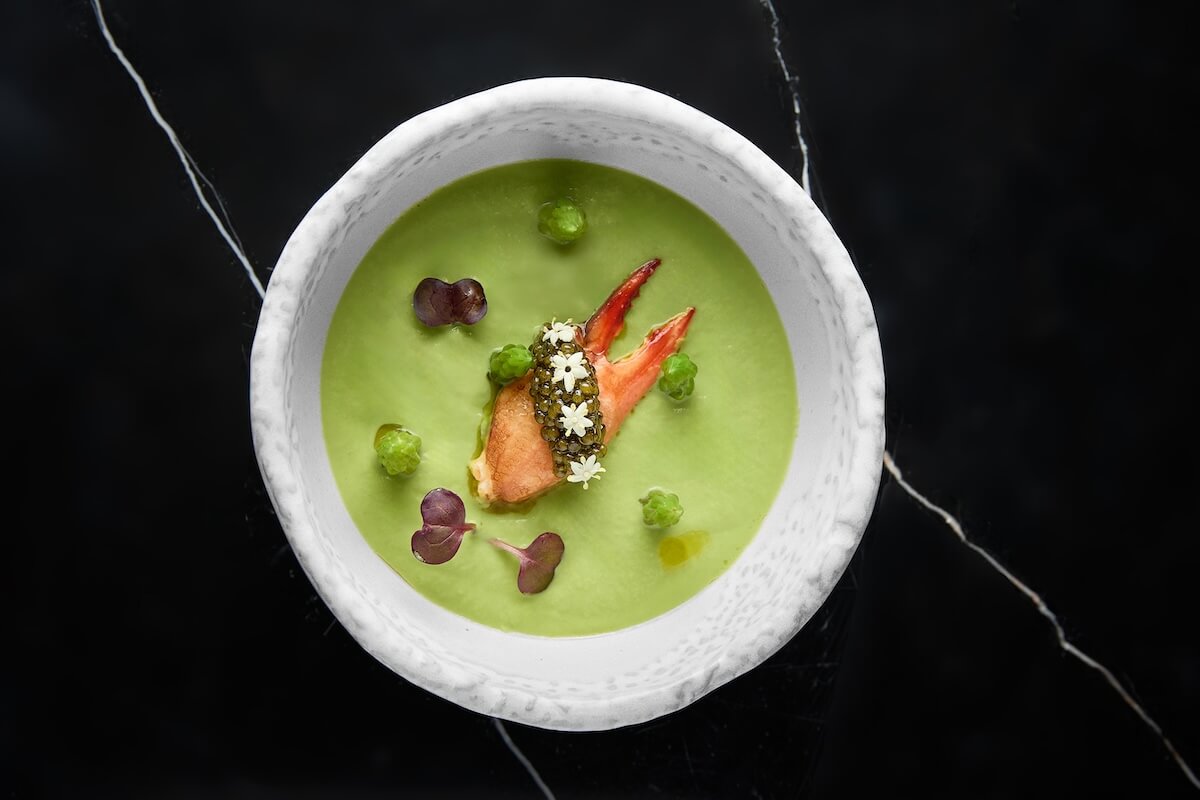
Nick paired foie gras with yellow curry – a deliberate choice, he explained, because yellow curry’s warmth and softness lets the richness of the foie gras remain the focus. Elsewhere, he worked Tom Yum and Thermidor into the same dish – the luxurious creaminess and gratinated texture of the French preparation against the brightness and citrus of the Thai.
Dung approached his contributions with the same logic he applies in the LAVA kitchen every day: a hero ingredient, something acidic or bright and something that grounds it. Crab, beef and a dessert, each built around a single central ingredient.
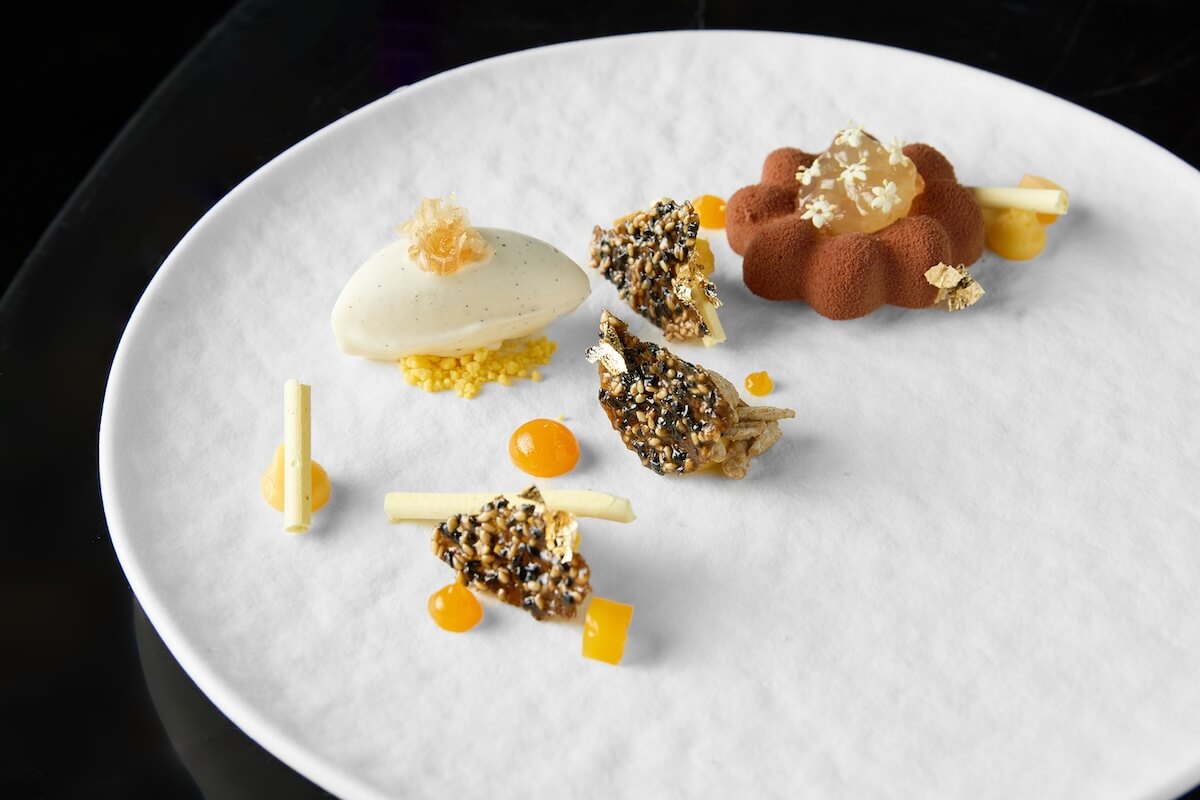
Two Culinary Worlds Meet
The one ingredient both chefs watched carefully was chili. Dung’s instinct was the same as it always is at LAVA — make it present when necessary and never louder than the hero ingredient.
Nick was equally deliberate: brightness, aroma and structure, but never dominance. “The spirit of Thai food,” he concluded, “without overwhelming the palate.” Two different culinary philosophies, one Vietnamese and one Thai, arriving at the same conclusion from opposite directions.
That tension — and the resolution of it — was what made the dinner work. Dung’s restraint and product-led precision against Nick’s analytical boldness and willingness to push at the edges of what a dish can hold.
Neither chef simply presented their own repertoire.
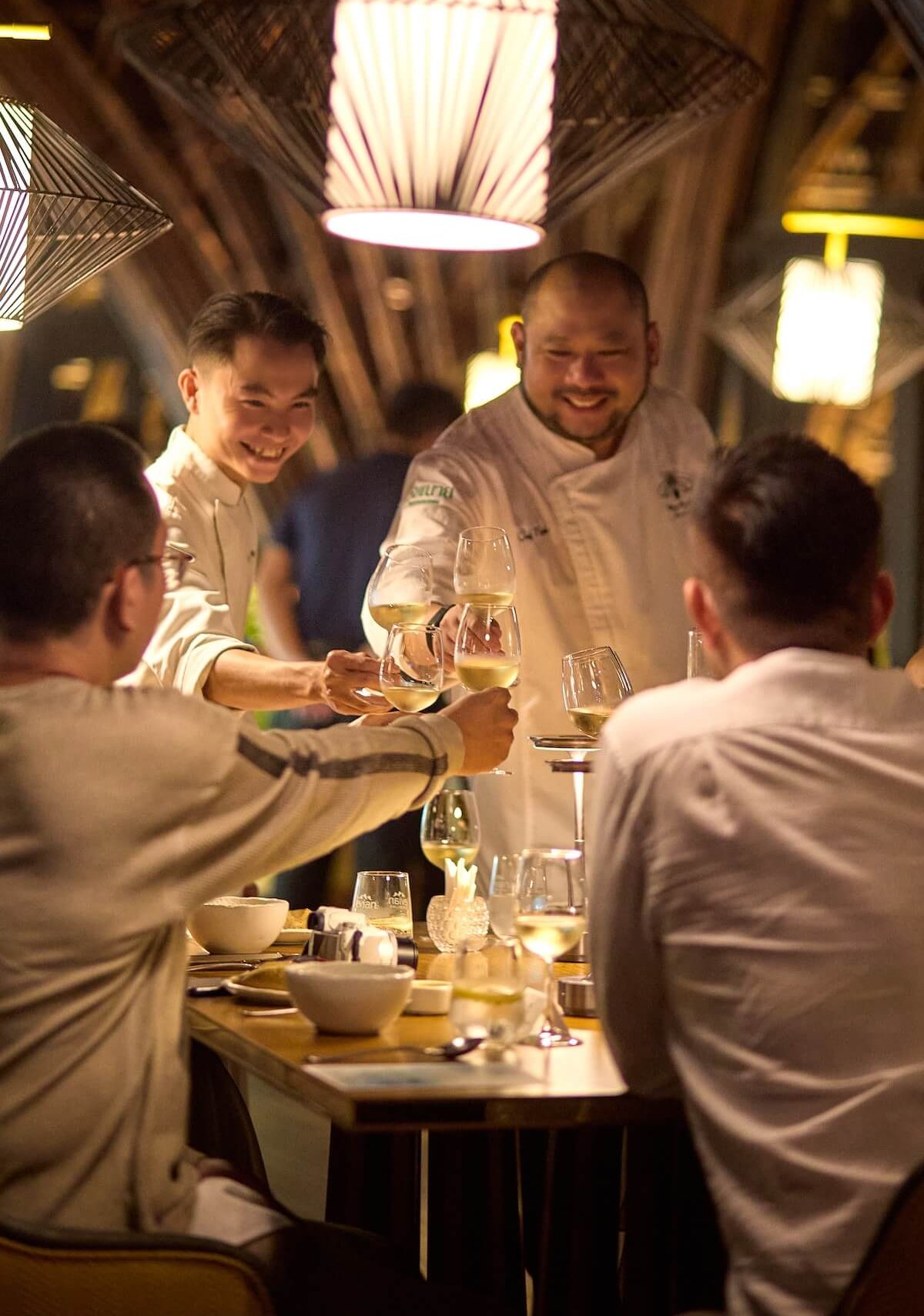
What landed on the table was genuinely shared: identities that didn’t alternate but merged. And evian was there throughout — resetting the palate between courses, preserving the conditions for each dish to land as intended, part of a longer commitment to fine dining in Vietnam through Annam Group, where they exclusively distribute it.
What guests took with them is harder to quantify. Nick had hoped they’d feel they experienced something that could only happen when two culinary worlds meet around the same fire. Dung, characteristically, put it more simply. His job, as always, was to make sure what’s on the plate still feels true to the ingredient, true to the island and true to LAVA.
Around the shared flame, both men delivered on that — and in doing so, created something neither could have made alone.