


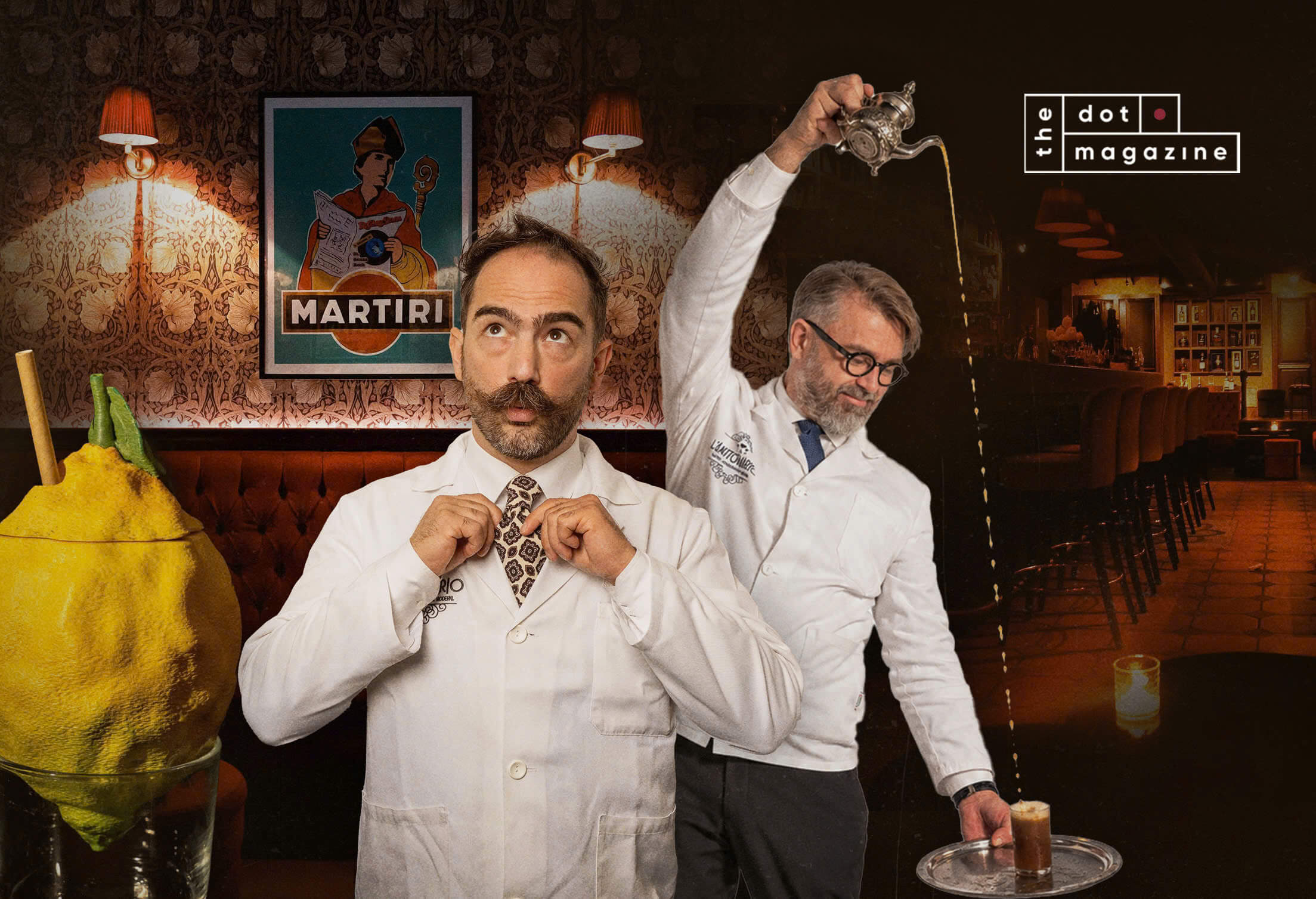
Behind a closed door in Chiaia, Alex Frezza and his team have spent more than a decade pouring classics and house specials for locals, visitors, and industry insiders alike. Here, Alex tells us about the rollercoaster ride, and what keeps the bar on track.
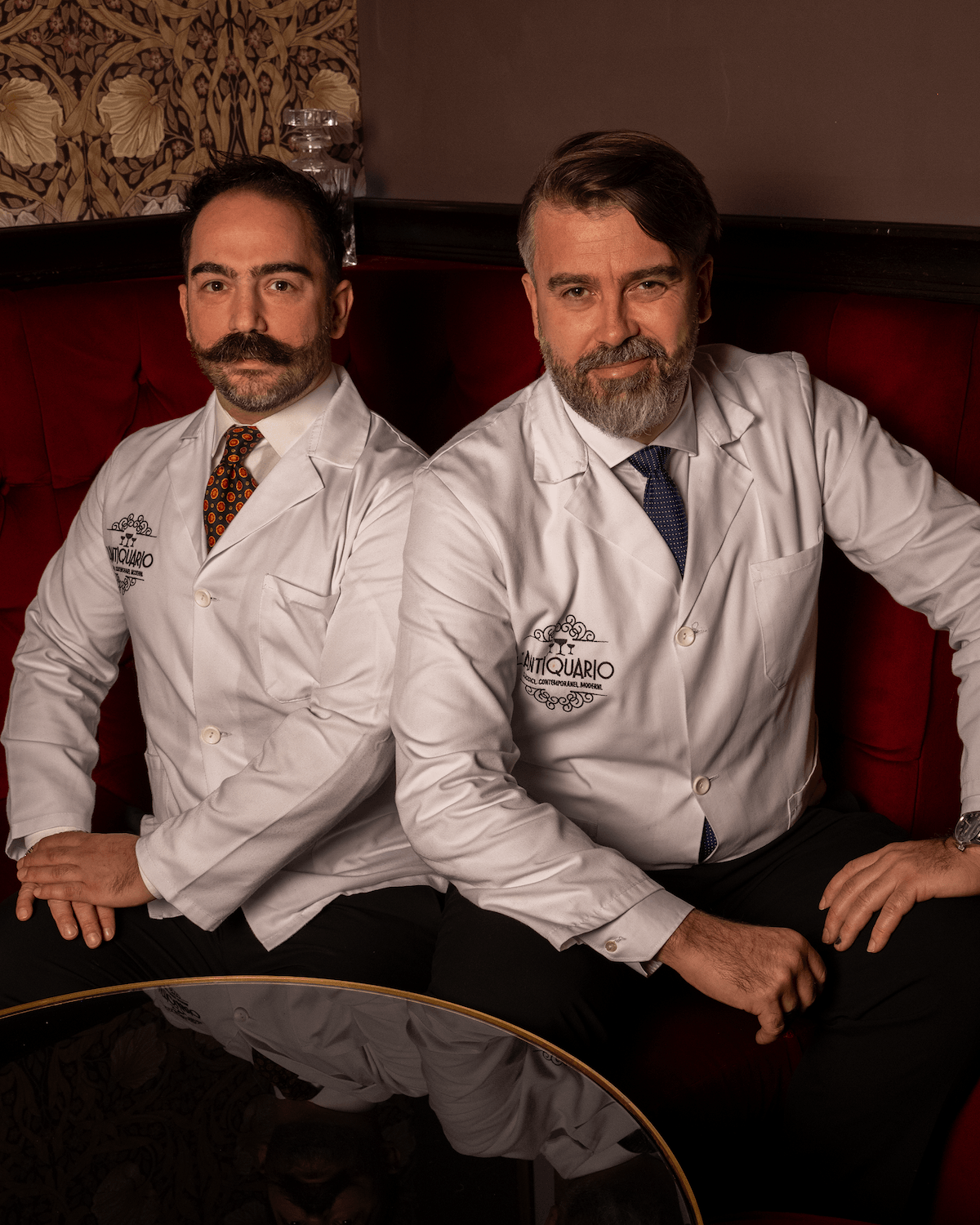
Two men in white jackets sit on a bench at an amusement park, sharing a box of popcorn and mulling over a recent setback. They’re L’Antiquario co-founder Alex Frezza and head bartender Dario Tortorella, in a video the bar posted on its Instagram earlier this month.
“First you go up,” Alex tells Dario, “and then you go down,” as the video cuts to the pair on a rollercoaster, arms in the air, with Talking Heads’ iconic ‘Once in a Lifetime’ kicking in.

He’d know. Over the years, L’Antiquario has had its share of highs and lows, always handling them with a healthy dose of what Neapolitans call l’arte di arrangiarsi, or the art of getting by.
To see the bar in action, we swung by on a Friday at 5pm. The door opened at 6, and within 15 minutes, the place was already filling up.
The Cocktail Steward
Alex – a self-proclaimed ‘Cocktail Steward’ – was born in London, then raised on the Neapolitan island of Procida, where he started working in hospitality at a young age.
He studied architecture in Naples before dropping out to launch a cocktail catering company in 2007, despite having no formal bar training.
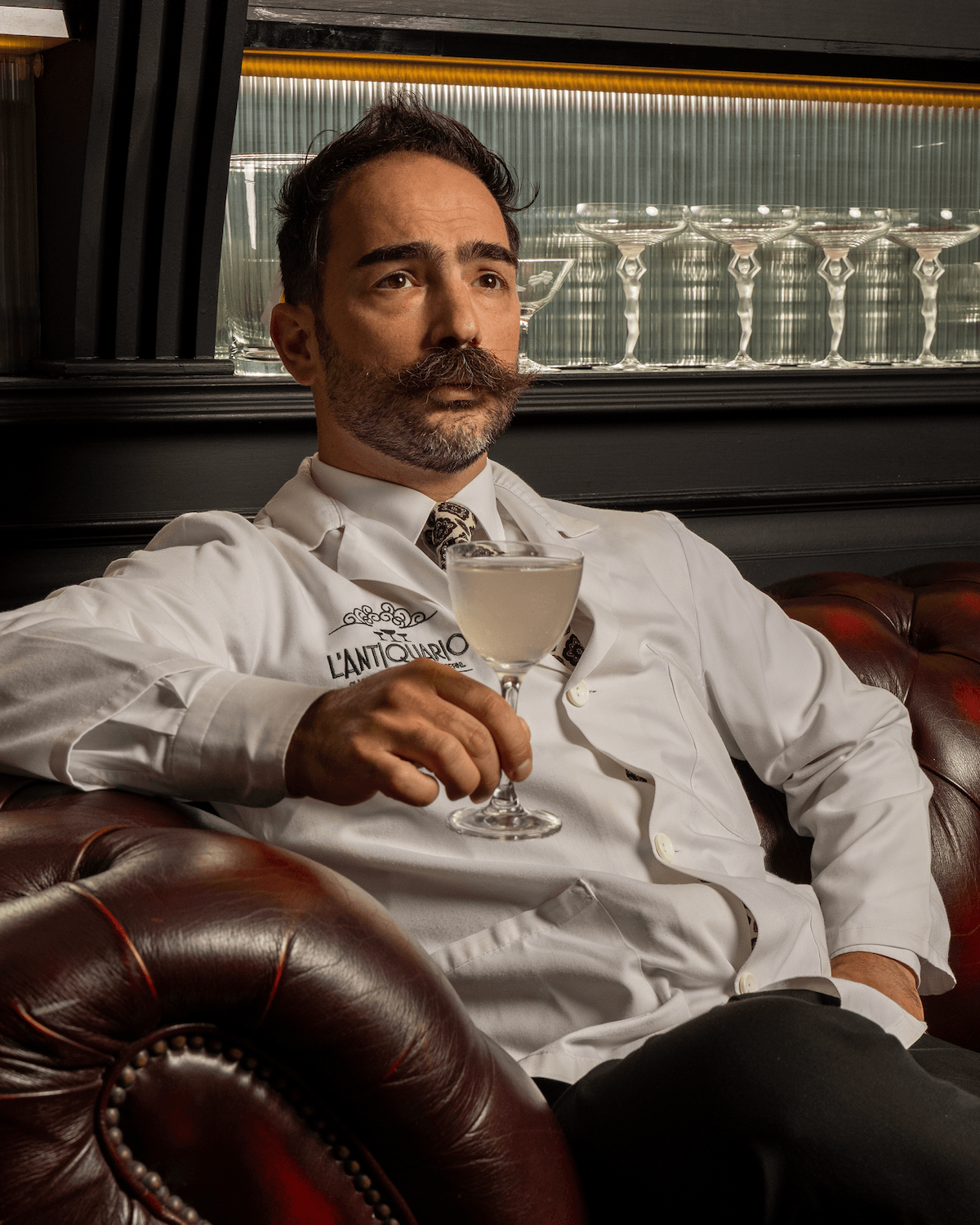
In the early 2010s, he embraced the international cocktail renaissance on trips abroad, while working as a brand advocate and trainer for major drinks companies in Italy. In 2015, he brought it all back home with L’Antiquario.
Today, Alex is one of four partners. Dario joined in 2017 and has since been named Campari Bartender of the Year (2023) and Best Italian Bartender at the Roma Bar Show (2024).
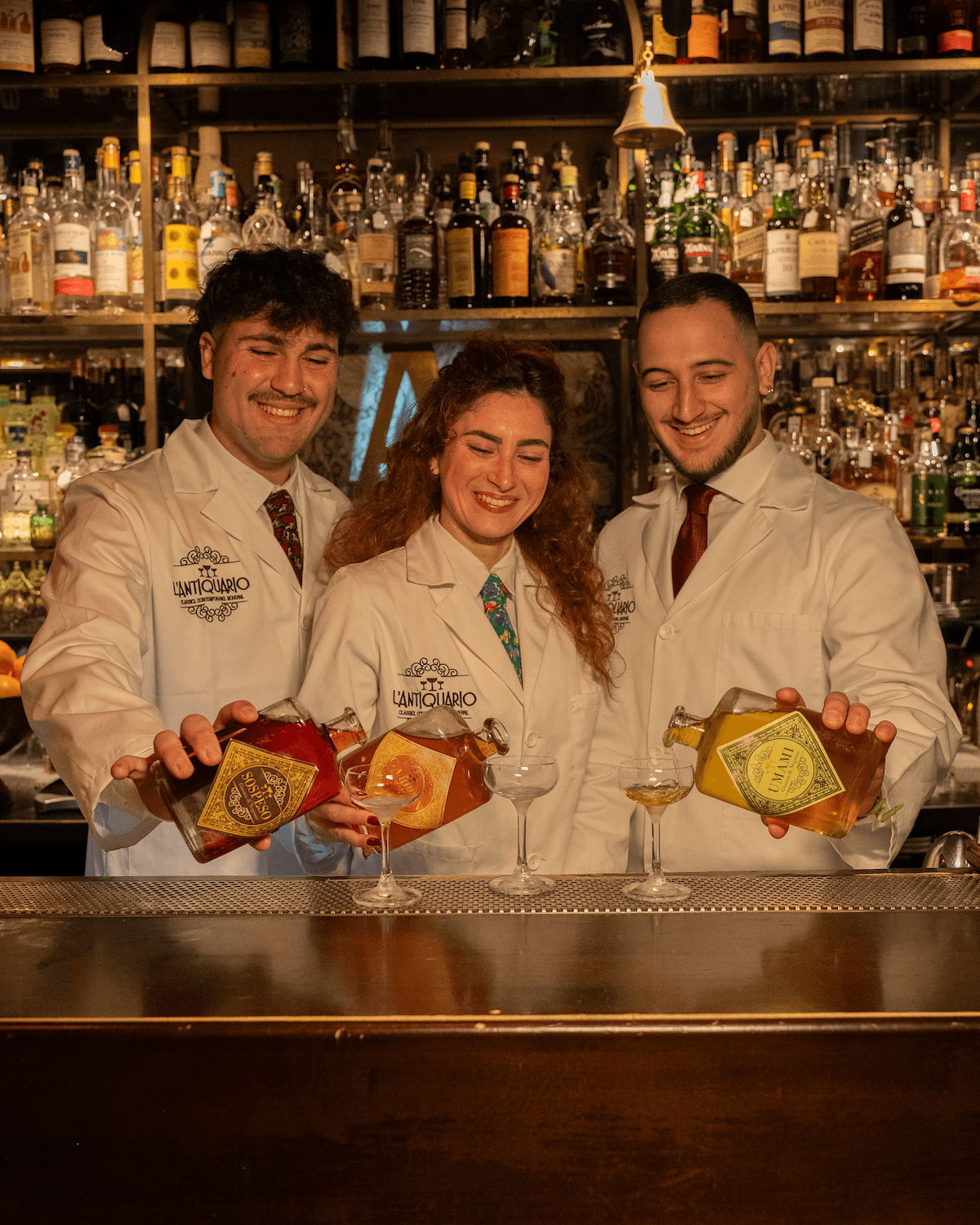
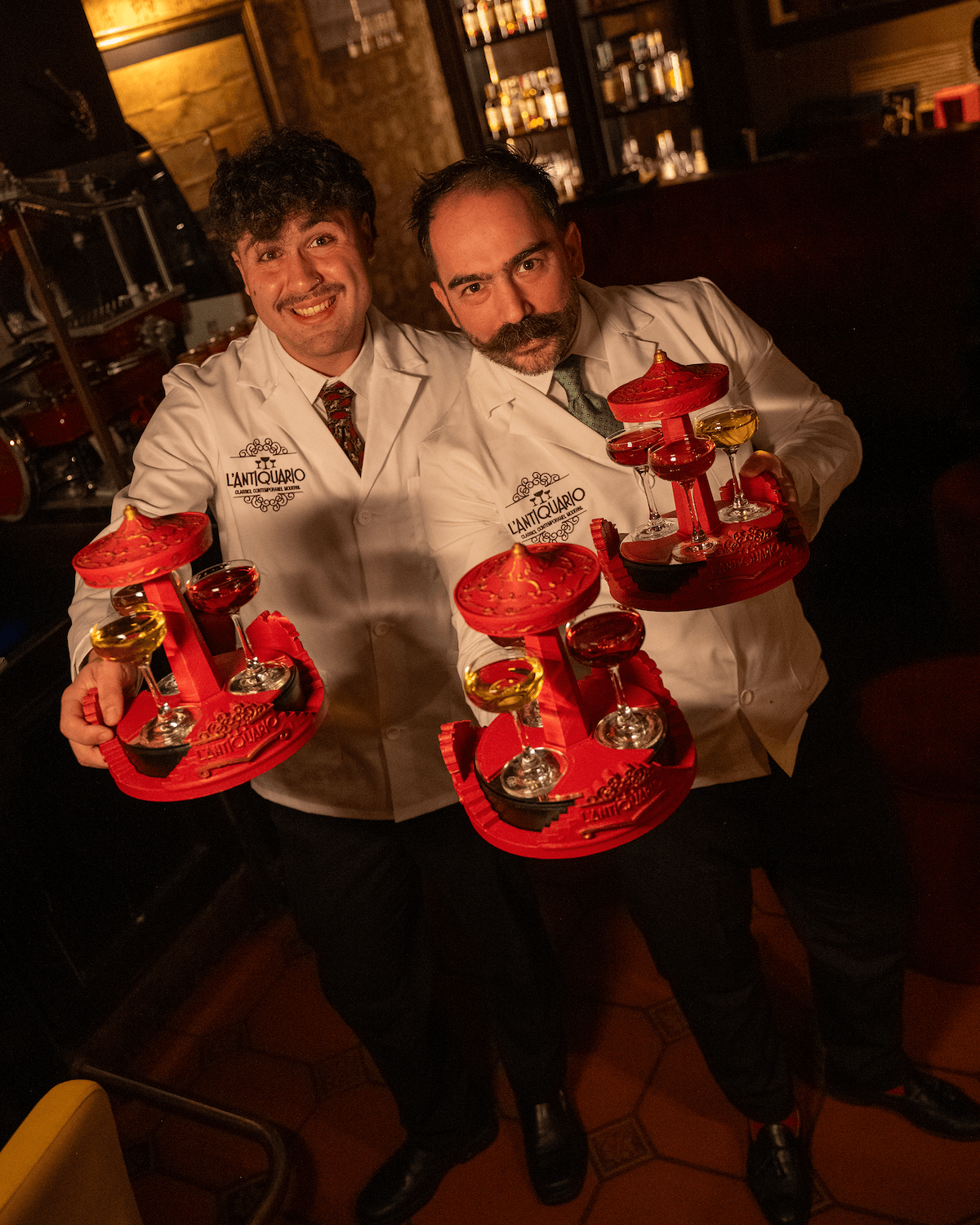
Behind the bar, the whole team wears white jackets. To Alex, they’re “a symbol of excellent hospitality.” But a uniform only gets you so far. As he told Campari Academy, “A smile is much stronger than a non-perfect bar.”
Just Ring
L’Antiquario sits on Via Vannella Gaetani in Chiaia, a street historically lined with antique shops – and where the name comes from.
Compared with the centuries-old historic center, the neighborhood is relatively young and, in Alex’s words, “a bit more aristocratic.” Hotels, shopping streets, and posh restaurants surround the bar. “So I’m kind of in the middle of things,” he says.
Out front, there’s no obvious sign, just a wooden door, which lends it a speakeasy feel. But it was never intended to be one. It was all about the lease. “By chance, I got the best rent deal here, and this could only have a closed door.”
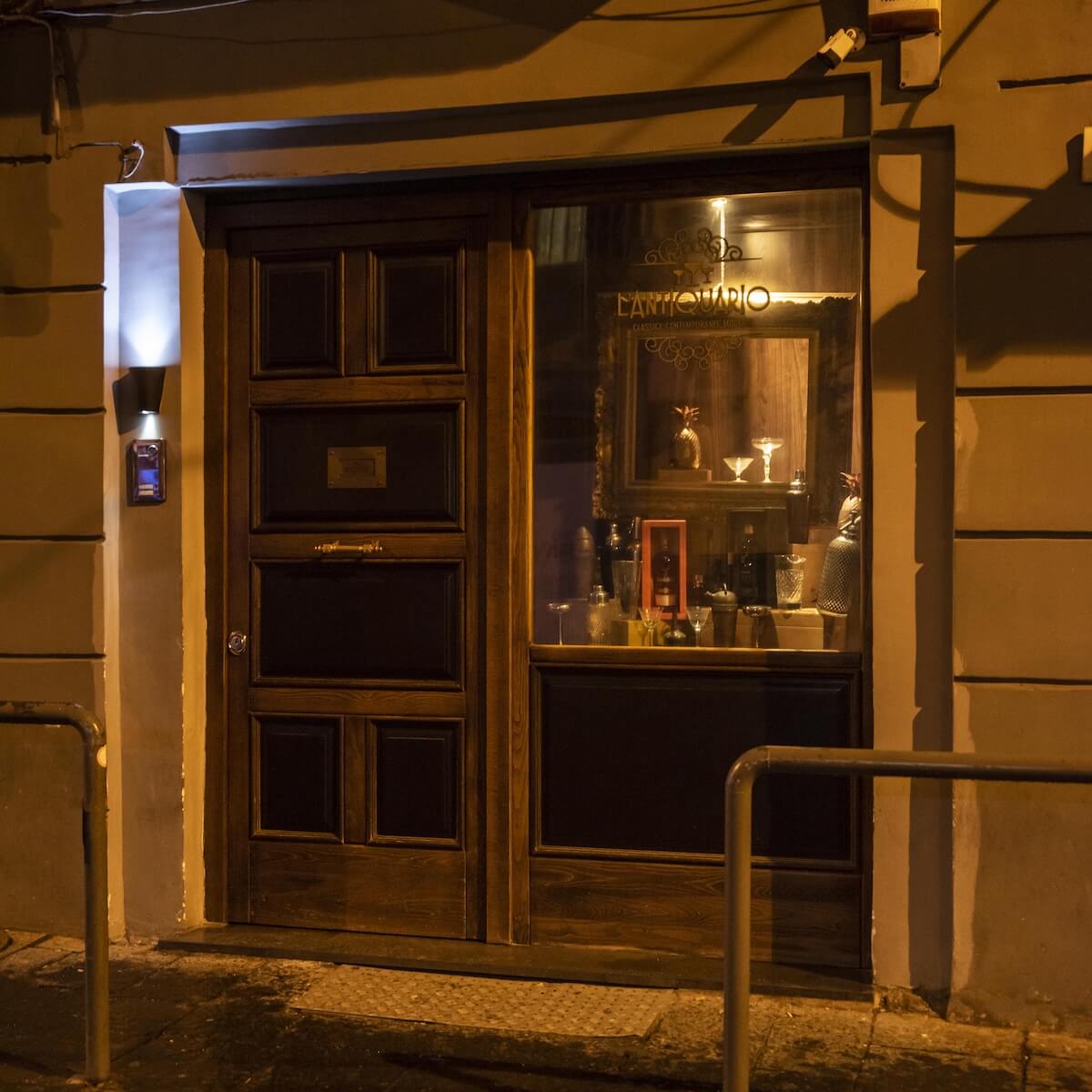
Alex calls it a secret bar purely “because you have to knock.” Yet there are no passwords here. In the early days, Neapolitans kept asking whether there was a dress code or someone vetting guests at the entrance. The answer was always the same: “There is no selection. Just ring.” As the team puts it on Instagram, it’s “hidden but not invisible.”
Still, a closed-door bar is unusual in Naples. “People here drink socially,” Alex explains. “You drink to be able to see people and say hello.” L’Antiquario flips that. Ringing the bell means taking “the leap of faith that you go in, and you don’t know what’s inside.” And once you’re in, you get your own space. Even if you spot someone you know, you might not stop and exchange pleasantries the way you would outside. “Here there’s like a privacy curtain… Engagement rules are different here.”
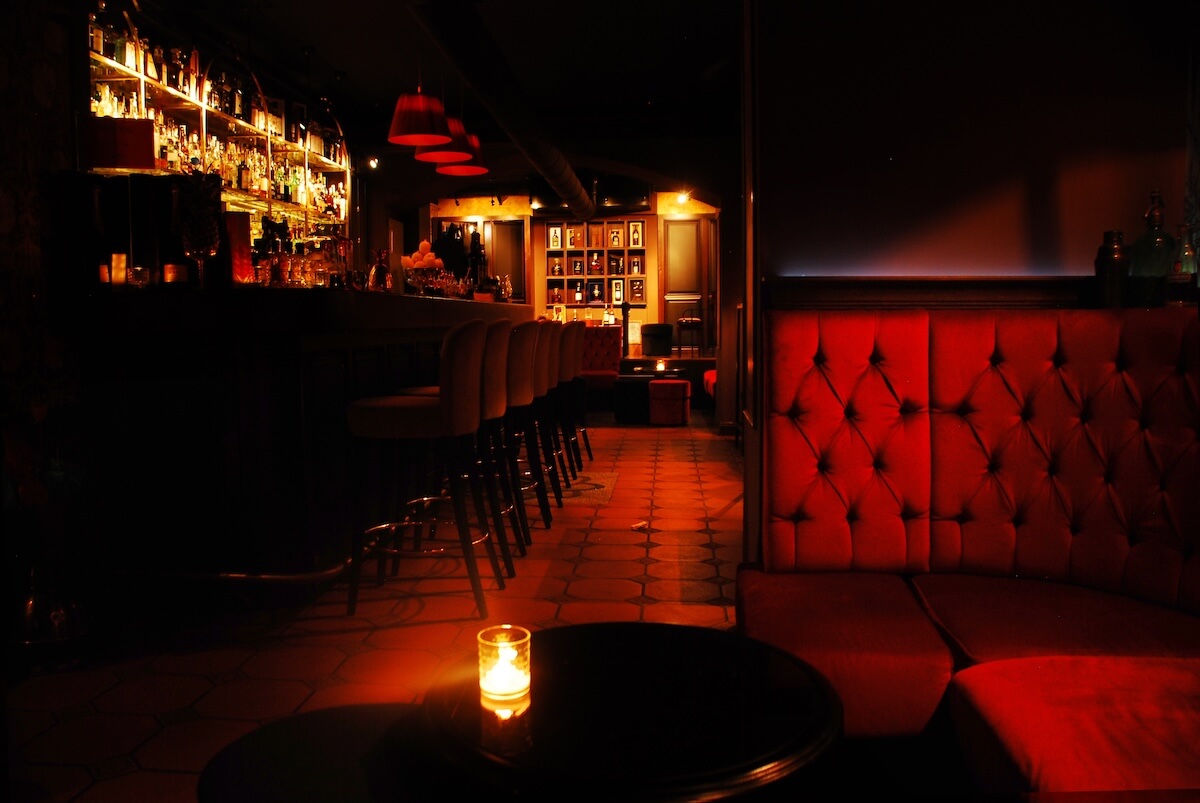
Behind that curtain, the look draws on classic European and American bars from the early 1900s. Think candlelight, dark wood, and low lampshades. “There are certain things that always work anywhere you are in the world, like red velvet and nice wallpaper,” Alex says. “Psychologically, it works.”
Classici, Contemporanei, Moderni
The bar’s tagline, ‘classic, contemporary, modern,’ comes from Naples’ eclectic art history. Alex points to everything from Pompeii to Andy Warhol, who had shows in the city in the ’80s and left his mark. Translated into cocktails, classic covers the old guard, contemporary the past 20 years, and modern anything with an idea that makes it feel “like new forever.”
Yet the team didn’t delve into their own creations right away. For the first two years, the menu featured only famous cocktails invented elsewhere, each firmly attributed. Alex felt there was no point in making his own versions until people had become accustomed to the originals.
And it worked. People would read the credits and plan to order a Hanky Panky at the Savoy in London next time, “because that was invented there.”
When signatures finally arrived, the dream was lofty: a single cocktail people would come to Naples just to drink, like the Bellini at Harry’s Bar in Venice. “But that is impossible,” Alex says. “We didn’t manage.” Instead, they settled on something that better fit their ethos: house twists on the classics, a few seasonal changes, and no themed menus. But don’t worry, the originals haven’t vanished.
What you won’t find is beer or wine. “If I do wine, I will never do cocktails because people will just drink wine.” Italians, he explains, will happily spend €100 on dinner but only about €25 on cocktails.
Cocktail Merry-Go-Round
So what should you actually order? Ask Alex to pick one drink that sums up L’Antiquario and, well, he won’t. It depends on what you like, he says, so he runs through a few instead.
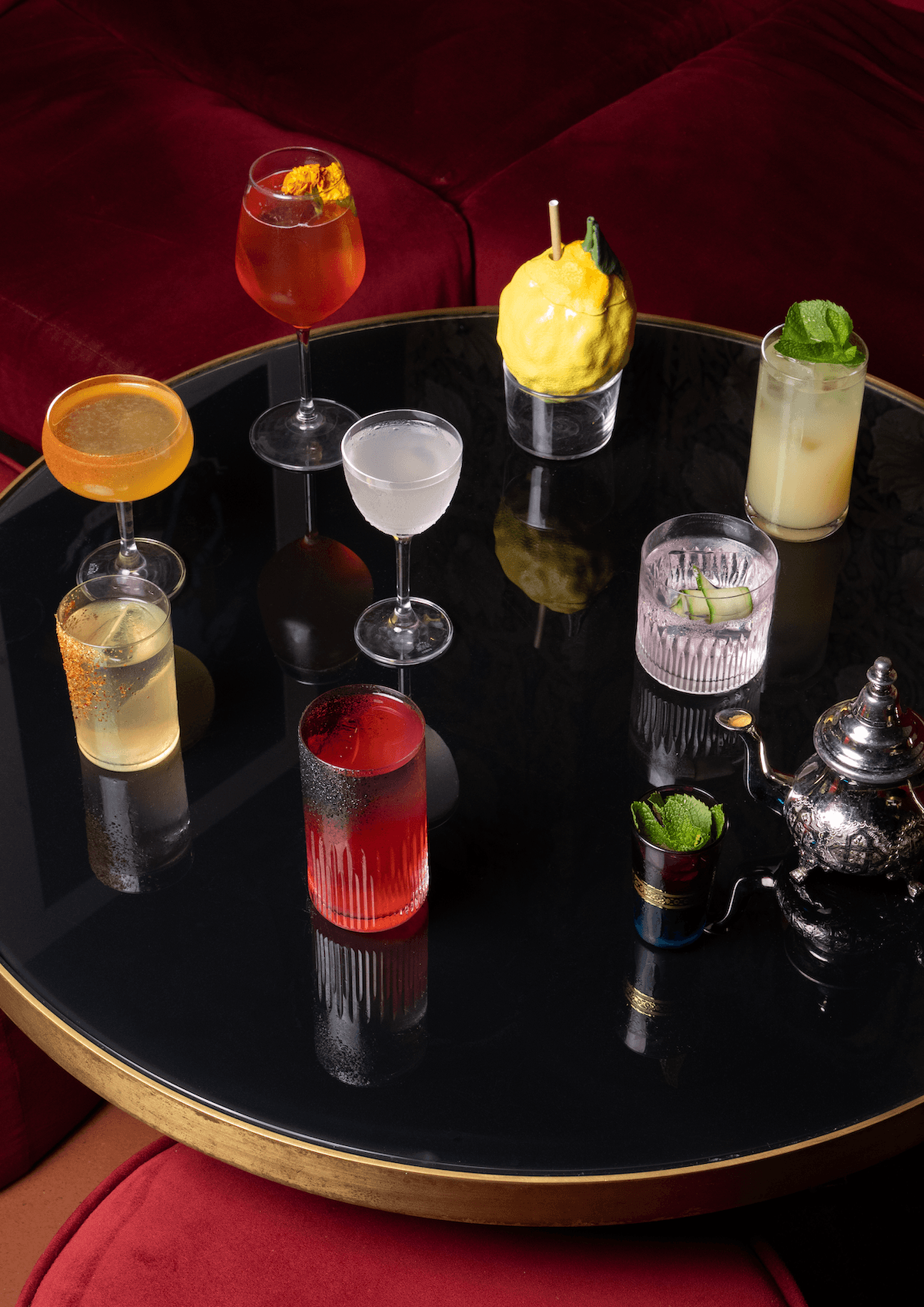
Un Tè nel Deserto blends gin, Moroccan mint tea, lime, muscovado, orange curaçao, and Fernet, served in a teapot. Alex calls it a homage to the North African mint tea ritual, and says “we sell a lot.”
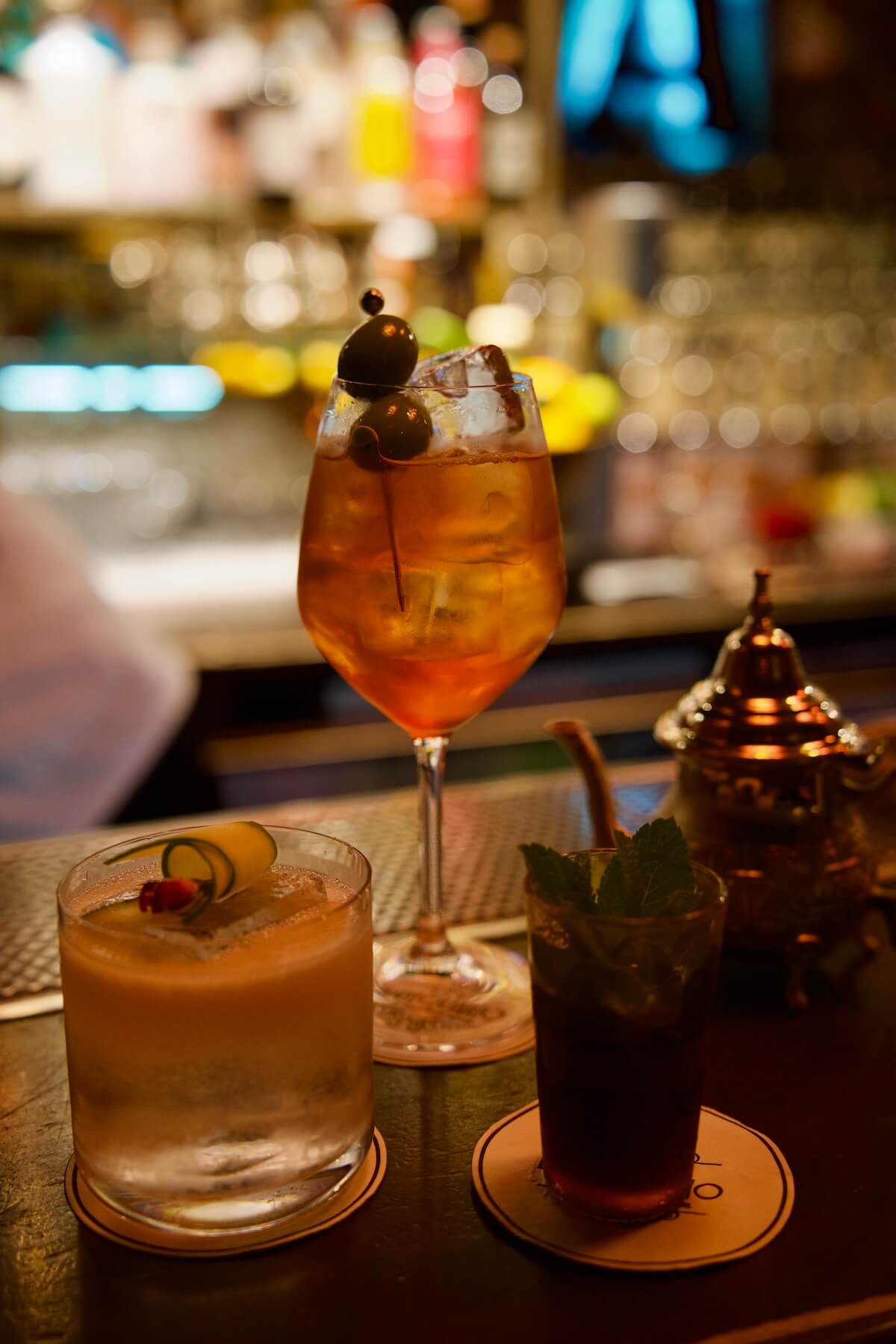
There’s also Femminiello, their take on a spritz, featuring Hennessy VS cognac, Amaro Santoni, vine peach liqueur, ginger ale, and Angostura.
La Maliarda mixes El Jimador Blanco tequila with cucumber and rose, and it’s been on the menu for about four years. It “seems very simple,” Alex says, but “there’s a lot of work behind it.” He also sees it as unusually modern “for a bar like this.”
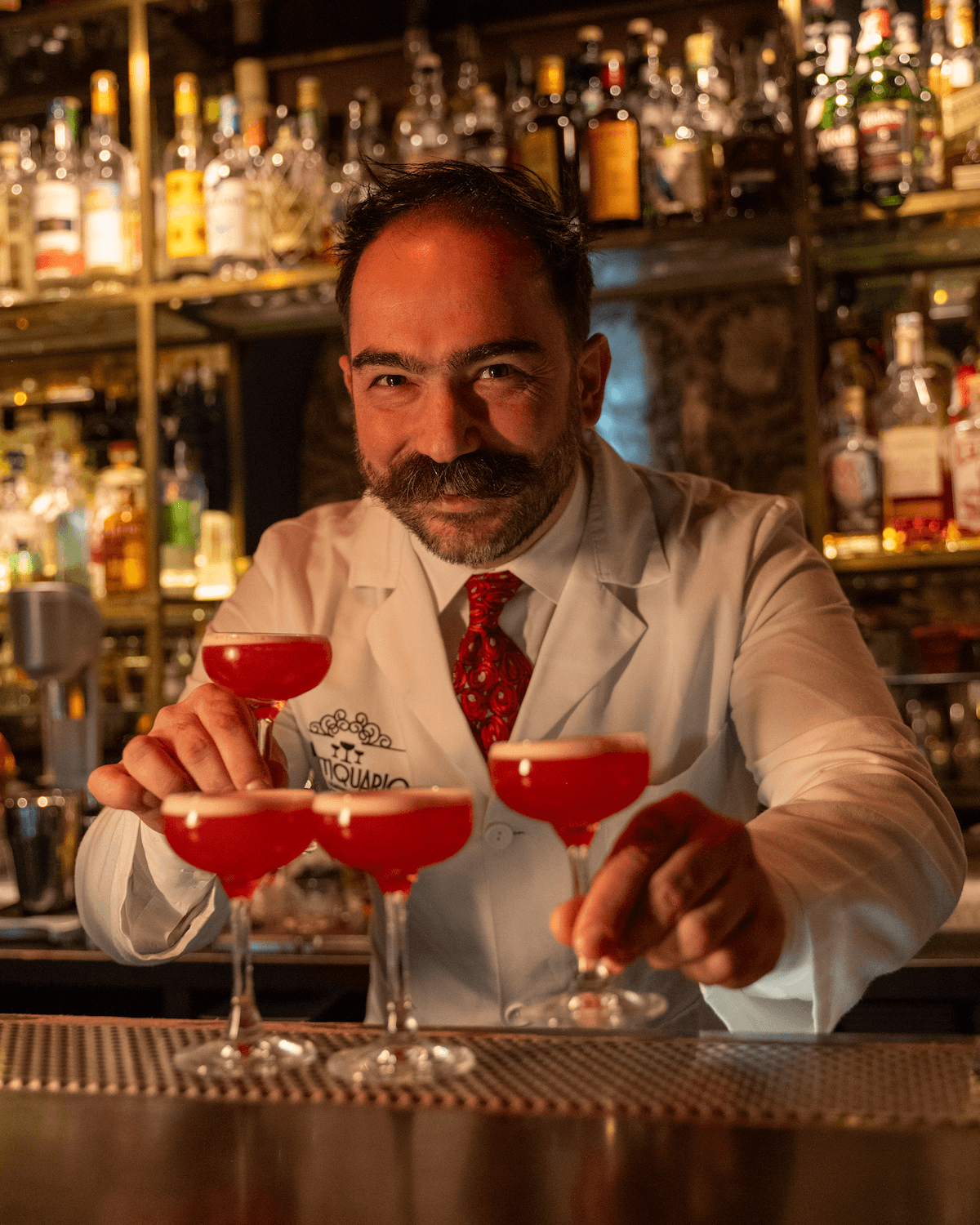
And if you see a trio of glasses passing by on a little red carousel, that’s the Giostra di Negroni (the negroni merry-go-round), each variation made with a different southern Italian wine. Even here, the menu credits Tony Conigliaro’s negronis at Bar Termini in London as its inspiration.
A Wake-Up Call
None of this attention to detail has gone unnoticed. Italian food and wine guide Gambero Rosso credits L’Antiquario with paving the way for Naples’ new wave of drinks.
The bar joined the World’s 50 Best Bars’ extended 51–100 list in 2021 at No.82, peaked at No.44 in 2023, then ranked No.78 and No.63 in the following two years.
Getting listed was “a wake-up call,” Alex says. Unlike Milan or Rome, Naples had no bar show, “so to be nominated in Naples, it means that the city was changing.” Suddenly, big industry names were turning up unannounced, even ones in the area for a wedding in nearby Sorrento. “We can’t take it easy anymore.”
“If you come here with expectations, it’s difficult to win.” Before the bar made the list, guests arrived with few preconceptions, and it won them over precisely because “people didn’t expect to see a bar like this.”
Alex never expected to last on the list, either. Staying there, he says, takes a different kind of promotion – aimed at rankings rather than customers – and it’s one he’s never paid for. “I prefer to put 10,000 euros in my pocket rather than spending it on a PR agency.” He gave it two or three years at most. “Last year was a miracle.”
So when L’Antiquario finally dropped off the list in 2026, the team posted that rollercoaster video the day after the results were announced in Milan. The real surprise had come a few months earlier: a No.28 spot on the inaugural Europe’s 50 Best Bars. “I had no idea… it turned out well for us.”
Up or down, Alex takes it in stride: “Whatever happens, we can laugh about it, and it’s okay.” Or, as he tells Dario in the video: “The awards, the recognition aren’t important, sure, they’re nice, but the important thing is what we do every evening at the bar.”
House Rules
If there’s one phrase that sums up L’Antiquario, it’s the one Alex and his partners used from day one: “Sometimes for everybody, every day for a few people.” To Alex, someone who comes once a year is as much a regular as someone who comes four times a week.
He notes that people still assume it’s exclusive. That is, until they look around and see a Tinder date at one table, a couple of twentysomethings at another, and tourists from Shanghai to Athens by the bar.
“You can’t select your clientele anymore… anybody can come.” Turn up in flip-flops, and he might not love it, but he’ll still let you in, just like someone in a suit straight from the theater.
Come 1am, chefs start drifting in after service. They stand at the bar and order two cocktails at a time. Half an hour later, they’re gone. As he puts it, “That means that the bar works.”
That’s his measure of success, and it’s printed in the menu, too. Among the house rules – translated here from the Italian – some are playful (“If you came in as 6, don’t become 12”; “Don’t ask us to change the music”), but one gets to the heart of it: “We don’t care about reviews, we only care about making you feel good.”
As for Alex, he nearly made it over to Vietnam this summer. He and his business partner planned to buy a motorbike, ride for a few weeks, and “see what happens.” Like a few things this year, it didn’t quite go to plan. “We have a midlife crisis, so we have to do something exciting,” he says. And motorbiking around Vietnam sounds good enough to him.
“Maybe next year.”