


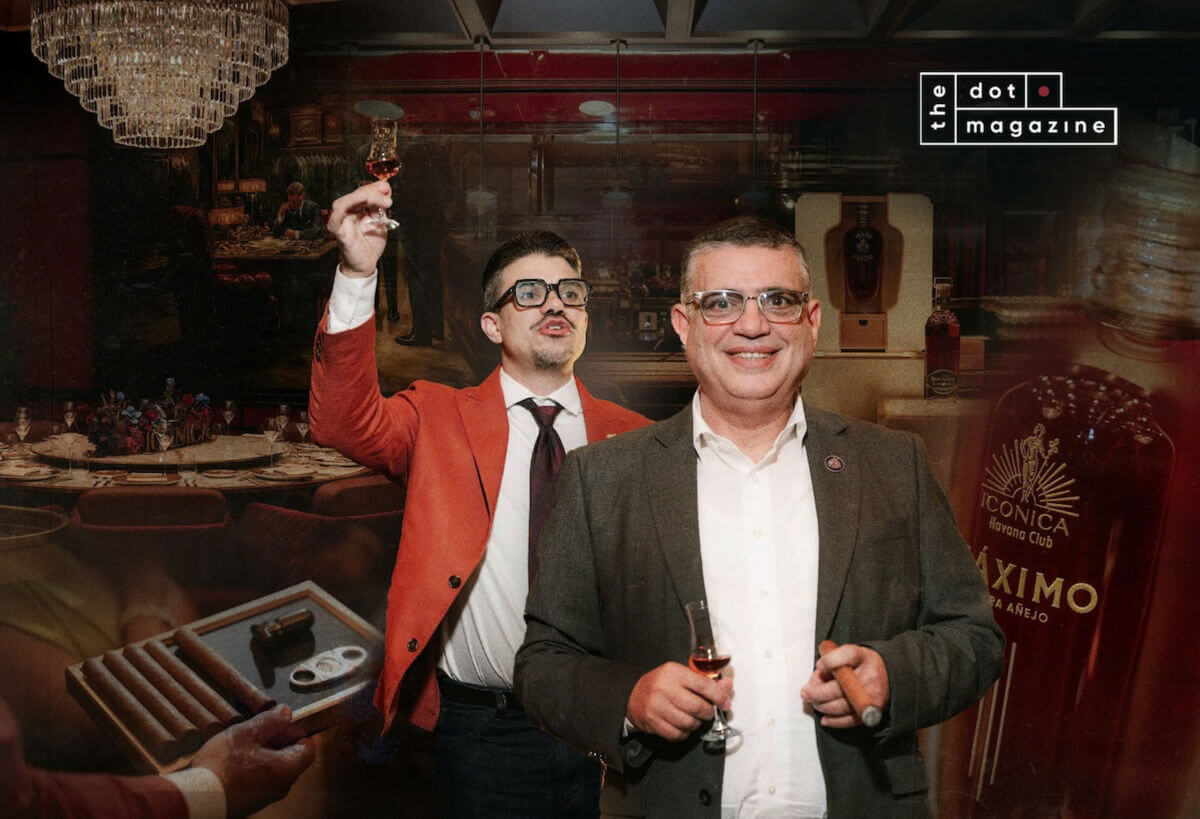
Outside, Hanoi moves loudly, seemingly in every direction at once. Inside 8 Saville Row, Fairmont Hanoi’s secretive space for rare spirits, curated tastings, and speakeasy events sprinkled with some London elegance, Havana Club’s Global Brand Ambassador Alfredo Guerra is here with Maestro Asbel Morales to present the Havana Club Icónica Collection.
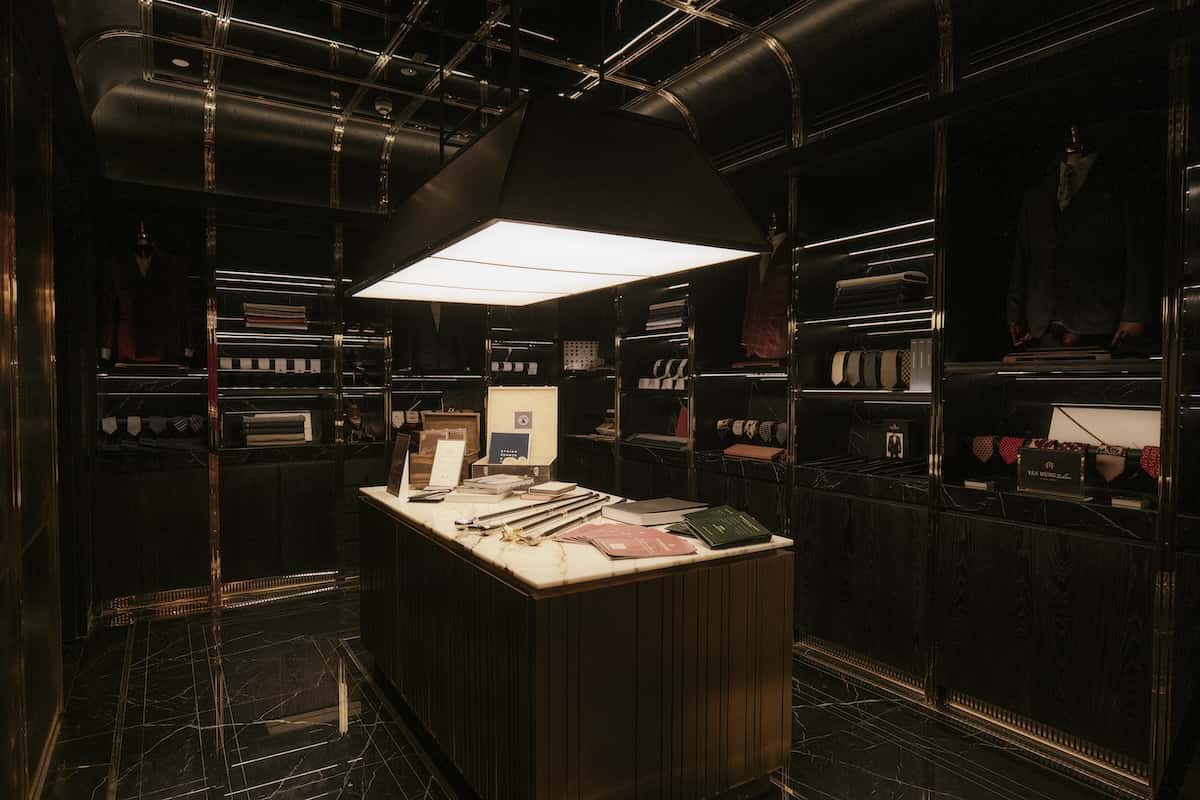
“Cubans like to move too,” Alfredo Guerra, Havana Club’s Global Brand Ambassador, says, wiggling for effect as he browses the tailors’ shop that’s at the entrance of Fairmont Hanoi’s speakeasy concept called 8 Saville Row. Alfredo has moved a lot as well – through the industry.
Havana Club Carries The Soul Of Cuba
In 2011 he was a languages student in Havana looking for an internship. He and three friends chose the Havana Club Rum Museum – partly on a whim. Somehow, he spent his entire five years of university working there at weekends and sometimes, when time allowed, during the week, leading tours in French, Italian and then German. When he graduated, he didn’t leave.
In 2016 he was appointed Global Brand Ambassador – a role that has since taken him from Bogotá to Bangkok, “that’s our final stop of this trip,” he sighs. But if this Asian excursion has left him tired, he’s not showing it – such is his passion for the spirit he represents, that carries the soul of his native Cuba.
“Cuban rum is Cuba. The tropical fruits, the coffee beans, the tobacco leaves, the cacao, it’s all in there,” he exclaims at one point.
A Symbol Of Resilience
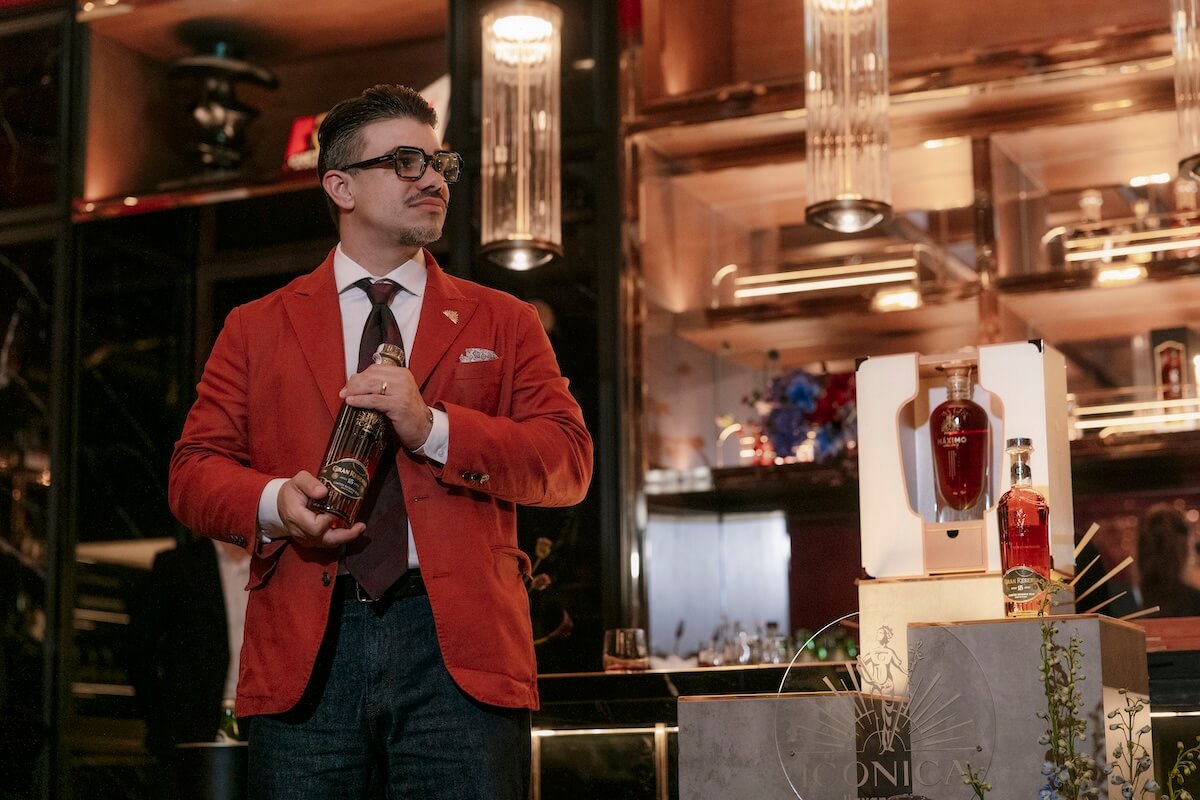
There’s even the symbol on the bottles of the range of extra-aged and rare Icónica Collection rums he’s here to present. La Giraldilla – a bronze statue cast in 1634 and placed atop El Castillo de La Fuerza in Havana – has stood over the city for nearly four centuries, a symbol of its resilience. Havana Club put her on every bottle in the Icónica Collection.
The collection runs three expressions. Selección de Maestros is bottled at cask strength – 45% ABV – hand-selected and collectively approved by all of Havana Club’s Maestros, the small group of master blenders whose craft holds UNESCO Intangible Cultural Heritage recognition. There are currently only nine of them across the whole island.
Gran Reserva 15 Años draws its character from Cuba’s tropical climate – the heat accelerates aging, drives up the angel’s share, and produces a rum with a distinctively dry finish.
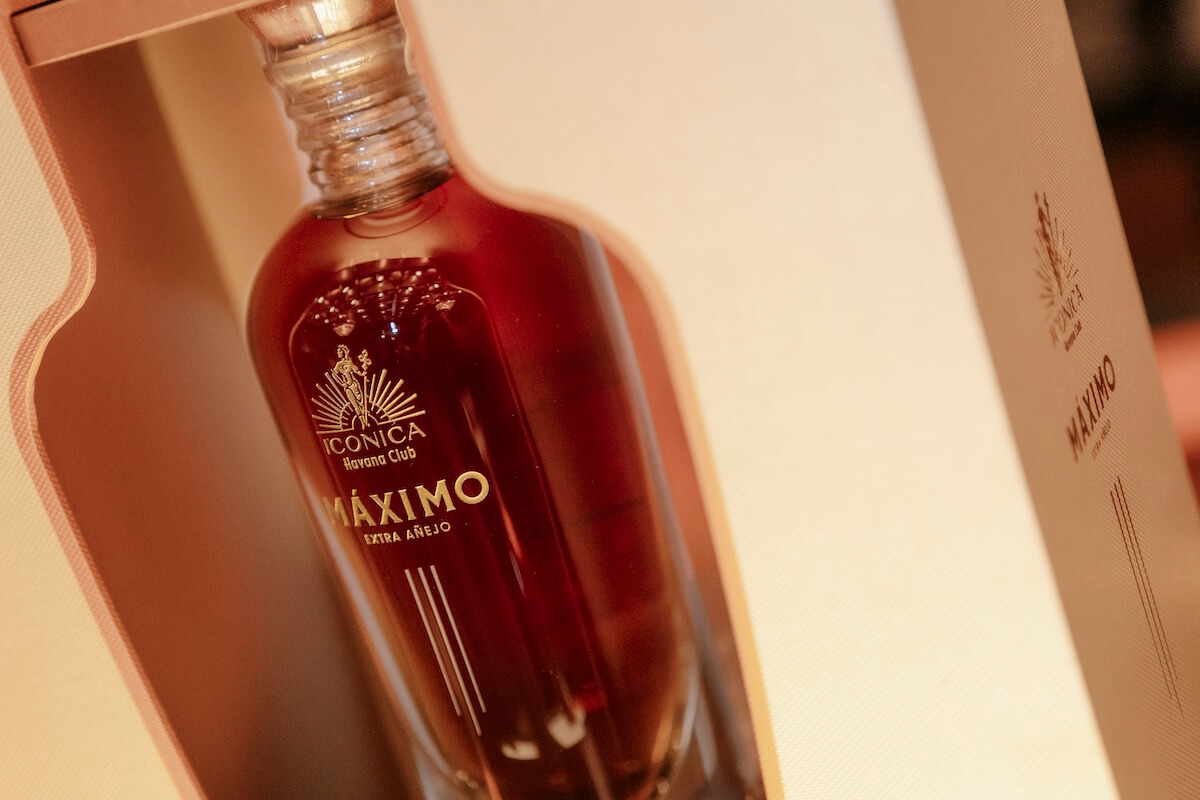
Then there’s Máximo Extra Añejo – created in 2002 by the late Don José Navarro. Only 1,000 bottles are produced a year, each in a hand-blown individually numbered crystal decanter.
Into Fairmont Hanoi’s 8 Saville Row
Alfredo pauses at a rack of ornate walking canes in the tailors’ shop with engraved handles each with a different animal’s head. At Havana Club, everything starts with a different kind of cane – sugarcane molasses, fermented and distilled, then aged in white oak barrels that have been sourced from Ireland and Scotland before making their way to San José de Las Lajas, southeast of Havana.
One of the men responsible for this range of Havana Club Icónica Collection rums is already in the main room at 8 Saville Row.
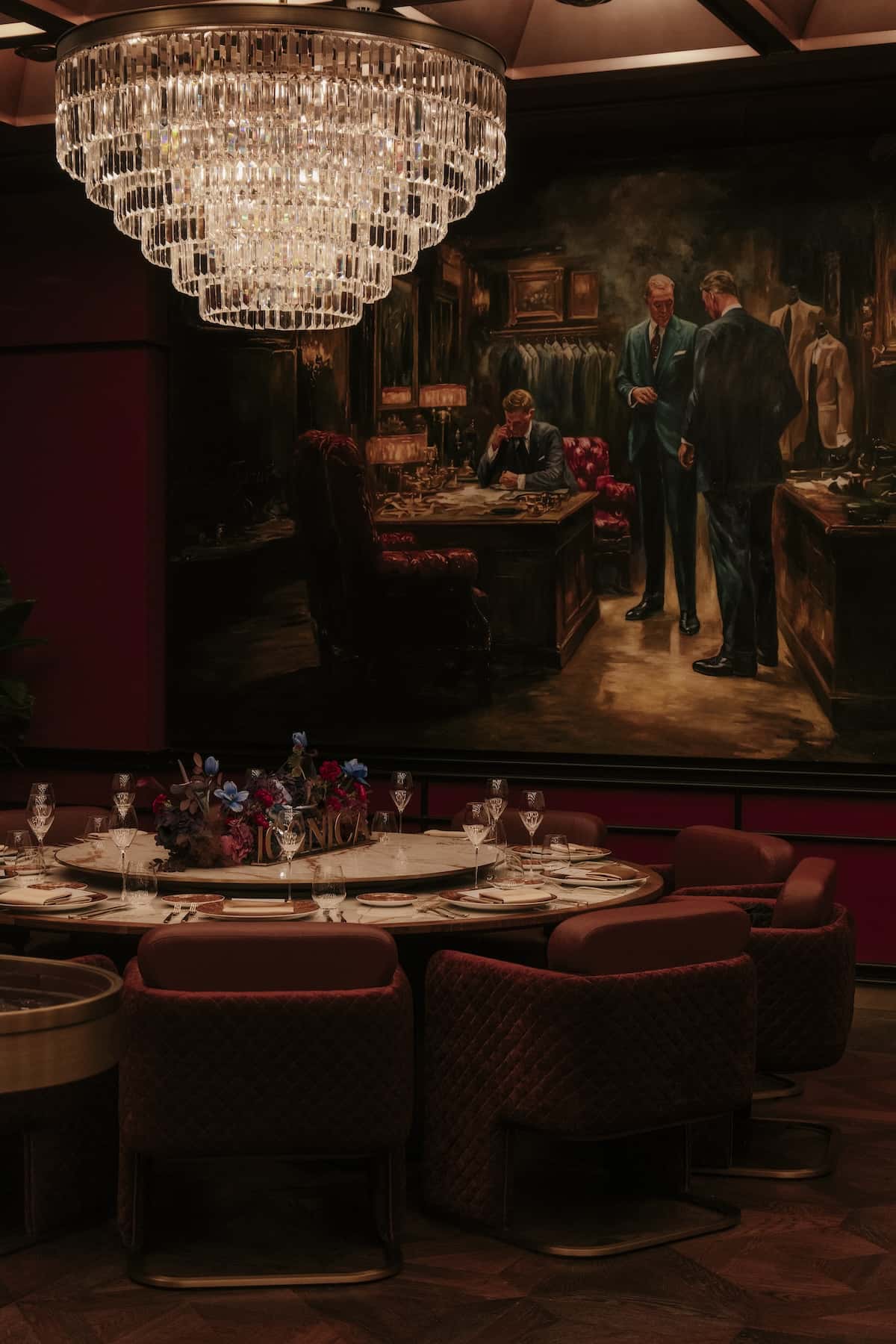
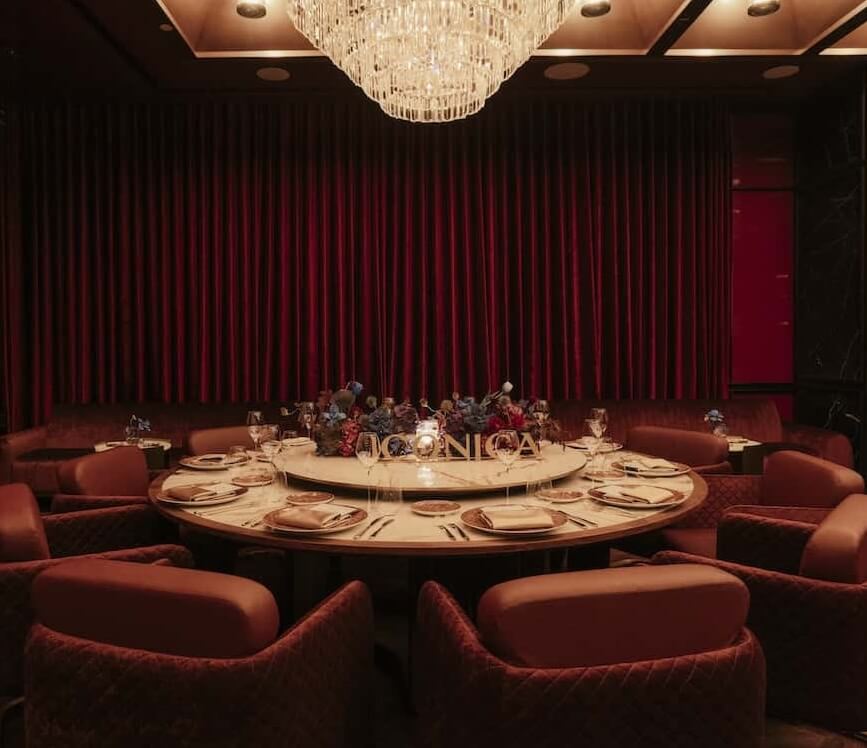
The tailors’ shop doesn’t prepare you for this space beyond it with its lacquer-red walls – the color of a vintage Bentley interior – and plush floor-to-ceiling crimson curtains that muffle the room from everything outside it.
The ceiling is warm dark wood, each recessed panel housing a cylindrical downlight, and from the center hang two extraordinary tiered crystal chandeliers that decant light across the whole room. It feels more like a private members’ club than a hotel bar.
At one end, looms a huge painting – done in a loose, painterly style, with thick brushwork that suggests atmosphere over precision. A man at his tailor’s desk, caught mid-thought, the workshop around him half-lit and smoky. The figures in the background are sketched rather than rendered.
Para Los Santos, For The Saints
Alfredo in his burnt-orange blazer – gold lapel pin of La Giraldilla, thick-framed glasses, a goatee and prim pocket square, looks like he wandered in from the painting itself.
The room opens toward the bar, and beside it, the listening corner. A gramophone with a wide brass horn sits on a marble table beside a turntable. The shelves behind hold records – Miles Davis, Art Blakey and Aretha alongside Erykah Badu and Bob Marley – alongside coffee table books: on Tom Ford and Le Mans.
At the bar counter, Asbel Morales is pouring out a drop of the first bottle onto the floor, “para los santos,” or “for the saints” he says – which is the way they do it in Cuba.
Asbel originally wanted to be a mining engineer. His second choice at university was liqueurs and beverages. He went straight from graduation into a distillery and hasn’t left the industry in 37 years, the last 30-plus of them at Havana Club, working exclusively on dark rums. When he started, there were three products in that category. Today there are more than 15.
The Maestros del Ron Cubano
Asbel was part of the delegation that traveled to Rabat to secure UNESCO Intangible Cultural Heritage recognition for the Maestros del Ron Cubano – a title that can take twenty years to earn and requires intensive knowledge of the sugar cane, the climate, the distillation and the history of Cuba. There are nine Maestros on the whole island, each one a keeper of knowledge passed down from the last. It’s Asbel who is responsible for the Icónica Collection – the production process, the character and every expression in the range.
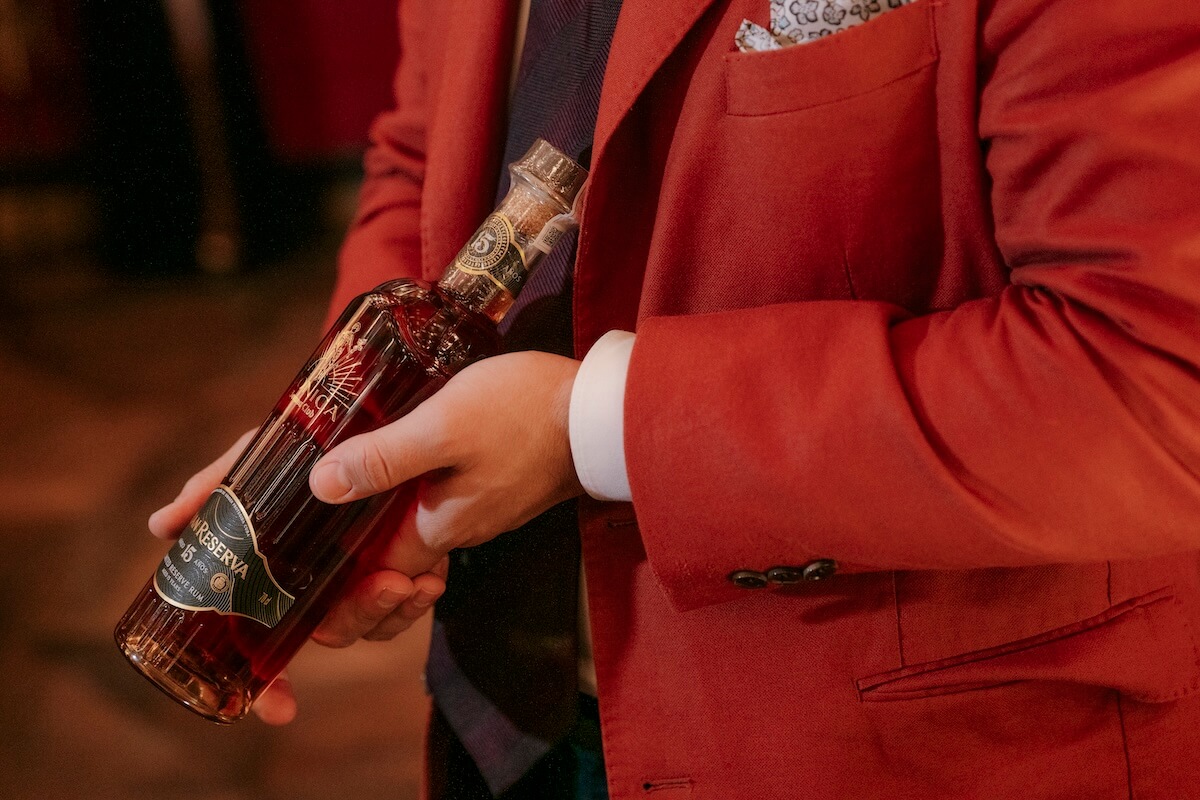
From the kitchen comes squid tagliatelle – the slices of squid spiraled into a tagliatelle-like birds’ nest – which arrives with black ink, bottarga and finger lime alongside a flute of G.H. Mumm. Then a hunk of dry-aged duck with oyster mushrooms, parsley miso mayo and jus, matched with Havana Club Gran Reserva 15 Años. The richness of the bird pulls the rum’s dried fruit forward.
Lobster tail follows that – saffron caviar beurre blanc, zucchini and ricotta roll. And dessert is a chocolate cigar, crispy tuile filled with chocolate and caramel ganache.
A Gift From God
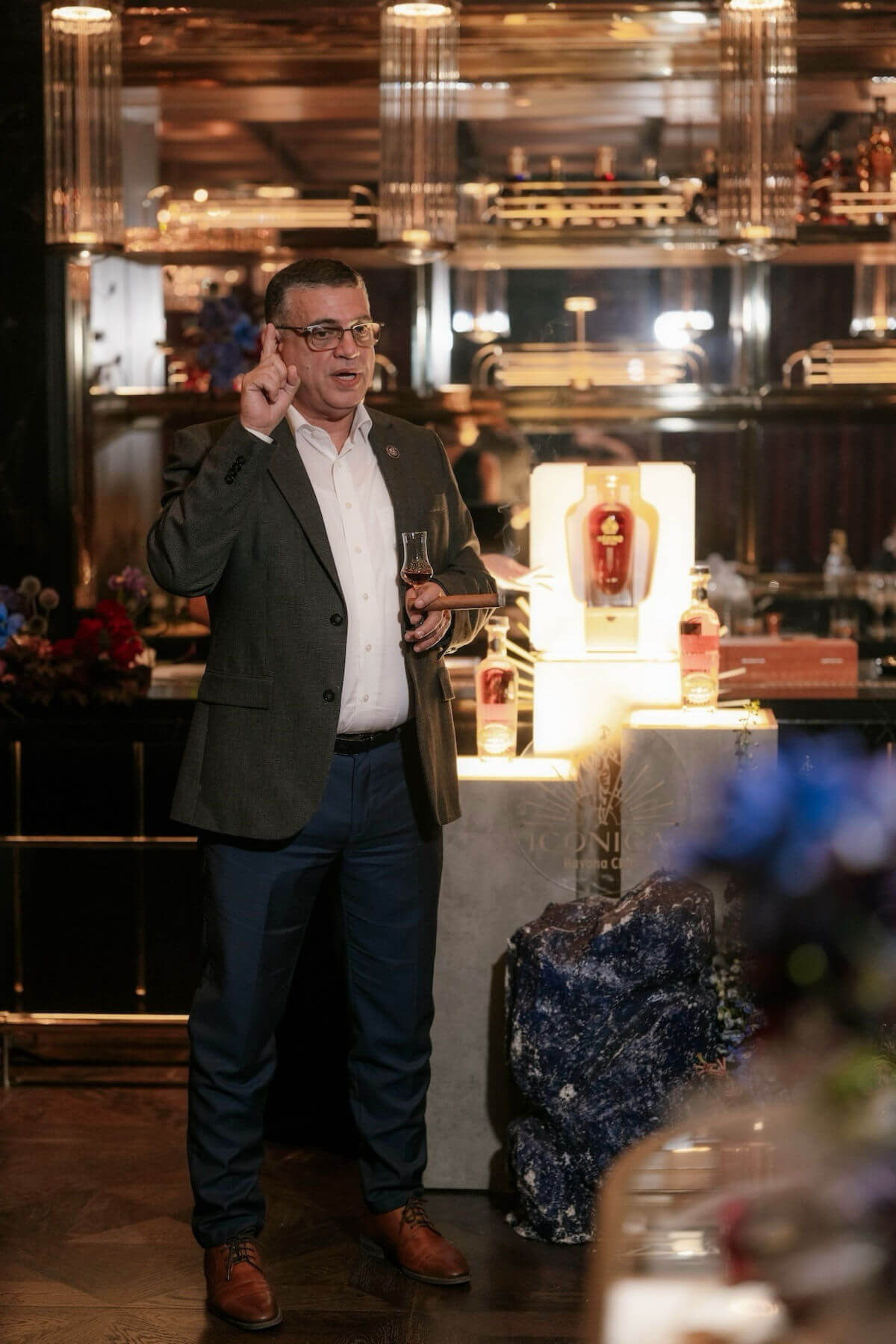
Asbel keeps interjecting information in Spanish, a finger raised in exclamation, for Alfredo to translate. “There is something not on the menu,” he translates. He’d planned to serve the Selección de Maestros, but Asbel had changed his mind. “This rum,” Alfredo says, “is a gift from God.”
What he serves first is Havana Club Union alongside the lobster tails – not yet launched and not yet in any market. The original Union was created in 2014, the first Cuban rum ever conceived specifically to pair with a cigar – Cohiba, specifically. Production stopped in 2019. What’s here tonight is the new version, and Asbel brought it from Cuba himself. “You’re only the second people in the world to taste this rum,” Alfredo tells the room, finger raised again for emphasis.
Aged between 25 and 30 years in Cuba’s tropical climate, only around 5,000 bottles exist. “The concept of this new Union,” Alfredo translates, “is not only to be a union with a cigar. It goes to the culture, to the arts, to the creation, to the tradition. It represents the union between friends, between countries. The rum you are tasting doesn’t only carry the molecules of rum from Havana – it carries parts of our history and our culture.”
Then Asbel offers up one final surprise of the evening: the Máximo Extra Añejo – the final expression in the Icónica Collection, alongside the dessert. After that long in Cuba’s heat you expect something that has surrendered to it. What you get instead is white fruit and candied peel, opening slowly into sultanas, coconut and dried mango. It probably shouldn’t still taste this alive.
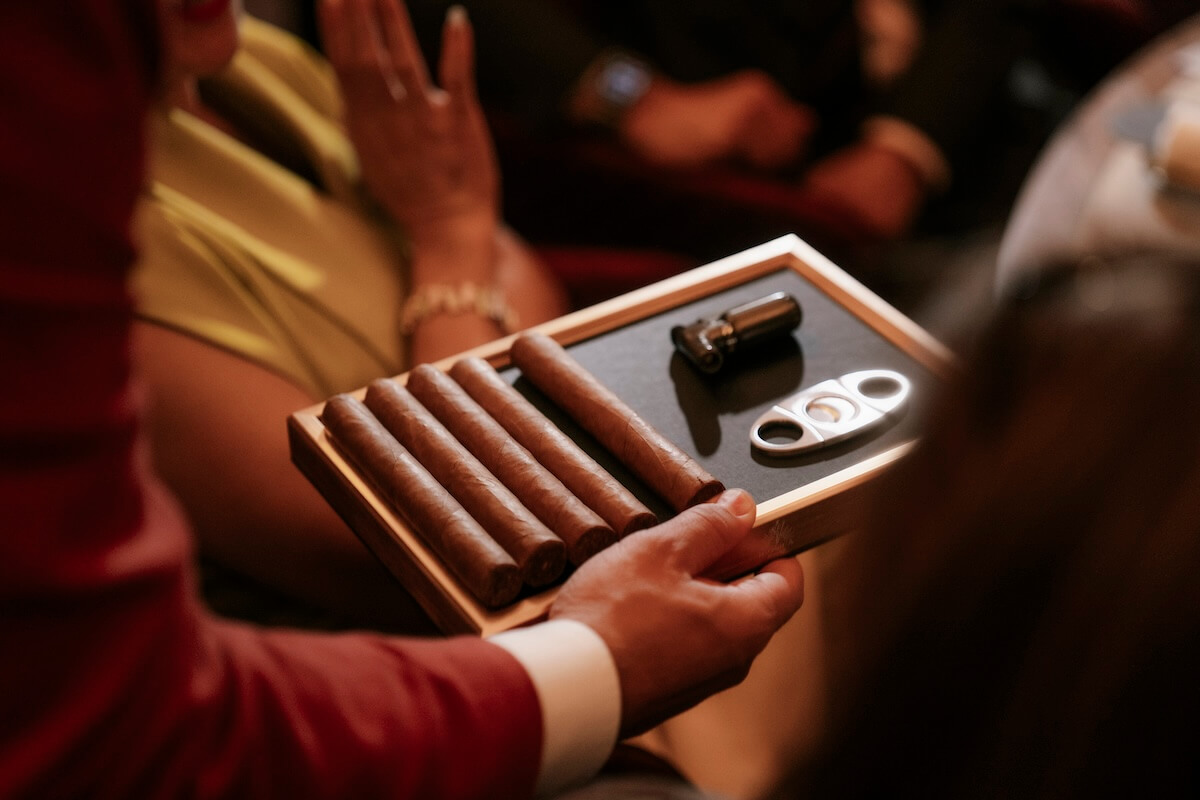
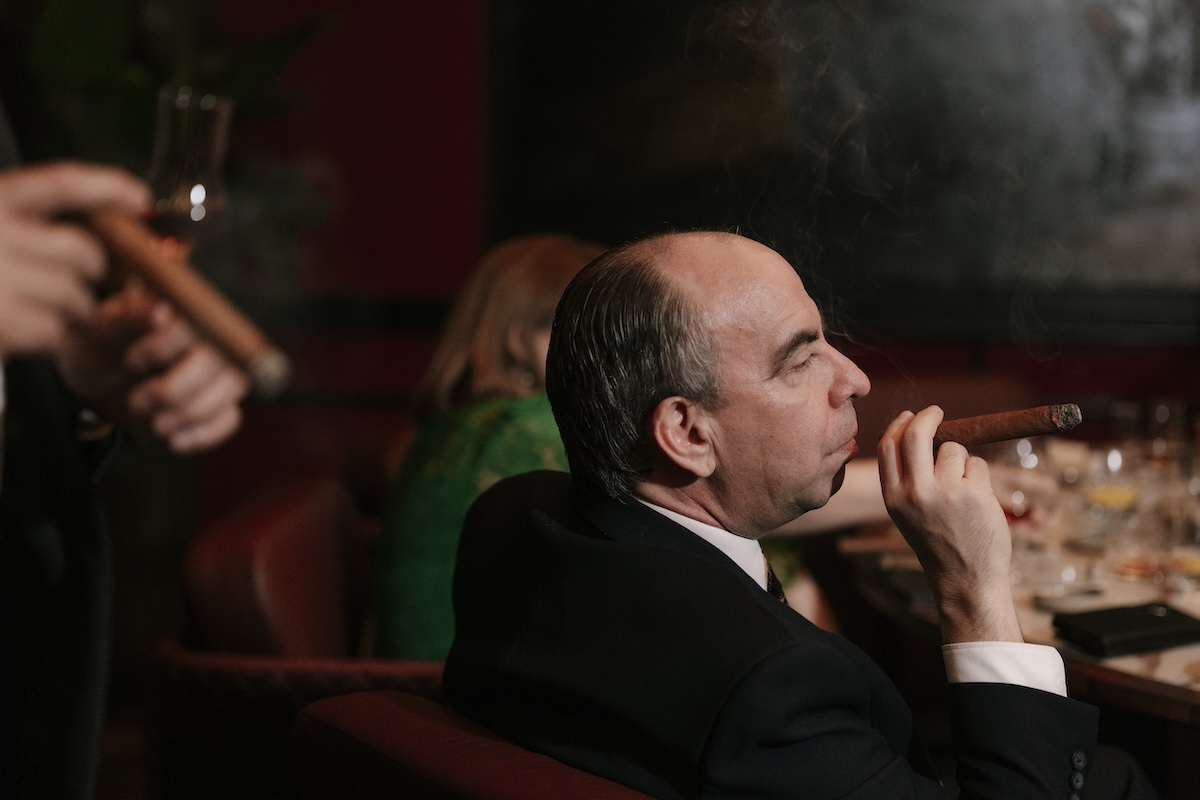
The cigars come out shortly after. And, as they do, it’s the Máximo that lingers like the smoke in the air.
By the time the cigars have dwindled to their bases, there is talk of a bar somewhere around Hanoi’s Westlake, rumored to be owned by a native of Havana. Nobody has a confirmed address. But Alfredo has already stood up and is leading the way.
Because Cubans like to move.
Drink Responsibly.